

Explore stories and insights
Loading...


 78
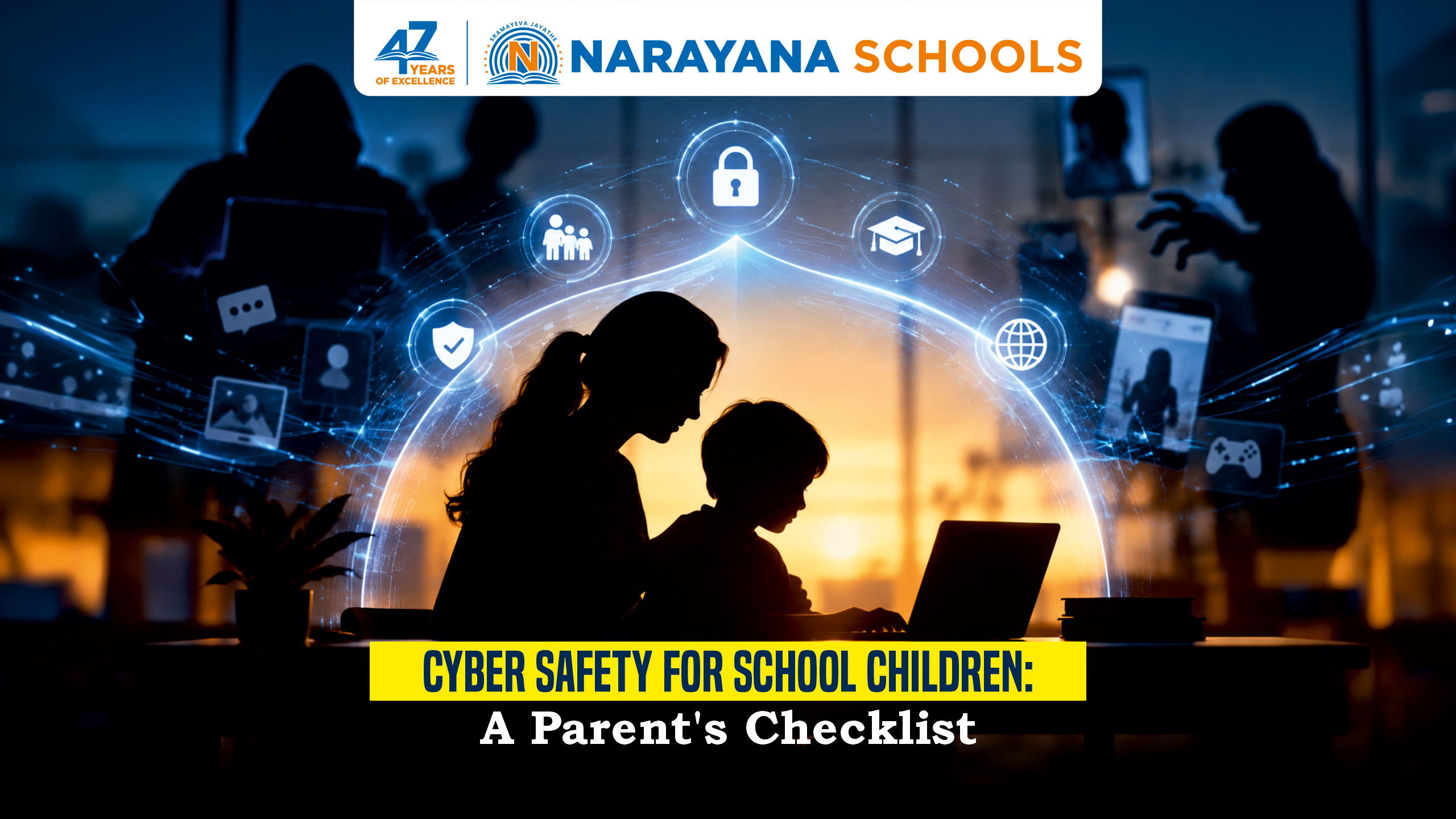
Online learning, gaming, social media and AI-powered apps are becoming part of everyday childhood. But greater access also means greater exposure to cyberbullying, online scams, privacy breaches and harmful interactions. A February 2026 guidance note by United Nations Children’s Fund ( earlier: United Nations International Children’s Emergency Fund; UNICEF ) India and United Nations Educational, Scientific and Cultural Organization (UNESCO) Regional Office for South Asia highlights the growing importance of online safety in education. It cites Annual Status of Education Report (ASER) 2024 findings that 89.1% of adolescents aged 14–16 have a smartphone at home , while 76% primarily use these devices for social media. UNICEF's 2024 U-Report poll also found that 40% of young respondents spent more than four hours online daily. These findings underline why digital access must be matched with digital safety skills. What Is Changing and Why Should Parents Care? Online risks now extend beyond suspicious links and strangers. Children may encounter fake gaming rewards, fraudulent scholarship messages, manipulative in-app purchases, cyberbullying by classmates, inappropriate recommendations and AI-generated images or voices used to deceive or threaten. Personal details shared through apps, photographs and location settings can also be misused. The answer is not to avoid technology altogether, but to help children use it safely, responsibly and confidently. 7 Cyber Safety Checks Every Parent Should Make 1. Protect personal information : Teach children never to share passwords, OTPs, home addresses, school details, live locations or private photographs with untrusted contacts. Explain the lasting impact of a digital footprint. 2. Secure devices and accounts: Install updates, use strong, unique passwords and enable two- factor authentication where available. Review privacy settings, app permissions and parental controls. 3. Recognise scams and restrict financial access: Warn children about fake gaming rewards, free in-game currency, fraudulent scholarship offers and suspicious downloads. Avoid giving children independent access to payment apps, banking credentials, saved payment methods or credit and debit cards. 4. Make gaming and social media safer: Check age suitability, chat settings, friend lists, content recommendations and in-app purchases. Remind children that online contacts may not be who they claim to be. 5. Address cyberbullying: Watch for signs of distress, withdrawal or reluctance to use devices, and create a safe space for children to discuss uncomfortable online interactions without fear of blame. If cyberbullying occurs, preserve screenshots and relevant details, block and report the account and guide children towards seeking help rather than retaliating. 6. Help children question AI-generated content: Discuss how fake profiles, manipulated images, cloned voices and convincing messages can be used to deceive or harass. Encourage children to verify suspicious content through trusted sources before believing or forwarding it. Remind them never to create or share manipulated images of others and also to not take or share pictures without consent. 7. Protect wellbeing: Set practical screen-time boundaries, maintain device-free meals and protect sleep, physical activity and homework time. Keep conversations open so children feel safe reporting uncomfortable experiences. What If Something Goes Wrong? Stay calm, listen without blame and preserve screenshots, usernames and relevant messages. Block and report the account. In India, cybercrime can be reported through the National Cyber Crime Reporting Portal or by calling 1930 for cybercrime assistance. Contact local police if there is a serious threat or immediate danger. At Narayana Schools, nurturing responsible digital habits alongside academic learning, life skills and holistic development reflects a commitment to helping students learn safely, grow confidently and fulfil their dreams, because your dreams are our dreams. Frequently Asked Questions 1. When should cyber safety education begin? Parents should introduce cyber safety as soon as children start using connected devices, with guidance suited to their age and understanding. 2. Should parents check childrens phones? Parents should conduct regular, age-appropriate reviews of device usage, apps and online interactions while maintaining open conversations and gradually encouraging responsible independence. 3. What should parents do if a child is threatened online? Parents should remain calm, listen without blame, preserve evidence, block and report the account, and seek appropriate help if the threat is serious. 4. How can parents prevent cyberbullying? Parents can encourage respectful online behaviour, discuss cyberbullying openly and create a supportive environment where children feel safe reporting incidents without fear of punishment or blame. 5. Where can parents report cybercrime in India? Parents can report cybercrime through the National Cyber Crime Reporting Portal or call 1930 for cybercrime assistance. In cases involving immediate danger, they should contact the local police or emergency services.
 4 min
 02 Nov 2026
 55
Every year, as the vibrant colours of Navratri reach their grand finale, millions of people across India prepare to celebrate Dussehra . In 2026, the festival falls on 20 October . The word Dussehra is believed to have originated from the Sanskrit Dasha-Hara or Dasha-Harana , commonly interpreted as the defeat of the ten-headed Ravana. In the Ramayana , Lord Rama slays the demon king Ravana after a long battle to rescue his wife Sita , and this victory of dharma over adharma is celebrated on Dussehra. Its other name, Vijayadashami , translates to ‘the victory on the tenth day’, referring to the tenth day of the bright fortnight of the Hindu month of Ashwin . The day also honours Goddess Durga’s victory over the buffalo demon Mahishasura , as narrated in the Devi Mahatmya ( Durga Saptashati ). In that account, the goddess battles Mahishasura for nine nights and slays him on the tenth day. Together, these two stories give the festival its message that good ultimately triumphs over evil. Yet Dussehra is much more than a single festival celebrated in one way. Travel across India and you will encounter different names, rituals and cultural expressions. Journey beyond India's borders and you will discover communities that honour related traditions inspired by the Ramayana , Goddess Durga and centuries of shared cultural heritage. For students, Dussehra offers a fascinating lesson in history, culture and values. It reminds us that while customs may vary across regions, the ideals of courage, integrity and perseverance remain universal. Dussehra Across India: Many Names, One Message One of the most remarkable aspects of Dussehra is how differently it is celebrated across regions while preserving the same underlying values. Andhra Pradesh: Vijayadashami In Andhra Pradesh , Vijayadashami is closely associated with the renowned Kanaka Durga Temple on Indrakeeladri Hill in Vijayawada . During the nine nights of Navaratri , devotees worship Goddess Kanaka Durga through elaborate Alankarams (the deity is adorned in a different form each day, such as Bala Tripura Sundari , Gayatri Devi , Annapurna Devi , Lalitha Tripura Sundari , Maha Chandi and Saraswati Devi ). The Saraswati Alankaram , held on Moola Nakshatra, is the most crowded day of the festival. The Durga and Mahishasura Mardini forms are worshipped on Ashtami and Navami The celebrations culminate on Vijayadashami , when the goddess appears as Raja Rajeshwari Devi , with special poojas followed by the Theppotsavam , a ceremonial float festival in which the utsava murthis of the goddess and Lord Malleswara Swamy are taken on a decorated boat on the Krishna River . Telangana: Bathukamma and Vijayadashami/Dasara In Telangana , Vijayadashami/Dasara is celebrated together with Bathukamma , the state’s colourful floral festival. Bathukamma is observed for nine days, beginning on Mahalaya Amavasya and ending on Durgashtami with Saddula Bathukamma . Women gather seasonal wildflowers such as tangedu (cassia), gunuka (celosia) and marigold , and stack them in concentric layers to form a conical floral mound, often topped with a small turmeric form of Goddess Gauramma . Dressed in traditional attire, women place their Bathukammas in open grounds and community spaces, sing folk songs while moving around them in circles, and celebrate nature and womanhood. In the evening, the Bathukammas are immersed in lakes and ponds. Vijayadashami follows the Bathukamma celebrations, with devotional rituals and family traditions such as Jammi (Shami) tree worship, where people exchange its leaves as symbolic gold and seek elders’ blessings . West Bengal: Bijoya/Bijoya Dashami In West Bengal , Bijoya Dashami is celebrated on the 10th day and marks the conclusion of Durga Pujo , the state’s grandest festival. The celebrations begin with Mahalaya , when the goddess is invoked through the recitation of the Chandi Path , and with Akal Bodhan , the ceremonial awakening of Goddess Durga . The name means untimely awakening. Goddess Durga’s original worship, begun by King Surath , was held in spring during Chaitra Navratri and is still observed today as Basanti Pujo . According to Bengali tradition, Lord Rama invoked the goddess out of season, in Sharad Navratri , to seek her blessings before battling Ravana . Because this worship came before its traditional time, it is called Akal Bodhan , and it is the Durga Pujo that Bengal celebrates today. The main pujas are held from Shashthi to Dashami , with Bodhon on Shashthi, Sandhi Puja at the juncture of Ashtami and Navami , and elaborate pandals and idols across towns and cities. On Bijoya Dashami, married women perform Sindoor Khela , applying vermilion to the goddess and to one another, after offering her sweets and betel leaf in a farewell ritual known as Boron. The idols are then taken in processions for immersion in rivers and ponds, bidding Durga farewell as she returns to her marital home on Mount Kailash . Afterwards, people exchange Bijoya greetings, touch the feet of elders for blessings and share sweets such as rasgulla and sandesh . Karnataka: Mysuru Dasara In Karnataka , Mysuru Dasara is celebrated as the Nadahabba , the state festival, and is the grandest expression of the state’s royal and cultural heritage. The ten-day celebrations begin with the inauguration of the festival and worship of Goddess Chamundeshwari atop Chamundi Hill , and conclude on Vijayadashami . The Mysuru Palace is illuminated with nearly one lakh bulbs and the city hosts cultural performances, music, dance, wrestling bouts, food fairs and exhibitions. The Golden Throne ( Ratna Simhasana ) is assembled for the private royal Durbar , which the Wadiyar family continues to hold. The festival culminates on Vijayadashami with the famous Jamboo Savari , a grand procession in which an idol of Goddess Chamundeshwari , placed in a golden howdah , is carried on a decorated elephant through the city to Bannimantap , where the Banni tree is worshipped. The royal traditions associated with Mysuru Dasara trace their roots back over four centuries to the Vijayanagara Empire , and were later carried forward by the Wadiyar kings of Mysore from the early 17th century . Himachal Pradesh: Kullu Dussehra In Himachal Pradesh , Kullu Dussehra starts on the 10 th day, unlike other regions where the celebrations conclude on that day. The festival is held at the Dhalpur Maidan in Kullu and lasts seven days. It opens with a grand procession in which Lord Raghunath ( Lord Rama ), the presiding deity of the Kullu valley , is carried in a decorated chariot ( ratha ) and pulled by devotees. Hundreds of local deities from neighbouring valleys are ceremonially brought in palanquins to pay homage to Lord Raghunath , and the gathering is often described as a Devta Sammelan (assembly of deities). The festival is accompanied by folk music, traditional dances such as the Kullvi Nati , local handicrafts and cultural programmes. On the final day, the Lanka Dahan ritual is performed, symbolising the victory of good over evil, and the deities return to their villages. The tradition dates back to the 17th century , when Raja Jagat Singh installed the idol of Lord Raghunath in Kullu . The festival is celebrated as one of India’s most distinctive Dussehra celebrations. Chhattisgarh: Bastar Dussehra In Chhattisgarh , Bastar Dussehra stands apart from the Rama -centred traditions commonly seen elsewhere. The festival honours Goddess Danteshwari , the presiding deity of Bastar , and showcases the region’s rich tribal heritage. It is celebrated for around 75 days , making it one of the longest festivals in the world , and does not involve the burning of Ravana . The celebrations begin with Pata Jatra , the ritual worship of the sacred wood used to build the festival chariot, and the Kachan Gadi ceremony, in which a young girl from the Mirgan community is believed to be possessed by the goddess and gives her permission to hold the festival. The highlight is the Rath Yatra , in which a massive wooden chariot, built by tribal communities using traditional methods, is pulled through Jagdalpur by hundreds of villagers. Other key rituals include Jogi Bithai, Muria Darbar and Kutumb Jatra. The festival concludes with the Mawli Parghav , where the deity is bid farewell, and the Doli Vidai . Tribal communities such as the Muria, Maria, Halba and Dhurwa take part, along with deities from nearby villages. The tradition dates back over six centuries, to the time of the Kakatiya dynasty rulers of Bastar in the 15th century . Delhi and Northern India: Ramleela and Ravan Dahan Across Delhi and much of northern India , Dussehra is characterised by Ramleela , dramatic performances that depict episodes from the Ramayana . The Ramleela is staged over nine or ten nights during Navaratri , with the story unfolding from Rama’s birth and exile to the abduction of Sita and the battle with Ravana . It is performed by local theatre groups and community committees, often in open grounds and accompanied by music, dialogue and elaborate costumes. In Delhi , well-known Ramleelas are held at the Ram Leela Ground , Red Fort grounds and Luv Kush Ramleela at Lal Qila , and the tradition is also strong in cities such as Varanasi , Ayodhya , Lucknow and Mathura . The celebrations culminate on Vijayadashami with Ravan Dahan , in which towering effigies of Ravana , his son Meghnad and his brother Kumbhakarna are filled with firecrackers and set alight, symbolising the victory of truth and virtue over evil. The effigies are typically set ablaze after a symbolic enactment of Rama’s arrow striking Ravana . The Ramnagar Ramlila near Varanasi , staged for around a month, is recognised by UNESCO as part of the Intangible Cultural Heritage of Humanity , and the Ramlila tradition of Uttar Pradesh was inscribed in 2008 . Although Dussehra may not be celebrated in the same way in every place, the values embodied by Durga Puja , the Ramayana and Dussehra resonate across cultures and communities worldwide. Their enduring messages of good triumphing over evil, courage overcoming adversity and righteousness prevailing over wrongdoing continue to inspire people across borders. At Narayana Schools , nurturing cultural understanding, courage and self-discipline alongside academic learning helps students grow with confidence, overcome challenges and move towards fulfilling their dreams, because your dreams are our dreams . FAQs What is Dussehra and why is it celebrated? Dussehra, also called Vijayadashami, is a Hindu festival celebrated on the tenth day after Navaratri begins, marking the victory of good over evil. In much of North India it commemorates Lord Rama’s victory over Ravana, while in other regions it marks Goddess Durga’s victory over the demon Mahishasura. How is Dussehra celebrated in different parts of India? Dussehra is celebrated differently across India, with each region following its own traditions. In Delhi and North India, Ramleela performances end with Ravan Dahan. In West Bengal, it is Bijoya Dashami, marked by Sindoor Khela and idol immersion. Karnataka hosts the Mysuru Dasara with the Jamboo Savari procession, Telangana celebrates alongside Bathukamma, Andhra Pradesh worships Goddess Kanaka Durga at Vijayawada, Himachal Pradesh holds Kullu Dussehra, and Chhattisgarh observes the 75-day Bastar Dussehra. Are Dussehra and Bijoya Dashami the same? Dussehra and Bijoya Dashami fall on the same day but are celebrated with different customs. Bijoya is the Bengali form of Vijaya (victory). In West Bengal, the day marks the farewell to Goddess Durga at the end of Durga Puja, while in much of North India it centres on Rama’s victory over Ravana. Which place is most famous for Dussehra celebrations in India? Mysuru in Karnataka is among the most famous Dussehra destinations, known for its illuminated palace and Jamboo Savari procession. Other well-known celebrations include Kullu in Himachal Pradesh, Bastar in Chhattisgarh, Kolkata’s Durga Puja, and the Ramleela and Ravan Dahan events in Delhi. Why is Ravana’s effigy burnt on Dussehra? Ravana’s effigy is burnt on Dussehra to symbolise the destruction of evil and the victory of truth and virtue. The ritual follows the Ramleela performances and re-enacts Rama’s defeat of Ravana, often with effigies of Meghnad and Kumbhakarna alongside. Not every region follows this practice; Bastar, Kullu and Mysuru, for example, observe Dussehra without it as the central ritual.
15 Oct 2026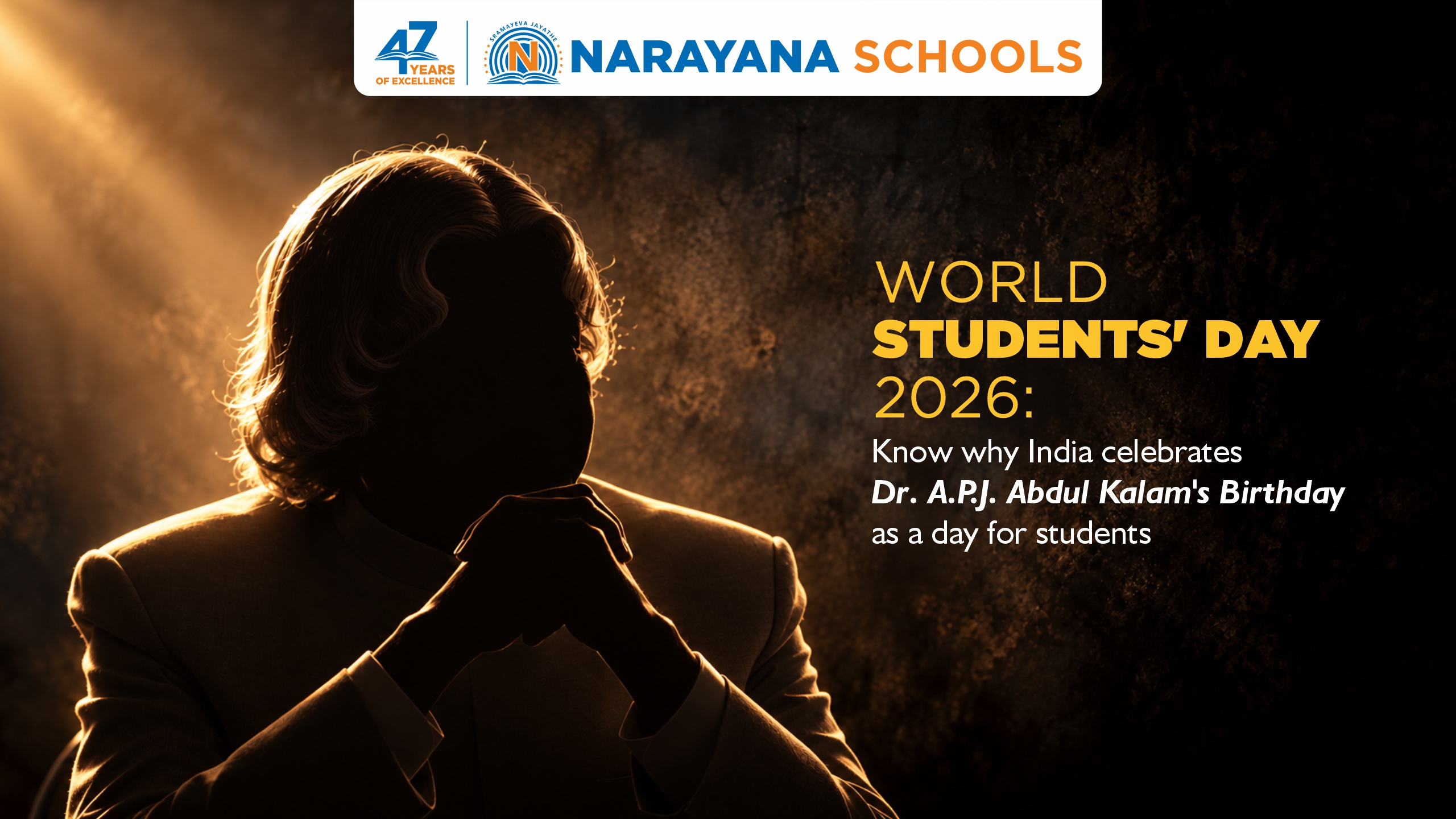 44
Every child carries a dream, a question or an untapped potential waiting to be discovered. Every child has a dream waiting to take shape. World Students' Day, observed in India on 15 October , honours Dr. A.P.J. Abdul Kalam , scientist, former President and one of the country's most inspiring advocates for young minds. Born in Rameswaram , Tamil Nadu , on 15 October 1931 , Dr. Kalam rose from humble beginnings to become a renowned aerospace scientist and the 11th President of India . Known as the ‘Missile Man of India’ and the ‘People's President’ , he believed that education and empowered youth were the foundation of national progress. World Students' Day is more than a tribute to his achievements. It is a reminder of the values he championed: curiosity, perseverance, innovation, integrity and lifelong learning. A Journey That Inspires Millions As a child, Dr. Kalam helped support his family by selling newspapers while pursuing his studies. His dedication to learning led him to a career in science, where he played a key role in India's space and missile programmes. His life is a powerful reminder that success is determined not by one's circumstances but by curiosity, perseverance and hard work. One of his most celebrated messages was: " Dream, dream, dream. Dreams transform into thoughts and thoughts result in action. " For Dr. Kalam, dreams were not distant wishes. They were goals supported by effort, knowledge and perseverance. He encouraged students to think beyond limitations and see themselves as creators of the future. Why Students Were at the Heart of His Vision? What set Dr. Kalam apart was his deep connection with children and young people. Even after serving as President, he spent much of his time visiting schools and interacting with students. He believed that education should develop not only knowledge but also: Scientific thinking Creativity and innovation Leadership skills Strong values and character Confidence to solve real-world challenges His commitment to nurturing young minds is why his birth anniversary is widely observed as World Students' Day in India. A Lesson from His Childhood One story Dr Kalam often shared involved his science teacher, Sivasubramania Iyer . When students struggled to understand how birds fly, the teacher took them to the seashore to observe birds in motion. The experience sparked Kalam's fascination with flight and eventually inspired his journey into aerospace engineering. The lesson is simple: great learning begins with curiosity. Honours and Awards Dr Kalam's contributions to India were recognised with some of the nation's highest civilian honours: Padma Bhushan (1981) Padma Vibhushan (1990) Bharat Ratna (1997) 5 Ways Parents Can Keep Dr Kalam's Vision Alive Share His Life Story: Talk about how Dr Kalam overcame challenges through education, discipline and determination. Encourage Children to Dream Big: Help children set meaningful goals and take small steps towards achieving them. Celebrate Curiosity: Welcome questions and explore answers together. Curiosity was central to Dr Kalam's success. Discuss His Values: Introduce children to his teachings on integrity, perseverance, leadership and service. Connect Learning to Real Life: Read Wings of Fire , visit science museums or encourage simple STEM activities at home. Dr. A.P.J. Abdul Kalam's legacy extends far beyond his achievements as a scientist and President. He devoted his life to inspiring children and empowering young minds to dream bigger, learn continuously and contribute positively to society. On World Students' Day 2026, parents, educators and schools have an opportunity to celebrate not only his accomplishments but also the values he stood for: curiosity, perseverance, innovation, integrity and service. At Narayana Schools, we strive to support this vision by nurturing scientific thinking, encouraging personal growth and helping students discover their unique potential. In doing so, we continue the mission Dr Kalam dedicated his life to: empowering the next generation to transform dreams into action and possibilities into progress, because at Narayana Schools, your dreams are our dreams . FAQs When is World Students' Day? It is observed on 15 October , Dr A.P.J. Abdul Kalam's birth anniversary. Why is Dr Kalam associated with students? He dedicated much of his life to interacting with young people and promoting education, innovation and scientific thinking. Why is he called the People's President? Because of his humility, accessibility and strong connection with ordinary citizens, especially students. What is Dr Kalam's most famous message? "Dream, dream, dream. Dreams transform into thoughts and thoughts result in action." 5. How can families celebrate World Students' Day? By sharing stories from Dr Kalam's life, discussing his values and encouraging children to pursue their dreams through learning and curiosity.
13 Oct 2026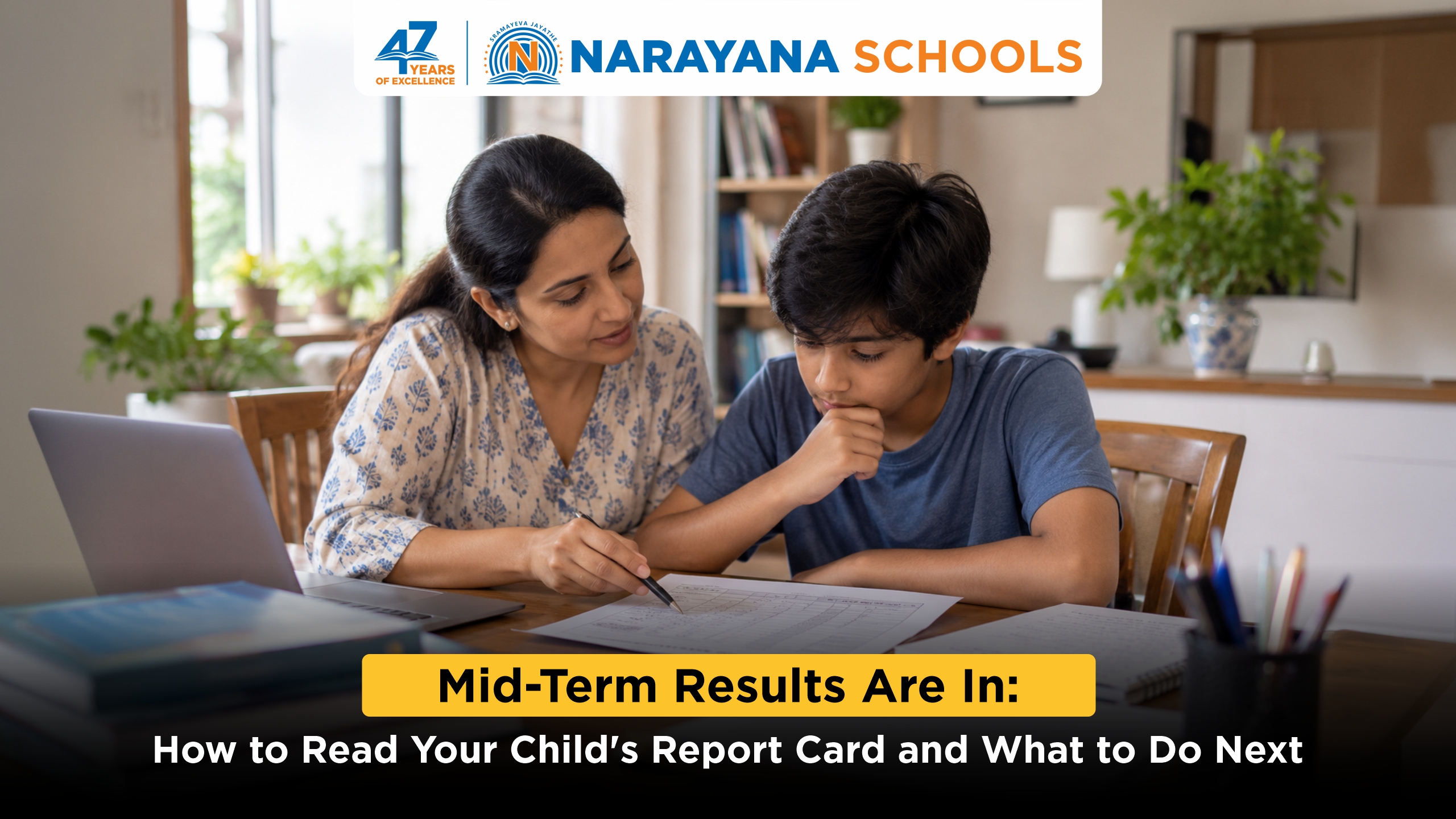 29
Mid-term results are in, and a report card can bring pride, concern or a mixture of both. But marks tell only part of the story. The real value lies in understanding what a child has learnt, where difficulties remain and what can improve before the next examination. Here are five practical ways parents can interpret school report cards and support progress. 1. Look Beyond the Total Marks A high overall score can hide gaps in individual subjects, while a lower score may reflect one difficult topic rather than weak understanding across the subject. Compare subject-wise marks, assessment patterns and previous results. Focus on progress, not comparisons with classmates. 2. Read Teacher Comments Carefully Remarks about participation, attention, homework, communication or classwork provide context that marks cannot. India's PARAKH Holistic Progress Card framework promotes a broader view of learning, including competencies and different aspects of student development. 3. A Parent's Quick Reference: How to Read a School Report Card Report card indicator What it may reveal What parents can do next Subject-wise marks Strong subjects and areas needing improvement Identify specific topics that need revision. Class tests and assessments Consistency in understanding and performance Compare results across assessments to spot patterns. Teacher remarks Participation, attention, classwork and learning habits Discuss recurring concerns with the teacher. Conceptual understanding Whether the child can explain and apply what has been learnt Ask the child to explain a concept or solve a similar problem independently. Homework and classwork Regularity, effort and ability to complete tasks Review routines and identify practical obstacles. Attendance and participation Opportunities for consistent learning and classroom engagement Check whether missed lessons or reluctance to participate need attention. Progress since the previous report Improvement, stagnation or a change in performance Recognise progress and agree on realistic next steps. A report card is a snapshot of progress, not a complete measure of a child's abilities, potential or future success. Individual results are best understood alongside teacher feedback, classroom performance and the child's learning experience. 4. Find the Reason Behind the Learning Gap Repeated mistakes may point to unclear concepts, rushed answers, weak revision, difficulty interpreting questions or examination anxiety. Discuss specific examples calmly and ask the child which topics felt challenging. Avoid labelling a child as careless or weak. 5. Turn Results into a Realistic Action Plan Choose two priority areas rather than trying to fix everything at once. Set short revision sessions, practise similar questions, revisit mistakes and review progress weekly. The Education Endowment Foundation's research guidance on feedback emphasises specific, actionable advice that helps learners improve, rather than comments that simply judge performance. 6. Use the Right Support Microschedules : Break learning into manageable daily targets for consistent revision. Daily Practice Tests : Reinforce concepts and identify areas needing further practice. Weekly Tests : Track progress and assess understanding across topics. Personalised Error Analysis : Identify recurring mistakes and address specific learning gaps. nLearn : Access concept resources, practice tests and performance reports to support revision and monitor progress. Teacher Guidance : Discuss persistent difficulties with teachers and agree on targeted improvement strategies. At Narayana Schools, combining meaningful assessment, personalised practice and supportive guidance helps students learn from every result, build confidence and move towards fulfilling their dreams, because your dreams are our dreams . FAQs Should a mid-term report card cause concern? Not automatically. It is an opportunity to identify strengths, learning gaps and areas needing support. What if marks have dropped suddenly? Review subject-wise performance, recent changes in study habits and teacher feedback before deciding on corrective steps. How can parents discuss disappointing results? Begin with listening, recognise effort and agree on specific, achievable improvements without comparisons or punishment. How often should progress be reviewed? A brief weekly review can help assess understanding, identify recurring mistakes and adjust the study plan.
12 Oct 2026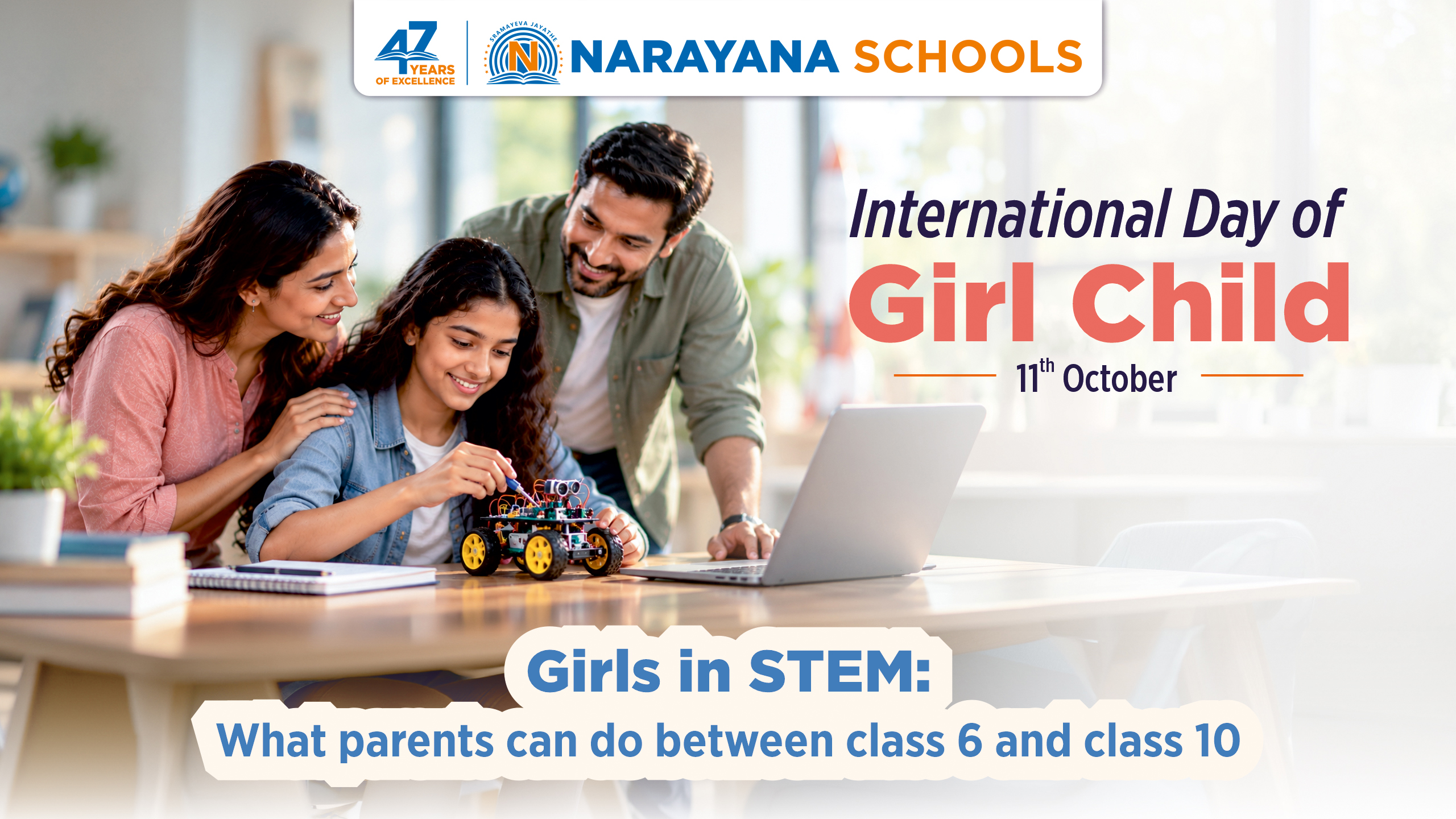 26
International Day of the Girl Child , observed on 11 October , highlights the importance of creating opportunities that enable girls to learn, grow and realise their potential. In today's technology-driven world, one of the most powerful ways to empower girls is by encouraging participation in Science, Technology, Engineering and Mathematics ( STEM ) from an early age. India has made encouraging progress in this area. According to the All India Survey on Higher Education (AISHE) 2023-24 , women accounted for 44% of STEM enrolment in higher education . However, despite strong participation at the education level, women continue to be underrepresented in many STEM research and leadership careers. This highlights the importance of nurturing confidence, curiosity and scientific thinking during the formative years. The period between Class 6 and Class 10 is particularly important because it is often when students begin developing subject preferences, career aspirations and perceptions about their own abilities. With the right encouragement from parents, schools and society, girls can build the confidence needed to explore STEM opportunities and pursue their interests without limitations. Challenge stereotypes early The transition from Class 6 to Class 10 can influence how girls see their abilities. A 2024 meta-analysis by David I. Miller and colleagues , covering 98 studies and 1,45,204 children across 33 countries, found that gender stereotypes were particularly strong around computer science, engineering and physics and became more pronounced among girls with age. Parents can counter this by avoiding phrases such as ‘boys are naturally better at technology’ and praising curiosity, persistence and problem-solving instead. What Parents Can Do for Their Children Who Are in Classes 6 to 10? A. Make STEM hands-on Building a simple circuit, coding a game, observing the Moon, analysing household electricity use or testing materials can turn abstract concepts into discoveries. Research by Allison Master and colleagues found that hands-on programming experiences increased technology interest and self-efficacy among girls. B. Bring female STEM role models closer A study by Susana González-Pérez, Ruth Mateos de Cabo and Milagros Sáinz , involving 304 girls aged 12 to 16, found that exposure to female STEM professionals improved mathematics enjoyment, expectations of success and STEM aspirations while reducing gender stereotypes. Indian role models such as Tessy Thomas , Gagandeep Kang , and women scientists including Ritu Karidhal Srivastava , Muthayya Vanitha and other contributors to India's space missions can help girls see STEM as a field in which women can contribute, lead and innovate. C. Encourage Curiosity, Independent Exploration and Participation in Competitions and STEM Communities Support activities that allow girls to ask questions, investigate ideas and seek solutions. Science documentaries, museums, astronomy clubs, coding platforms and innovation challenges can deepen interest beyond textbooks. Focus on learning and discovery rather than only grades and outcomes. Olympiads, science exhibitions, coding competitions and innovation contests help girls develop analytical thinking, confidence and problem-solving skills. Participation also exposes them to like-minded peers and mentors who can inspire future STEM aspirations. Government initiatives supporting girls in STEM To encourage greater participation of girls and women in STEM, the Government of India has introduced several initiatives, like: Vigyan Jyoti : Encourages girls from Classes 9-12 to pursue STEM education through science camps, mentoring, laboratory visits and interactions with STEM professionals. Women in Science and Engineering - Knowledge Involvement in Research Advancement through Nurturing (WISE-KIRAN): Supports women through fellowships, research opportunities and career development programmes in STEM. All India Council for Technical Education (AICTE) Pragati Scholarship for Girl Students : Provides financial assistance to girls pursuing technical and professional education. Let Class 6 to 10 be an exploration window Narayana Schools' eTechno programme for Classes 6 to 10 supports STEM learning through a structured approach that helps students strengthen concepts, develop analytical thinking and apply knowledge to real-world problems. Strong foundations in Mathematics and Science: Builds conceptual understanding though CDF (Concepts, Definitions and Formula) to help students approach challenging STEM topics with confidence. Structured learning through microschedules: Organises learning into manageable steps, supporting consistency and progressive understanding. Regular assessments and performance analysis: Helps identify learning gaps, correct errors and strengthen problem-solving skills. Olympiad preparation and competitive exposure: Encourages logical reasoning, analytical thinking and the ability to tackle unfamiliar questions. Science laboratories and practical learning: Gives students opportunities to connect scientific concepts with experiments, observations and applications. Technology-enabled learning through nLearn : Narayana Schools’ nLearn digital learning platform supports students in strengthening subject concepts and practising problem-solving at their own pace. These learning experiences can make STEM education for girls more engaging and accessible, helping them recognise that scientific and mathematical abilities develop through practice, guidance and persistence. Equal opportunities to participate, explore and innovate can encourage girls to consider a wider range of future STEM pathways. At Narayana Schools, nurturing curiosity, confidence and scientific thinking through meaningful STEM experiences helps girls explore possibilities, build capabilities and move towards fulfilling their dreams, because your dreams are our dreams . FAQs Why are Classes 6 to 10 important for girls in STEM? These years can influence confidence, subject interests and future academic choices. How can parents encourage girls to explore STEM? Provide equal access to experiments, technology, competitions, books, mentors and STEM role models without attaching subjects to gender. Does a girl need to be naturally good at mathematics for STEM? No. STEM skills develop through conceptual understanding, practice, problem-solving and persistence. How can schools support girls in STEM? Hands-on learning, laboratories, Olympiad preparation, mentoring and inclusive opportunities can help sustain STEM interest.
09 Oct 2026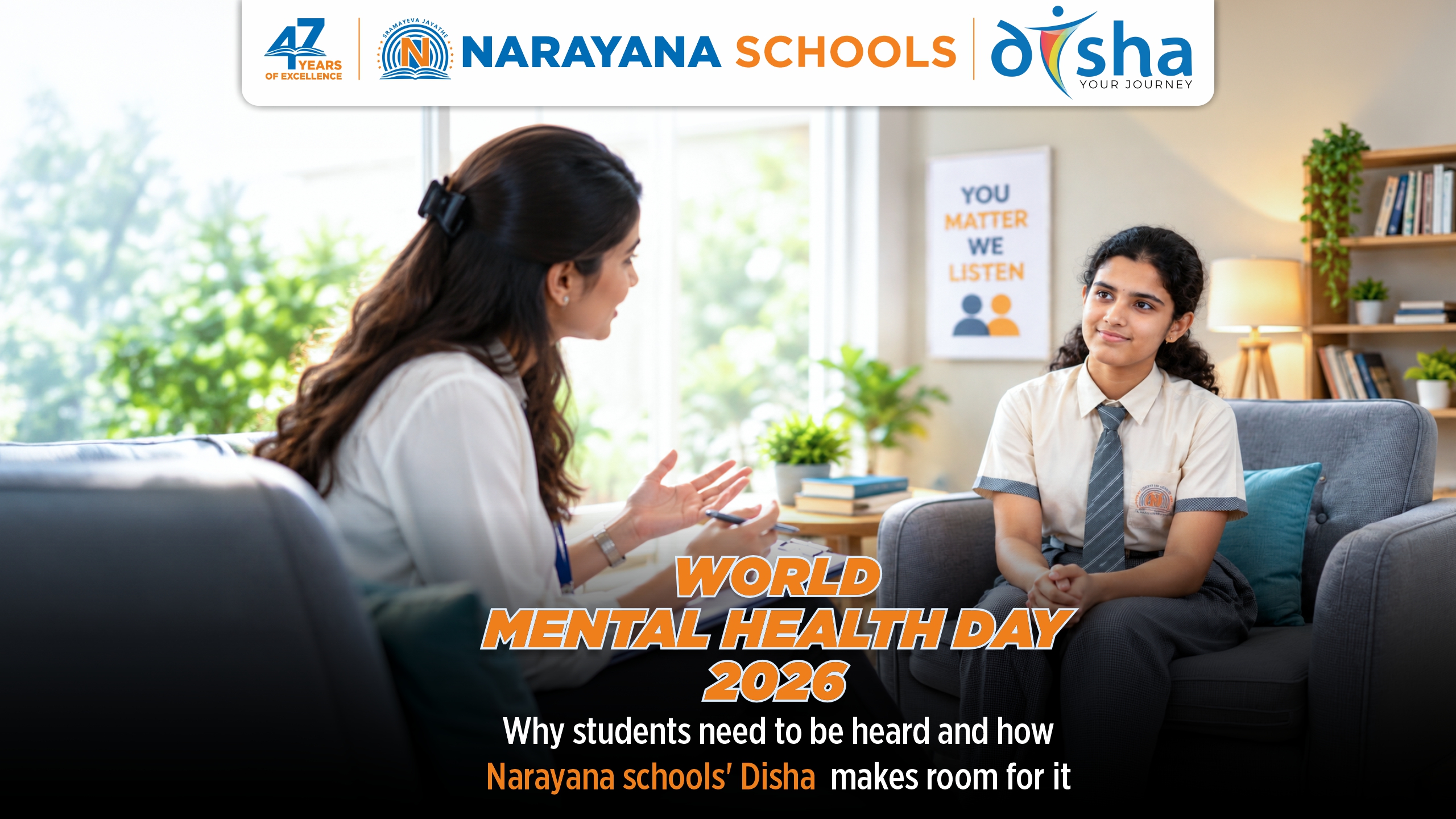 29
A student saying “I am fine” does not always mean everything is fine. Sometimes a change in sleep, withdrawal from friends, irritability or reluctance to attend school says more than a direct answer. World Mental Health Day , observed on 10 October , has “Lived experiences heard: real voices, real change” as its theme for 2026 , highlighting the importance of listening to people’s experiences and turning their voices into meaningful action and stronger mental health support. For Indian families, this matters across every school stage. According to the World Health Organization (WHO), around one in seven adolescents aged 10 to 19 globally experiences a mental health condition . Furthermore, the WHO and the United Nations International Children’s Emergency Fund (UNICEF) report that one-third of mental health conditions emerge before the age of 14 and half before the age of 18 worldwide . These findings highlight the importance of early support and nurturing environments at home and school. Why Students Need to Be Heard? Mental health in students is shaped by academic expectations, friendships, family relationships, bullying, identity, social pressures and major life changes. Signs of stress in school students can include changes in behaviour, sleep, appetite, concentration or social interaction. Listening without immediately correcting or judging can make it easier for a child to speak honestly. How parents can support children's mental health starts with simple conversations: “What felt difficult today?” or “Is there something that has been bothering you?” Listening Is More Than Asking Questions Supporting student mental health does not mean solving every problem immediately. Give conversations time rather than rushing towards advice. Take concerns seriously even when they seem small to adults. Avoid comparing academic performance or emotional responses with siblings or classmates. Encourage healthy routines involving sleep, physical activity, friendships and breaks. Persistent or severe emotional, behavioural or physical changes may require support from a qualified mental health professional. WHO recommends age-appropriate psychosocial interventions that can be delivered in schools and communities, reinforcing the importance of accessible support around young people. Government Initiatives in India for Mental Health and Well-being Student wellbeing is also a public priority. National and state initiatives now give families places to turn for support. National initiatives Tele-MANAS (14416): A free, 24x7 national helpline offering mental health support in 20 languages, with a mobile app that includes video consultation. Manodarpan (Ministry of Education): Psychosocial support for students, teachers and parents, including a toll-free helpline and resources. National and District Mental Health Programmes: These bring mental health services closer to communities, and the district programme now covers 704 districts. Mental Healthcare Act, 2017: It guarantees every citizen the right to access mental healthcare services. Supreme Court guidelines (July 2025): Institutions with 100 or more students must appoint a qualified counsellor, psychologist or social worker. National School Mental Health Policy: Announced by the Ministry of Education for rollout by 1 June 2026, reportedly covering counsellor ratios and early screening. State initiatives Telangana: The School Mental Health Programme, run by State Council of Educational Research and Training (SCERT) with School Initiative for Mental Health Awareness (SIMHA), trains teachers identified as counsellors to support students. Karnataka: Rashtriya Kishor Swasthya Karyakram (RKSK) Adolescent Health Days give students a platform to discuss health concerns, and government colleges are being oriented on student mental health with National Institute of Mental Health and Neuro Sciences (NIMHANS). Kerala: A joint Health and General Education programme, announced in January 2026 , covers children's physical and mental wellbeing. How Narayana Schools' DISHA Makes Room for Students At Narayana Schools, DISHA Mental Wellness Programme has supported students since 2017 through a dedicated system for academic, social and emotional wellbeing. Personal Assistance Programme: One-to-one support in a safe and confidential setting. Group Assistance Programme: Sessions that encourage mental health awareness and resilience. Parent Assistance Programme: Guidance that helps families understand and respond to children's emotional needs. 130+ counsellors and psychologists: A dedicated professional network supporting students across the system. This creates space not only to identify concerns but also to normalise conversations around mental wellbeing. Small Changes at Home Can Make a Difference Practical mental health tips for students can begin with everyday habits: Make one regular, distraction-free time for conversation. Listen before offering solutions. Notice changes in behaviour rather than focusing only on marks. Protect sleep, meals, recreation and family time during demanding academic periods. Praise effort, honesty and resilience alongside achievement. At Narayana Schools, creating spaces to listen, understand and support student wellbeing helps children grow with confidence and resilience, turning care into action and helping them move towards fulfilling their dreams, because your dreams are our dreams . FAQs Why is World Mental Health Day 2026 important for students? Its theme, “Lived experiences heard: real voices, real change”, highlights the importance of listening to people with lived experience and allowing their voices to influence support and services. How can parents recognise signs of mental health concerns in their child? Persistent changes in mood, sleep, appetite, concentration, behaviour, school attendance or social interaction may indicate that a child is struggling and could benefit from additional support. How can parents support children's mental health? Regular conversations, patient listening, realistic expectations and healthy routines can create a more supportive environment. What is DISHA at Narayana Schools? DISHA is Narayana Schools' dedicated mental wellness programme offering group, individual and parent support for academic, social and emotional concerns. When should professional help be considered? If emotional or behavioural changes are persistent, severe or affecting daily functioning, assessment by an appropriately qualified professional is advisable.
08 Oct 2026

