

Explore stories and insights
Loading...


 21
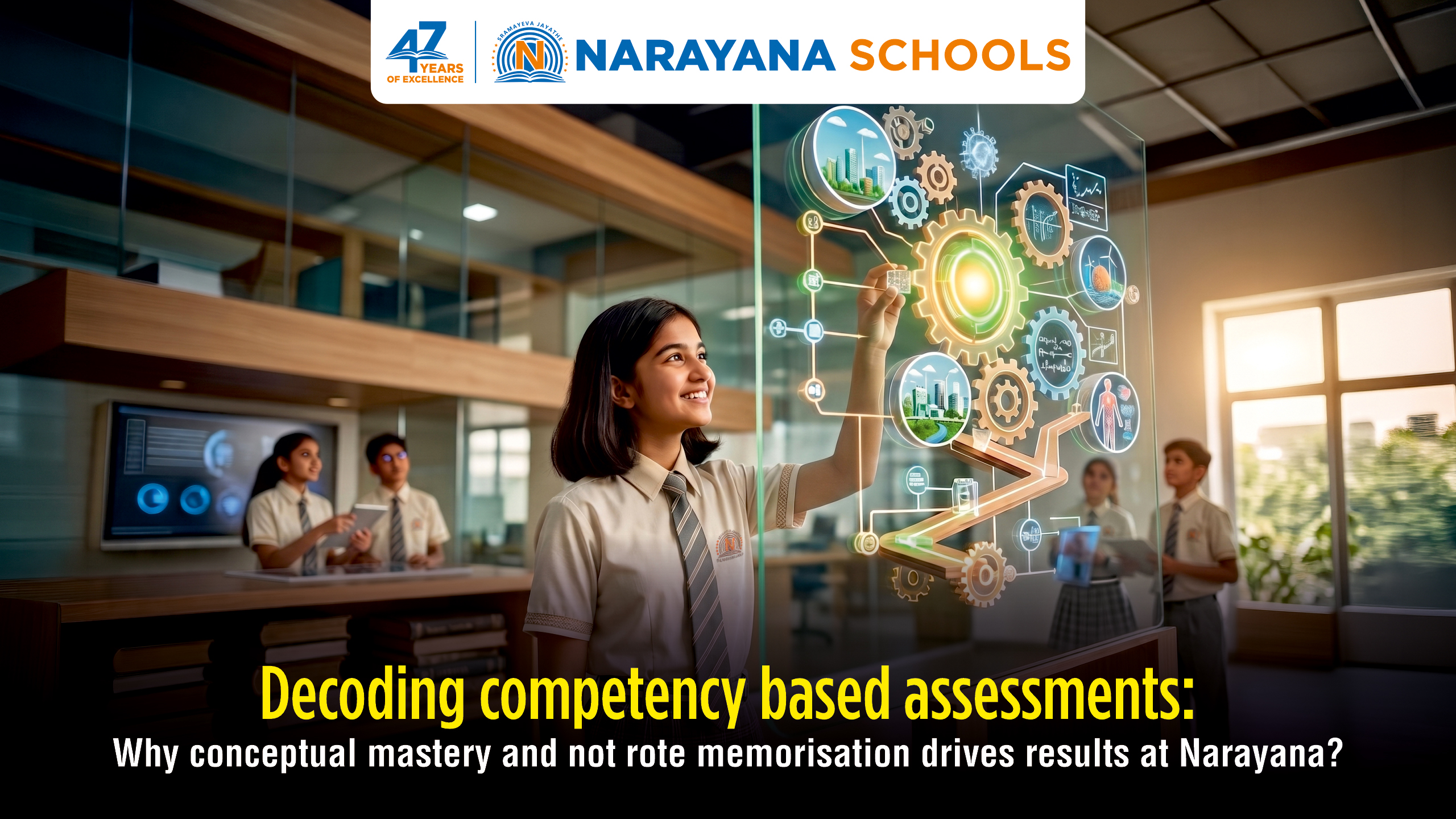
A child comes home, recites an entire chapter word-for-word, yet freezes the moment the same question is phrased differently. Sounds familiar? That single moment explains why Indian education is quietly rewriting its rulebook, moving away from memorisation and toward Competency Based Assessments (CBA) . 1. What exactly is a competency based assessment? A competency based assessment does not check how well a fact is remembered. It checks whether a concept can be used. Instead of ‘Define photosynthesis’, a CBA question asks: ‘Why would a plant kept in a dark room for a week begin to wilt?’ It measures application, analysis and reasoning , not recall alone. It follows Bloom's Taxonomy (a widely used framework created by educational psychologist Benjamin Bloom in 1956 , which ranks thinking skills from simplest to most complex: Remember → Understand → Apply → Analyse → Evaluate → Create). CBA deliberately tests the higher rungs of this ladder and not just the bottom one. Questions are usually case based (a short real-world scenario is given and the child must reason through it; for example, working out why a patient's fever chart shows a certain pattern) or source based (an unfamiliar passage, graph, map or data table is provided on the spot, and the answer has to be worked out from that source rather than recalled from memory). The end goal is a learner who can transfer knowledge to a brand new context, not one who reproduces a memorised paragraph. 2. Who came up with this idea? Competency based thinking is not a sudden Central Board of Secondary Education (CBSE) invention. It has a long and layered history. The roots trace back to the United States in the 1960s , where educational theorist Ralph W. Tyler 's outcomes-based curriculum model first argued that education should be judged by what a learner could do , not what had been taught . B.F. Skinner's behavioural learning research shaped how competencies were broken into small measurable steps. Linguist Noam Chomsky's distinction between ‘competence’ and ‘performance’ was later adapted by education researchers to describe demonstrable skill versus rote recall. Educationalist W. James Popham helped formalise competency-based teacher training in the 1970s , and the approach steadily moved from vocational and teacher training into mainstream schooling worldwide over the following decades. In India, this global idea was reshaped and formally adopted through the National Education Policy (NEP) 2020 and the National Curriculum Framework (NCF) 2023 , with CBSE translating it into board exam reality from 2023 onward. 3. Why did this shift take place? NEP 2020 explicitly called for assessment reform, stating exams must move away from rote testing toward one that promotes analysis, critical thinking, and conceptual clarity. Research by the Organisation for Economic Co-operation and Development (OECD) and National Council of Educational Research and Training (NCERT) has repeatedly shown that conceptual learning improves retention, problem-solving ability and long-term academic success; a direct rebuttal of the ‘mark now, forget later’ outcome of rote learning. India's employability gap : Multiple industry surveys have flagged that a large share of graduates struggles with applied problem-solving despite strong mark sheets, prompting a rethink starting at school level itself. International benchmarking : India's performance in the OECD's Programme for International Student Assessment (PISA) showed that students trained in competency-based systems consistently perform better in real life problem-solving scenarios than those trained purely on recall. The World Economic Forum has separately identified critical thinking, adaptability and analytical reasoning as the core skills the future workforce will need, reinforcing that this is not just an exam-pattern change but preparation for life after school. 4. Why rote memorisation falls short and what the science says instead? The evidence against pure memorisation and for conceptual mastery is not new. It is decades deep and comes from some of the most respected names in learning science. Research by Henry Roediger III and Jeffrey Karpicke highlights the ‘testing effect’, demonstrating that actively recalling information significantly improves long-term retention compared to passive review. Further studies by Karpicke and Blunt , published in Science , reinforce this finding by showing that retrieval practice leads to deeper and more meaningful learning than traditional elaborative methods such as concept mapping (elaborative studying), particularly when learners are required to apply knowledge in new situations. Research from the Harvard Graduate School of Education indicates that memorised information, when it has no conceptual links to build on, is often forgotten within days, which is exactly why a child can "know" a chapter the night before an exam and blank out a week later. Robert Bjork (University of California, Los Angeles) described ‘desirable difficulties’, the idea that learning which feels harder in the moment, such as being questioned on an unfamiliar application, builds deeper and more durable understanding. Doug Rohrer and Kelli Taylor's interleaving studies showed students who practise mixed, varied problems outperform those who drill one type repeatedly, which is exactly why modern exam papers mix question types and contexts. A study published in the Journal of Educational Psychology found that deep conceptual learning measurably improves both retention and the ability to transfer knowledge to new problems, precisely the skill CBA is built to test. Students relying solely on memorisation frequently struggle in competitive exams like JEE and NEET , where application-based questions dominate the paper. 5. Narayana Schools’ approach to competency based learning Narayana Schools has built CBA readiness directly into daily classroom practice, not as an exam-week add-on. CDF (Concepts, Definitions and Formulae) Learning : proprietary, chapter-wise reference workbooks used across Narayana Schools, junior colleges, and coaching centres, condensing core concepts and formulae so students build a strong conceptual base before attempting applied, competency-style questions. Integrated Curriculum : draws the strongest elements of Central Board of Secondary Education (CBSE), Indian Certificate of Secondary Education (ICSE), International General Certificate of Secondary Education (IGCSE) and International Baccalaureate (IB) into one coherent framework, that ensures depth, global perspective and conceptual clarity. The 4C Framework : Common Teaching, Common Micro Schedule, Common Examination and Common Analysis standardises how concepts are taught and assessed across every branch nationwide. Experiential and activity-based learning : Introduced from the eChamps (pre-primary) stage onward, where concepts are first encountered through hands-on activity rather than a textbook definition. Age-appropriate and stage-wise design : eKidz (Nursery to UKG/PP2), eChamps (Classes 1-5) and eTechno (Classes 6-10) programmes map directly onto the NEP 2020 stages (Foundational, Preparatory, Middle, Secondary), so the level of conceptual demand and competency expectation genuinely matches what a child at that age can handle. ASTRA (AI assistant) with nLearn platform : deliver adaptive practice, secure online testing, doubt-resolution, and real-time analytics, tracking competency gaps at the level of an individual student, not just a class average. Personalised error-analysis : After every weekly test, unit test, or common examination, performance data is broken down to pinpoint exactly which competency, not just which chapter, needs reinforcement. Learner Support Programme and Disha wellness initiative : address academic gaps and exam-related stress side by side, recognising that a child adjusting to a more application-heavy assessment style needs emotional steadiness as much as academic support. Structured Olympiad, JEE, NEET foundation pathways : extend the same conceptual-mastery approach from school-level CBA straight into competitive-exam preparation, so the skills built early do not need to be relearned later. Marks secured through memorisation often diminish when questions are reframed or applied in unfamiliar contexts. In contrast, marks earned through deep understanding remain relevant across board examinations, competitive tests and higher education, extending far beyond the classroom. At Narayana Schools, this philosophy is reinforced through competency based assessments , where the focus shifts from recall to application, analysis and problem-solving. A strong foundation built on conceptual clarity transforms learning into a meaningful and lasting experience. Guided by structured pedagogy and a scientific approach, emphasis is placed on mastering concepts rather than rote learning. This approach empowers learners to think critically, adapt confidently and approach challenges with creativity and resilience. It nurtures not only academic excellence but also the ability to apply knowledge in real-world situations. We believe every step of learning is designed to help transform dreams and aspirations into achievements, because at Narayana Schools, your dreams are our dreams .
 31 Jul 2026
 12
Guru Purnima 2026 falls on 29 July , marking a timeless tribute to teachers, mentors and guides. Rooted in tradition yet evolving with modern education, the occasion highlights the enduring significance of the guru in Indian education system . 1. The origin of Guru Purnima Guru Purnima traces back to ancient India and is dedicated to Maharishi Ved Vyasa , regarded as one of the greatest gurus [ guru ( Sanskrit ): teacher/guide/master] and the compiler of the Vedas and author of the Mahabharata . The festival is observed on the full moon day ( Purnima ) in the Hindu month of Ashadha , which corresponds to 29 July in 2026 . It symbolises gratitude towards teachers who illuminate the path of knowledge, forming the foundation of value-based education in India . Historical texts and cultural studies highlight that this tradition began as a way for disciples to honour spiritual and academic mentors. 2. From traditional guru to modern mentor Ancient gurukuls focussed on life skills, discipline and moral values alongside learning. In 2026 , the role has evolved into a dynamic teacher mentor role in education , balancing academic excellence with personal development. Research from the Harvard Graduate School of Education indicates that mentorship-driven learning significantly enhances student motivation and engagement. 3. Narayana Schools’ approach Narayana Schools upholds the essence of the guru while redefining modern teaching methods in India . Its pedagogy is aligned with the National Education Policy (NEP 2020) and the National Curriculum Framework (NCF 2023), ensuring competency-based, experiential and learner-centric education. The NCF’s Panchpadi approach Aditi ( introduction) , Bodh ( conceptual understanding) , Abhyas ( practice) , Prayog ( application) and Prasar ( expansion) structures learning from introduction to real-world application and knowledge sharing. A differentiated subject-wise pedagogy combined with an integrated curriculum drawing from Central Board of Secondary Education (CBSE), Indian Certificate of Secondary Education (ICSE), International General Certificate of Secondary Education (IGCSE) and International Baccalaureate (IB) frameworks ensures depth, global perspective and conceptual clarity. Teaching methodologies include flipped classrooms, project-based learning, art-integrated learning and technology-enabled instruction, fostering 21st century skills in students such as critical thinking and collaboration. Continuous teacher training, personalised learner support and structured parent-teacher engagement strengthen the learning ecosystem. Studies by the Organisation for Economic Co-operation and Development (OECD) confirm that structured and guided learning ecosystems improve conceptual clarity and retention. 4. Narayana Schools’ tech-enabled teaching with a human touch At Narayana Schools, digital boards, smart classrooms and structured online classes are thoughtfully integrated to enrich everyday learning experiences. Age-appropriate platforms such as the nLearn Kids app for early learners and the nLearn app for higher classes provide structured, curriculum-aligned content, interactive practice and continuous learning support. The nLearn app is further strengthened by inbuilt AI assistance through Advanced Student Tutoring & Resource Assistant ( ASTRA) , enabling instant doubt resolution and personalised academic guidance. This approach reflects Narayana’s vision of technology in education in India , where innovation enhances learning while teachers remain at the heart of guidance, mentorship and motivation. Blended learning models combine classroom instruction with digital tools, ensuring continuity, flexibility and deeper conceptual understanding. By balancing advanced technology with strong teacher-student connections, Narayana creates an engaging ecosystem that improves retention, participation and overall academic outcomes. 5. Emotional guidance and holistic development The modern guru supports student mental health and well-being alongside academic growth. At Narayana Schools, this is strengthened through the DISHA mental well-being programme , which focuses on counselling, emotional support, stress management and building resilience among students. Research published in the Journal of School Psychology demonstrates that emotionally supportive environments enhance focus and reduce stress. Structured mentoring and regular interactions help identify concerns early and provide timely guidance. This approach aligns with holistic student development in schools , preparing learners for real-world challenges. 6. Reinforcing Values in a Competitive World Guru Purnima reinforces respect, discipline and lifelong learning. Narayana emphasises value-based education in India , ensuring that academic success is complemented by strong character. Studies confirm that value-driven environments build ethical reasoning and leadership qualities. 7. Preparing Students for the Future The evolving guru nurtures 21st century skills in students , including critical thinking, adaptability and collaboration. United Nations Educational, Scientific and Cultural Organization (UNESCO) reports underline the importance of these competencies for future readiness in a rapidly changing world. Guru Purnima is not merely a tradition but a living philosophy that continues to shape education. By honouring its roots while embracing innovation, we exemplify the true evolution of the guru , ensuring that mentorship in 2026 remains meaningful, relevant and transformative for every learner to fulfil their dreams, because at Narayana Schools, your dreams are our dreams .
28 Jul 2026 14
Observed on 27 July , Dr. A.P.J. Abdul Kalam’s death anniversary honours the legacy of India’s former President , widely known as the Missile Man of India . His life journey continues to serve as a powerful example of perseverance, discipline and vision. For families, this day offers a meaningful opportunity to nurture value-based education for students rooted in real life inspiration. 1. Early life and background Born on 15th October 1931 in Rameswaram , Tamil Nadu , into a modest family, Avul Pakir Jainulabdeen Abdul Kalam’s early life reflects resilience and determination. Took up work as a newspaper distributor during childhood to support the household while continuing education. Progressed to become a scientist with the Defence Research and Development Organisation (DRDO) and the Indian Space Research Organisation (ISRO), later serving as India’s 11th President (2002–2007). Studies in developmental psychology indicate that exposure to such journeys strengthens growth mindset in children and reinforces the value of consistent effort. 2. Education Completed schooling in Rameswaram , showing early interest in mathematics and science. Graduated in Physics from St. Joseph’s College , Tiruchirappalli . Pursued Aerospace Engineering from the Madras Institute of Technology (MIT), where his interest in aeronautics deepened. Research in education highlights that strong foundational learning supports analytical thinking and problem-solving skills in students , reflecting Dr. Kalam’s academic path. 3. Contributions as the “Missile Man of India” Led the Integrated Guided Missile Development Programme (IGMDP) , resulting in the development of Agni and Prithvi missiles. Played a key role in the Pokhran II nuclear tests (1998) , strengthening India’s strategic capabilities. Educational research suggests that discussing such achievements builds scientific awareness for students and highlights the importance of persistence behind success. 4. The power of dreams and scientific thinking Dr. Kalam emphasised dreaming big and combining vision with action. Cognitive science research shows that aspirational thinking enhances academic motivation and long-term achievement . Encouraging scientific temperament in students aligns with his belief in innovation-led development. 5. Values that build character and discipline His life symbolised humility, integrity and lifelong learning. Research in value-based education highlights that role models improve emotional intelligence and ethical decision-making . Learning from Dr. A.P.J. Abdul Kalam’s inspirational life lessons supports resilience and responsibility. 6. Practical ways to observe the day Encouraging reading of books such as Wings of Fire to deepen understanding. Participation in Dr. A.P.J. Abdul Kalam death anniversary activities like speeches, quizzes or projects. Promoting curiosity-driven discussions around science, innovation and national development. Reinforcing structured habits like reading, questioning and disciplined routines. 7. Linking inspiration with academic growth Research in the Journal of Educational Psychology shows that inspiration-led learning improves engagement and retention. Understanding the importance of role models in education helps connect theory with real-life success. Application based learning reflects Dr. Kalam’s emphasis on knowledge beyond memorisation. 8. Building future ready individuals United Nations Educational, Scientific and Cultural Organization (UNESCO) reports highlight that value-driven education fosters critical thinking, creativity and adaptability . Observing Dr. A.P.J. Abdul Kalam remembrance day strengthens patriotism and lifelong learning habits. Dr. A.P.J. Abdul Kalam’s life remains a timeless lesson in dedication, simplicity and vision. Embedding these principles into everyday learning nurtures not only academic excellence but also strong character, ensuring that his legacy continues to guide future generations.
21 Jul 2026 14
Every year on 26th July , Kargil Vijay Diwas is observed across India to commemorate the nation’s victory in the Kargil War 1999 . This day is not only a tribute to the bravery of the Indian Armed Forces but also an opportunity for families to instil values of resilience, patriotism and responsibility in children. Research in child development highlights that early exposure to real-life stories of courage significantly shapes moral understanding and emotional strength. 1. Understanding the significance of Kargil Vijay Diwas Kargil Vijay Diwas in India marks the successful operation to reclaim Indian territories from infiltrators in the Kargil sector of Jammu and Kashmir . Military history studies emphasise that the conflict showcased extraordinary strategic planning and high-altitude warfare capabilities. It remains a defining example of national security awareness for students . 2. Stories of courage that inspire young minds The war brought forward inspiring accounts of bravery from soldiers who fought under extreme conditions. Psychological research suggests that storytelling about real heroes enhances character building in children and strengthens empathy. Learning about such sacrifices nurtures respect for armed forces and a deeper sense of gratitude. 3. Why teaching patriotism matters early? Studies in social psychology show that children develop civic awareness through consistent exposure to national values. Encouraging discussions on importance of patriotism in education helps children understand duty, unity and responsibility. Schools and homes play a crucial role in shaping informed and responsible citizens. 4. Practical ways families can observe the day Encouraging participation in school activities like essay writing, speeches or poster-making on the significance of Kargil Vijay Diwas . Watching documentaries or reading age-appropriate books about the war to build awareness. Engaging in conversations about courage, discipline and service to the nation. Visiting local memorials or participating in community events where possible. 5. Linking history with holistic development Educational research highlights that integrating historical events into daily learning improves retention and contextual understanding. Discussions around Indian military history enhance analytical thinking and awareness of real-world challenges. Such learning also supports emotional resilience by showcasing perseverance in adversity. 6. Building values beyond the classroom Teaching children about sacrifice and unity fosters long-term values such as integrity and respect. Studies in value-based education indicate that children exposed to national history demonstrate stronger ethical decision-making skills. Observing Kargil Vijay Diwas related activities for students helps bridge the gap between academic learning and real-life values. Honouring this day goes beyond remembrance; it becomes a meaningful way to nurture informed, empathetic and responsible individuals. By integrating the lessons of courage and sacrifice into everyday conversations, families contribute to shaping a generation that values both knowledge and nationhood.
18 Jul 2026 12
Rainy days often disrupt routines, but with the right guidance, students can stay energised, healthy and academically focussed even during the monsoon season. Parents play a crucial role in ensuring that children beat the monsoon slump by combining practical measures with scientifically backed strategies. What is the monsoon slump and why it affects focus? The monsoon slump refers to the dip in energy, motivation and concentration that students often experience during prolonged rainy spells. This slump is not just psychological, it has physiological and environmental roots too. Humidity and dampness increase fatigue and reduce concentration. Studies from the Indian Journal of Public Health highlight higher absenteeism among school children during monsoon due to infections and lethargy. Reduced sunlight lowers Vitamin D levels, which research from Harvard Medical School links to decreased cognitive performance and mood dips. Interrupted routines due to waterlogging and travel delays add stress, impacting study schedules and consistency. Seasonal illnesses such as flu, dengue and stomach infections drain energy, making academic focus harder to sustain. Understanding this slump helps parents proactively counter its effects with structured routines, nutrition and safe environments. Tips for students to stay focussed on rainy days Structured routine : Fixed timetables for study, meals and rest reduce stress and improve concentration. Optimised study environment : Adequate lighting and ventilation prevent mould growth and maintain focus. Balanced nutrition : Vitamin C, Omega-3 and protein-rich foods boost immunity and memory. Hydration habits : Regular boiled or filtered water intake prevents dehydration and waterborne diseases. Indoor physical activity : Yoga or skipping ropes stimulate dopamine and serotonin, improving motivation. Mindfulness practices : Meditation or breathing exercises enhance attention and emotional regulation. Creative engagement : Hobbies like painting or music uplift mood and sharpen problem-solving skills. Protective measures : Waterproof supplies, anti-skid footwear and mosquito repellents safeguard health. Parent action checklist Daily routine monitoring Nutritional planning Health vigilance Safe environment Emergency preparedness Student friendly daily planner Morning : Light exercise or yoga, protein-rich breakfast. Midday : Focussed study session with hydration breaks. Afternoon : Creative hobby or mindfulness practice. Evening : Revision, family time, balanced dinner. Night : Early bedtime for rest and immunity support. Health and safety precautions Mosquito control : Prevent dengue , chikungunya and malaria by using repellents, insecticide-treated nets and keeping surroundings clean to eliminate stagnant water where mosquitoes breed. Hygiene habits : Regular handwashing and showering after rain exposure reduce fungal, bacterial and parasitic infections. Clean clothing and footwear also help prevent skin-related issues. Early medical attention : Timely consultation for fever, chills, stomach upset or persistent cough prevents complications. Malaria, in particular, can escalate quickly if untreated, so early diagnosis through blood tests is critical. The monsoon slump can be managed with balanced nutrition , structured routines and safe environments . Parents can help children thrive academically and emotionally even on the rainiest days by helping them develop small consistent habits like hydration, exercise and mindfulness, that makes a significant difference in sustaining concentration and energy.
09 Jul 2026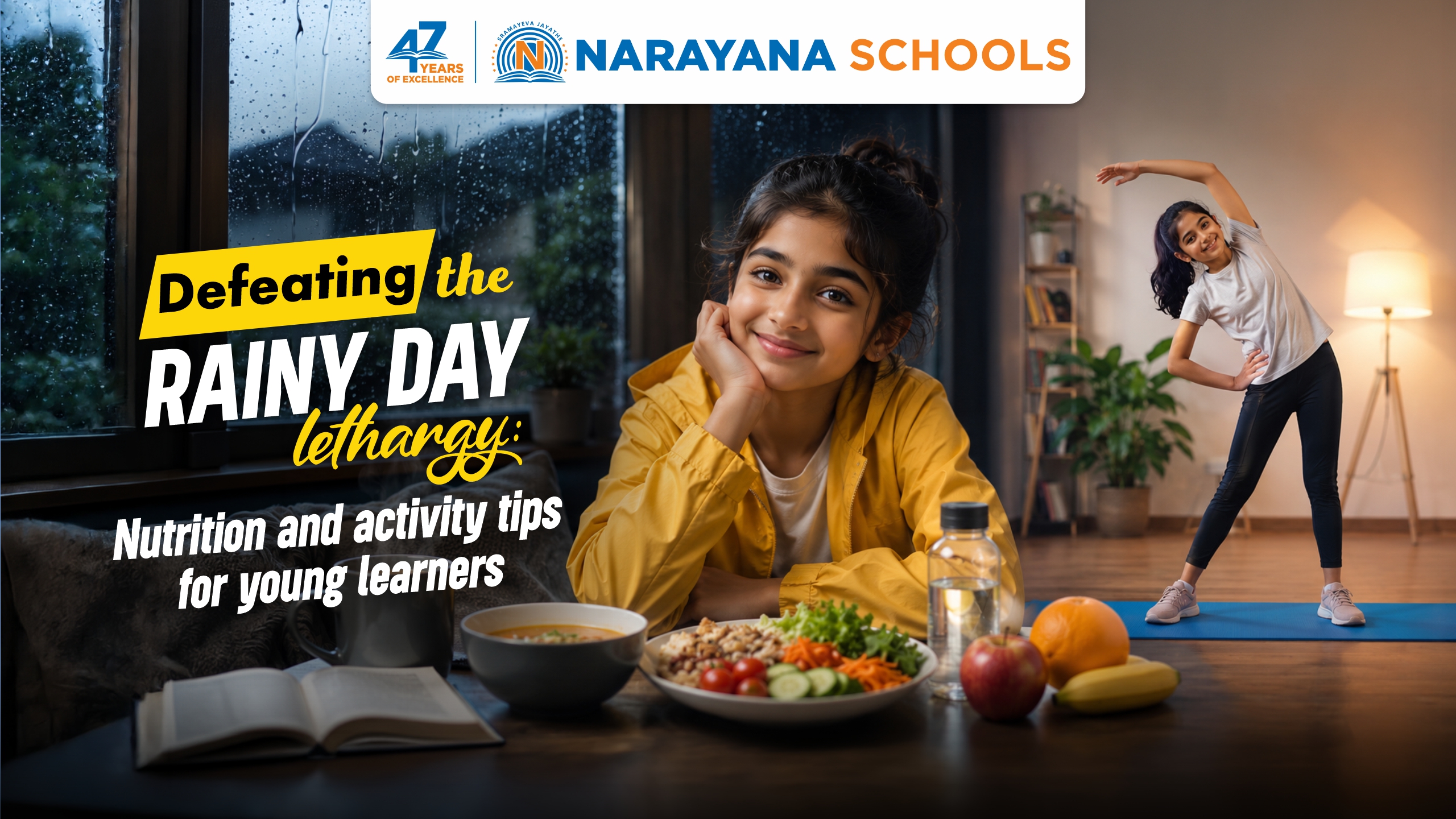 14
Monsoon brings relief from heat but often introduces sluggishness, low energy and reduced physical activity among children. This seasonal dip is commonly known as rainy day lethargy . For parents in India, managing children’s nutrition during monsoon and maintaining activity levels becomes essential for sustained learning and well-being. Science behind monsoon fatigue Reduced sunlight exposure during monsoon months, lowers vitamin D synthesis , which is closely linked to weakened immunity and low mood, as highlighted by the National Institutes of Health (NIH). Diminished sunlight also affects serotonin levels , a neurotransmitter responsible for regulating mood and energy, leading to symptoms similar to seasonal lethargy, as per research by Harvard Medical School . Increased humidity can slow down the body’s ability to regulate temperature efficiently, resulting in physical fatigue and reduced alertness , as noted in environmental health studies. Fluctuations in weather patterns can disrupt circadian rhythms (sleep-wake cycles), impacting sleep quality and daytime concentration, according to studies published in the Journal of Clinical Sleep Medicine . High moisture levels create an environment conducive to infections, placing additional strain on the immune system and contributing to overall tiredness, as reported by the World Health Organization (WHO). Research in behavioural science indicates that maintaining structured daily routines helps stabilise biological rhythms and improves energy levels, even during low-light and high-humidity conditions. Focus on immunity boosting nutrition A balanced monsoon diet for children plays a critical role in maintaining energy, immunity and cognitive function. Seasonal fruits like pomegranate and apples are rich in antioxidants such as polyphenols and vitamin C , which help combat oxidative stress and strengthen immunity, as highlighted in studies published in the Journal of Nutrition . Turmeric (curcumin), ginger and garlic possess strong anti-inflammatory and antimicrobial properties. Research published in Advances in Experimental Medicine and Biology highlights curcumin’s role in enhancing immune response. Protein rich foods such as pulses, eggs and dairy support growth, muscle repair and antibody production. The Indian Council of Medical Research (ICMR) emphasises adequate protein intake for children’s immune resilience. Warm and freshly cooked meals reduce the risk of microbial contamination, which tends to increase during humid conditions. WHO guidelines recommend avoiding stale and street food during monsoon. Probiotic rich foods like curd (yoghurt) help maintain gut health. Scientific research in Nature Reviews Gastroenterology & Hepatology confirms that a healthy gut microbiome is directly linked to stronger immunity. Vitamin C rich foods such as citrus fruits, amla and guava enhance iron absorption and support immune defence, as highlighted by the National Institutes of Health (NIH). Iron rich foods like green leafy vegetables and jaggery prevent fatigue and improve oxygen transport in the body, reducing lethargy. Zinc-containing foods such as nuts, seeds and whole grains support immune cell function, as noted in studies published in Nutrients Journal . Adequate hydration through warm fluids , soups and herbal drinks supports digestion and nutrient absorption, while also helping regulate body temperature during humid weather. Encourage indoor physical activity Limited outdoor play during monsoon often leads to reduced movement, directly impacting energy levels and focus. Incorporating indoor physical activities for children during monsoon helps maintain overall fitness and mental alertness. Yoga, stretching and dance sessions improve flexibility, balance and blood circulation while also reducing stress hormones like cortisol. Skipping, basic strength exercises and playful fitness games help build muscular strength, coordination and cardiovascular endurance. Short, structured movement breaks between study sessions enhance focus and prevent cognitive fatigue. Research in the Journal of School Health shows that brief physical activity improves classroom attention and academic performance. Regular physical activity stimulates the release of endorphins and dopamine , which elevate mood and reduce lethargy, as supported by studies from Harvard Medical School . Exercise increases blood flow to the brain , improving memory, concentration and executive functioning, according to research published in Frontiers in Psychology . Indoor activities help regulate energy balance and metabolism , preventing weight gain often associated with sedentary behaviour during rainy seasons. WHO recommends at least 60 minutes of moderate physical activity daily for children to support healthy growth and immune function. Movement based activities also strengthen the immune system by improving circulation of immune cells, reducing susceptibility to seasonal infections. Incorporating fun family based activities encourages consistency and helps build long-term healthy habits . Maintain sleep and screen balance Cloudy weather often disrupts sleep patterns, which can lead to irregular routines and reduced energy levels. Therefore, maintaining consistent sleep schedules becomes essential for sustaining children’s focus and overall well-being. Fixed sleep and wake schedules help regulate the circadian rhythm, even with reduced sunlight, improving overall alertness and mood. Limiting screen exposure before bedtime is crucial, as blue light suppresses melatonin production, delaying sleep onset. Studies from Harvard Medical School confirm its impact on adolescent sleep cycles. Exposure to natural daylight (even on cloudy days) supports vitamin D synthesis and helps stabilise biological clocks, as highlighted by research in Sleep Health Journal . Adequate sleep (8–10 hours for school going children) is linked to better memory consolidation, emotional regulation and academic performance, according to the American Academy of Sleep Medicine . Poor sleep hygiene is associated with weakened immunity and increased fatigue , making children more vulnerable to seasonal illnesses during monsoon months. Support mental well-being and build healthy daily habits Rainy days can influence children’s mood, behaviour and overall well-being. Combining emotional support with practical daily habits helps maintain stability, resilience and health during the monsoon: Engaging in creative activities such as reading, art, music or storytelling supports emotional expression and reduces stress. Behavioural research shows structured engagement improves resilience and lowers irritability. Maintaining a consistent daily routine for study, play and rest provides psychological stability and reduces mood fluctuations caused by gloomy weather. Ensuring proper ventilation indoors helps prevent dampness, which is linked to respiratory issues and discomfort, as highlighted by environmental health studies. Promoting strong hygiene practices such as regular handwashing and dry clothing reduces the risk of fungal and bacterial infections common during monsoon. Limiting junk and fried foods helps prevent sluggishness and digestive issues, as high-fat foods can slow metabolism and impact energy levels. Encouraging family interaction and communication supports emotional security and helps children cope better with seasonal changes. Creating a balanced environment of activity and relaxation ensures both mental stimulation and adequate recovery, supporting overall well-being. Managing monsoon health for school children requires a balanced approach combining nutrition, activity and routine. By fostering healthy habits, families can transform rainy days into opportunities for growth, ensuring children remain active, focused and resilient throughout the season.
06 Jul 2026

