

Explore stories and insights
Loading...



 12
A photograph can capture more than a moment. It can reveal how a child notices details, interprets the world and tells a story. Celebrated on 19 August , World Photography Day commemorates the public announcement of Louis Daguerre’s daguerreotype process (an early photographic technique that captured images on polished, silver-coated metal plates) in France in 1839 , a milestone that transformed how people documented and communicated experiences. For Indian parents, the occasion offers a timely reminder that creative learning for students deserves space alongside academic achievement. A camera can become a learning tool Photography encourages children to observe light, colour, patterns, expressions and perspective rather than simply look at them. Research published in the Journal of Media Literacy Education found that photography-based learning can support visual literacy , curiosity, problem-solving, independence and confidence in young children. A photography assignment can therefore become an exercise in observation, decision-making and communication. Creative activities build skills that marks cannot measure Creative activities give children opportunities to experiment without every activity being judged through examination scores. The Organisation for Economic Co-operation and Development (OECD) reports that arts education can contribute to creativity, motivation, self-confidence, communication and cooperation, alongside subject-based skills. The OECD’s Programme for International Student Assessment (PISA) 2022 creative-thinking findings also show that academic excellence is not a prerequisite for creative thinking. Photography connects creativity with critical thinking Choosing a subject involves asking: What matters here? What should be included? Which angle tells the story best? Reviewing and explaining a photograph develops critical thinking, visual literacy and communication skills . A 2020 review of 31 studies on photography with school-age learners found that photographic methods can support participation, representation and children’s agency. Make creativity practical at home Start a weekly photo storytelling challenge around themes such as daily life or India through my eyes, nature or everyday acts of kindness. Encourage children to photograph ordinary objects from unusual perspectives. Ask for a short explanation of the story behind each image. Discuss privacy, consent and responsible sharing before photographs are posted online. A phone camera is enough; expensive equipment is not the objective. Let creative interests grow alongside academics The goal is not to choose between marks and creativity. It is to create a balanced learning environment where academic excellence and creative skills strengthen one another. Photography can nurture observation, imagination and expression while giving children a space to discover interests that may eventually become hobbies, portfolios or even careers. This World Photography Day , a camera can become more than a device for taking pictures. It can become a lens through which children learn to notice, question, create and communicate. As education is not only about preparing children to answer questions but also about helping them see possibilities worth exploring.
 14 Aug 2026
 11
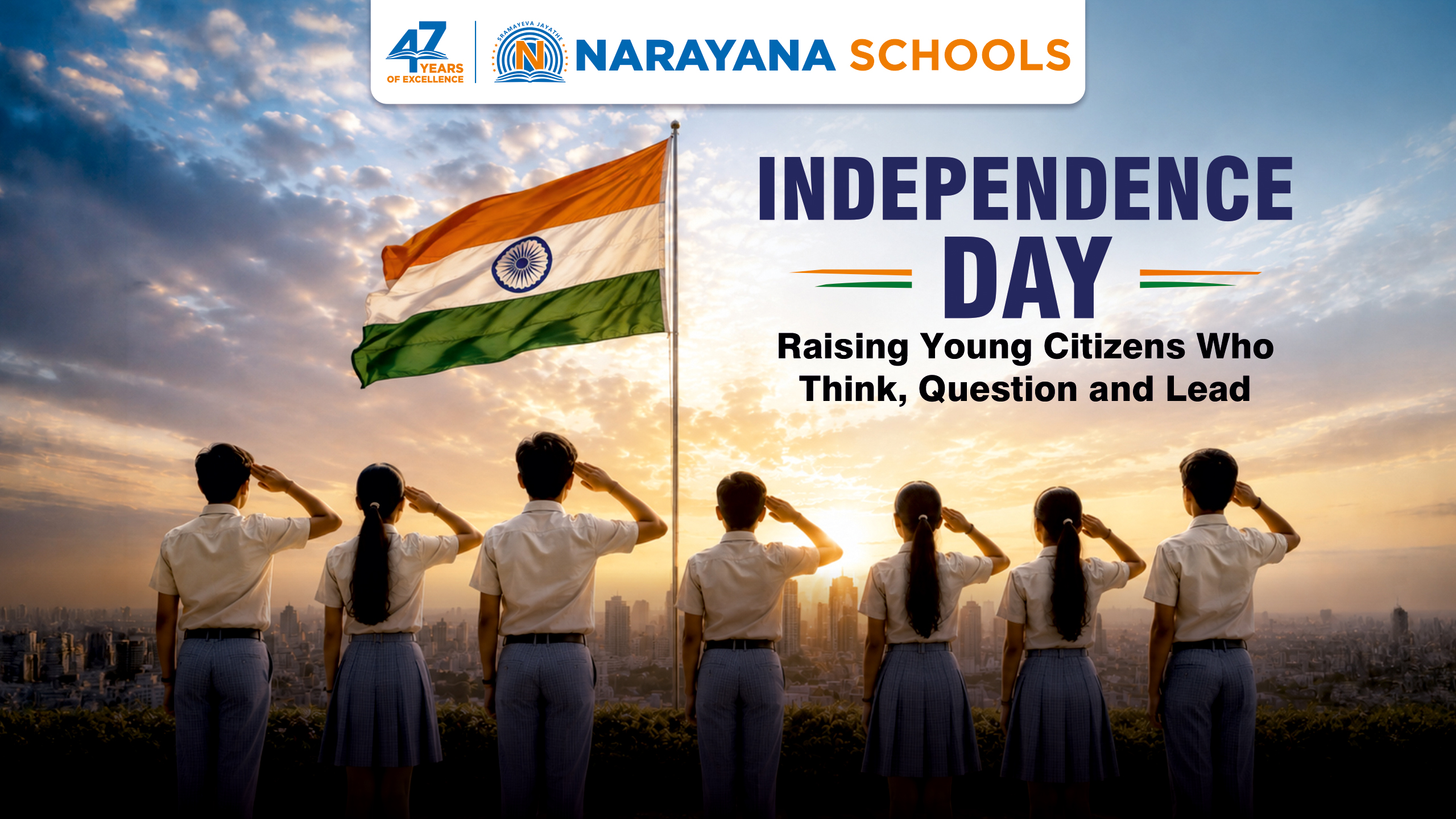
Every year on 15 August , India celebrates Independence Day , marking the country's freedom from British rule in 1947 . From the tricolour unfurling to patriotic songs and school assemblies, the day carries memories of a long freedom struggle shaped by courage, sacrifice, debate and an unwavering belief in a better India. But what should Independence Day for children mean beyond knowing dates, leaders and patriotic slogans? It can become a powerful opportunity to raise young citizens who understand freedom, question responsibly, think critically and have the confidence to contribute to society. UNESCO’s Global Citizenship Education ( GCED ) similarly emphasises critical thinking, empathy, collaboration, participation and responsible action as essential qualities for young citizens. Turn history into a living lesson Move beyond memorising dates, names and events. Discuss why freedom, democracy, equality and fundamental rights matter in everyday life. Connect India’s independence with contemporary issues such as environmental responsibility, inclusion and community welfare. Such conversations make Independence Day activities for students more meaningful than a ceremonial celebration. Shift to democratic household engagement A 2025 review on parenting dimensions published in Premier Science confirms that democratic environments cultivate higher cognitive flexibility and emotional regulation compared to authoritarian setups. Rote learning and strict compliance often stifle natural curiosity. Establish open family forums. Replace absolute demands with open-ended discussions, encouraging children to express views without fear of judgment. Allow children to explore activities and hobbies of their choice , whether sports, music, art, reading, coding or other interests, rather than prescribing every pursuit. Give age-appropriate freedom to choose and experiment , while offering guidance on time, safety and priorities. This helps children develop autonomy, decision-making skills and a stronger sense of ownership over their interests. Implement inquiry-based learning at home According to cognitive research by the Reboot Foundation , children who practice distinguishing between opinions, arguments, and verifiable evidence develop superior problem-solving capabilities . Accepting information at face value leads to gullibility. Whenever news or storybook events are discussed, prompt children with probing questions: ‘What evidence supports this claim?’ or ‘What alternative solutions exist?’ Build digital literacy and source evaluation Research in Developmental Psychology demonstrates that children as young as four evaluate the credibility of information sources when guided systematically. Digital exposure subjects students to misinformation and biased algorithms. Practice fact-checking exercises together. Guide children to verify online claims using multi-source cross-referencing before accepting statements as truth. Build empathy alongside patriotism Responsible citizenship involves respecting people with different languages, cultures, abilities, beliefs and perspectives. UNESCO’s framework places empathy, respect for diversity, fairness and social responsibility at the heart of citizenship education. Simple actions such as helping others, reducing waste, respecting public spaces and listening to different viewpoints turn values into habits. Let children act on what they learn A neighbourhood cleanliness drive, tree-care activity, water-saving challenge, book donation or awareness campaign can transform civic education for children into action. UNESCO notes that participation and practical engagement can strengthen learners’ awareness, agency and self-efficacy around global issues. The objective is not to create perfect citizens, but curious, compassionate and responsible young people who understand that small actions can influence larger communities. Connect freedom with future readiness The India of tomorrow needs more than academically successful students. It needs future-ready citizens who can evaluate information, collaborate across differences, solve problems ethically and participate constructively in society. UNESCO’s citizenship education framework similarly connects knowledge with cognitive, social-emotional and behavioural skills. This Independence Day, the most meaningful lesson may therefore be simple: freedom is not only something inherited from history; it is a responsibility carried forward through every thoughtful question, courageous decision and compassionate action. Raising children who think, question and lead today means helping shape a more responsible India tomorrow.
13 Aug 2026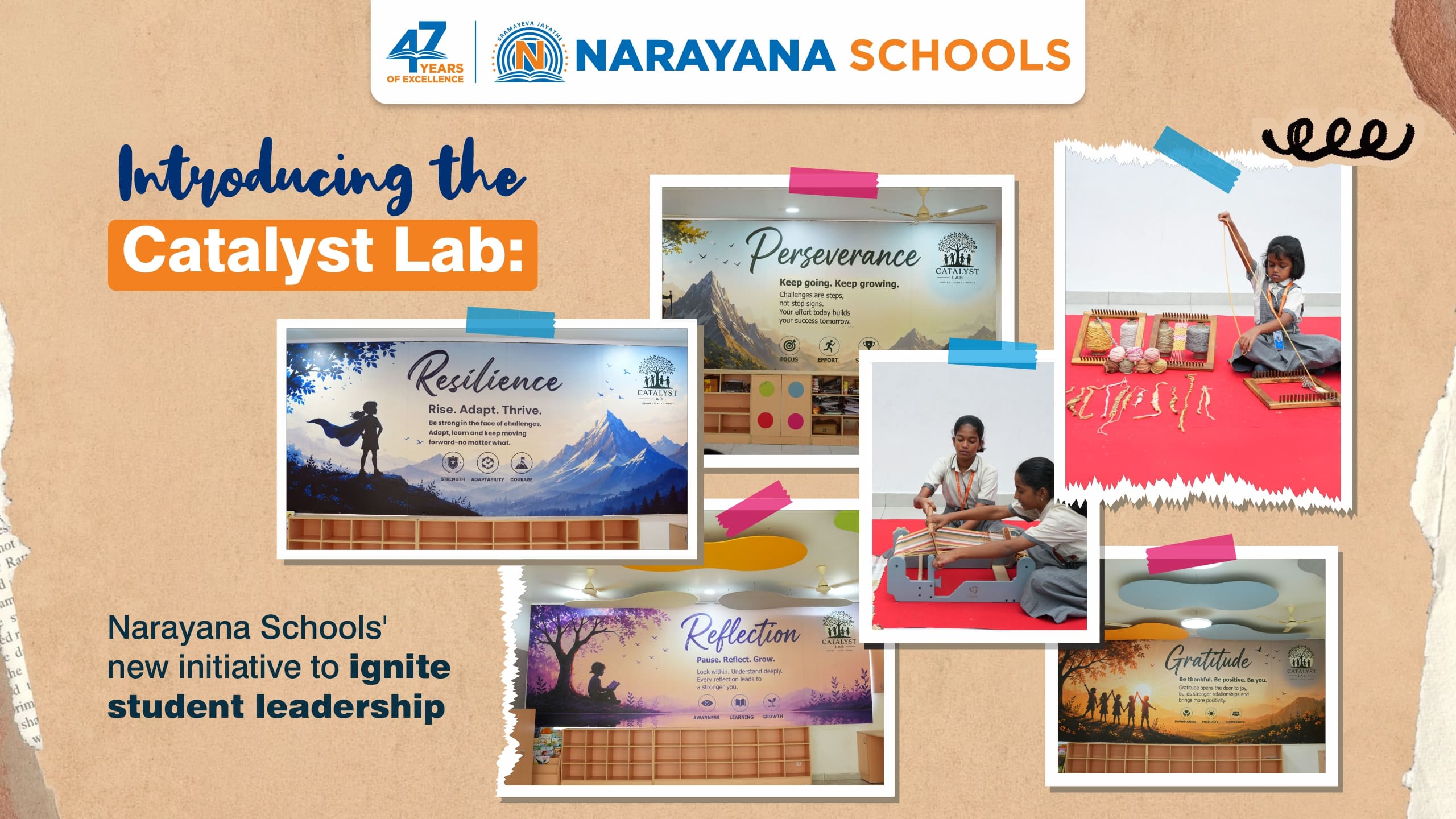 13
A child can top the class in maths and still crumble at the first go in the outside world. That gap between academic scores and real world grit is the quiet worry that many parents and students ignore. In this era academic excellence alone is not enough. Developing leadership, resilience and emotional intelligence has become extremely essential. Report cards measure marks every term but nothing has ever measured confidence, resilience or empathy the same way. Narayana Schools' new Catalyst Lab was built to close exactly that gap. What is the Catalyst Club? The Catalyst Club initiative by Narayana Schools is designed to nurture leadership, collaboration and self-awareness through experiential learning. It focuses on structured engagement , helping students gradually build leadership skills in schools through guided activities and reflection. Open to students from Grades 4 to 12 , the programme provides a safe, inspiring and engaging environment for growth. The learning experience is built around four key transformational zones: Resilience - managing stress and adapting to challenges Perseverance - building determination and goal-setting habits Reflection - encouraging mindfulness and self-awareness Gratitude - fostering positivity and emotional balance Through immersive, activity-based learning , students: Learn to manage stress effectively Develop confidence in overcoming challenges Set meaningful academic and personal goals Cultivate a growth mindset Practise mindfulness and self-reflection The programme also strengthens essential life skills such as: Emotional intelligence in children Leadership and teamwork Self-awareness and decision-making Character, courage and confidence It encourages students to envision aspirations and work steadily towards achieving their full potential. Research by the Harvard Graduate School of Education highlights that experiential learning programmes significantly improve student confidence, engagement and decision-making abilities. Moving beyond academics to holistic development Inspired by the Catalyst Lab’s focus on holistic student development , the initiative integrates emotional well-being, communication and problem-solving. Studies in child psychology indicate that structured self-discovery activities enhance emotional intelligence in children and long-term resilience. This approach ensures students grow not only academically but also socially and emotionally. Experiential learning that builds real world skills Interactive activities, collaborative projects and guided reflection form the core of this initiative. Research published by the Organisation for Economic Co-operation and Development (OECD) highlights that experiential learning in education improves adaptability and critical thinking. Students learn to lead, take initiative and solve problems, skills essential for future success. Creating future ready learners The Catalyst Club aligns with the growing emphasis on 21st century skills for students , including creativity, teamwork and leadership. Exposure to structured mentorship builds accountability and self-confidence from an early stage. Such programmes prepare students to navigate real-world challenges with clarity and purpose. The first of its kind the Catalyst Lab (Mindset Development and Wellbeing Lab) , is now established at Narayana Schools’ Vadavalli Campus in Coimbatore. Building on this vision of holistic education, we aim to introduce more such labs across campuses to nurture confident, compassionate and future ready individuals. The Catalyst Club represents a powerful shift towards nurturing thinkers, leaders and responsible individuals through structured, experiential learning. It reflects our belief that true education lies in shaping character alongside competence, enabling students to grow with confidence, purpose and vision to fulfil their dreams and aspiration, because at Narayana Schools, your dreams are our dreams .
10 Aug 2026 10
Mid-term often brings a surge of pressure, making exam preparation a delicate balance between performance and well-being. Research in educational psychology consistently shows that sustained academic success depends not on longer study hours, but on smarter, structured approaches that protect mental health. Guide for parents to support stress-free learning and maintain mid-term momentum . Prioritise structured study over long hours: Cognitive science highlights the effectiveness of spaced repetition over cramming. Studies by Cepeda et al. ( 2006 ) confirm that distributed learning improves long-term retention significantly. Encouraging short, focused study sessions with planned breaks ensures better recall and prevents fatigue. Embrace active recall techniques: The ‘testing effect’, demonstrated by Roediger and Karpicke , shows that active recall strengthens memory far more than passive revision. Practice papers, self-quizzing and oral revision help children retain concepts deeply while building exam confidence. Balance academics with emotional well-being: The Journal of School Psychology notes that emotionally supportive environments reduce anxiety and improve concentration. Open communication, realistic expectations, and reassurance play a crucial role in maintaining student mental health during exams. Focus on conceptual clarity and not rote learning: Competency-based education frameworks, aligned with NEP 2020 , emphasise conceptual understanding and problem-solving. When children understand the “why” behind concepts, they adapt better to application-based questions and experience less exam stress. Maintain healthy routines: Sleep, nutrition, and physical activity are directly linked to cognitive performance. The American Academy of Sleep Medicine recommends 8–10 hours of sleep for school aged children to support memory consolidation and focus. A consistent routine ensures sustained academic performance . Use technology mindfully: Digital tools can enhance personalised learning when used effectively. Adaptive platforms, revision apps, and AI-based support systems help identify weak areas and provide targeted practice, reducing unnecessary workload and burnout. Encourage realistic goal setting: Breaking the syllabus into achievable targets builds a sense of progress and reduces overwhelm. Goal-setting theory ( Locke & Latham ) demonstrates that specific, manageable goals improve motivation and performance. Recognise signs of burnout early: Irritability, fatigue, and lack of focus are early indicators of student burnout . Timely intervention through rest, schedule adjustments, or light recreational activities helps restore balance without compromising preparation. Sustaining mid-term momentum is not about pushing harder, but about guiding smarter. A balanced approach rooted in effective study techniques , emotional support, and structured routines ensures that children remain confident, capable, and exam-ready without unnecessary stress.
08 Aug 2026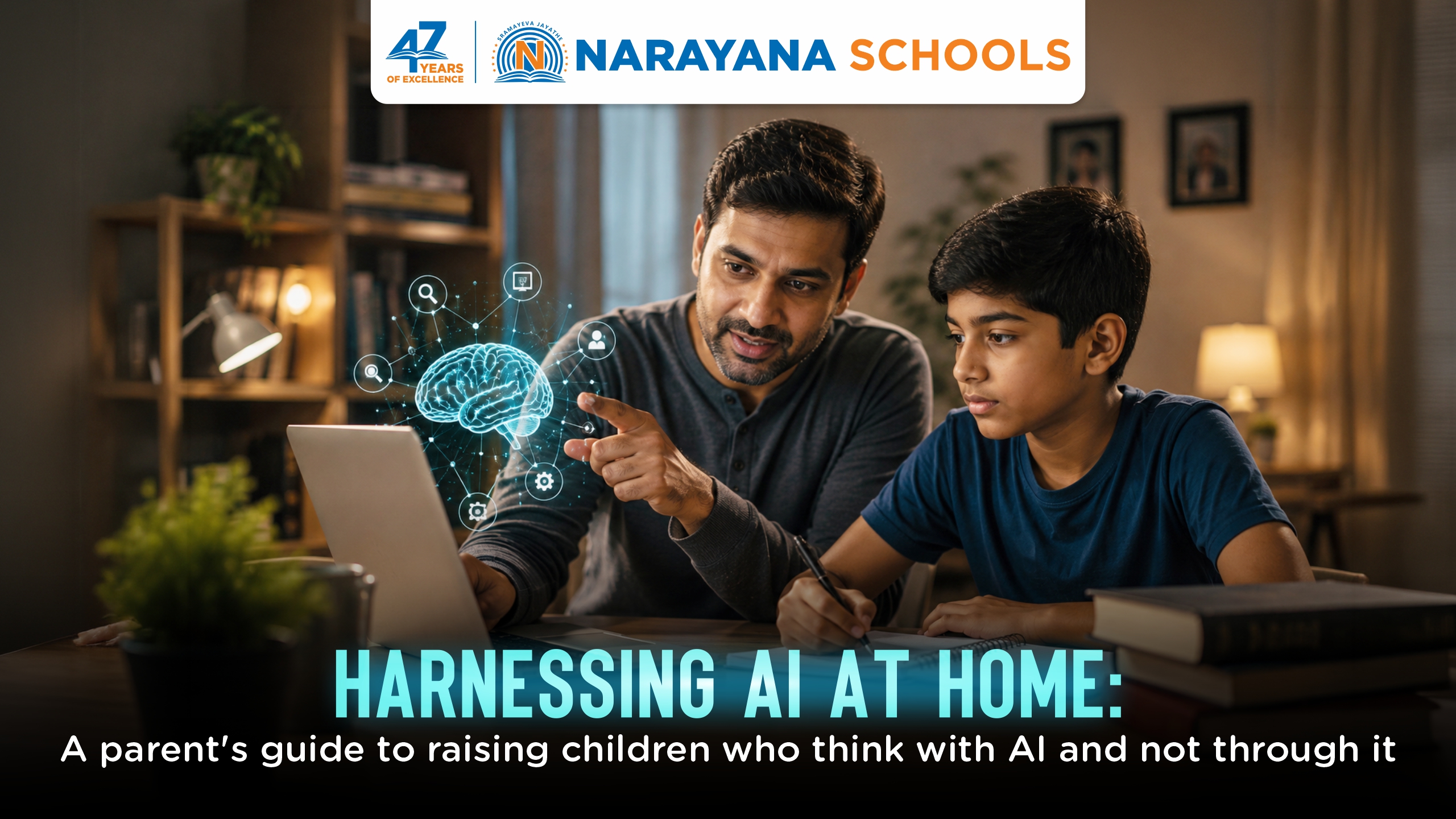 13
Artificial Intelligence is no longer a distant concept; it is shaping how children learn, think and solve problems. The challenge for families today is not access but direction, ensuring that children use AI in education as a tool for thinking, not a shortcut for answers. Research from organisations such as ( United Nations Educational, Scientific and Cultural Organization ( UNESCO) and the Organisation for Economic Co-operation and Development (OECD) highlights that guided AI use enhances learning, while unguided dependence can reduce critical thinking. Shift from passive consumption to active thinking Over-reliance on AI-generated answers can weaken independent reasoning. Cognitive science research shows that active learning strategies improve retention and understanding far more than passive consumption. Encouraging children to question, analyse and interpret AI outputs builds critical thinking skills in students . Teach children to question AI and not accept it Blindly AI systems can produce confident but occasionally inaccurate responses. Studies in digital literacy emphasise the importance of AI literacy for students , including verifying sources and cross-checking information. Developing sceptical inquiry ensures children become informed thinkers rather than passive receivers. Balance AI use with foundational learning Foundational skills such as reading, writing and problem-solving must remain central. Research in educational psychology highlights that strong basics support long-term academic success and adaptability . AI should supplement learning, not replace effort or practice. Encourage creation over consumption Instead of using AI only for answers, children can use it to generate ideas, draft solutions and explore possibilities. Studies show that project-based learning with AI tools enhances creativity and deeper engagement. This approach aligns with NEP 2020, which emphasises the development of 21st century skills in education , including innovation and problem-solving. Set healthy digital boundaries Excessive screen time and unstructured AI usage can impact focus and well-being. Research published in child development journals links balanced screen exposure to improved attention spans and cognitive health. Structured routines ensure AI becomes a productive academic aid rather than a distraction. Build ethical and responsible AI usage Discussions around plagiarism, originality and data privacy are essential. UNESCO frameworks highlight the need for ethical use of artificial intelligence in education . Instilling responsibility ensures children use technology with integrity and awareness. Platforms and apps parents and kids can explore together Beyond classroom tools, there is a growing world of platforms designed to help children build AI literacy, creativity and problem-solving skills at home. A few worth exploring as a family: a. For AI-guided learning and homework support Khan Academy/Khanmigo - A free platform with an AI tutor built to ask guiding questions rather than give direct answers, covering maths, science and humanities. Photomath - Lets children scan a maths problem and see step-by-step working, useful for understanding process over just getting an answer. Duolingo - Uses AI-driven features to support language learning with context, not just correction. b. For learning how AI actually works Code.org's AI lessons - Free, age-appropriate modules that introduce machine learning concepts through simple, guided activities. Teachable Machine (by Google) - A beginner-friendly tool where kids can train their own simple AI models using images, sounds or poses, and see how machine learning works hands-on. Machine Learning for Kids - Pairs with Scratch to let children build and train their own AI projects through block-based coding. c. For creativity and exploration Scratch - Not AI-specific, but a strong foundation for the computational thinking that underpins how AI systems work. CodeSpark Academy - Introduces early coding logic to younger children through visual, text-free puzzles. Partnering with schools for guided AI learning The most effective outcomes emerge when home and school approaches align. Schools integrating structured AI tools provide safer and more meaningful learning experiences. Narayana’s role in shaping responsible AI learning Narayana Schools has advanced its digital learning capabilities by enhancing the nLearn platform with ASTRA ( Advanced Student Tutoring & Resource Assistant ) . nLearn is a comprehensive platform that allows students to learn at their own pace and revisit concepts with ease. ASTRA, a dynamic AI-powered chatbot, delivers precise, personalised responses across subjects including Maths, Physics, Chemistry, Biology, Social Studies and English within seconds. Designed for intuitive chat-like interaction, ASTRA maintains academic focus by guiding conversations towards learning. Already supporting over 15,000 students , it enables instant doubt resolution while fostering conceptual clarity. With features such as revisiting past queries and accessing shared question repositories, it streamlines learning efficiently. Future integration with proprietary content will further enhance curriculum alignment, ensuring deeper and more accurate support. By combining innovation with responsibility, we ensure that AI becomes a tool for understanding and not dependency, empowering learners to think, question and grow and fulfil dreams with confidence, because at Narayana Schools, your dreams are our dreams
06 Aug 2026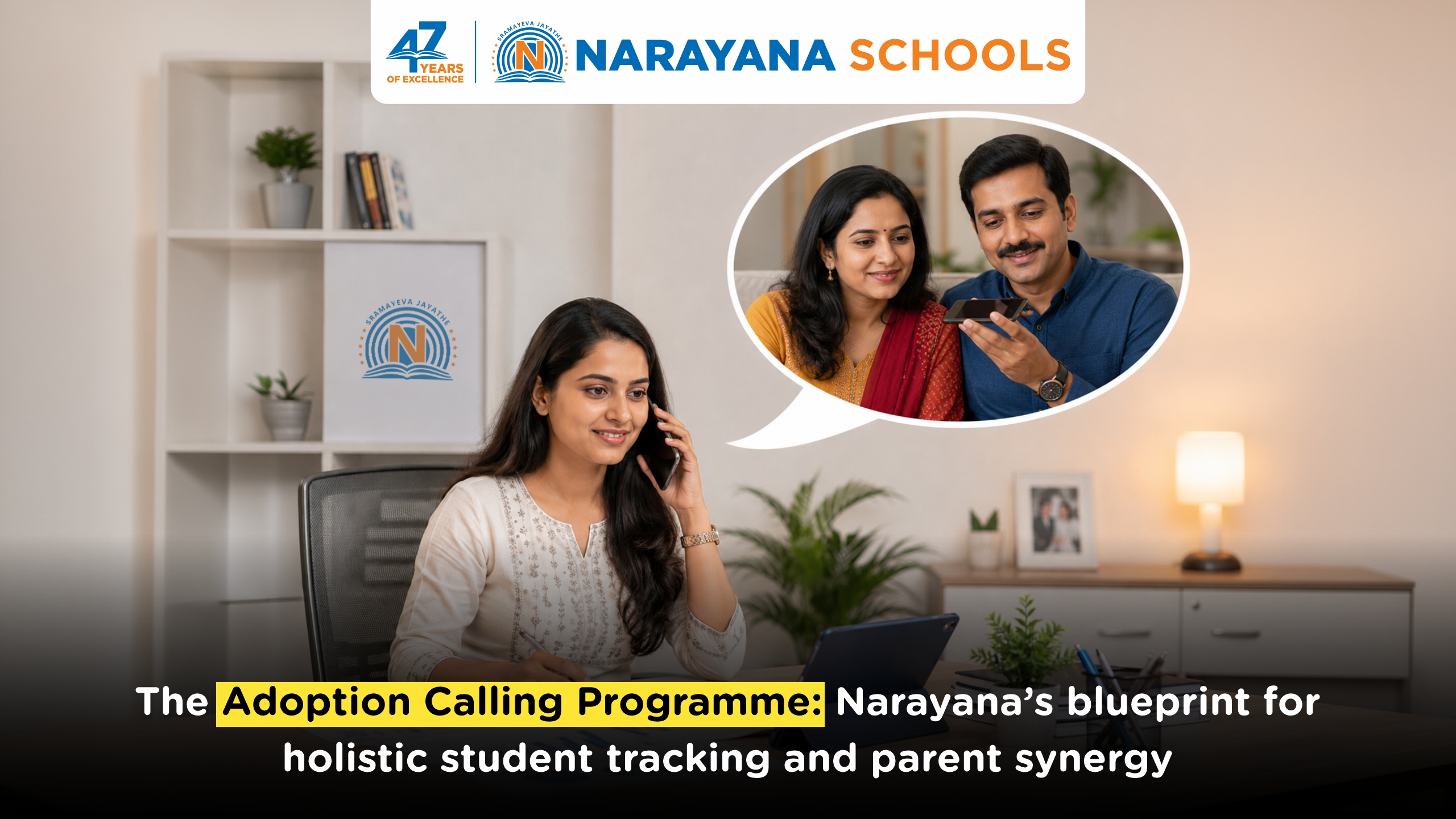 14
Report cards once arrived twice a year, with silence stretching between them. That gap is precisely what Narayana Schools’ Adoption Calling Programme was designed to close. What is the Adoption Calling Programme? Every learner is ‘adopted’ by a dedicated mentor/teacher who places a fortnightly call home. This is not for a generic update. It covers academic progress (across all subjects) , classroom behaviour, peer interaction and emotional well-being in a single conversation, turning parent-teacher communication into a rhythm rather than a rare event. The science behind the concept of Adoption Calls A 2022 study in Educational Research Review , analysing 23 meta-analyses covering 1177 studies, found that parental involvement consistently boosts academic achievement, especially when parents hold clear expectations and stay in regular dialogue with the school. Fortnightly calls are built for exactly that: consistency plus expectation-setting, delivered in small and digestible doses rather than one overwhelming meeting. Holistic tracking and not just marks Mentors note attendance, mood, friendship patterns and confidence, alongside progress across all subjects, test scores and detailed inputs from respective subject teachers. Calls are scheduled in advance at a day and time that is mutually convenient for parents, and this same day/date is then followed through for each successive month, building a dependable rhythm rather than a surprise interruption. Paired with digital dashboards such as nConnect , this builds a 360-degree view of every child, catching a dip in motivation weeks before it ever shows up on a report card. Practical ways to make every call count Keep a simple notebook of what the mentor shares each fortnight to spot patterns across a term. Ask open questions beyond marks, like ‘How does he seem at break time?’ (this often reveals more than any score). Share context from home, like a house move, a new sibling, exam nerves, etc., since context changes how a teacher reads classroom behaviour. Treat the call as a two-way exchange rather than a report card read aloud; mentors adjust support faster when families add detail. The emotional safety net Alongside initiatives like the DISHA Mental Wellness Programme , these calls ensure no child's stress goes unnoticed between two termly PTMs. Early flags mean early support, counselling, peer mentoring, or simply a teacher who already knows the fuller picture. The Adoption Calling Programme is not about monitoring. We believe it is about building a shared language between home and classroom, so encouragement at home and guidance at school pull in the very same direction, making it a genuine model of holistic student tracking that helps students strive towards fulfilling their dreams without holding back their true potential, because at Narayana Schools, your dreams are our dreams .
01 Aug 2026

