Cyber Safety for School Children: A Parents Checklist
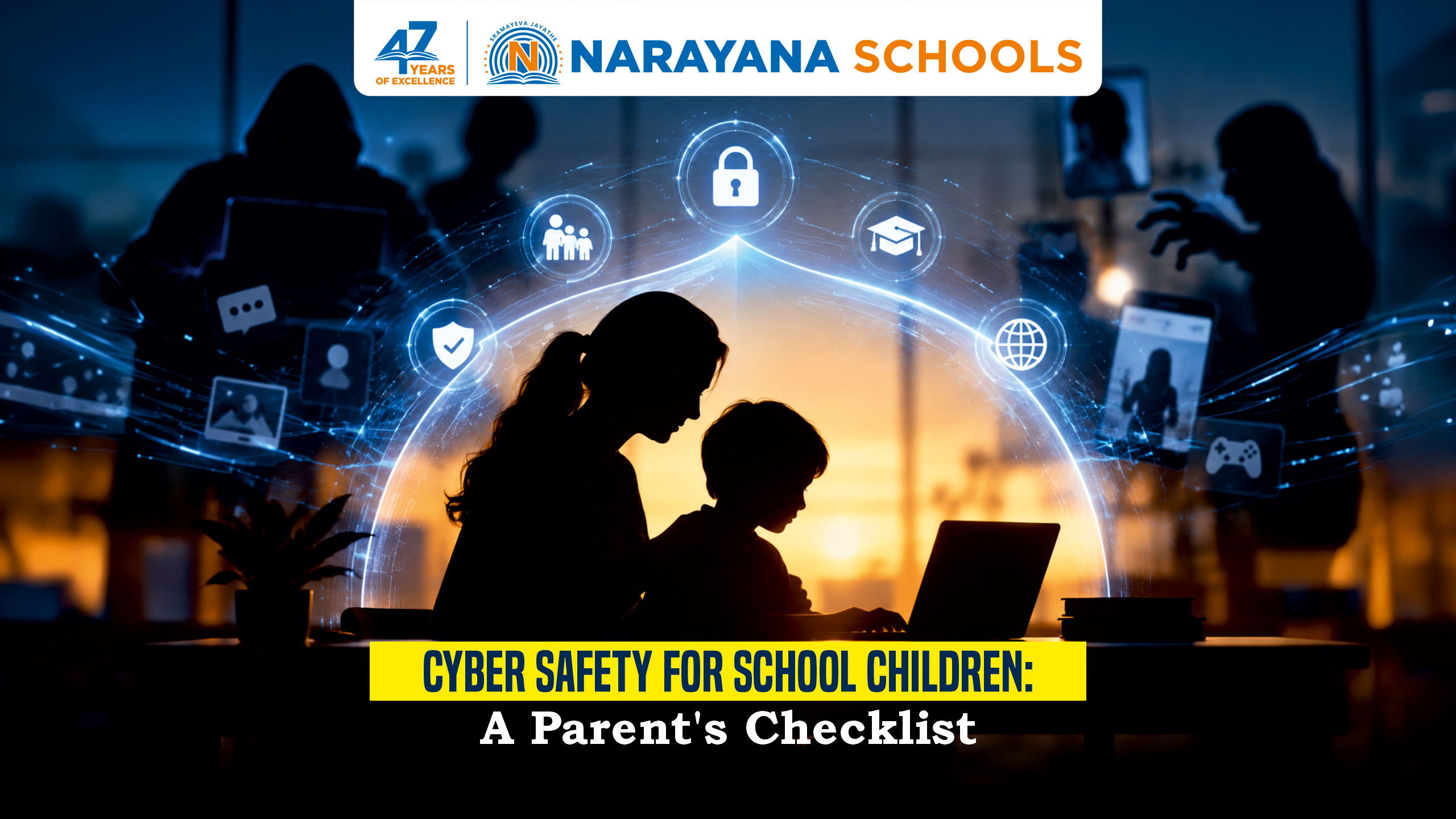
Online learning, gaming, social media and AI-powered apps are becoming part of everyday childhood.
But greater access also means greater exposure to cyberbullying, online scams, privacy breaches
and harmful interactions.
A February 2026 guidance note by United Nations Children’s Fund (earlier: United Nations
International Children’s Emergency Fund; UNICEF) India and United Nations Educational, Scientific
and Cultural Organization (UNESCO) Regional Office for South Asia highlights the growing
importance of online safety in education. It cites Annual Status of Education Report (ASER) 2024
findings that 89.1% of adolescents aged 14–16 have a smartphone at home, while 76% primarily
use these devices for social media. UNICEF's 2024 U-Report poll also found that 40% of young
respondents spent more than four hours online daily. These findings underline why digital access
must be matched with digital safety skills.
What Is Changing and Why Should Parents Care?
Online risks now extend beyond suspicious links and strangers. Children may encounter fake gaming
rewards, fraudulent scholarship messages, manipulative in-app purchases, cyberbullying by
classmates, inappropriate recommendations and AI-generated images or voices used to deceive or
threaten. Personal details shared through apps, photographs and location settings can also be
misused.
The answer is not to avoid technology altogether, but to help children use it safely, responsibly and
confidently.
7 Cyber Safety Checks Every Parent Should Make
1. Protect personal information: Teach children never to share passwords, OTPs, home addresses,
school details, live locations or private photographs with untrusted contacts. Explain the lasting impact
of a digital footprint.
2. Secure devices and accounts: Install updates, use strong, unique passwords and enable two-
factor authentication where available. Review privacy settings, app permissions and parental controls.
3. Recognise scams and restrict financial access: Warn children about fake gaming rewards, free
in-game currency, fraudulent scholarship offers and suspicious downloads. Avoid giving children
independent access to payment apps, banking credentials, saved payment methods or credit and
debit cards.
4. Make gaming and social media safer: Check age suitability, chat settings, friend lists, content
recommendations and in-app purchases. Remind children that online contacts may not be who they
claim to be.
5. Address cyberbullying: Watch for signs of distress, withdrawal or reluctance to use devices, and
create a safe space for children to discuss uncomfortable online interactions without fear of blame. If
cyberbullying occurs, preserve screenshots and relevant details, block and report the account and
guide children towards seeking help rather than retaliating.
6. Help children question AI-generated content: Discuss how fake profiles, manipulated images,
cloned voices and convincing messages can be used to deceive or harass. Encourage children to
verify suspicious content through trusted sources before believing or forwarding it. Remind them
never to create or share manipulated images of others and also to not take or share pictures without
consent.
7. Protect wellbeing: Set practical screen-time boundaries, maintain device-free meals and protect
sleep, physical activity and homework time. Keep conversations open so children feel safe reporting
uncomfortable experiences.
What If Something Goes Wrong?
Stay calm, listen without blame and preserve screenshots, usernames and relevant messages. Block
and report the account. In India, cybercrime can be reported through the National Cyber Crime
Reporting Portal or by calling 1930 for cybercrime assistance. Contact local police if there is a serious
threat or immediate danger.
At Narayana Schools, nurturing responsible digital habits alongside academic learning, life skills and
holistic development reflects a commitment to helping students learn safely, grow confidently and fulfil
their dreams, because your dreams are our dreams.
Frequently Asked Questions
1. When should cyber safety education begin?
Parents should introduce cyber safety as soon as children start using connected devices, with
guidance suited to their age and understanding.
2. Should parents check childrens phones?
Parents should conduct regular, age-appropriate reviews of device usage, apps and online
interactions while maintaining open conversations and gradually encouraging responsible
independence.
3. What should parents do if a child is threatened online?
Parents should remain calm, listen without blame, preserve evidence, block and report the account,
and seek appropriate help if the threat is serious.
4. How can parents prevent cyberbullying?
Parents can encourage respectful online behaviour, discuss cyberbullying openly and create a
supportive environment where children feel safe reporting incidents without fear of punishment or
blame.
5. Where can parents report cybercrime in India?
Parents can report cybercrime through the National Cyber Crime Reporting Portal or call 1930 for
cybercrime assistance. In cases involving immediate danger, they should contact the local police or
emergency services.
Drop Your Comment

karthik
November 13, 2026
Testingg
karthik
November 13, 2026
test