

Explore stories and insights
Loading...



 7
JEE Mains session 2 results are out, and after moments of cheer and joy, it is time to grind again, and this time for the end game! i.e., JEE Advanced. The JEE Advanced 2023 date is June 4, which leaves us with only a month. Since there is no time to waste, we should come straight to the point. What is the ideal last-month revision strategy for JEE Advanced 2023? Continue reading this blog, and we will explain in simple points how you can strengthen your JEE Advanced 2023 preparation in the last month with a structured and systemic approach. There is a significant difference between the pattern of JEE Main and Advanced. Hence, the preparation strategies for both need to be different accordingly. NCERT books are still important, but it is time for you to pick up some advance preparation books. Here is a subject-wise book list suitable for your JEE Advanced 2023 preparation: PHYSICS H.C.Verma Concepts of Physics Vol I and II Halliday , Resnick & Walker Fundamentals of physics I.E. Irodov Problems in General Physics Arihant Publications Objective Questions on Physics by D.C Pandey S.S. Krotov Problems in Physics Mathematics R.D Sharma Maths XI & XII R.D Sharma Objective Mathematics for JEE Main & Advanced S.L. Loney Trigonometry & Geometry : Plane Trigonometry S.L. Loney CO-ordinate Geometry: Plane Co-ordinate Geometry D.R. S.K. Goyal Algebra Amit M Agarwal (Arihant Publications) Play with Graphs Amit M Agarwal (Arihant Publications) Integral Calculus Tata-Mcgraw -Hill Publication Course in Mathematics for IIT-JEE Chemistry O.P. Tandon Organic Chemistry Morrison and Boyd Organic Chemistry O.P. Tandon Physical Chemistry J.D. Lee Inorganic Chemistry R.C. Mukherjee Numerical Chemistry Analyse your preparation till now: The first step to an effective last-month revision strategy for JEE Advanced 2023 is to fairly evaluate the level of your preparation till now. Identify your areas of strengths, areas that need improvement, and concepts you have not started yet. Create a schedule that allows you to practice and improve your weaker concepts while also regularly reviewing your stronger concepts. Narayana’s 360-degree educational app, nLearn, is a great tool to evaluate your preparation. It provides you with a bank of thousands of questions for practise and you get advanced reports for your tests, including an analysis of your strong and weak areas. Additionally, you can choose the topic for your question paper, which is a great way to evaluate how well you prepared. Focus on the chapters with more weightage: Although all chapters are important, for the last month, you must make sure that there are no knowledge gaps for the topics that have more weightage. This way, all your major topics will be covered, and you will be sure to attempt the most number of questions in the exam. Do not start anything new: Till now, it is possible that you would have covered all the syllabus; however, if you have missed some concepts, then it is very important to understand that for the last month, your JEE Advanced 2023 revision strategy should be to first solidify what you already know. Revise and strengthen the parts of the syllabus that you have covered so far. Following this strategy will make sure that your preparation for the concepts you understand is thorough, and you’ll be able to attempt questions from them accurately. Solve JEE Advanced previous year’s question paper: For the last one-month preparation strategy for JEE Advanced 2023, a thorough revision must be undertaken by every IIT JEE aspirant. One of the best ways to do that is by solving previous-years’ question papers. It will help you recognise and improve your weak areas in all subjects. It will also give you a fair idea of the level of questions that usually get asked in the exam. Solve JEE Advanced Mock tests: Solving IIT JEE Mock tests is one of the best way to evaluate your preparation level. For the last month, you should solve an ample number of JEE Advanced Mock tests. It will help you get an idea of how to solve a real exam and make you familiar with the pattern and weightage. IIT Mock tests are a great way to improve your time management; you get an idea of how to vary the time you spend on easy and difficult questions and accurately complete the whole exam within the time limit. Practise subjective questions: When you solve subjective questions, you realise how well you are able to apply concepts you have studied to the question. Solving more and more subjective questions will strengthen your understanding and application of the concepts. It is this form of questioning that evaluates the students' capabilities practically; hence, if a candidate does well with the subjective questions, he/she will do well in the JEE Advanced exam. Avoid overwhelming yourself: While you are preparing for this extremely important exam and following a tight study schedule, do remember to take breaks in between. It is important that you do not overwhelm yourself. Meditate and do yoga to improve your concentration and get enough sleep to avoid fatigue. Avoid any distractions that can affect your schedule and hinder your progress. An informed but well-rested mind is your biggest ally in any exam. Conclusion The final month before exams can be a stressful time, but with the revision strategy for JEE Advanced 2023, you can be sure to achieve your IIT dream. Creating a revision schedule, prioritising your weaker areas, practising past papers, and creating summary notes are all effective ways to maximise your revision efforts. Remember to take breaks and look after your physical and mental health during this period, as this will help you stay focused and productive. With these tips in mind, you can approach your exams with a sense of calm and confidence, knowing that you have done everything you can to succeed. We at Narayana Educational Institutions are sure that you will end up performing at your best and will exceed everyone’s expectations! With this, we hope we were able to answer your questions and wish you the very best of luck!
 05 May 2023
 9
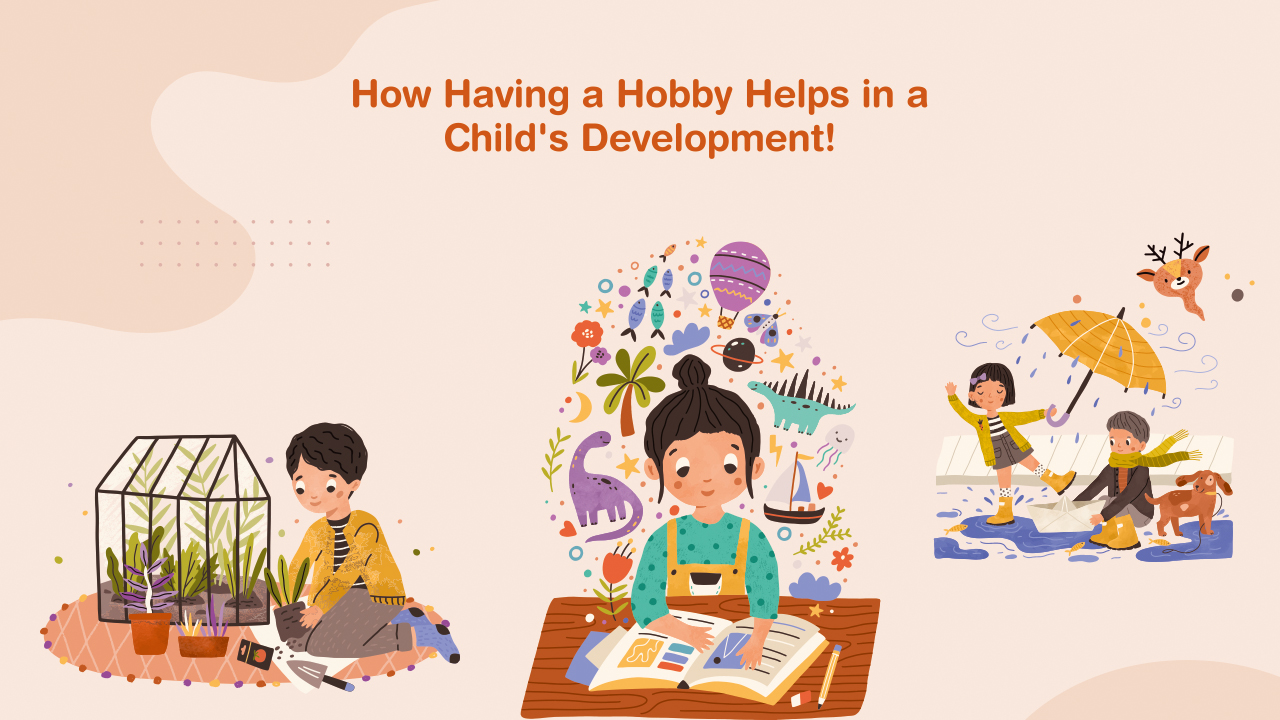
Some of you might have something that you absolutely love to do—a hobby that brings you joy, pleasure, and excitement whenever you are engaged in it. It can be a certain sport, a favourite genre of books, a dish that you are always looking forward to cooking, a musical instrument that you like to play, or anything else entirely. A hobby makes us forget, at least temporarily, things that would otherwise keep us indulgent, such as work or a chore. However, the consciousness that you love doing something comes much later in life. Before that, you have that epiphany when you realise that this is something that you enjoy beyond anything. And then you engage yourself in it without a single worry in mind and without counting every hour like you do now. Of course! The stage of life being remembered here is your childhood. And the reason we take you through this memory walk is to remind you the importance of hobbies . It is wonderful if you still engage in your favourite hobbies now and then, but if for some reason you have left them behind, then we think this blog is both for you and your kids! If you had such experiences, it is possible that you wish that your kids go through the same, or, if possible, even some better ones. Good hobbies are not leisure activities that kids do when they have nothing else; we need to understand ‘ why are hobbies important for kids?" To understand how having a hobby helps in a child’s development, let us remember how it helped you. Do you agree that while playing the sport you like, you developed skills such as collaboration, coordination, and patience? Did it not help you channel your negative feelings positively towards the cause of winning? And did it not give you a sense of belonging among your peers? These are just some of the advantages of having sports as a hobby; there are innumerable activities that one can indulge in, and they all come with their own special perks. Here are some other ways having a hobby helps in a child’s development : Nurtures Creativity Being able to express oneself artistically is a priceless feeling. If your kid rejoices in any form of creative expression, rest assured that they will have a unique and distinctive viewpoint on things. These hobbies can be, writing, painting, drawing and colouring, crafts, and performing arts such as acting, dancing, and singing. These are very fulfilling hobbies to have and will help your kids build their own perception of everything in life. Nurtures Cognitive Ability When you are engaged in something you truly love and enjoy, you do not mind trying hard to understand its complexities. If your kids’ hobby is building model rockets, they will happily go through the scientific principles and laws one would require to build a small working model. This naturally helps in developing their cognitive abilities. Helps in Developing Confidence One of the many benefits of hobbies is that when you successfully complete what you set out to do, you feel positive and accomplished. It happens because you love what you are doing. Sooner than later, it becomes your habit to see a task through to its perfect completion. All this builds a character that has confidence in itself, is aware of its capabilities, and can face challenges head-on. Teach Time management What do you do when you don’t have time to do your favourite activity? You shift other things here and there and eventually make enough time. You prioritise things based on their importance and manage them. This is what kids learn when they also have to juggle school, tuition, and their hobbies all in one day. Skills like these cannot be taught; kids can only learn them through experience. Learn Problem Solving When you are determined to do something, you find ways to overcome any challenge that comes across the way. You use your creativity and innovation to make your way through the problems. When a kid who plays cricket cannot play spin bowling, he tries different approaches, such as advancing down the pitch or observing the bowler’s hands, to pick up variations. Either way, the kid would try to solve this issue, as playing is something very important to him. It’s only natural that he will soon be applying this in real life. Make Future Career Choices Realising what you like to do is great; what is even greater is to turn that into your career. Another important benefit of having a hobby is that your kids will not struggle to find a suitable career for them if they are able to do what they like and make a living out of it. Fields like sports, performing arts, photography, writing, etc., are all great career options and provide well professionally if one is dedicated and determined enough. Improve Mental Health and Well Being Studies show that if we engage in things we love, it is good for our mental health and well-being. Although we are sure that you do not require scientific research to tell you that, you already know how much positivity your favourite hobby fills you with. With all the curricular and extracurricular things kids are engaged in these days, it is important that they find something that fills them with colour and emotions, refreshes and reenergizes them, calms them down, and provides them a break from their monotonous schedule. Conclusion To encourage your children to pursue a hobby, it's important to discover their strengths and interests. This will help you identify any unique skills or talents they may possess. With kids being so engaged in the digital ecosystem that comprises both their education and entertainment, the importance of hobbies increases even more. It is crucial for their overall development that they enjoy something that does not come in 1080p resolution. What do you think about this blog? What are your favourite hobbies? How did they help you learn important life skills? Do let us know in the comments. Team Narayana would love to hear from you.
02 May 2023 8
Have you ever wondered why a ball stops rolling after travelling a certain length? Did you notice lightning in the sky and wonder how the phenomenon takes place? Or have you ever wondered how a larva turns into an adult butterfly? Even if you haven’t, your kids surely would have. Children are naturally inquisitive; they want to know all there is to know about the world around them, from how things work to what causes certain events to occur. Since science has become ubiquitous in modern society and is present in almost every aspect of our lives, children these days wish to seek answers to different questions they have in their minds. And you never know, there might be a budding scientist under the roof of your home. If you really wish to fuel the growth of your child’s scientific mindset, then this blog is for you. Simply reading out the science concepts from textbooks won’t help your children. Making science fun and engaging requires experimental demonstrations for the kids so that they can witness the phenomena and learn the concepts through practical exposure. Many science experiments call for unusual, expensive, or inaccessible materials. But don’t you worry about that. We bring some simple, yet impactful scientific experiments and STEM (science, technology, engineering, and mathematics) activities for your kids that can be performed with common household items. One simple activity might be the spark that ignites your child’s lifelong interest in science. So, what are you waiting for? Let’s enter the realm of scientific experimentation ! Walking Water - This vibrant demonstration of capillary action, water movement, and color mixing is simple to set up and execute. Watching the science experiment where color flows through the paper towel on its own will fascinate kids of all ages and teach them about plant nutrition at the same time. What do you need? 5 transparent glasses, paper towels, and 3 food colors – red, yellow, blue. Steps Involved: • Six sheets of paper towels should be folded in half lengthwise first. To get an ideal fit in the glasses, you may need to trim off some length. They need to reach from the bottom of one glass to the next without protruding too much. • Next, put some red food coloring in the first glass, a little yellow in the third, and a little blue in the fifth. Use a plastic spoon to stir it up. Don't bother filling the other glasses. • The colored water is then added to the glasses until they are almost full. • Put in the paper towels now. Throw the other end of the paper towel into the empty glass next to the red one. • The colored water will spread almost completely along the length of every paper towel after several minutes. In approximately 20 minutes, you may observe the water's transformation. How's this Happening? Capillary action causes the colored water to rise up the paper towel. Capillary action refers to a liquid's capacity to move upward, defying gravity, in small areas. This is what allows water to rise from a plant's roots to its leafy parts in the treetops. Paper towels are manufactured from a type of plant fibre called cellulose. In this instance, the water rose through the small pores of the membrane of cellulose. Capillary action caused the water to rise through the towel's holes. Due to the mutual attraction between water and the cellulose fibres, the liquid is able to rise vertically against the pull of gravity. Water molecules have a tendency for sticking to the paper towel's cellulose fibres. It's called adhesion when something sticks together like this. Cohesion refers to the mutual attraction and sticking together of water molecules. As the water trickles up the paper towel fibres, the cohesive forces aid in attracting additional water to the top, changing the white paper to the colored one. 2. Blobs in a Bottle (Lava Lamp) - The lava lamp demonstration is super cool and awesome! Watching a creative lamp with colored water and oil is a fun science experiment for youngsters, but there's a secret element that will make it more engaging for your kids. This simple experiment utilizes everyday items to help children learn about the concept of density, and it also forms a great science project idea. What do you need? A transparent plastic bottle/glass jar, a transparent cup, vegetable oil, food color, vinegar, baking soda, and a torch/flashlight. Steps Involved: • Put some baking soda at the base of your container. Vegetable oil should be used to fill half the remainder of the container/jar. If you have a funnel, use it. Take note of how the two are kept apart. • Put some food coloring in a separate cup and add about a fourth of a cup of vinegar. Mix the two. • Carefully add the food coloring and vinegar to the oil. • Finally, turn out the lights, grab a torch, and enjoy a nighttime show from your lava lamp. How's this Happening? The lava lamp science experiment discusses the density of two liquids as well as their solubility in another liquid. Due to its lower density in comparison to water, oil is able to float on the surface. Because the food coloring has identical density as water, it descends through the oil and combines with the water. Carbon dioxide gas is produced while baking soda mixes in vinegar. Since gas is less dense than water, it rises to the surface, carrying the tinted water with it. The blob of colored water sinks after the air is released from within it. This cycle continues, producing an effect of a lighted lamp when seen under the beam of light. 3. Water Cycle in a Bag – Isn’t it strange to even think of experiencing a water cycle in a small bag? It might sound complicated; it is actually not! Let us simplify it for you! What do you need? Bag with a zip lock, water, a permanent marker, food color (blue), clear transparent tape Steps Involved: • Create a sky on the top part of your ziplock bag with a permanent marker. Make sure to give it a creative touch by drawing clouds and the sun. • Then, put a few drops of blue food coloring into a cup of water. Your children will be able to see the water better this way. Blend it until you get a vibrant blue hue. • The next step is to fill around one fourth of the bag with water and seal it to prevent any spillage. • Now place your bag in a bright window to dry. Tape the corner down so it won't slide around. • You may check on your bag in a couple of hours, and then again in roughly a day. Water drops will begin to adhere to the bag's surface at some point. Some will be floating in the air like "clouds," while others will fall from the sky like rain. How's this happening? Because of the sun's warmth, the water in the pouch is evaporating and becoming a gas . This also occurs in the atmosphere we live in. The water in the bag condenses back into a liquid because it is trapped with nowhere to go. We refer to this as condensation. This science experiment shows how sunlight may change the state of water. As you can see, simple items found around your house or school may be transformed into fantastic scientific project ideas for your children. Making science fun for kids can be a great way to foster their curiosity and interest in the subject. By creating a learning environment that is interactive, stimulating, and exciting, you can help kids develop a lifelong love of science. So, until we bring you more such activities, make your kids practice these science experiments and give them hands-on experience with the concepts.
27 Apr 2023 8
As a parent, you always wish that your child's learning environment is engaging and fun. And that your child is always motivated to explore and expand their horizons of knowledge. Schools and teachers constantly strive to make this a reality for their students. In addition to the traditional teaching methods, the use of technology within education provides a practical solution to this. In this blog, we will discuss the importance of technology in education and how sending your child to a school that effectively uses educational technology can transform the very way they comprehend concepts and ideas taught to them. When we talk about edtech, we keep hearing words such as interactive classrooms, educational media, digital teaching, etc. But what actually are they, and how do they practically help students with their education? Here are your answers: What is digital Technology in Education? Standard use of digital technology in classroom consists of a computer, a projector, and an interactive smartboard for the classroom. This is what we call educational media. They are used to show explanatory videos, colourful animations, and virtual experiments to students. Concepts in the curriculum are explained in innovative and creative ways. And the process of teaching students through the use of these teaching aids is called digital teaching. Other than this, there are mobile applications for students that are loaded with explanations, quizzes, and practise tests. They also provide an evaluation of their answers. They enable rapid feedback and quick identification of gaps in knowledge which aids the teachers to address those issues and a student to learn faster. By using these applications, teachers can distribute and receive homework and assignments online in the form of soft copies, therefore increasing engagement with the students. Technology within Education Helps Your Children in the Following Manner: Increased Motivation and Engagement: One of its major advantages is the increased engagement that comes with using digital technology. Teaching with exciting illustrations and vibrant images gives students an engaging and immersive experience. Edtech synchronises the content and questions to the learner's level, resulting in adaptive learning that has a high likelihood of success. This approach motivates students to engage with the subject matter more effectively. Increased Retention of Concepts: Since students are more engaged in the learning process, their conceptual understanding naturally increases. The interactive content used in digital teachnology presents information in a unique and attractive manner. Increased understanding and conceptual clarity eventually leads to better performance in the examination. Accurate and Targeted Feedback When we include digital technology in the classroom, it helps in getting personalised and targeted feedback from the teacher. They can provide their insights on the student's assignments and tests individually anytime, and students can also raise their doubts and get them clarified simultaneously. Increases Collaboration There are online classroom applications that can be used by both teachers and students to increase collaboration. They are quite simple to use, and students can get instant notifications regarding important updates on their courses. With their use, there is an increased scope for project-based learning where students can interact remotely with peers and collaborate on projects by sharing resources, advice, and suggestions. All the documents, videos, and photos are saved online and can be accessed at any time. Your child can benefit greatly from these new innovations in the education system, provided your child’s school uses these resources effectively and efficiently. Make sure that your child attends a school that has both physical and digital infrastructure to support their learning. Narayana’s Digital Classroom and nLearn When it comes to the use of technology in education, Narayana Group of Schools is an industry pioneer. Narayana’s Digital Classroom provides a platform for students to comprehend the concepts using 3D animated videos. The Digital Classroom at Narayana enables students to visualise complex concepts with simplicity. Animated videos, interactive simulations, special keyword decks, glossaries, and assessments represent more than 6,000 concepts. Narayana’s nLearn is an educational tool that provides videos and concept cards that are designed to solidify core topics at your child's own pace. It has questions to practise and also provides feedback and advanced analysis reports for students to measure their improvement continuously. Conclusion Every day, we witness examples of how technological advancements are disrupting and transforming industries. Sending your child to a technologically equipped school will determine how well prepared they are for this. The use of technology in education will prepare your child for their needs of the present and their necessities of the future. It is important that we understand that technological literacy is the demand of today, not tomorrow.
21 Apr 2023 8
As parents, we always want to provide our children with the best opportunities to grow and excel in their lives. While academics have always been the centre of attention, it is important not to overlook the significance of a healthy body with a happier mind. In this regard, the importance of sports in students' lives cannot be overstated. In a school setting, a good balance of extracurricular activities and academic guidance helps kids grow and learn. Students' grades can improve if they play more sports at school. In this blog, we will explore the importance of games and sports in students' lives, discuss the benefits, and share some do’s and don'ts. So, what are you waiting for? Let's dive in! Benefits of Sports in Students' Lives Apart from just being a ‘FUN’ thing, there are multiple ways sports can help students: • Improve Physical Health: Participating in sports helps students maintain their physical health and stay fit. The importance of sports and games in students' lives is evident through the numerous health benefits they provide, such as reducing the risk of obesity, improving energy levels, and facilitating the healthy growth of muscles and bones. • Support Mental Well-being: Playing sports, especially team events, also has a positive impact on a student's mental health. They help to release stress, overcome anxious thoughts, and improve concentration levels. Positive collaboration with other students can increase a child’s ability to communicate. Moreover, sports can instil a sense of accomplishment and boost self-esteem. • Promote Teamwork and Social Skills: The role of sports in students' lives extends beyond physical health, as it also teaches students the value of teamwork, cooperation, and problem-solving. Playing in a team fosters social skills, emotional intelligence, and an understanding of the importance of supporting one another. • Develop Discipline and Time Management: Balancing academics and sports helps students develop time management skills and discipline. They learn to prioritise their tasks, set goals, and work towards achieving them. • Teach Life Lessons: Although sports events might look like all fun and games, they expose students to real-life situations where they learn to face challenges, overcome obstacles, and develop resilience. Students also learn the importance of sportsmanship, fair play, and respecting their opponents. What Can Parents and Students Do? Do's: • Encourage your child to participate in sports, even if they don't show a natural talent for them. The goal is to help them develop a healthy lifestyle and look beyond the realm of core academics. • Support your child's choice of sport, even if it's not your favourite or you're unfamiliar with it. If your kid is passionate about something, let him/her explore it to the fullest. • Attend their games and practises; it shows your support and interest in their passion. On the other hand, students should try to learn the rules of the games and continue practising at their own pace. • Talk to your child's coaches and teachers to make sure that their school and sports schedules are balanced. Students should also talk about their interests and plan their days so that they have time to study and do things outside of school. Don'ts: • Don't force your child into a particular sport. Let them explore and find the one they enjoy the most. Additionally, students should also not stop exploring and trying out different types of sports to find something they are passionate about. • Avoid comparing your child's performance to others’ or setting unrealistic expectations. • Don't overemphasise winning; focus on the values and lessons sports can teach. Fun Fact! Did you know that the legendary scientist, Albert Einstein, was a passionate sailor? He believed that sailing helped him develop his problem-solving skills and cultivate his creativity. Sailing allowed Einstein to clear his mind, and some of his best ideas were conceived while he was out on the water. This serves as a reminder of the importance of sports and physical activities in shaping the lives of even the most brilliant minds. Narayana Schools – Where Students Explore their Limits Above & Beyond We are committed to creating an environment of excellence and ensuring that our students excel in every sphere of physical activity. We have developed our own outcome oriented and age-appropriate physical education programme, ‘nSports’, which ensures: • Inclusive physical and mental development to produce physically fit and confident students. • The nurturing of talent and develops sporting excellence. • Fostering the spirit of healthy competition, teamwork, fair play, and sportsmanship. (Narayana Students Playing Kabaddi During NPL) nSports is an age-appropriate programme designed for the Narayana Group of Schools . There is an emphasis on motor skills and object manipulation for kindergarten students; for grades 1–5, the focus is on fitness and the basics of sports such as basketball, volleyball, kabaddi, and cricket; and for students above these age groups, there is a focus on advanced sports skills, competitions, and talent identification. Each year between October and January, we also organise the NPL (Narayana Premier League), our own interschool tournament, which is a part of our nSports Curriculum . In this, students participate in games like Cricket, Athletics, Kho-Kho, Kabaddi, Basketball, Volleyball, Throw ball, Tug of war, Dodgeball, and Table-Tennis. As a result of these programmes and initiatives, Narayana School students regularly bag top positions in various state and national level sports competitions. Conclusion As parents, we should help and encourage our kids to make sports an important part of their lives. Sports help them foster a mindset of excellence and the right attitude towards competition. Constantly striving to win will help them be resilient in life, to try again after failures, and to learn and grow from their mistakes. Sports will teach your child to take on challenges head-on, whether they come from a field or life itself.
12 Apr 2023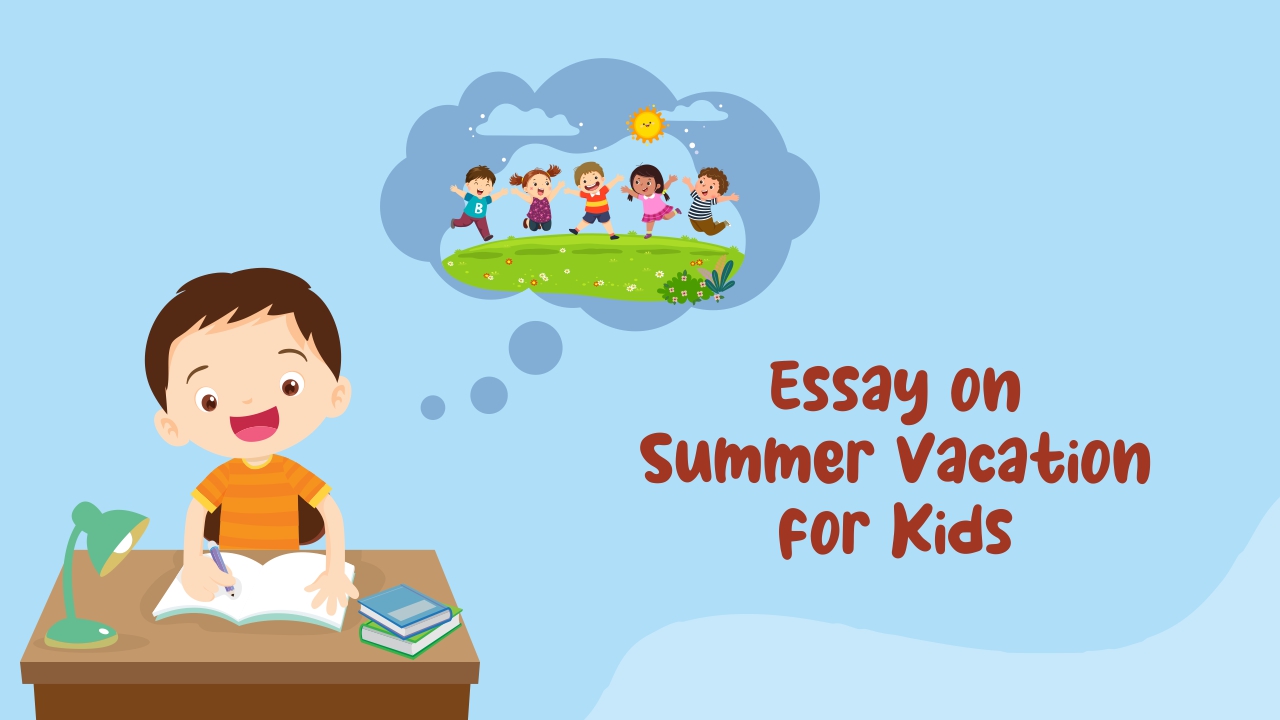 8
Summer vacation is just around the corner, and you must already be planning all the things you are going to do in this most cheerful time of the year. You may be waiting to meet your favourite cousins and play with them all day, or your parents might be planning a vacation to a place you love. Either way, you would have planned by now how you are going to enjoy your summer vacation. Some of you might be looking forward to doing all the interesting projects and activities you have been asked to do as part of your holiday homework. Holiday homework, when done with the right spirit, can actually be quite fun, and you can learn a lot while doing it. Summer vacation essay in English is usually a common topic that students get to write as a part of their holiday homework. You can either look at this and sigh, or you can try to understand that this is the chance to convey all your feelings and record all your experiences in an interesting and engaging way for all your classmates to read out. A summer vacation essay can include all the new experiences that you had while visiting places or learning a new skill. In this blog, we will help you get an idea of what to write in your essay on summer vacation . Essay on Summer Vacation (400 words): My Summer Vacation Essay I had been waiting for this summer vacation for a very long time. For me, it is the best time of the year, and I plan things months before it starts. Just as the vacation started, we went to our grandparents’ house. My cousins also joined us in a few days. My days would start with the delicious breakfast that my grandmother would make; she is the best cook. Then, I would go out with my grandfather to the fields. From him, I got to learn new things about managing a farm. He took me through the entire process of growing corn. He would teach me very enthusiastically about steps like manuring, watering, and harvesting. I also enjoyed learning from him. Then I would go out with my cousins and friends to play cricket. We liked imitating the bowling action of all the bowlers; it was so much fun. Throughout the afternoon, I would watch my favourite cartoons. And at night, all my cousins would sit together and tell each other scary stories. My stories were usually much scarier than theirs. It was all going so well. I was having the best time, but we had to come back as my mother had some important work to do. Because we came home early, all my plans were cut short. I couldn't attend a fair that was being organised there and also missed learning to drive a tractor from my grandfather. He wasn't going to let me drive it alone, but still, I thought it would have been interesting if I learned. To make up for it, I asked my mother to make one of my favourite dishes every week. Then, something really wonderful happened. My father arranged for me to go to a summer camp. It was a day camp, and I used to go there every day for 3 hours. They organised so many different and interesting activities, such as breaking and remaking some small machines, making baking soda volcanoes, and doing pottery. I even learned how to make bread myself. Everything there was so much fun, and the instructors were very friendly. They also taught us how to paint and do art and craft. It looked difficult at first, but I eventually got a hold of it. I even made a painting of my grandfather standing on his farm. Finally, after 3 weeks, it ended, and with it, one of the best summer vacations that I had. And then it was time to finish my holiday homework. How to write a Summer Vacation Essay? Make sure to remember small details about your holiday and include them in your summer vacation paragraph. Do not just write about the things you liked and enjoyed; you need to express clearly what you felt while you were doing them. Also include the things that you did not like and wished would have happened differently. Talk about your feelings about summer vacations, such as how excited you are about them or how you make plans. Mention how your vacation schedule is different than the regular days throughout the year. You can also write about new things that you have learned and how you plan to include them in your daily schedule. When you follow these pointers, your summer holiday essay will be completely different from others. It would be very personal to you, and you would enjoy writing it. When you read it after a long time, it will make you remember all the good times you had. We hope this was helpful and you will end up writing the most interesting essay. We at The Narayana Group of Schools wish you the best summer vacation and hope you get to do all the things you have planned.
05 Apr 2023

