

Explore stories and insights
Loading...


 7
Getting young children to convey their thoughts clearly on paper might be quite a tough job for some parents. This includes teaching children how to write longer sentences. Writing sentences might be fairly natural for some children, but this might not be the case for all of them. Writing sentences includes understanding sentence structures and grammar rules. This might make writing longer sentences tough for little children. There are a number of ways you can teach your kids to write longer sentences. However, before that, you need to teach them the basic parts of speech, which include nouns, verbs, adjectives, etc. If your kid knows them beforehand, it will be much easier to teach him/her to write longer sentences. Here are a few tips regarding teaching your children how to write longer sentences. Tips to Teach Children How to Write Longer Sentences Listed below are some of the ways that might help kids improve their sentence writing: 1.Teaching parts of a sentence You need to start teaching your child how to make their sentences longer by explaining the parts of sentences. Explain to them that there are two basic parts to a sentence: a subject, that is, a part of a sentence that contains the person or thing performing the action (or verb) in a sentence, and a predicate, that is, the part of a clause that includes the verb and the words that tell what the subject is doing. Take examples of a few sentences and point out what a subject and predicate are. Such as, • The veterinarian examined all the cows. Subject: The veterinarian Predicate: examined all the cows. Your child must be aware of the fact that if the sentence does not include any of the parts, then it is a fragment. Also, explain to them the definition of a run-on sentence: A run-on sentence is formed when two independent clauses are written together without proper punctuation or conjunctions. Such as: • Dhoni finished the match with a six he is an excellent cricketer. – Incorrect • Dhoni finished the match with a six; he is an excellent cricketer. – Correct This will help them understand the importance of punctuation. 2.Practising Sentence-writing Skills The best way for kids to understand how to make their sentences longer is through hands-on experience. You can teach them with the help of an activity by writing some basic sentences on task cards that lack detail. Take a task card and explain to your child that the sentence is ordinary and that there are ways to make it interesting. For example, let’s say that the sentence is "She picked apples." Now ask your kid to think about a few questions regarding this sentence that can make it interesting. The first question that might strike the child is, "Who picked the apples?" Now you can use some specific name to refer to who picked apples. For example, let’s say that your child chooses the name Kim. Help your child make the necessary changes to the sentence to implement the name. Even after this, the sentence "Kim picked apples" looks simple and plain. Therefore, make your child ask further questions in relation to this question. The next question might be, "How many apples did Kim pick up?" and "Why did Kim pick up apples?" To answer these queries, you need to further teach your kid to change the sentence accordingly. For the question "How many apples did Kim pick up?" The sentence can be framed like this: "Kim picked up half a dozen apples." And to answer the question, "Why did Kim pick up apples?" the sentence can be revised this way: "Kim picked up half a dozen apples to bake a pie." After this, you can keep making your child practise by providing them with similar sentences and asking them to think about questions. You can also ask them to practise by trying to speak English. Correct them whenever they make a mistake; using a language in speech is one of the most effective ways of learning it. 3.Creating Sentences from a Word You can also use words as a basis to help them write sentences. The word can be anything from a dog to a unicorn. This will become the ‘who’ of the sentence. Now you can teach your kid to ask questions regarding the subject of the sentence. This can be what the subject is doing, where the subject is, when the subject is doing the activity, and finally, why the subject is doing it. For example, let’s say your kid picks up a person’s name like Ram. The next question can be, what is Ram doing? To answer this question, your kid says, "Ram is studying." Next, where is Ram studying? To answer this question, "Ram is studying in his room." After this comes, "When did Ram start studying in his room?" For this, the answer might be, "Ram has been studying in his room since morning." By adding more information to the sentences, you can teach your child to explain the activity and write longer sentences. 4.Encourage More Reading If you want to make learning more fun for your child, you can put those grammar rules aside for once. One of the best ways to teach your child how to write is to encourage them to read more. Give them storybooks suitable for their age and ask them to read them loudly. Reading not only helps them understand sentence structures but also expands their vocabulary and imaginative skills. It helps them understand how they can use those words to frame sentences. Once they are done reading, ask them simple questions about what they have read and encourage them to write their answers in a notebook. This will help them convey their thoughts by writing longer sentences. Conclusion If your child has just started learning how to write, you can teach him/her how to write longer sentences in a fun way by creating sentence-writing games. Asking kids to create a sentence with the help of a picture can also encourage them to write longer sentences. Being patient with children and praising them for their work will also make them comfortable with writing. You need to make sure that they keep practising so that, with time, they can excel in it. To stay updated about all the important information from the Narayana Educational Institutions, Join our Telegram channel: https://t.me/narayanaeducationalinstitutions
 27 Jun 2023
 7
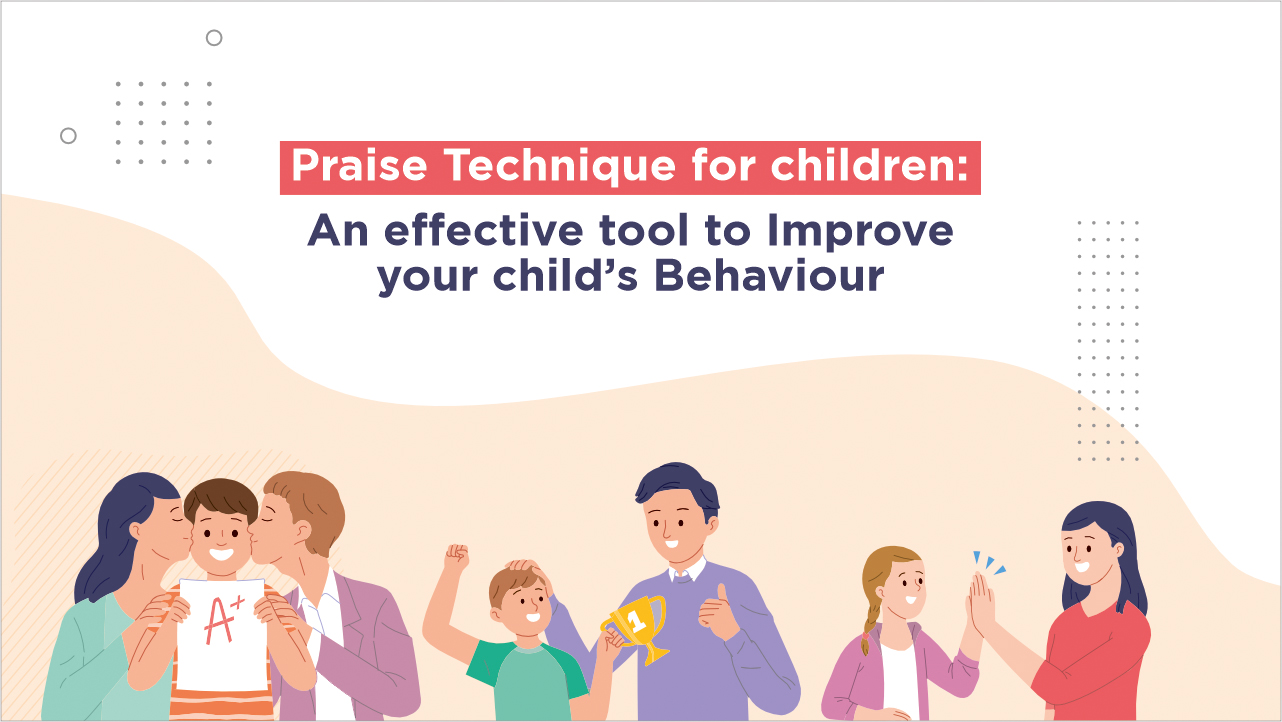
Praising your child can be a surprisingly effective technique that you, as a parent, can use for your child's positive growth. It helps you connect with your child and also encourages them to be at their best. Praise technique for children, if correctly used, can help you improve your child's behaviour in a desired manner, bringing out the best in them. Today we will discuss how parents can try improving children’s behaviour through praise. Why use praise technique for children? Young children generally have the tendency to want to please their parents and do well. When you praise your child, it motivates them to willingly continue the same behavior. It carries much more power than when parents scold their children to make them behave. Yelling at your child may keep them in line, but they would listen to you out of fear and not willingness. How to effectively use the praise technique for children? You can implement several behavioural strategies for kids, but if you do not understand the right way to use them, it might not give you the desired results. Here are some tips on how you can use praise to discipline your child: ● Praise specific actions Instead of waiting to praise your child for a general behaviour or outcome, praise them for actions and behaviours you want to see more of. It helps them understand what you expect of them. For example, if your child has behaved well throughout the day, instead of telling them they have been a good kid all day, tell them things like, "I really liked how you ate all your vegetables today and did not waste any food." ● Be enthusiastic about it Once you know what behaviour to praise, add some enthusiasm to it. Half-hearted praises do not bring the desired results, but when you are enthusiastic about it, younger children in particular take it more positively. Adding phrases like “good job!” or “well done” can add more effect to it. ● Keep your praise positive The purpose of praising your child is to add positive changes to their behaviour. Adding negative comments to the praise won't help you see positive changes. Behavioural rewards for children don't work if you add criticism to them because it takes away the positive effect of the praise. Saying, "I am happy you didn't cry for the race car" won't have such an effect as when you say "I'm proud of how happy you were even when we didn't get the race car." ● Praise immediately Instead of waiting to praise your child for a specific behaviour or outcome, do it immediately. It carries more influence because your child is still in that headspace and would receive the praise more positively. ● Praise their efforts, not the result If your child scores good marks in exams, praise them for the effort they put in their studies and not the grades they achieved. Praising them for their grades undermines their efforts. It can also condition them to believe that they don't deserve praise if they can't score good marks. Remember, the outcome is not something in your child's control, but their behaviour is. ● Add non-verbal gestures Motivating children through praise can become more effective with gestures like hugging your child, or smiling at them. Physical contact such as patting their back or hugging them makes them feel loved and validated. It also reinforces your words of praise in their heart. Use them as and when possible to create a safe environment for your child. ● Keep the praise genuine When you tell your child things like "you are the best athlete in your school," it might encourage them, but also makes them scared of failure. A child needs to understand that failing is a part of life and they should not fear it. Therefore, try to keep your praise genuine and instead tell them "You are a very good athlete." This makes it easier for your child to accept negative outcomes much more positively. Conclusion Using praise techniques with children helps them improve their self-confidence and have a more positive view of themselves. Whereas children who are often scolded can become self-conscious and lose their confidence. However, you must also remember that moderation is the key. Overdoing or underusing praise won't give you the desired results. So, once you start seeing positive changes in your child, you may also want to reduce the frequency of your praise. With consistent efforts and making your child feel loved and safe, you can start seeing positive results in a short span of time. To stay updated about all the important information from the Narayana Educational Institutions, Join our Telegram channel: https://t.me/narayanaeducationalinstitutions
22 Jun 2023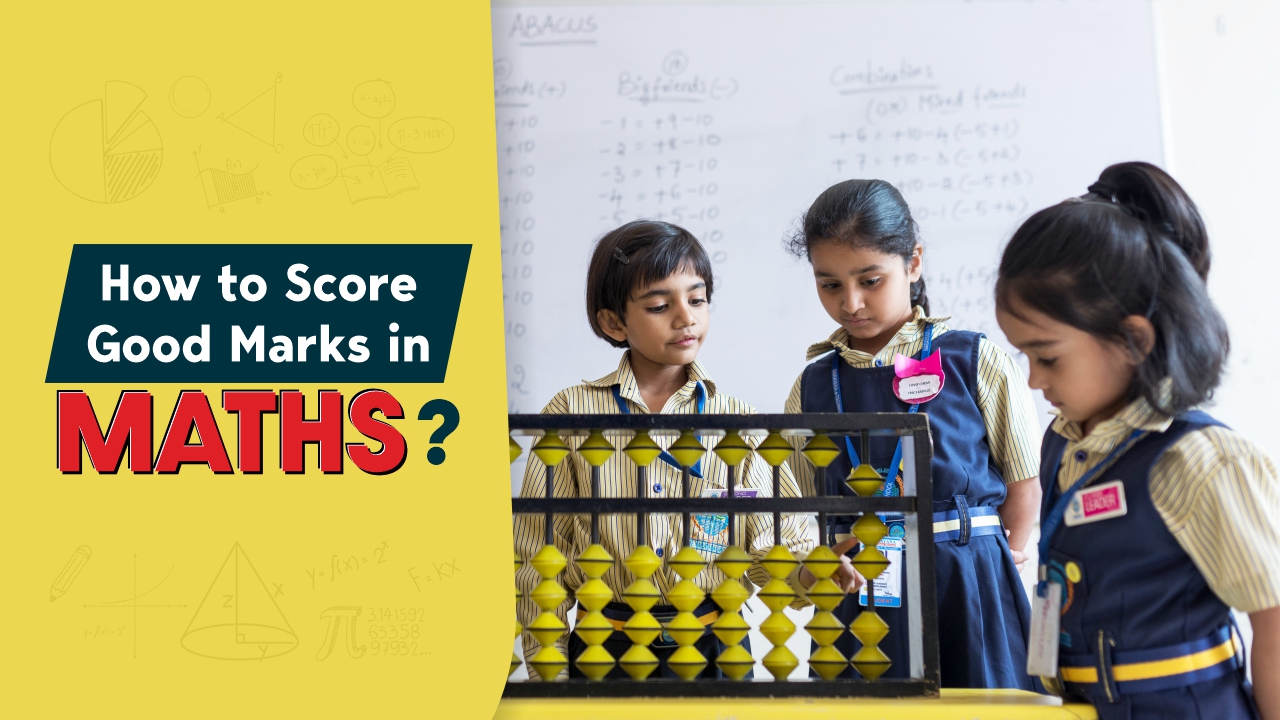 7
For many students, Maths can be a very difficult subject. Although it is not rocket science, Maths requires a great deal of dedication and practice. It is also actually one of the highest-scoring subjects where you can get full marks if you get the correct answer. Thus, it is important to know how to score good marks in Maths if you want to get high marks overall. If you find it hard to solve Maths questions and get good marks in exams, don’t worry. With regular practice and by understanding the formulas and questions, you can learn to solve Maths questions faster and more easily. Here are 7 tips on how to get good marks in Maths so that when you sit for your exams, you do not feel stressed and are able to solve the question paper easily! Top 7 Tips to Score Good Marks in Maths Solving Maths questions might be frightening. But, if you pay attention and focus, you might be able to do it easily! Take a look at these top 7 tips that will help you to learn how to get full marks in Maths: 1. Understand the chapters one by one It is quite a common habit for us to avoid anything that is difficult. Same thing happens in case of tough chapters in your Maths syllabus. As most of the chapters/topics are in a sequence, skipping a chapter might create doubts later. Therefore, it is best to get a simplified explanation of any topics that you might have doubts about instead of jumping to the next chapter. 2. Never give up on practice You must have heard that practice makes a man perfect . So, you must practise to get used to the methods and formulas for solving different questions. It will also help you give your exams confidently. Regular practice helps in understanding concepts better. It also helps in remembering the steps to solve similar sums and increases speed. This will certainly benefit you during exams. 3. Keep a formula book An important aspect of mathematics is remembering formulas. The best way to do so is by noting down all the formulas in one notebook chapter-wise. This will help in solving questions quickly during practice as well as during the exams. Also, you will not need to get back to your textbooks constantly to check the formulas. 4. Work on your mistakes Making mistakes is absolutely normal, especially in a subject like Maths. However, you need to try your best to not repeat them. For this, it is important to identify the reason behind your mistakes. Try to understand why you make the mistakes - is it because you haven’t understood the concepts, you can’t remember the formulas or you don’t understand the process? Once you understand the reason behind your mistakes, you should try to focus on solving them. Working on your mistakes continuously can help you in case you are wondering how to score good marks in Maths. 5. Solve practice papers The best way to prepare for an exam is by creating an exam-like atmosphere during revision. Practising mock papers and previous year question papers will help to get some idea regarding the type of questions that can come. You can use a timer to check your speed and work on it if required. This will help in correcting your pace as well as help in increasing your confidence during the actual exam. 6. Never forget to show the detailed solution While solving a question, it is important to show the method you used to get the answer. Most examiners check the steps to see whether you have used the correct method to get the answer and have not cheated or memorised the answer. Even if your answer is wrong due to any calculation error, they might still award you with some marks for the steps done correctly. 7. Time Management While practising mock papers at home, divide the total time available during the exam by the total number of questions. It is important to give more time to solving questions that carry more marks. This will help you in case you have trouble completing all the questions during your exam. This is one of the ways to score full marks in Maths. Conclusion Maths might be a scary subject for many but it is not impossible to score good marks in it. Right amount of determination and concentration will surely help you. Perfection comes with practice. Therefore, you need to create a study plan that will help in practising the sums regularly and improving your performance. These 7 tips regarding how to score good marks in Maths will help you if you follow them diligently. To stay updated about all the important information from the Narayana Educational Institutions, Join our Telegram channel: https://t.me/narayanaeducationalinstitutions
21 Jun 2023 7
Father's Day is an occasion that reminds us of the profound impact fathers have on their children's lives. Father’s Day 2023 is on June 18. The concept of Father's Day originated in the United States during the early 1900s and drew inspiration from the establishment of Mother's Day. Its purpose is to acknowledge and celebrate the vital role fathers have in influencing their children's development. Narayana Educational Institutions recognises the importance of a father in a child's life and proudly Salutes our Silent Superheroes . This time, we are taking a special approach to celebrating Father’s Day. In a heartfelt gesture, we are here with a story that highlights the extraordinary role fathers play in their children's lives. Through the display of heart-warming moments, it attempts to celebrate the less spoken, yet dedicated efforts made by fathers for their children. Right from holding the new-born child to enabling the kids to achieve their dreams, fathers do it all with sheer dedication and honesty. And this video is an ode to all such superheroes in the world. Their steady but silent presence instils confidence and resilience among their children, teaching them that actions speaks louder than words. The story touches upon various episodes from the child's life journey and the role a father plays through thick and thin in each one of them. It unveils the tender-hearted nature hidden behind the father’s strong exterior, showcasing his consistent presence, self-less love, and unwavering support for his child. It is a poignant reminder of a father’s love and sacrifice , support, and guidance. Fathers are pillars of strength for their children. Whether it's teaching them valuable life lessons, providing advice during challenging times, or simply being a listening ear, fathers are always there, ready to help their children navigate the complexities of life. Whether it's witnessing a father's dedication to his profession or observing his acts of kindness, children learn essential life skills by emulating their fathers. A father's positive influence encourages them to become responsible individuals who strive for excellence and contribute meaningfully to society. By watching, sharing, and actively participating in this celebration, we can collectively appreciate and honour the selfless dedication and love fathers bring. As we continue to honour and value the remarkable role of fathers in child’s development , let us draw inspiration from their impact not just on this special day but throughout the year. To stay updated about all the important information from the Narayana Educational Institutions, Join our Telegram channel: https://t.me/narayanaeducationalinstitutions
16 Jun 2023 7
When it comes to the education of your little ones, parents want to provide them with nothing but the best. You tend to research the best schools and what career paths they can choose for a successful future. However, the frown on our foreheads starts to appear when it comes to deciding the right age for LKG (Lower Kindergarten) admission. Now, parents tend to have different views in this regard. Thus, asking around can make deciding the correct age for LKG a daunting task. Fortunately, this blog covers everything you need to know on this matter. Keep reading to learn more and make an informed decision! What is the best age for children to get admitted to LKG? As per the National Education Policy 2020, the LKG age limit for kids is 4 years. This means that students completing four years of age on or before June 1, 2023, can get admission to LKG for academic year 2023-24. The Directorate of Education has passed a circular to all schools across India to enforce the age criteria for LKG admission 2023-24. But, as parents, you know that every child is different. Your little one may or may not be ready to join LKG at the age of 4. So, it is possible that you end up deciding to delay the admission of your child past the cut-off age. This is known as "redshirting" and some parents believe that it makes their little ones get used to the school environment more easily and do better academically. There have been observations that kids who have been redshirted at kindergarten, had developed better cognitive learning capacities and social skills in comparison to their younger peers. But, according to a study by the National Bureau of Economic Research, there is hardly any concrete evidence to prove that delaying kindergarten admission has a significant impact on educational performance. So, how do we decide the right age for enrolling our children? The right age for LKG admission is when the child is ready to easily transition to a new social environment. Each child learns and grows at its own pace and it is important for parents to enrol at the right time. Usually, toddlers start walking, talking, jumping and running right from the age of 2. But, you should watch out for certain other signs, which will help you understand whether your toddler is ready for attending school. How to know whether your child is ready for kindergarten? These are some of the signs which indicate whether your child is ready to start learning at school: ● Ability to identify alphabets and numbers Today’s kids are fast learners. So, if you notice that your little one can identify even some of the alphabets and numbers, it is a potent sign that he/she may be ready for attending LKG. Now, he/she may yet not be able to read and identify all alphabets and numbers, but that’s okay. If they have learnt some of them, the rest will soon follow. ● Ability to follow basic instructions To study in a class, your child needs to have the ability to listen and execute simple instructions. For example, the teacher may ask your kid to take out a book and open a certain page. In addition, it is important for them to have the ability to understand the instruction and remember what has been said. You can ensure the presence of this skill in your kid by asking him/her to do simple tasks at home. ● Has all the basic motor skills To attend school, your little one should have mastered all the basic motor skills. These include holding a pencil, throwing a ball, picking up and putting down objects, etc. In case your child is still learning them and hasn’t quite figured them out yet, it is better to wait for them to get used to it, before you send them to school. ● Has completed potty training One of the most important requirements in LKG is that your little one needs to be potty trained. This ensures that your kid has an enjoyable experience in school, without having to go through an embarrassing situation. Additionally, please remember that having completed potty training does not mean that there will not be any accidents. But, it will at least show that they have understood their bodily needs and have the necessary skills to use the toilet. ● Able to spend time away from parents Going to school means that your child will spend a considerable amount of time each day away from you. So, you need to be sure that your kid can handle such a situation. To determine this, you can leave them with a family member or a babysitter for an entire day. If they are not upset about spending such a long time away from you, it is a sign that they are ready. ● Can socially interact with other children Another important skill which your toddler needs to have is to know how to socialise with other children. At school, they will have to interact with several other kids of their age. Thus, knowing how to behave with other students, share items and take turns while participating in activities is important. Letting your little one play with other children is an effective method to improve their social interaction skills. Narayana e-Kidz – The Best Place for Your Child to Start Their Educational Journey At Narayana e-Kidz, we aim to create an atmosphere where your kid learns concepts with unconscious effort. Our interactive classrooms have rhymes charts, sight boards, story charts, etc., to facilitate a fun learning experience. The curriculum we follow is an amalgamation of traditional values with a futuristic approach. This helps us develop social, intellectual and physical skills among each of our students. So, if your child has reached the right age for LKG admission, Narayana e-Kidz can be the best place to start their educational journey! To stay updated about all the important information from the Narayana Educational Institutions, Join our Telegram channel: https://t.me/narayanaeducationalinstitutions
09 Jun 2023 8
Let’s face it. When your child's school calls, it can be a very stressful experience. It is difficult for both you and your young ones, but it is one of those times when you need to make decisions rationally. You can get called due to various reasons like your child’s misbehaving, not listening to the teacher’s instructions, not doing well in studies, etc. As per a 2019 study by the International Journal of Science & Engineering Development Research, there can be several reasons behind children misbehaving at school. They can range from lack of interest in studies, classroom environment, to getting bored during extra-curricular activities. But, as parents, you need to remember that teachers usually call parents to ensure the child’s well-being. Moreover, it is important for us to know the issue and get it resolved as it involves our little ones’ future. Now, every time your child's school calls, it may not be just to report his/her misconduct. It may be the case that your kid has performed exceptionally well in their exams or has done something worthy of praise. During such times, it is equally important to encourage your kid for their achievements! So, the next time the call comes from school, keep these tips in mind. What to Do When the School Calls? Here are 5 things you need to keep in mind if you receive a call from your child's school : 1. Listen to What the Teacher is Saying The first thing to do when your child's school calls is to keep your head calm and listen to what the teacher is saying. It is a natural instinct to try and defend your child under such situations. But remember, disagreeing with your kid’s teacher will not solve anything. Also, not understanding the problem may put your little one in a tough spot in future. 2. Do Not Take It Personally Another big thing to remember while taking a call from your kid’s school is to not take it personally. You must keep in mind that the teachers are only doing their duty and informing you to keep you in the loop. Moreover, acknowledging the problem from your end does not show a fault in your parenting. It rather indicates that you are ready to identify the problem and do what’s best for your child’s future. 3. Ask Everything in Detail One of the most essential things to do when your child’s school calls regarding any issue is to ask about everything in detail. For example, you can ask the details of what happened, whether it is happening every day at the same time, what disciplinary action is being taken for that, etc. Consider noting down all the points. It is quite natural to get worked up during such calls, making it difficult for you to remember all the important aspects. Putting them on paper will ensure that you can review all the factors while discussing them with your child. 4. Try and Identify the Underlying Problem After having the call with your child's teacher, you must take some time and think over the matter. Go over all the facts in order to get a complete overview of the situation. Then, you can have a conversation with your child in order to find the root cause of the problem. Such issues can crop up due to several reasons like lack of sleep, conflicts at home, seeking attention, lack of a satisfactory diet, etc. Now, while talking with your child, it is important to keep yourself calm. Remember, your kid may not be aware of what they should do and what they should not. Furthermore, you need to create an atmosphere in which your child will be willing to share his/her feelings. Once they share, you need to maintain your composure and explain why they are wrong. You must explain to them the consequences of their actions and ask them to apologise and correct themselves. Remember, showing concern will urge them to learn and be better. 5. Follow up with the Teacher An effective way to follow up on the improvements in your child’s behaviour is to set a meeting with his/her teacher in the next couple of weeks. By doing so, you can get to know whether there have been any positive changes. Additionally, you can understand whether you need to take any additional steps to further rectify their conduct. nConnect by Narayana Schools - Streamlining Communication Between Parents and Teachers At Narayana, we believe in streamlining the communication between parents and schools through our nConnect app. With this platform, teachers can chat directly with parents about anything regarding their child. Parents can stay informed about all the interesting things that happen in school on a regular basis via stories and posts. Most importantly, teachers can take digital attendance of each student and notify the same to the parents. Additionally, Principals and School Admins can instantly communicate any emergency announcements to the parents in times of need. Parents can even raise an issue on the nConnect app, and its smart escalation system will ensure quick resolution to the problem. So, at Narayana, you do not just get a call from your child's school. We keep you in the loop about anything and everything that your little learner is doing! To stay updated about all the important information from the Narayana Educational Institutions, Join our Telegram channel: https://t.me/narayanaeducationalinstitutions
05 Jun 2023

