

Explore stories and insights
Loading...



 8
Selecting the right school programme today goes far beyond academics. It involves choosing an ecosystem that nurtures holistic development, emotional well-being, critical thinking and lifelong learning skills . Research in education, neuroscience and child psychology consistently highlights that a balanced approach to learning shapes not just academic success, but also confidence, adaptability and future readiness. Understanding holistic learning beyond academics Holistic learning focuses on cognitive, emotional, social and physical growth. Studies by UNESCO indicate that students exposed to balanced learning environments show higher engagement and improved long-term outcomes. Integrating academics with co-curricular activities strengthens problem-solving abilities and interpersonal skills. Evaluating curriculum depth and flexibility A strong curriculum promotes conceptual clarity rather than rote memorisation. Research supports interdisciplinary learning as a key factor in improving retention and real-world application. For example, combining Mathematics with Science through data analysis in experiments, or linking History with Geography to understand how civilisations evolved based on terrain and climate. Exposure to diverse educational frameworks enables children to develop adaptability and a broader perspective. For instance, a curriculum drawing from Central Board of Secondary Education for structure, International Baccalaureate for inquiry-based learning, and Cambridge Assessment International Education for global application helps learners adapt to different styles of thinking and problem-solving. Importance of early childhood education According to the National Institute for Early Education Research (NIEER), structured early education significantly enhances future academic performance. Play-based and activity-driven learning strengthens cognitive development, while early social interaction builds emotional intelligence and confidence. Tailored mentorship and support The American Psychological Association (APA) highlights that tailored mentoring improves both confidence and academic outcomes. Tailored teaching, mentoring and assessments recognise that one size does not fit all, helping identify strengths and address learning gaps early. Strong parent-teacher collaboration further reinforces a supportive and adaptive learning environment. Continuous assessment and meaningful feedback The National Council of Educational Research and Training (NCERT) emphasises Continuous and Comprehensive Evaluation (CCE) as a critical tool for deeper understanding. Regular assessments, such as weekly quizzes, periodic tests, concept checks, assignments and classroom evaluations, combined with detailed analysis shift the focus from marks to progress, encouraging improvement and reducing academic stress. Focus on future-ready skills Modern education must develop critical thinking, communication, collaboration and creativity. Neuroscience studies indicate that combining academics with extracurricular exposure enhances cognitive flexibility and innovation. Participation in competitive platforms further builds resilience and confidence. Like: Olympiads such as the International Mathematics Olympiad and National Science Olympiad b. Hackathons like the Smart India Hackathon c. Coding contests such as Google Code Jam d. Robotics competitions like the FIRST Robotics Competition e. Innovation challenges such as the Atal Tinkering Marathon f. Other platforms including debates, Model United Nations (MUNs), quizzes and design challenges These provide structured opportunities to apply knowledge and perform under pressure. Emotional well-being and life skills integration Child psychology research confirms that emotional stability plays a vital role in academic success. Programmes that include mental wellness, communication skills and leadership training help children manage challenges effectively and grow into balanced individuals. For example, mindfulness and stress-management sessions, school counselling initiatives, public speaking and debate clubs, peer mentoring programmes, leadership camps, group projects, theatre and role-play activities, and student councils that encourage decision-making and responsibility. How Narayana Schools supports holistic learning at every stage? With decades of expertise, Narayana Schools has created a comprehensive ecosystem of age-appropriate programmes designed to support every stage of a child’s growth. From the eKidz pre-primary programme (Nursery to UKG) to the eChamps primary programme (Classes 1–5) and the eTechno middle and secondary programme (Classes 6–10) , each level is thoughtfully aligned with developmental needs. At the core lies an Integrated Curriculum , drawing from CBSE, ICSE, IGCSE and IB frameworks, ensuring strong conceptual understanding and a well-rounded academic foundation. A unique feature, Adoption Calling , assigns a dedicated teacher to closely monitor progress and maintain fortnightly communication with parents, creating a strong partnership that supports both academic and personal growth. Each programme is designed with specific developmental goals. The eKidz programme focuses on early brain development through play-based learning, phonics and motor skills, helping children confidently step into the world beyond their families. The eChamps programme builds a strong foundation through activity-based and experiential learning, while also addressing individual learning gaps through structured Learner Support Programme . The eTechno programme prepares students for future challenges with a focus on analytical thinking, structured assessments, competitive exam exposure and personalised performance analysis. Holistic development is seamlessly integrated through Soft Skills programmes , nSports and creative platforms such as student-led activities and clubs. Initiatives like JAM (Just A Minute) , debates, news reading, elocution and mock interviews help students develop real-world communication skills in a safe and encouraging environment. Activities and events such as KKC (Kahaniyon Ka Caravan) , MOC (Junior Master Orator Contest) , Spell Bee , Quiz Whizz and Model United Nations (MUN) further nurture confidence, articulation, critical thinking and global awareness. Mental well-being is supported through initiatives like the Disha programme , ensuring emotional resilience alongside academic growth. At the eTechno level, students are further supported through the Council for Nurturing Academic Potential in Studies (CNAPS) , which focuses on identifying, nurturing and strengthening academic potential through structured assessments and continuous feedback. This leads to the Olympiad Programme , where students are trained in advanced problem-solving, critical thinking and application-based learning. The programme equips students to excel in national and international Olympiads and confidently navigate competitive academic environments, turning potential into performance. This comprehensive and research driven approach ensures that children grow into confident, capable and future-ready individuals, equipped not just for examinations but for any challenges and circumstances in life to fulfil their dreams, because at Narayana Schools, your dreams are our dreams .
 04 May 2026
 8
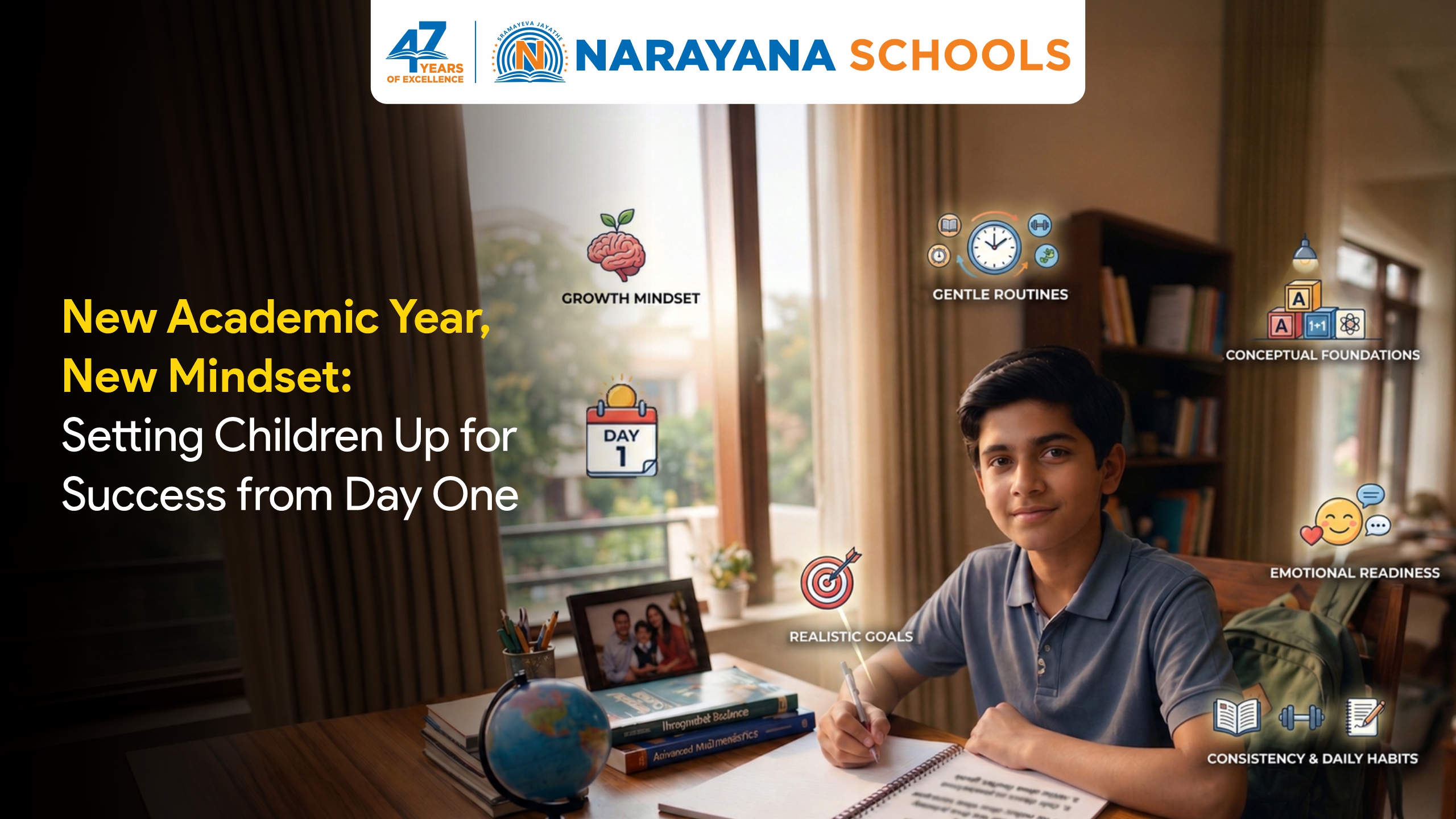
The summer holidays are more than just a break, they are a crucial window to reset habits, build the right mindset and prepare children for a strong educational start. Research in education and child psychology shows that how this transition period is utilised can significantly influence academic performance, motivation and emotional well-being in the coming year. The science of fresh starts Behavioural science describes the ‘fresh start effect’, where new beginnings increase motivation and goal commitment. Studies indicate that structured planning before the term begins improves consistency and long-term outcomes. Using the holiday period to gradually introduce routines helps children adapt faster once school reopens. Nurturing a growth oriented mindset during the break Research by Carol Dweck highlights that children who believe they can improve their abilities through effort and practice tend to perform better over time. Encouraging reflection on the previous academic year helps identify lessons learned rather than focusing only on results. Exposure to reading, puzzles and exploratory learning during holidays builds curiosity and confidence. Building gentle and flexible routines Cognitive studies show that maintaining light but consistent daily structures improves focus and readiness. Introducing a balanced routine with reading time, light revision, physical activity and hobbies supports holistic development. Gradually aligning sleep schedules closer to school timings ensures a smoother transition. Strengthening conceptual foundations early Revisiting key concepts from the previous class prevents learning gaps from carrying forward. Educational research supports spaced revision as an effective way to improve retention. Engaging with subjects through real-life applications and activities strengthens understanding beyond textbooks. Supporting emotional readiness before school reopens Holidays are ideal for reducing academic stress and rebuilding emotional balance. Research in child psychology shows that open conversations about expectations for the new year improve adaptability. Setting realistic and measurable goals The holiday period is ideal for setting simple, achievable academic and personal goals. Studies show that writing down goals improves commitment and clarity. Keeping goals flexible allows children to adapt as the academic year progresses. Encouraging consistency through small daily habits Developing small habits like daily reading or problem-solving builds long-term discipline. Research highlights that consistent, low-intensity effort is more effective than last-minute preparation. Reinforcing routine behaviours during holidays makes it easier to sustain them during the school year. Summer holidays are not merely a pause from learning but a preparation phase for future success. When used thoughtfully, this time helps children return to school with clarity, confidence and a positive mindset. By focusing on gradual routines, emotional readiness and consistent habits, the new academic year begins on a strong and balanced note, bringing children closer to achieving their dreams with purpose and confidence.
27 Apr 2026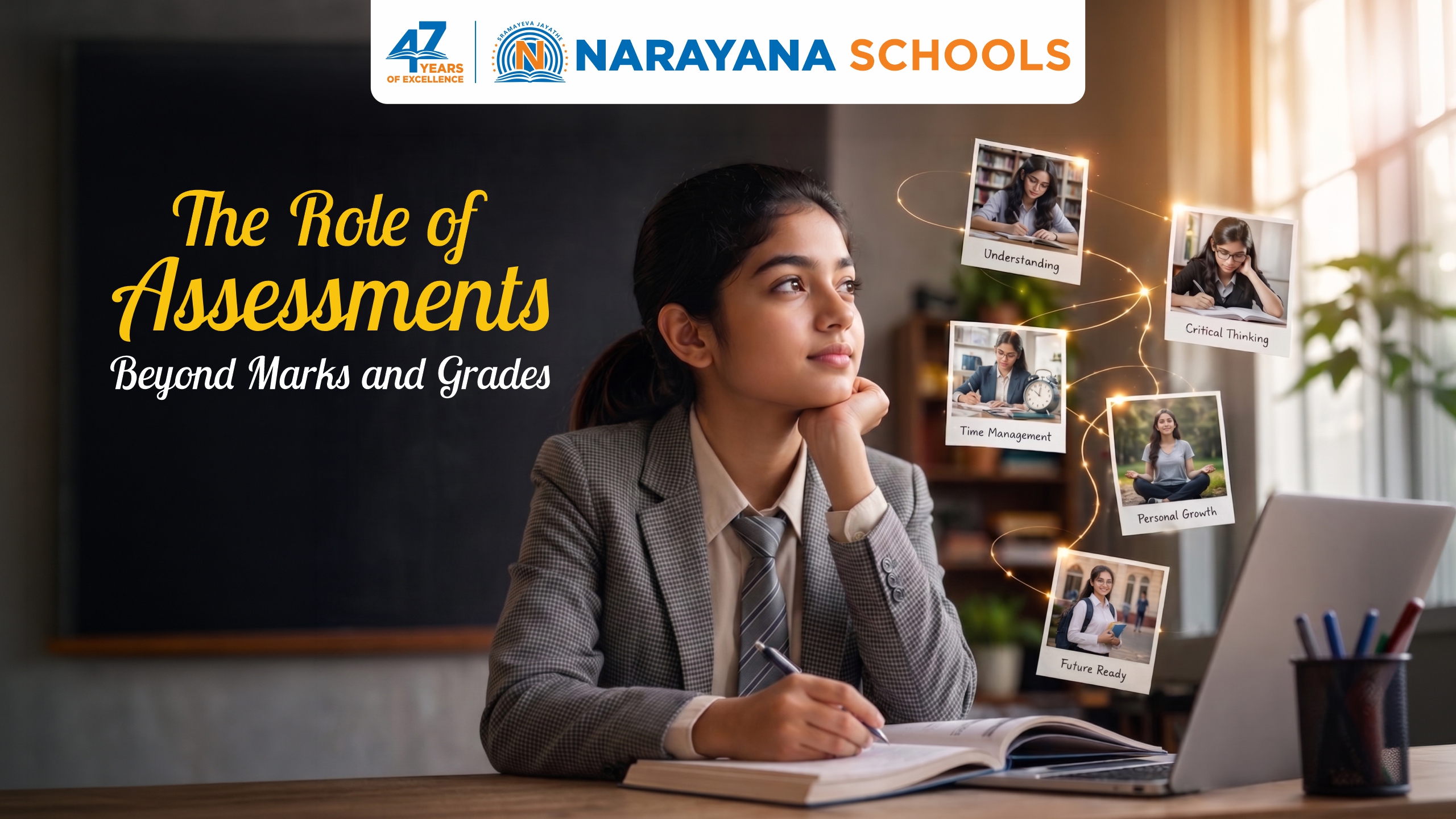 9
In today’s evolving education system, assessments in education are no longer limited to marks and report cards. Research by the Organisation for Economic Co-operation and Development highlights that meaningful assessments play a crucial role in shaping critical thinking, problem-solving skills and long-term academic growth . For families, understanding this shift is essential to supporting children effectively. Assessments as tools for deep learning Modern formative assessments focus on conceptual clarity rather than rote memorisation. Studies show that frequent low-stakes testing improves retention through the ‘testing effect’ in cognitive psychology. Regular evaluations help identify learning gaps early, enabling timely intervention. Building critical thinking and analytical skills Research in educational psychology confirms that application-based questions enhance reasoning abilities. Assessments designed around real-life scenarios encourage logical thinking and decision-making. Analytical evaluation nurtures curiosity and independent learning habits. Strengthening time management and discipline Timed tests train the brain to process information efficiently under structured conditions. Behavioural studies indicate that consistent practice improves focus, planning and productivity. Routine assessments build discipline and reduce last-minute exam stress. Emotional and psychological development According to child development research, constructive feedback improves confidence and resilience. Assessments help children view mistakes as learning opportunities rather than failures. A balanced evaluation system reduces performance anxiety and promotes a growth mindset. Personalised learning through data and analysis Modern assessments provide both quantitative and qualitative insights into performance. Data-driven feedback allows tailored learning strategies based on strengths and weaknesses. Continuous evaluation supports adaptive learning, ensuring steady academic progress. Ensuring the right approach to assessments Educational research recommends focusing on consistency rather than excessive pressure. A mix of objective, subjective and application based tests ensures holistic development. Regular review of performance patterns helps refine study strategies effectively. Assessments, when designed thoughtfully, become powerful tools that go far beyond marks, shaping skills, mindset and lifelong learning abilities. They prepare children not just for examinations, but for real-world challenges and opportunities. At Narayana Schools, we too have numerous assessments throughout the year, from CDF (Concept Definition Formula) type assessments to DPTs (Daily Practice Tests) to Mock Tests to chapter-wise and topic-wise tests along with qualitative and quantitative analysis assessments. Each assessment serves a distinct purpose, focusing not merely on scores but on building concept mastery, time management, critical thinking and rational decision-making. We structure our assessments as mental exercises that shape well-rounded individuals, empowering them to tackle challenges, excel in competition and grow with confidence to achieve their dreams, because at Narayana Schools, your dreams are our dreams .
23 Apr 2026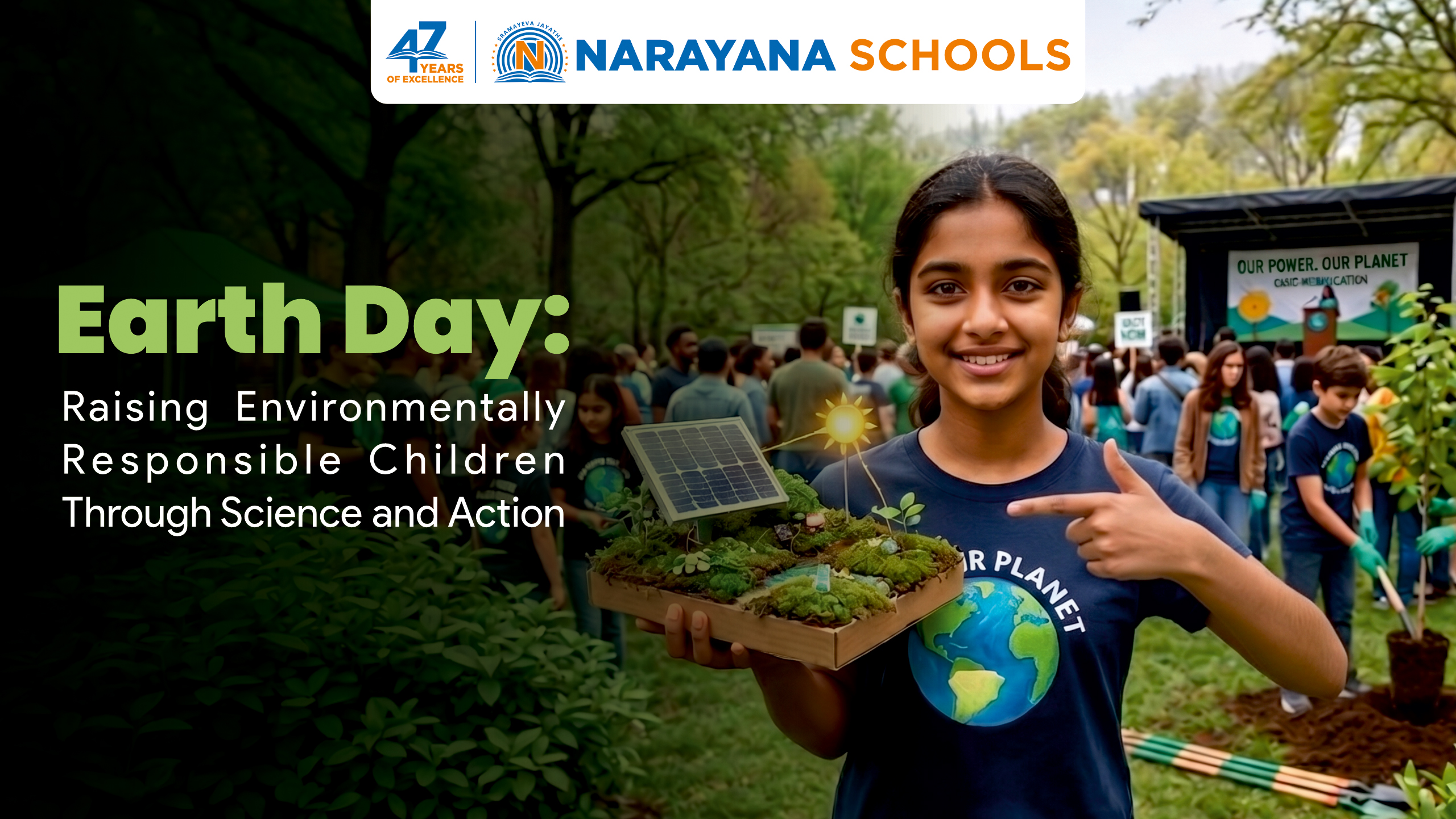 8
Observed annually on 22nd April , Earth Day is a global movement rooted in environmental awareness, sustainability and collective responsibility. For families, it presents an opportunity to nurture environmentally conscious habits in children, grounded in both science and everyday practice. Why Earth Day matters today? Environmental studies highlight rising concerns such as climate change, biodiversity loss and pollution. According to research by the United Nations Environment Programme (UNEP), early environmental education significantly influences lifelong sustainable behaviour. Encouraging awareness in children fosters responsibility, empathy towards nature and informed decision-making. Why 22nd April was chosen? Earth Day originated in 1970 , aligning with the spring season in the Northern Hemisphere, a time symbolising renewal and ecological balance. Academic calendars also influenced the date, ensuring maximum student participation and awareness-building. The timing reflects seasonal transitions, reinforcing the connection between human activity and natural cycles. The science behind environmental awareness Climate science confirms that greenhouse gas emissions are directly linked to rising global temperatures. Studies in ecology show that small behavioural changes, such as reducing waste and conserving energy, collectively create measurable environmental impact. Neuroscience research indicates that experiential learning, such as gardening or nature observation improves retention and environmental sensitivity in children. Key areas families should focus on Waste Management: Segregation, recycling and reducing single-use plastics. Energy Conservation: Efficient use of electricity and promotion of renewable sources. Water Preservation: Mindful consumption and awareness of water scarcity. Sustainable Consumption: Choosing eco-friendly products and reducing overconsumption. Ensuring the right environmental choices Research-based approaches suggest focusing on consistent, small actions rather than occasional large efforts. Verified practices, such as composting, tree plantation and reduced plastic usage have proven environmental benefits. Avoiding misinformation is crucial, relying on credible environmental studies and scientific recommendations ensures meaningful impact. Practical and doable actions for children Participating in simple activities like planting saplings or maintaining small home gardens. Encouraging observation-based learning, such as tracking seasonal changes or local biodiversity. Promoting mindful habits like switching off unused appliances and reducing waste generation. Earth Day is not merely a symbolic celebration but a scientifically grounded reminder of the urgent need for sustainable living. When environmental awareness is combined with practical action and informed choices, children develop into responsible global citizens. By integrating sustainability into daily routines, families can transform awareness into impact, ensuring a healthier planet and a more conscious future generation. At Narayana Schools, an impactful e-waste awareness initiative brought together students, parents and communities to promote responsible disposal and recycling. Through hands-on activities, creative projects and outreach programmes, students learned to view e-waste as a resource rather than waste. The campaign led to the safe collection of over 100 kilograms of e-waste, reflecting the power of collective action. At a time when environmental responsibility is essential and not optional, we believe such efforts inspire a shared vision of a cleaner, greener future, one that is built through awareness, action and collective dream for a greener world, because at Narayana Schools, your dreams are our dreams .
20 Apr 2026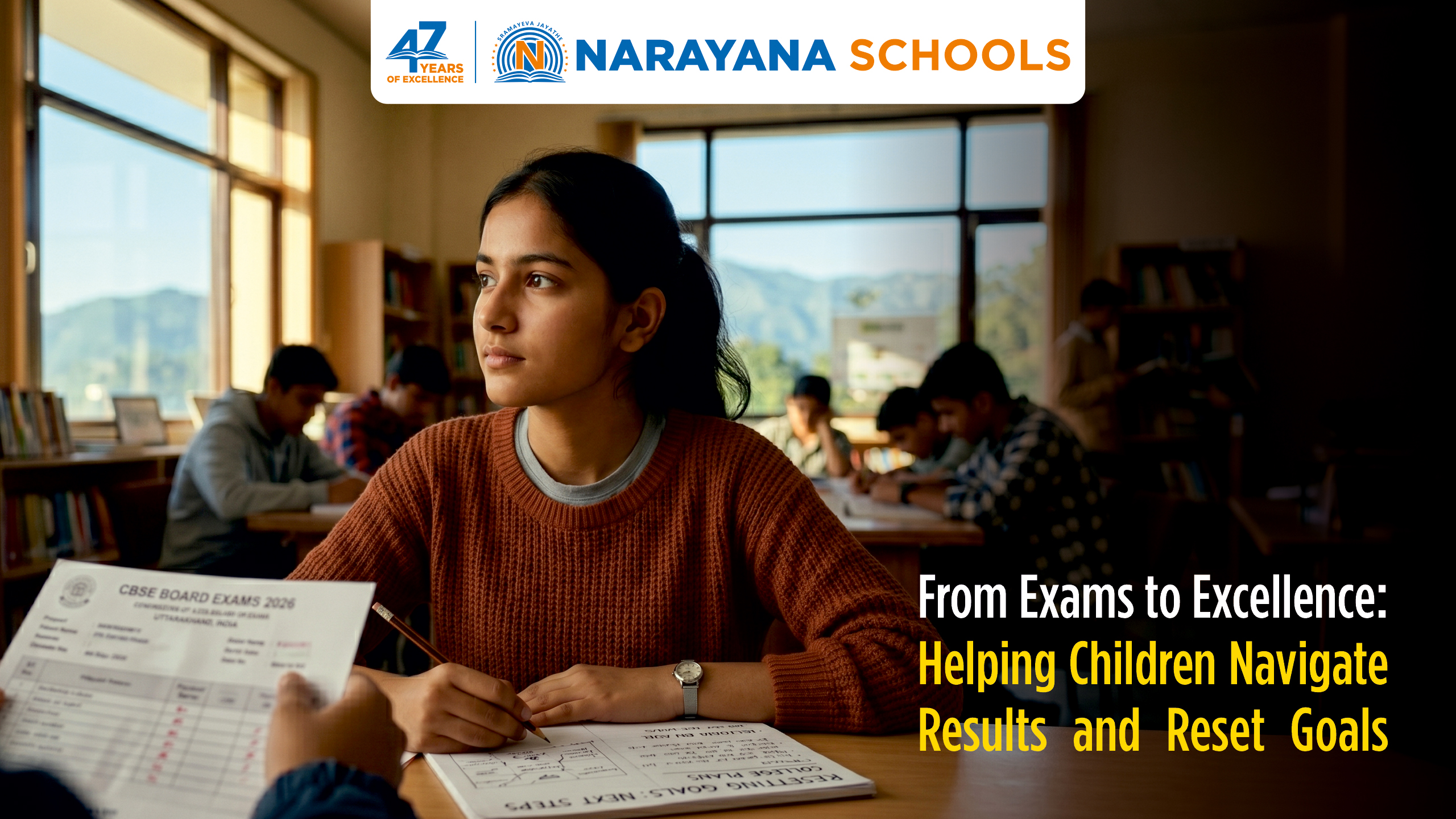 9
In today’s competitive academic environment, exam results for students are often seen as defining moments. However, research by the Organisation for Economic Co-operation and Development (OECD) highlights that long-term success depends more on resilience, adaptability and setting goals than on individual scores. The real opportunity lies in transforming results into a stepping stone for academic growth and future success . Understanding results beyond marks Academic scores reflect performance at a specific point in time, not overall potential or intelligence. Educational research shows that focusing on effort and improvement builds growth mindset and confidence . Interpreting results constructively helps reduce anxiety and promotes emotional stability. The science behind reflection and reset Cognitive psychology highlights that self-reflection strengthens metacognition , improving learning strategies. Studies show that analysing mistakes enhances retention and prevents repetition of errors. Neuroscience research indicates that goal-setting activates motivation pathways, improving focus and persistence. Managing emotional responses Results can trigger stress, disappointment or overconfidence, making emotional support essential. Research in child psychology shows that a supportive environment improves coping mechanisms and resilience . Encouraging open conversations helps children process outcomes and build emotional intelligence. Practical ways to reset goals Break down long-term academic goals into smaller, achievable milestones. Focus on conceptual clarity rather than rote learning to improve performance sustainably. Create structured study routines that balance revision, practice and rest. Use past performance as a diagnostic tool to identify strengths and improvement areas. Ensuring a balanced approach Avoid excessive pressure, balanced expectations improve long-term performance. Encourage consistency over intensity, as sustained effort leads to better outcomes. Monitor progress regularly and adapt strategies based on evolving needs. Examinations are not endpoints but milestones in a larger learning journey . When results are approached with clarity, structure and emotional support, they become powerful tools for reflection and growth. By focusing on resilience, setting structured goals and continuous learning , children can move beyond marks towards true excellence, building the confidence and capability needed to succeed in an ever-changing world. At Narayana Schools, the Disha Mental Well-being Programme is thoughtfully designed to help students de-stress, discuss, analyse their performance, set realistic goals and develop a balanced approach to both academics and life. Supported by a dedicated team of 130+ experienced psychologists and trained counsellors , the programme ensures that every child receives the right emotional and academic guidance at the right time. By nurturing not only academic progress but also emotional strength and character, students are empowered to grow into confident and capable individuals. We believe when children learn to move beyond marks and focus on meaningful progress, every result becomes a step closer to fulfilling their dreams, because at Narayana Schools, your dreams are our dreams .
15 Apr 2026 8
Across India, mid-April marks a vibrant cluster of festivals, Vishu, Baisakhi, Poila Boishakh, Bohag Bihu, Puthandu and Maha Vishuba Sankranti celebrated as regional New Years. In 2026, most of these festivals will be observed on or around 14th–15th April . While each state celebrates in its own unique way, with different names, rituals and cultural expressions, the essence remains the same, renewal, gratitude, prosperity and new beginnings . Why are these festivals celebrated? These festivals mark the solar New Year , when the Sun transitions into Aries (Mesha Sankranti), a significant event in the Indian solar calendar. Historically, agrarian communities celebrated this period as the harvest season , expressing gratitude for crops and praying for abundance. Cultural traditions evolved to reinforce values of renewal, discipline and community bonding. The science behind celebrating it in April Astronomically, this period aligns with the vernal equinox cycle , when day and night durations stabilise, supporting agricultural cycles. Studies in environmental science show that seasonal transitions influence crop cycles, metabolism and lifestyle patterns . The shift towards warmer temperatures makes it ideal for dietary changes, detoxification and physical activity. State-wise names and significance Punjab Baisakhi Celebrates harvest and holds religious significance in Sikh tradition. Kerala Vishu Marks prosperity and new beginnings with the ritual of Vishukkani. West Bengal Poila Boishakh Bengali New Year symbolising financial and cultural renewal. Assam Bohag Bihu/Rongali Bihu Celebrates fertility, agriculture and the onset of spring. Tamil Nadu Puthandu Tamil New Year focusing on prosperity and auspicious beginnings. Odisha Maha Vishuba Sankranti Marks solar transition and seasonal balance. Arunachal Pradesh Mopin (around 5 th April)/Sangken (14 th -16 th April) Agricultural festival seeking prosperity, fertility and protection from evil. (Mopin) Celebrates New Year with water rituals symbolising purification, renewal and positivity. (Sangken) Meghalaya Shad Suk Mynsiem (April) Thanksgiving dance festival celebrating harvest, peace and community harmony. (Major Khasi festival) Manipur Cheiraoba/Sajibu Nongma Panba (late March/early April) Traditional New Year marking renewal, spiritual cleansing and family unity. Tripura Garia Puja Worship of deity Garia for a good harvest, prosperity, livestock well-being and community happiness. Tripura/Mizoram (Chakma Community) Biju Festival Marks New Year and seasonal change with rituals, water celebrations and cultural performances. Cultural food and celebrations Seasonal foods like jaggery, rice, coconut and fresh vegetables dominate festive meals, aligning with nutritional needs. Traditional dishes such as payasam, pitha, sattu and festive thalis reflect regional diversity. Celebrations include dance, music, temple visits, community feasts and rituals , strengthening social cohesion. Scientific and lifestyle relevance Nutrition science suggests seasonal foods during this period support digestion, immunity and energy balance . Cultural routines like early rising, cleaning homes and structured rituals reinforce discipline and mental well-being. Exposure to traditions enhances cognitive development, cultural identity and emotional grounding in children. Making festivals meaningful for children Encourage participation in traditions to build cultural awareness and values . Introduce the scientific reasoning behind rituals to foster curiosity and logical thinking . Balance celebrations with learning to create holistic development experiences. These festivals are more than celebrations, they represent a harmonious blend of science, culture and life skills . By understanding their deeper significance, families can transform them into opportunities for learning, connection and growth, ensuring that traditions continue to inspire future generations in meaningful ways.
13 Apr 2026

