

Explore stories and insights
Loading...


 9
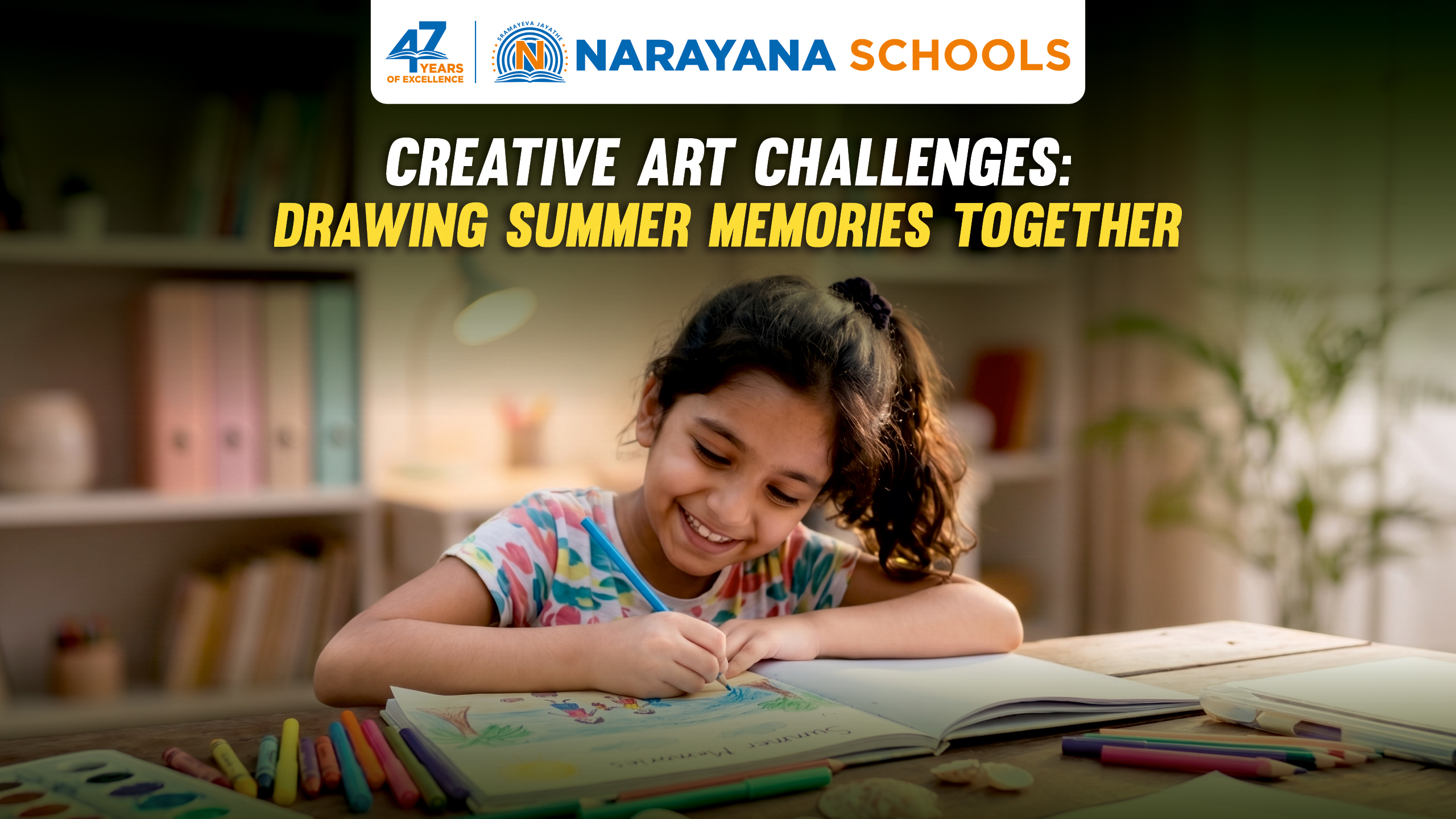
Summer holidays open a valuable window for creative learning for children , where imagination thrives beyond textbooks. Research in neuroscience and child development confirms that artistic activities stimulate the brain’s right hemisphere, improving creativity, emotional expression and problem-solving skills. Structured summer art challenges provide both freedom and direction, ensuring that creativity remains consistent rather than occasional. Why creative art challenges matter? Studies in developmental psychology show that drawing and visual storytelling enhance fine motor skills and cognitive flexibility . The American Art Therapy Association highlights that art helps children process emotions and reduce stress. Creative engagement during holidays prevents passive screen time and supports holistic child development . Age-wise creative art challenges Pre-Primary Level Focus: Sensory exploration, basic shapes, colour recognition. Early art exposure strengthens hand-eye coordination and neural pathways . Activity Description Benefit Finger Painting Summer Scenes Use colours to depict sun, trees, beaches Improves sensory and motor skills Shape-Based Drawing Create objects using circles, squares Builds visual recognition Colour-the-Season Sheets Summer-themed colouring pages Enhances focus and creativity Primary Level Focus: Imagination, storytelling through art. Drawing improves memory retention and visual learning . Activity Description Benefit Draw a Summer Holiday Memory Illustrate a favourite vacation moment Boosts recall and expression Nature Sketch Journal Daily drawing of plants, birds, sky Builds observation skills Comic Strip Creation Create short summer stories in panels Enhances narrative thinking Middle School Level Focus: Creativity, experimentation. Creative challenges enhance divergent thinking , a key innovation skill. Activity Description Benefit 7-Day Art Challenge Different themes each day (sunset, travel, food) Encourages consistency Perspective Drawing Streets, landscapes, buildings Develops spatial awareness Recreate Famous Art Interpret known artworks in personal style Builds analytical creativity Secondary School Level Focus: Conceptual thinking, artistic depth. Art at this stage improves abstract thinking and emotional intelligence . Activity Description Benefit Theme-Based Illustration Climate, summer heat, environment Encourages critical thinking Digital Art Projects Use design apps for summer posters Builds tech-art integration Mood Board Creation Combine textures, colours, images Enhances visual communication Senior Secondary and Beyond Focus: Expression, portfolio building. Advanced creative work strengthens problem-solving and independent thinking . Activity Description Benefit Personal Art Portfolio Document summer experiences visually Prepares for creative careers Social Awareness Art Posters on sustainability or climate Builds purpose-driven creativity Mixed Media Projects Combine photography, painting, collage Encourages innovation Making art a meaningful habit Set a flexible daily creative routine without over-structuring. • Encourage showcasing artwork through family discussions or mini exhibitions. • Balance guided challenges with free drawing time to avoid burnout. Creative art challenges are not merely activities, rather they are tools for expression, reflection and growth. In a fast paced academic environment, such initiatives ensure that summer becomes a season of imagination, emotional well-being and lifelong creativity, where every drawing tells a story and every colour captures a memory.
 25 May 2026
 9
Summer holidays are more than a break from school, they are a critical window for building reading habits in children . Research on the summer slide (learning loss during summers) shows that students who do not engage in reading can lose up to 20% of academic progress. In contrast, regular reading enhances vocabulary, comprehension and emotional intelligence. A family friendly summer reading list ensures that learning continues in a relaxed and engaging way. Why summer reading matters? Cognitive science research confirms that reading strengthens neural connections , improving memory and analytical thinking. Studies by educational institutions highlight that children who read for pleasure perform better academically across subjects. Reading also develops empathy, creativity and attention span. Age-wise reading list for children Pre-Primary Level Focus: Visual learning, language development, curiosity. Picture books improve word recognition and cognitive association . Book Title Author Key Benefits The Very Hungry Caterpillar Eric Carle Builds sequencing and early comprehension Brown Bear, Brown Bear, What Do You See? Bill Martin Jr. Enhances memory and pattern recognition Amar Chitra Katha (Starter Series) Various Introduces Indian culture through visuals Primary Level Focus: Imagination, comprehension, moral learning. Narrative reading improves language fluency and comprehension speed . Book Title Author Key Benefits Panchatantra Vishnu Sharma Develops ethics and problem-solving Magic Tree House Series Mary Pope Osborne Encourages curiosity in history and adventure Children’s Stories Ruskin Bond Builds simple language and relatability Middle School Level Focus: Critical thinking, curiosity. Fiction reading enhances creativity , empathy and social cognition . Book Title Author Key Benefits Harry Potter Series J.K. Rowling Enhances imagination and complex thinking The Blue Umbrella Ruskin Bond Builds emotional intelligence Wings of Fire (Young Readers Edition) A.P.J. Abdul Kalam Inspires scientific curiosity and ambition Secondary School Level Focus: Analytical skills, awareness Reading diverse genres builds higher order thinking . Book Title Author Key Benefits The Diary of a Young Girl Anne Frank Builds historical understanding To Kill a Mockingbird Harper Lee Encourages ethical reasoning Ignited Minds A.P.J. Abdul Kalam Motivates goal-setting and vision Senior Secondary School Level and Beyond Focus: Real-world skills, deep thinking Non-fiction reading improves decision-making and problem-solving skills . Book Title Author Key Benefits Sapiens Yuval Noah Harari Develops interdisciplinary understanding Atomic Habits James Clear Builds behavioural and habit-forming skills Indian Non-fiction (Science/Economics) Various Enhances practical knowledge and awareness Making reading a habit Create a reading routine of 20–30 minutes daily. Encourage discussions to deepen comprehension. Blend physical and digital reading for accessibility. A thoughtfully curated reading list for kids is not about academic pressure but about nurturing curiosity. With the right mix of storytelling, knowledge and imagination, reading transforms vacations into a time of discovery, growth and meaningful learning.
23 May 2026 9
With summer comes vacation periods when kids enjoy playing outdoors, trips, and relaxation. From a scientific point of view, however, summer is associated with increased risk of heat exposure and dehydration . In paediatric and environmental sciences, studies show that kids are especially susceptible to heat because of their poor body thermoregulation ability. Understanding temperature and exposure to sun The World Health Organization (WHO) warns that heat is a growing health risk, especially for children. Extended exposure to ultraviolet or UV rays causes sunburn, damage to the skin and other serious effects. The likelihood of heat exhaustion gets significantly higher during peak heat hours, i.e., from 11 a.m. to 4 p.m. Early morning sunlight (between 7:00 a.m. and 9:00 a.m.) is considered ideal for safe sun exposure. Studies show that 15–30 minutes of mild sunlight helps the body synthesise Vitamin D without the harmful intensity of midday UV rays. Science of hydrating your body Research reveals children lose fluids at faster rates when exercising because they sweat more. Even mild dehydration can impair mood, concentration and physical performance. Drinking enough water and natural fluids such as coconut water and fresh fruit juices replenishes body salts or electrolytes. School-going children (typically ages 6–12) generally require 1.5–2.5 litres of water daily, depending on activity levels and climate. Adolescents may need 2.5–3 litres. Increased outdoor activity demands higher intake. 3 . Ways to protect from the Sun According to dermatological scientists, use of broad-spectrum sunscreen with SPF 30 or greater is recommended. In order to lessen direct exposure, wear protective clothing, hats and sunglasses, light cotton dress. It is important to reapply sunscreen every 2 to 3 hours, especially if outside. Make a safe routine Scheduling outdoor play during early morning hours or evenings can limit heat. To avoid fatigue and overheating, one can enjoy indoor activities during peak heat hours. Routines with adequate rest, hydration and nutrition are conducive to wellness. Nutrition to bolster summer resilience Fruits and vegetables such as watermelon, cucumber and oranges keep your body hydrated. It is easier to digest light home cooked meals which help keep the energy level up. Staying away from junk foods and sweetened beverages avoid dehydration and tiredness. Try consuming: Watermelon and cucumber: High water content (over 90%) aids hydration and regulates body temperature. Curd (yoghurt): Contains probiotics that improve gut health and reduce heat-related digestive issues. c. Coconut water: Rich in electrolytes like potassium, helping replenish lost minerals. d. Buttermilk (chaas): It improves digestion and has a natural cooling effect due to lactic acid bacteria. e. Raw mango drinks (aam panna): Traditionally used to prevent heat stroke; rich in salts and antioxidants that restore electrolyte balance. Spotting early symptoms Fatigue, dizziness, parched lips and decreased urine production are signs of dehydration. Heat exhaustion is associated with increased sweating, nausea or headaches. Quick action in terms of cooling down, rehydration and rest will help avoid complications. Fostering awareness and habits In child development studies, it was found that early education about hydration and precautions during sunny weather contributes to building positive habits. Teaching your child to be aware of changes in weather and how their body feels will allow them to develop responsible approaches. Creating good routines will ensure that your children stay active and safe even during their holiday period. Studies indicate that children can lose up to 1 litre of water per hour during intense summer play, making regular hydration breaks essential. Summer safety is not about limiting activities, rather it is about making wise decisions based on scientific facts to make sure your child remains healthy. Parents must find a balance between enjoying the summer season with their kids and keeping them safe from health hazards associated with hot weather.
18 May 2026 10
Every year on 17 May , the world pauses to recognise the extraordinary journey of communication technologies. This date was chosen to mark the signing of the first International Telegraph Convention in Paris in 1865 , which gave birth to the International Telecommunication Union (ITU). Since then, the day has evolved into a global reminder of how science and connectivity shape everyday life. Why it matters? Telecommunication is more than mobile phones or the Internet. It is the invisible web of radio waves, fibre optics, satellites and data systems that keeps societies connected. Research by the ITU shows that resilient networks reduce disaster risks by enabling early warning systems and emergency communication. For families, this means children can continue learning online during disruptions, access digital libraries and stay safe through reliable communication channels. Purpose and Relevance Bridging the Digital Divide: The ITU’s mission is to ensure equal access to technology, so rural and urban communities benefit alike. Education: For school students, connectivity opens doors to interactive learning, exam simulations and global knowledge-sharing. Safety: Telecommunication supports healthcare, disaster relief and even wildlife conservation. Satellite collars, for example, track endangered species such as tigers and elephants, helping scientists protect habitats and prevent poaching. Unique Insights Annual Themes: Each year, ITU sets a theme, ranging from children’s online safety to sustainable development. India’s Contribution: India plays a vital role in ITU, pushing for affordable connectivity and digital inclusion. Conservation Link: Networks are not just for humans; they are lifelines for monitoring biodiversity and protecting endangered species. Practical Steps for Families Encourage Digital Literacy: Children benefit from learning safe, responsible use of technology. Balance Screen Time: Promote hobbies such as reading, drawing, painting and outdoor play alongside digital learning. Discuss Online Safety: Awareness of cyber risks builds resilience. Highlight Real-World Applications: Share how telecom aids disaster relief, healthcare and conservation, making science relatable. World Telecommunication Day is not merely a celebration of technology, rather, it is a call to ensure inclusivity, resilience and sustainability . It is a reminder to guide children towards using digital tools wisely, while appreciating how connectivity is shaping a safer, smarter and more sustainable future. So, in essence, 17 May is a day to reflect on communication as a lifeline, a learning tool and a bridge to opportunity.
14 May 2026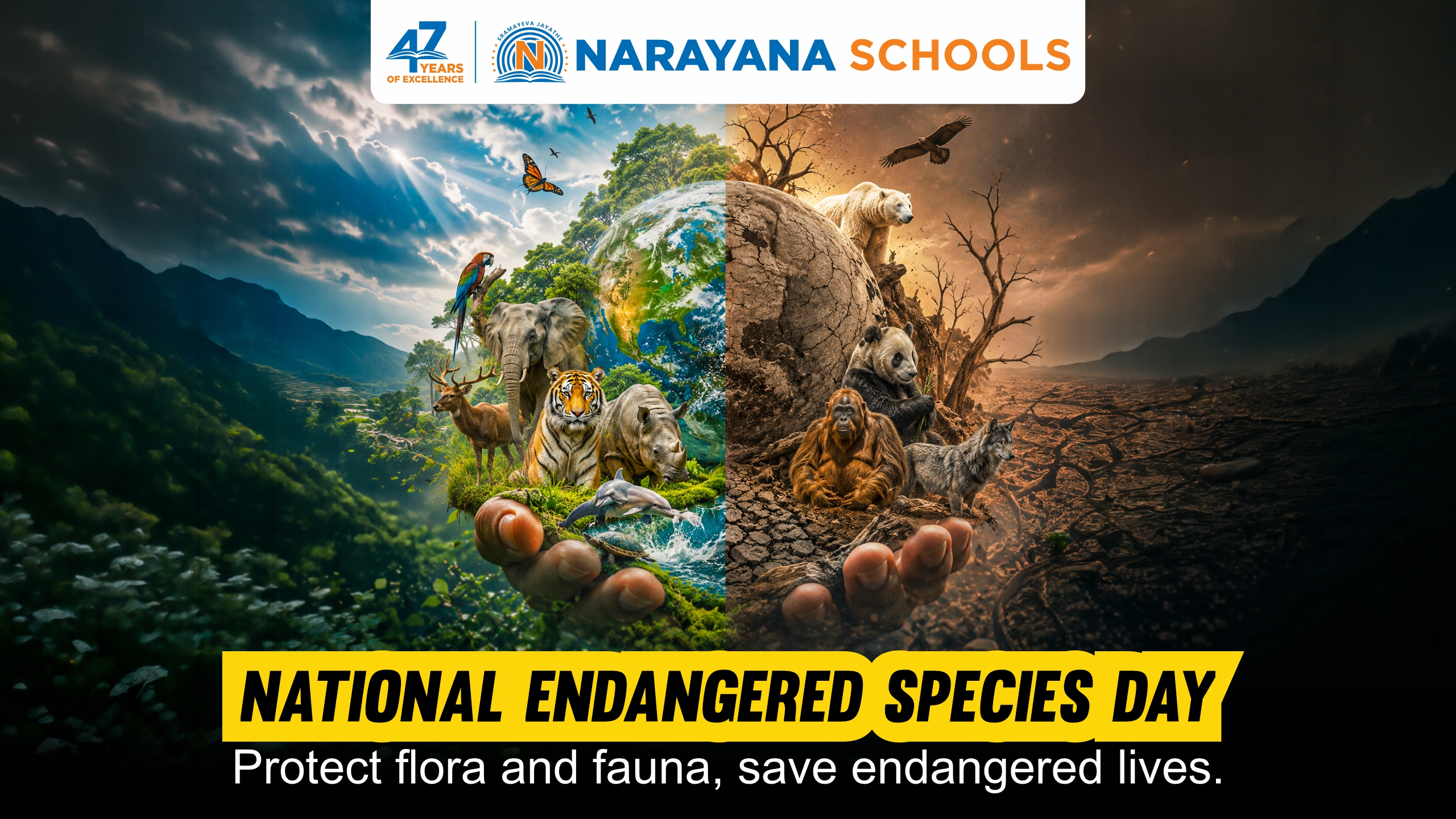 10
National Endangered Species Day , observed every year on the third Friday of May , is more than a date, it is a call for awareness, responsibility and action. First initiated in the United States , this observance has today evolved into a global movement, including India , where biodiversity conservation is both a necessity and a responsibility. Importantly, it is not limited to animals alone, the day highlights the urgent need to protect both flora and fauna , recognising that plants and animals together form the delicate web of life that sustains ecosystems and human survival. Where it began and how it evolved? The day was co-founded in 2006 by the Endangered Species Coalition and David Robinson . It began in the United States as a national awareness campaign but soon expanded globally due to rising biodiversity concerns. Robinson described it as a “worldwide day of action to rescue species and celebrate conservation triumphs”. David Robinson , a seasoned writer, editor and conservation advocate, served as the Founding Director of National Endangered Species Day from 2005 to 2020. With a background in communications and public outreach, he played a pivotal role in shaping the vision of the day, ensuring it became a credible, global platform for protecting both flora and fauna. His qualifications in journalism and leadership gave him the ability to mobilise schools, libraries and conservation groups worldwide, making the observance a truly international movement. Why this day matters scientifically? The International Union for Conservation of Nature Red List is the world’s most authoritative database on species survival, assessing over 1,70,000 species . Current estimates suggest that a significant proportion of species face extinction due to habitat loss, climate change and human activity . Biodiversity loss disrupts ecosystems, affecting food chains, climate stability and human survival. How it reached India and how it is observed? India adopted the observance through environmental education, policy awareness and global conservation alignment. Schools, NGOs and institutions conduct eco-club activities, awareness drives, nature walks and conservation campaigns . It aligns with India’s conservation framework under the Wildlife Protection Act and national biodiversity goals. 4 . Theme for 2026 While global campaigns often highlight wildlife recovery and conservation success , recent themes such as Celebrate Saving Species emphasise positive environmental action and restoration. 5 . IUCN Red List: What it reveals? Species are classified into categories such as Vulnerable, Endangered and Critically Endangered based on extinction risk. Scientific criteria include population decline, geographic range and survival probability. This data guides global conservation policies and national action plans. Endangered Flora and Fauna in India S.No. Species Name Scientific Name IUCN Status (2026) Primary Habitat / Region Major Threats Conservation Efforts 1 Bengal Tiger Panthera tigris tigris Endangered Sundarbans, MP, Assam, Uttarakhand Poaching, habitat fragmentation Project Tiger 2 Asian Elephant Elephas maximus indicus Endangered Assam, Kerala, Karnataka, Odisha Human-elephant conflict, deforestation Project Elephant 3 Lion-Tailed Macaque Macaca silenus Endangered Western Ghats Deforestation, habitat isolation Nilgiri Biosphere Reserve 4 Indian Rhinoceros Rhinoceros unicornis Vulnerable (recovering) Assam (Kaziranga, Manas) Poaching, floods Rhino Vision 2020 5 Gharial Gavialis gangeticus Critically Endangered Chambal, Ganga, Mahanadi rivers River pollution, sand mining Gharial Breeding Centres 6 Great Indian Bustard Ardeotis nigriceps Critically Endangered Rajasthan, Gujarat Power lines, habitat loss Desert National Park program 7 Gangetic River Dolphin Platanista gangetica Endangered Ganga, Brahmaputra Water pollution, fishing nets National Aquatic Animal plan 8 Himalayan Brown Bear Ursus arctos isabellinus Endangered J&K, Himachal Pradesh Climate change, poaching Wildlife Institute monitoring 9 Snow Leopard Panthera uncia Vulnerable Ladakh, Himachal Pradesh, Uttarakhand Habitat loss, retaliatory killings Project Snow Leopard 10 King Cobra Ophiophagus hannah Vulnerable Western Ghats, NE India Deforestation, illegal trade Awareness programmes 11 Red Sandalwood Pterocarpus santalinus Endangered Andhra Pradesh, Eastern Ghats Illegal logging, overharvesting Protected under Convention on International Trade in Endangered Species of Wild Fauna and Flora (CITES), forest patrols 12 Blue Vanda Orchid Vanda coerulea Endangered Northeast India Over collection, habitat loss Orchid conservation programs 13 Indian Wild Mango Mangifera indica var. sylvatica Endangered Western Ghats Deforestation, habitat fragmentation Botanical garden conservation 14 Malabar Mahogany Swietenia macrophylla Endangered Kerala, Western Ghats Logging, habitat loss Plantation and forest protection 15 Cycas beddomei (Beddome’s Cycad) Cycas beddomei Endangered Andhra Pradesh Overharvesting, habitat degradation Protected under Wildlife Act 7. Why this matters for children and future generations? India holds nearly 8% of global biodiversity. This makes India one of the 17 officially recognised megadiverse countries, with four global biodiversity hotspots located within its borders, and thus making conservation education essential. Research shows early environmental awareness fosters long-term responsible behaviour. Small actions like reducing waste, respecting nature, supporting conservation, etc., can create lasting impact. National Endangered Species Day is not merely about endangered animals. It is about safeguarding the balance of life itself. For parents, it offers an opportunity to nurture awareness, scientific thinking and responsibility in children, because protecting biodiversity today ensures a sustainable tomorrow and every small step contributes to a larger environmental legacy.
09 May 2026 8
In an increasingly competitive academic environment , Olympiads and competitive exams are often viewed as essential milestones. However, research in education and cognitive science suggests that the right timing, approach and balance matter far more than an early start alone. When introduced thoughtfully, these aspects can significantly enhance analytical thinking , conceptual clarity and problem-solving skills . When should children begin? Developmental psychology indicates that ages 8–10 are ideal for gradual exposure to structured learning and academic competitions , as logical reasoning skills and abstract thinking begin to strengthen. Early years should prioritise foundational learning , curiosity driven education , and literacy and numeracy skills . Studies warn that premature academic pressure may reduce intrinsic motivation and increase anxiety. 2. How should children start? Begin with a strong conceptual foundation , ensuring clarity in basics before introducing competitive problem-solving. Introduce low-pressure exposure through school-level quizzes, simple Olympiads and activity-based challenges to build confidence gradually. Follow a progressive approach , moving from fundamental questions to higher-order and application-based problems. Encourage consistent and spaced practice instead of intensive study, as research shows this improves retention and understanding. Use regular assessments and feedback to track progress and identify learning gaps early. Maintain a balanced routine , integrating academics with sports, creative activities and adequate rest. Provide guided mentoring and emotional support , helping children view competitions as opportunities to learn rather than sources of pressure. Why conceptual clarity comes first? Research by organisations like National Council of Educational Research and Training highlights that strong fundamentals in Mathematics and Science are critical before competitive exam preparation . Concept based learning improves long-term retention and the ability to solve higher-order thinking questions . Experiential learning and activity-based education are proven to deepen understanding beyond rote memorisation. The science behind competitive learning Cognitive research shows that solving challenging problems strengthens neural pathways and enhances critical thinking skills . The principle of desirable difficulty in learning suggests that moderate challenges improve memory retention and learning outcomes . Regular exposure to complex problem-solving builds mental agility and adaptability. Balancing preparation with holistic growth Child development studies emphasise that over-scheduling and excessive focus on academic excellence can lead to student burnout . A balanced routine including academics, sports, co-curricular activities and rest supports holistic development in children . Research confirms that spaced learning techniques and consistent study habits are more effective than last-minute preparation. Emotional readiness and motivation Studies in child psychology highlight that intrinsic motivation in students leads to better academic outcomes than external pressure. Encouraging a growth mindset (positive learning attitude) and resilience in children builds confidence over time. A supportive environment improves student mental well-being and reduces exam stress . Choosing the right platforms and pathways Not all competitions suit every child. Aligning choices with student aptitude and interest is essential. Gradual progression from school-level competitions to national and international Olympiads ensures steady development. Exposure to Olympiads, hackathons, quizzes, debates and innovation challenges builds 21st-century skills . Ensuring sustainable and healthy preparation Long-term success in competitive exams like IIT-JEE, NEET and Olympiads depends on consistency in learning rather than intensity. Regular student assessments , performance tracking and feedback systems help identify improvement areas. Monitoring student well-being alongside academic growth ensures sustained interest and success. How Narayana Schools builds competitive readiness? At Narayana Schools, competitive exam preparation is introduced through a structured and age-appropriate approach. Students begin by strengthening conceptual understanding and building strong foundation at the eChamps stage (class 1-5), while developing logical reasoning and analytical thinking skills for competitive exams at the eTechno stage (class 6-10) , ensuring a strong academic base. Continuous assessments , personalised learning plans and academic mentoring help track progress and address learning gaps. At the eTechno stage , initiatives such as the Council for Nurturing Academic Potential in Studies (CNAPS) identify and nurture academic excellence in students through structured evaluation. This seamlessly leads into Olympiad preparation programmes , where students develop advanced problem-solving skills , critical thinking and application-based learning , preparing them for national and international competitions . This progression also paves the way for Classes 11–12, a crucial phase where students begin to identify their chosen streams and chart their academic paths forward.
05 May 2026

