

Explore stories and insights
Loading...


 12
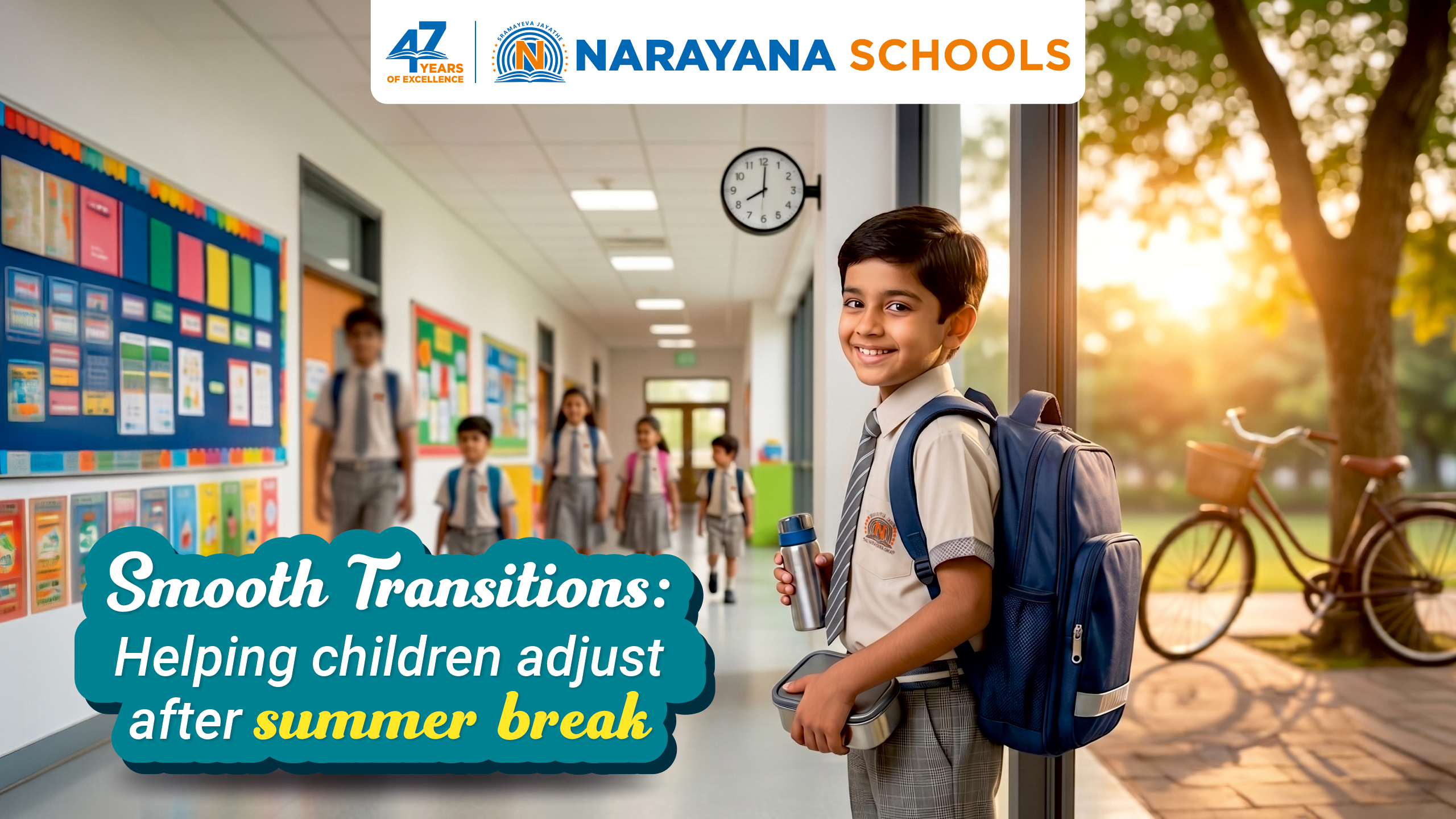
The shift from carefree holidays to structured classrooms often feels abrupt. School reopening adjustment is not merely about timetables, it is deeply linked to a child’s emotional, cognitive and physical rhythm. Understanding this transition is essential for ensuring academic readiness , mental well-being and sustained learning continuity . Why this transition matters? Studies in child psychology show that after extended breaks children often experience a temporary decline in attention span and retention, commonly referred to as summer learning loss . Research highlights that disrupted sleep cycles in children affect memory, mood and concentration. In India’s climate, irregular routines during holidays can also impact energy levels and immunity, making early school days more challenging. The Science Behind It The brain thrives on routine. The circadian rhythm (body’s internal clock) gets altered during holidays due to late nights and relaxed schedules. According to learning research, consistent routines improve neuroplasticity (brain’s ability to adapt and reorganise), enabling better absorption of new concepts. Emotional transitions also play a role, moving from unstructured to disciplined environments can trigger mild stress or resistance. Purpose and long term relevance A smooth transition builds resilience in children , helping them adapt to change more effectively. Establishing early routines strengthens self-discipline and time management skills , crucial for long term academic success. It also fosters a positive attitude towards school, reducing anxiety and enhancing student engagement . Unique insights Children who gradually reintroduce routines show up to 30% better focus levels in the first few weeks of school. Peer reconnection significantly boosts motivation, making social readiness as important as academic preparation. Nutrition plays a subtle but powerful role; balanced diets support cognitive performance during transitions. Practical and doable strategies Gradually reset daily routines for school (sleep, meals, study hours) at least a week before reopening. Reintroduce light academic activities such as reading or puzzles to stimulate the brain. Encourage conversations about school to rebuild excitement and emotional comfort. Maintain a consistent morning routine for students to reduce chaos and stress. Limit excessive screen time to support better sleep and attention spans. Focus on balanced meals and hydration to improve energy and concentration. Collaborate with schools that prioritise holistic development , structured orientation and emotional support systems. A thoughtful transition is not just about the first day. It sets the tone for the entire academic year. When routines, emotional readiness and learning habits align, children step into school with confidence rather than hesitation. In a world where adaptability is key, these small consistent efforts shape stronger, happier learners prepared for both academic and life challenges.
 11 Jun 2026
 9
Observed every year on 8 June, World Ocean Day is a global reminder that oceans are not distant ecosystems. They are central to everyday life, climate stability and the future of children growing up today. How it began? World Ocean Day was first proposed at the 1992 Earth Summit in Rio de Janeiro and was officially recognised by the United Nations in 2008 . The date symbolises a unified global effort to protect oceans, which cover over 70% of the Earth’s surface. Significance of oceans Oceans produce nearly 50% of the world’s oxygen, absorb about 30% of carbon dioxide emissions and regulate global temperatures. They act as Earth’s natural climate regulator, distributing heat through ocean currents. Over 3 billion people depend on marine biodiversity for food and livelihoods. Coral reefs and mangroves protect coastal populations from storms and erosion. The global ocean economy is valued at approximately $1.5 trillion annually. Why this day is urgently needed? Oceans face critical threats such as marine pollution, overfishing, coral bleaching and biodiversity loss. Nearly 11 million tonnes of plastic pollution enter oceans every year. Oceans absorb over 90% of excess global heat, acting as buffers against climate change. Rising ocean temperatures are intensifying cyclones, disrupting monsoons and causing extreme weather events. Climate patterns like El Niño and La Niña are driven by changes in ocean temperatures in the Pacific, and significantly influence global weather. El Niño often leads to droughts and heatwaves, while La Niña can trigger heavy rains, floods and stronger monsoons, directly impacting countries like India. The purpose To promote sustainable ocean management, environmental awareness and collective responsibility. Early exposure helps children build environmental values and long-term sustainable habits. Relevance for India With a coastline of over 7500 km, India is highly vulnerable to changes in ocean health. Ocean warming impacts monsoon patterns, agriculture and food security. Rising sea temperatures are increasing the intensity of tropical cyclones. Sea level rise threatens coastal regions through flooding and erosion. Fascinating facts that spark curiosity More than 80% of the ocean remains unexplored. The ocean makes up about 99% of the planet ’s living space by volume. It means that most of the space where living things can exist on Earth is inside the ocean. Phytoplankton in the ocean produce at least half of Earth’s oxygen. Practical actions that create impact Encourage reduced use of single-use plastics (e.g., carrying reusable water bottles, using cloth bags, avoiding plastic straws and disposable cutlery). Support waste segregation and recycling at home. Choose sustainable seafood options where applicable (e.g., opting for locally sourced fish like sardines, mackerel, rohu or catla choosing shellfish such as mussels and oysters; avoiding overfished species like certain tuna varieties; and selecting responsibly sourced prawns or salmon). Promote water conservation habits. Engage children in ocean-themed projects, documentaries and eco-activities (e.g., making ocean ecosystem models, creating posters on marine conservation, watching Blue Planet or Our Planet, participating in DIY recycling activities). Participate in local clean-up drives or awareness campaigns. World Ocean Day is not limited to a calendar event. Its growing relevance lies in shaping a generation that understands sustainability as a way of life. When families integrate eco-conscious habits into daily routines, these small actions collectively create measurable environmental impact. In a world increasingly defined by environmental challenges, protecting oceans is not an option, it is essential for ensuring a balanced and sustainable future for generations to come.
06 Jun 2026 9
Observed every year on 5th June , World Environment Day is more than a global event, it is a timely reminder that environmental responsibility begins at home. For families across India, this day presents an opportunity to turn awareness into action through simple, meaningful habits that children can learn and carry forward. How World Environment Day began? World Environment Day was designated by the United Nations following the landmark United Nations Conference on the Human Environment held in Stockholm . This was the first global conference focussed entirely on environmental concerns, where nations collectively acknowledged the impact of human activity on nature. The date 5th June was chosen as it marked the opening day of the conference in 1972 . The first World Environment Day was celebrated in 1973 , signalling the beginning of a global movement towards environmental awareness. The conference also led to the establishment of the United Nations Environment Programme , which continues to lead and coordinate this initiative worldwide. Why World Environment Day matters? Environmental studies highlight that climate change, biodiversity loss and pollution are accelerating at unprecedented rates. Scientific research confirms that rising global temperatures, largely due to greenhouse gas emissions, are directly impacting ecosystems and human health. According to global environmental assessments, even small behavioural changes at the household level can collectively create large scale impact. For children, early exposure to environmental awareness and sustainability practices shapes lifelong values. Studies in behavioural science indicate that habits formed during childhood are more likely to persist into adulthood. The purpose and growing relevance World Environment Day was established to encourage global awareness and action for environmental protection. It closely aligns with the United Nations Sustainable Development Goals , particularly goals such as Climate Action ( SDG 13 ), Responsible Consumption ( SDG 12 ) and Life on Land ( SDG 15 ). Over the years, its relevance has only increased as challenges like plastic pollution, water scarcity and air quality concerns continue to grow, especially in rapidly developing countries like India. The purpose today extends beyond awareness. It is about sustainable living, climate education and responsible consumption . Integrating these ideas into everyday life ensures that children understand not just the ‘what’ but also the ‘why’ behind conservation. Practical ways families can contribute Promote mindful consumption: Reducing waste at home, reusing materials and avoiding single use plastics instil responsible habits. Encourage water conservation: Simple practices like turning off taps and reusing water help children understand resource value. Plant and nurture greenery: Growing plants or maintaining a small garden builds environmental responsibility and patience. Adopt energy saving habits: Switching off unused appliances and using natural light teaches efficient resource use. Practice waste segregation: Separating biodegradable and non-biodegradable waste introduces practical sustainability. Engage in eco-friendly activities: Nature walks, recycling crafts or community clean-ups make learning interactive and impactful. Lead by example: Children learn most effectively through observation. Consistent actions reinforce values more than instructions. World Environment Day is not limited to a single date. Its true impact lies in integrating sustainable practices into daily routines. When environmental care becomes a natural part of life, it shifts from being an obligation to a shared responsibility. For parents, the goal remains clear, to nurture environmentally conscious individuals who value sustainability not as a subject, but as a way of life. The Narayana approach At Narayana Schools, environmental awareness is not limited to a single day. Across many campuses, it is already an active and evolving part of everyday learning. Classroom concepts are consistently brought to life through initiatives such as plantation drives, waste segregation practices, eco-club engagements and sustainability-led student activities. Students regularly participate in projects centred around environmental responsibility, enabling them to connect academic learning with real-world relevance and impact. Sustainable Development Goal ( SDG ) projects have been introduced as an integrated part of the Life Skills curriculum. Implemented as a central Pan India initiative, students from Grades 3 to 9 engage in two structured projects per grade, designed to build awareness, responsibility and problem-solving skills around sustainability. This approach is further strengthened through three key clubs: - Young Entrepreneur Club - Community Service Club - Eco (Green) Club Where students actively collaborate, innovate and contribute towards meaningful environmental and social change. Observances like World Environment Day are used as meaningful touchpoints to further strengthen this awareness through hands-on, experiential learning across campuses. With a growing focus on sustainability, Narayana Schools continue to expand such initiatives, aiming to nurture environmentally conscious individuals who view sustainability not merely as a topic but as a shared responsibility. Every dream we nurture today is rooted in a better tomorrow, one that is greener, more responsible and sustainable, because at Narayana Schools, your dreams are our dreams .
04 Jun 2026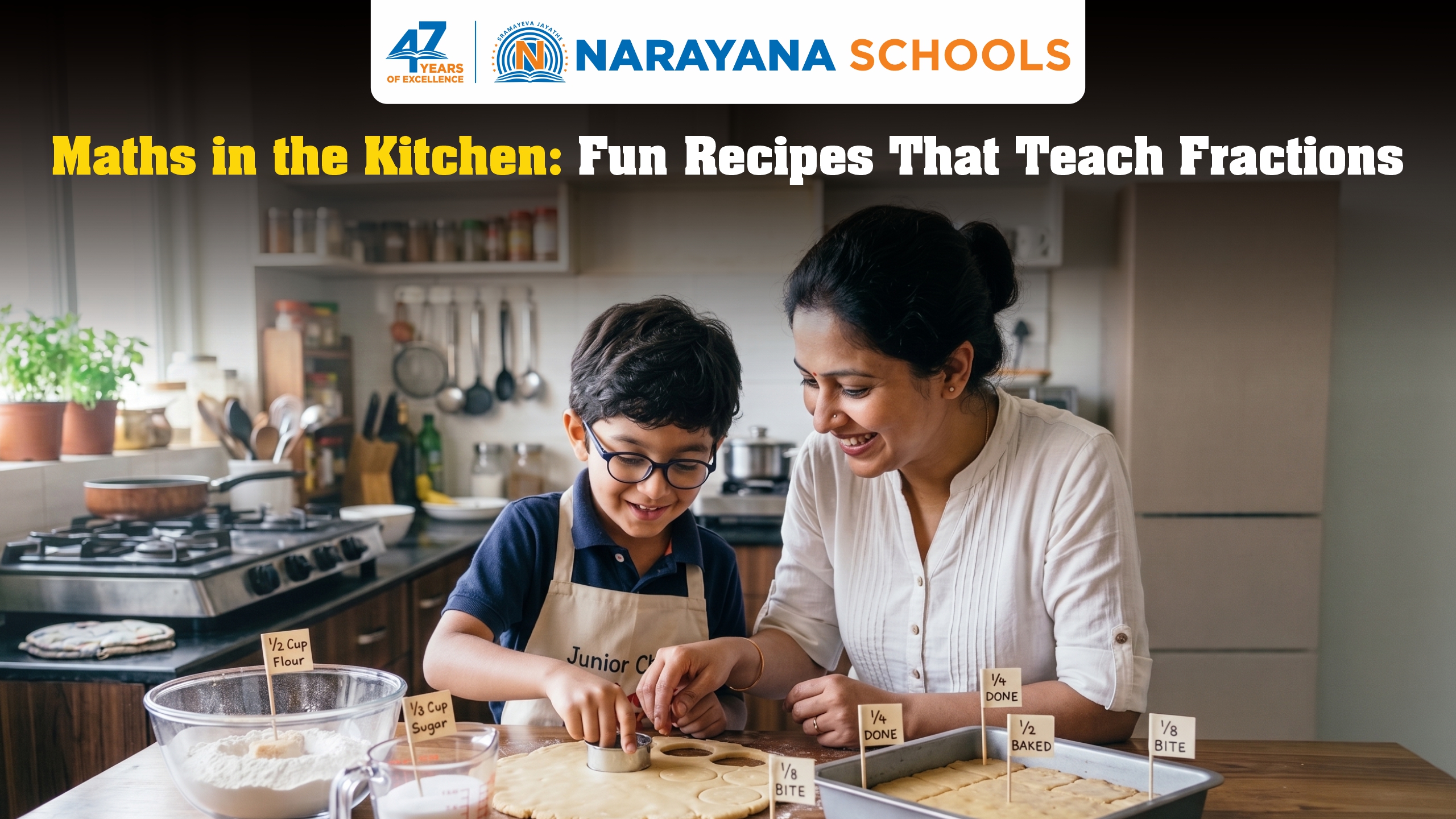 12
In many households, the kitchen is more than a place for cooking, it is an untapped classroom. Teaching fractions through cooking is increasingly recognised by educators as an effective form of experiential learning. Research in cognitive science highlights that children grasp abstract mathematical concepts better when they are linked to tangible real world activities. This makes kitchen maths activities one of the most engaging ways to build numerical understanding. Why learning fractions through cooking works? Studies show that hands-on learning improves concept retention by up to 75% compared to passive methods. Cooking naturally introduces fractions, like half, quarter, double, etc., making it a practical application of maths. According to educational research, multi-sensory activities enhance problem-solving and logical reasoning skills . Age-wise kitchen activities to teach fractions Pre-Primary Level Focus: Basic division, visual understanding. Fruit salad: Cutting fruits into halves and quarters introduces simple fractions visually. Chapati sharing: Dividing a roti into equal parts builds early division concepts. Visual exposure helps develop early number sense and pattern recognition . Primary Level Focus: Basic fractions, measurement. Sandwich making: Using half slices or quarter portions teaches fraction values. Measuring ingredients: 1 cup, ½ cup, ¼ cup measurements during baking introduce proportional thinking. Measurement based tasks improve numerical accuracy and comprehension . Middle School Level Focus: Equivalent fractions, operations. Recipe adjustment: Doubling or halving recipes teaches multiplication and division of fractions. Pizza fractions: Dividing pizzas into slices demonstrates equivalent fractions and ratios. Applied maths strengthens analytical and reasoning abilities . Secondary School Level Focus: Ratios, proportions. Scaling recipes: Adjusting servings introduces ratios and proportional reasoning. Ingredient substitution: Understanding proportions when replacing ingredients builds flexibility in thinking. Real life applications improve higher order mathematical thinking . Senior Secondary and Beyond Focus: Advanced application, precision. Nutritional calculations: Analysing ingredient quantities links fractions with percentages. Budget cooking: Planning meals within a budget integrates fractions with financial literacy. Practical maths enhances decision making and real world problem-solving . Making kitchen maths effective Encourage participation in simple cooking tasks regularly. Use everyday recipes to demonstrate fraction concepts naturally. Maintain a balance between guidance and independent exploration. Mathematics often appears abstract in textbooks, leading to disengagement. However, when integrated into daily life, it becomes meaningful and intuitive. Research indicates that children exposed to experiential maths develop stronger conceptual clarity and confidence. The kitchen, therefore, transforms into a dynamic learning space, where fractions are not just numbers on paper but real, visible and understandable. Such approaches ensure that learning is continuous, practical and deeply rooted in everyday experiences, preparing children for both academic success and real world challenges.
30 May 2026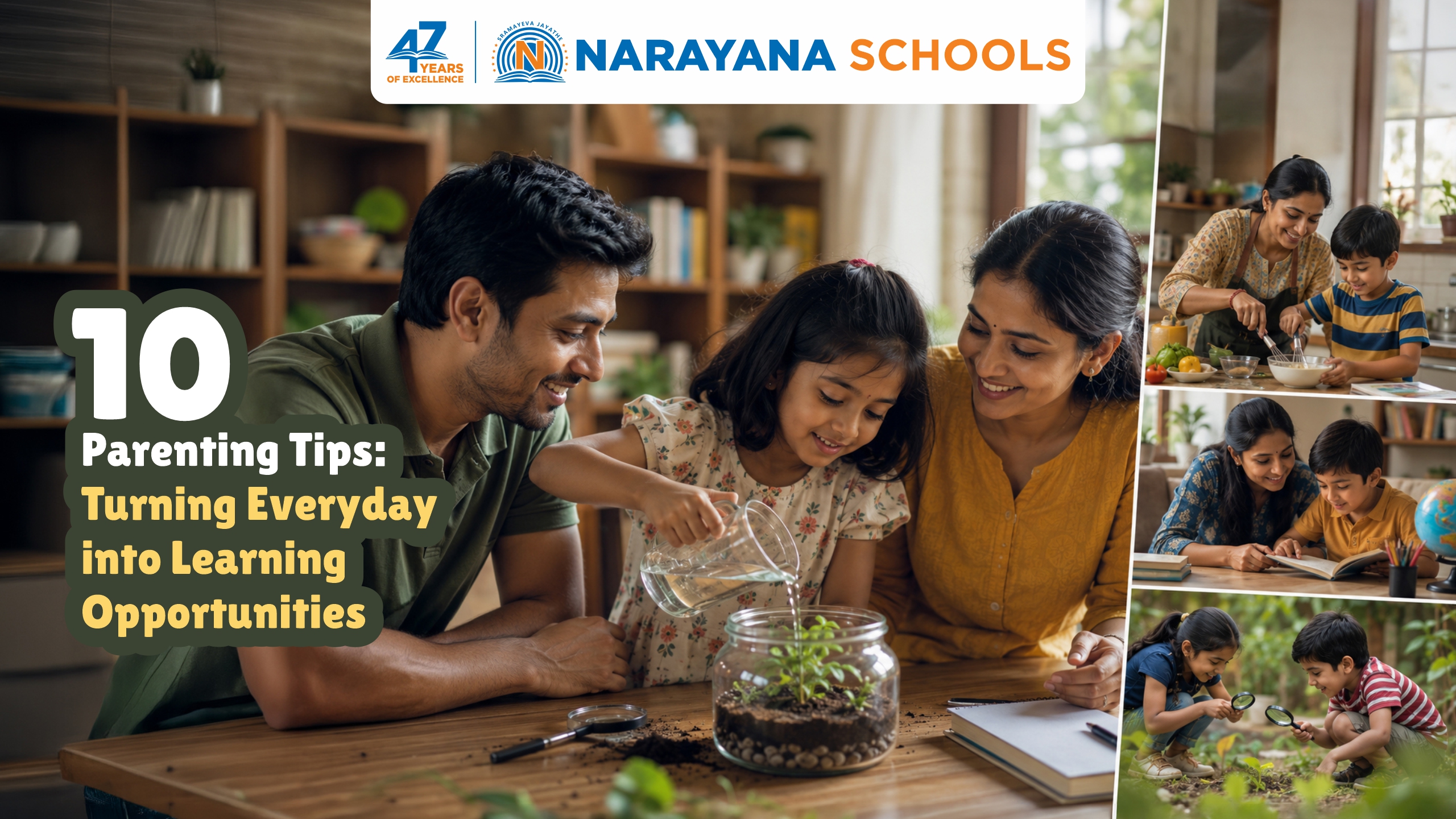 10
In today’s educational environment, everyday learning for children has become essential rather than optional. Research in developmental psychology reveals that a significant portion of learning happens through daily interactions and real-life experiences, not just textbooks. The concept aligns with modern education frameworks that emphasise experiential learning, critical thinking and life skills development . Why everyday learning matters? Neuroscience studies confirm that learning through experience strengthens neural pathways , improving retention and understanding. The National Education Policy (NEP) 2020 promotes application based learning over rote memorisation. Everyday exposure to problem-solving builds confidence, adaptability and independent thinking. 10 Practical Parenting Tips Integrate learning into daily routines: Simple activities like cooking, shopping or travelling can introduce concepts of maths, science and observation. Encourage curiosity driven conversations: Open ended discussions about daily experiences help develop language skills and critical thinking. Use real life problem solving: Situations such as planning a day or managing small tasks enhance decision making abilities. Promote reading beyond textbooks: Books, newspapers and articles build comprehension, vocabulary and awareness. Leverage play as a learning tool: Educational games and creative play (such as role-playing, building with blocks, storytelling with toys, art and craft activities) improve cognitive flexibility and memory. Encourage observation of surroundings: Nature walks, noticing patterns or observing changes in weather strengthen analytical skills. Introduce financial awareness early: Basic concepts like saving, budgeting and value of money develop practical intelligence. Balance screen time with meaningful engagement: Digital tools, when used wisely, can support interactive and visual learning. Foster creativity through daily expression: Drawing, writing or storytelling helps in emotional development and innovation. Build consistency through flexible routines: A balanced structure ensures that learning becomes a habit without creating pressure. Making it practical and sustainable Keep learning natural and connected to real-life contexts rather than forced instruction. Encourage participation and independence to build confidence. Maintain a balance between structured guidance and free exploration. Everyday learning is not an added responsibility, rather it is a powerful approach to holistic development. When everyday moments are gradually turned into learning opportunities, the process becomes natural, ensuring that education is not perceived as a chore but as an engaging and seamless part of daily life. Scientific studies indicate that children exposed to continuous real world learning are better equipped to handle academic challenges and life situations. In a rapidly changing world, the ability to learn, adapt and think independently holds greater value than memorising information. Transforming ordinary moments into meaningful learning experiences ensures that education becomes continuous, practical and deeply engaging, thus laying the foundation for lifelong success.
29 May 2026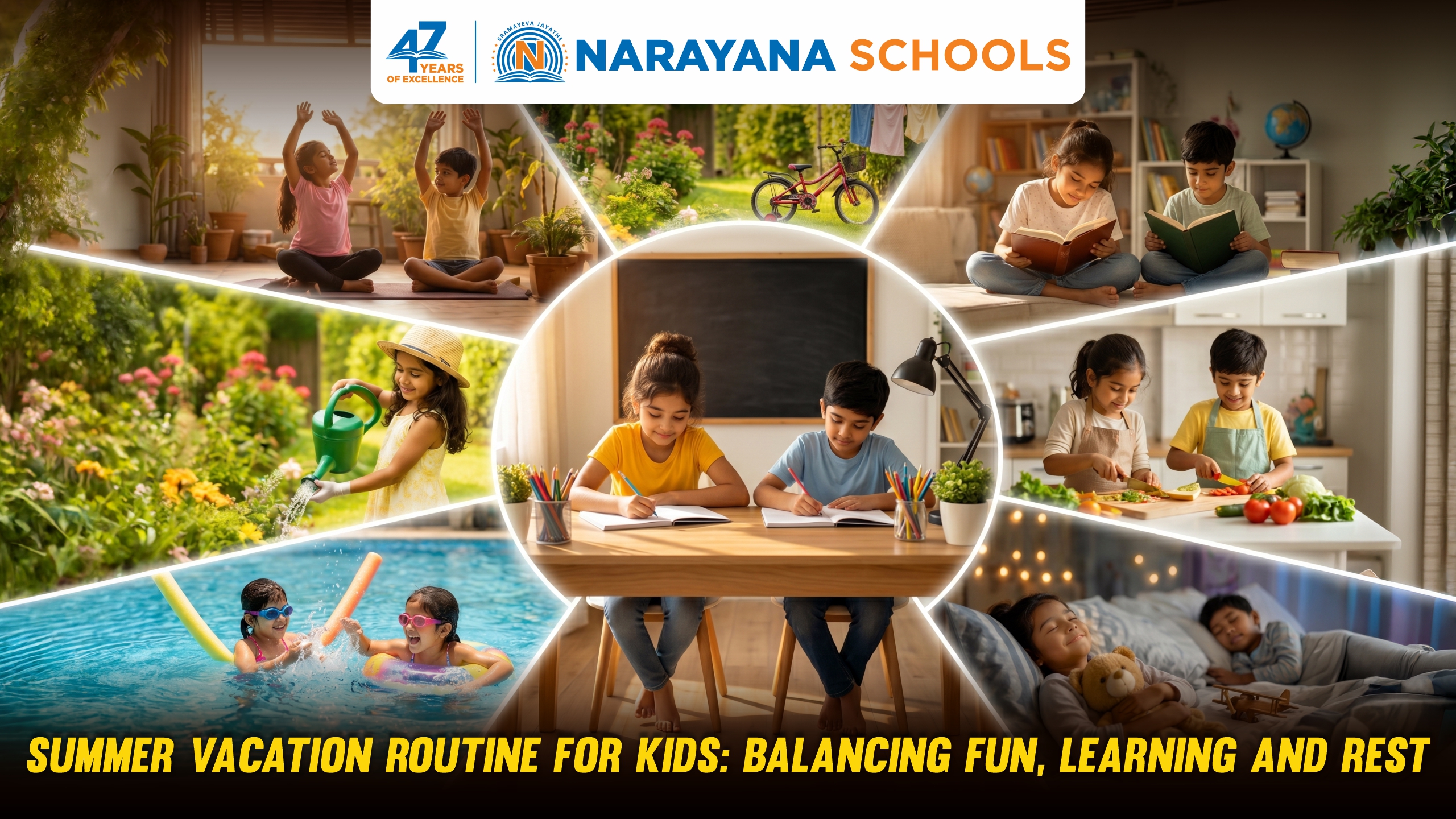 8
Summer vacation is often seen as a break from structured schooling, yet educational research suggests it plays a crucial role in a child’s cognitive and emotional development . Studies on the summer learning gap indicate that children may lose up to 20–30% of academic gains if this period is entirely unstructured. At the same time, over-scheduling can lead to fatigue and reduced creativity. The key lies in a balanced summer routine for kids that blends flexibility with purpose. Why summer routines matter? Research in cognitive science highlights that consistent daily routines improve memory retention and emotional stability . The Indian climate, with extreme summer conditions, also necessitates planned indoor and outdoor activities. Summer provides a unique opportunity for experiential learning beyond textbooks . Start with a flexible daily structure A light framework, like, wake up time, study hour, playtime and sleep schedule, etc., creates stability without rigidity. Studies show that predictable routines help children develop self-discipline and time management skills . Avoid overly strict timetables. Flexibility encourages independence and reduces stress. Blend learning with enjoyment Allocate 1–2 hours daily for summer learning activities such as reading, puzzles or concept revision. Research by the National Education Policy (NEP) framework supports activity based and interdisciplinary learning during breaks. Educational games, storytelling and real life problem-solving enhance retention far better than rote study. Prioritise physical activity and outdoor play The World Health Organization recommends at least 60 minutes of physical activity daily for children. Activities such as swimming, cycling and outdoor play in early mornings or evenings help maintain fitness while avoiding extreme heat. Including calming practices like meditation or mindfulness exercises improves focus, emotional regulation and mental well-being. Physical activity combined with relaxation improves focus, mood and overall academic performance . Encourage hobbies and skill building Summer is ideal for developing creative and life skills such as gardening, cooking, art, music or coding . Neuroscience research shows that learning new skills strengthens neural connections and boosts confidence. Hobby-based learning fosters intrinsic motivation , which is critical for long-term success. Limit screen time mindfully Excessive screen exposure is linked to reduced attention span and sleep disruption. Setting reasonable limits while allowing educational content ensures a healthy balance. Encouraging offline engagement promotes creativity and social interaction. Focus on rest and family bonding Adequate sleep is essential for growth, with studies linking it to improved memory and emotional health. Family activities such as travel, storytelling or simple shared routines strengthen emotional security. A well-planned summer is not about constant productivity but about meaningful engagement . With a thoughtful balance of study, play, creativity and rest, children return to school refreshed, confident and better prepared. For parents, the goal remains simple, to create a summer routine that nurtures curiosity without pressure and discipline without rigidity .
27 May 2026

