

Explore stories and insights
Loading...



 7
As parents, we all want the best for our children. We want them to excel in school, make friends, and eventually find success and happiness in their lives. While it is normal for parents to have these aspirations, it's important to remember that every child is unique and develops at their own pace. Comparing your child to others, whether it's academically, socially, physically, or in any other aspect, can be hazardous to their development and overall well-being. Here are several drawbacks of comparing your child with others: 1. Undermines Self-esteem: When children constantly hear comparisons to their friends or siblings, it can erode their self-esteem. They may begin to doubt their abilities and feel inadequate, which can have lasting psychological effects. This is not an ideal situation for healthy child development . Instead of boosting their confidence, comparisons can lead to insecurity and self-doubt. 2. Suppresses Individuality: Each child is unique, with their own strengths, weaknesses, and interests. Nurturing unique abilities is what parents should aim for. Comparisons can stifle their individuality and creativity, pushing them to conform to someone else's standards. This can hinder their personal growth and prevent them from discovering their true passions and talents. 3. Creates Unhealthy Competition: One of the negative effects of comparison is the creation of unhealthy competition. Healthy competition can be motivating, but when it turns into a constant race to outdo others, it becomes toxic. Children may start to view their friends as rivals rather than allies, which can harm their friendships and overall social development. 4. Ignores Different Learning Styles: Children have different learning styles and abilities. Some may excel in academics, while others may shine in arts, sports, or other areas. Comparing based solely on academic achievements neglects these differences and can lead to frustration and anxiety for those who may learn differently. 5. Fosters Resentment: Constant comparisons can lead to resentment between siblings or peers. Instead of fostering a supportive and nurturing environment, it can create tension and rivalry that may persist into adulthood. 6. Hinders Emotional Growth: When comparisons constantly favour one child over another, it can demotivate a child, and they may develop an attitude where they accept that they will never be better than their friends or siblings. This can affect the way they deal with failures. Eventually, it can prevent them from developing important emotional skills like resilience and adaptability since they didn’t learn how to positively learn from others' success. 7. Limits Exploration and Risk-Taking: Children who fear constant judgement may become risk-averse and avoid trying new things. This can hinder their willingness to explore their interests and take healthy risks, which are essential for personal growth. So, in case you are wondering how you can support your child's development without comparing them with others, here are some methods that you can try: 1. Celebrate their unique achievements: Instead of comparing your child to others, focus on their individual accomplishments, no matter how small. Recognise and celebrate their efforts and progress in areas that interest them. 2. Encourage open communication: Create an environment where your child feels comfortable discussing their fears, successes, and failures without judgement. Encourage them to share their thoughts and feelings. 3. Set realistic expectations: Set achievable goals based on your child's abilities and interests, rather than imposing unrealistic expectations. This will help them develop a sense of self-worth and motivation. 4. Embrace mistakes as learning opportunities: Teach your child that mistakes are a natural part of learning and growing. Encourage them to view setbacks as opportunities for improvement and growth, and then work on them. 5. Promote a growth mindset: Foster a growth mindset by emphasising the importance of effort and perseverance over innate talent. An ideal way to compare and promote a growth mindset is to focus positively on the strengths of a peer or a sibling of your child and encourage them to work on those qualities. This mindset encourages resilience and a willingness to learn from challenges. You can also ask your kids to check out our blog on Top 10 Personality Development Tips for Students . It will help you and your kids understand how having a growth mindset helps in the personality development of a student. Conclusion: In conclusion, there are multiple and serious drawbacks to comparing your child with others. It can be hazardous to their development and well-being. Instead, focus on nurturing their individual growth, celebrating their uniqueness, and creating a supportive environment that allows them to thrive on their own terms. Remember that your child's journey is not just theirs; rather, your contributions to it are significant. And your role as a parent is to be with them, guide them, and support them in becoming the best version of themselves. We, at Narayana, take great care in identifying each child’s unique capabilities and nurture them further with the appropriate support. This helps our students grow into confident adults who are ready to take on the world and its challenges. To stay updated about all the important information from the Narayana Educational Institutions , Join our social media channels: https://t.me/narayanaeducationalinstitutions https://www.facebook.com/TheNarayanaGroup https://www.instagram.com/thenarayanagroup
 20 Sept 2023
 8
What is Personality Development? Personality is not just about appearances; it encompasses the unique set of qualities and an overall impact an individual has on others. It goes beyond physical aspects and reflects how one thinks, behaves, and interacts with the world around them. For students, developing a strong and appealing personality is crucial, as it can significantly impact their academic success, future career prospects, and personal relationships. In this blog, we will explore the top 10 Personality Development Tips for Students. 1. Shyness won't help One of the first hurdles to personal growth for many college students is shyness. While being reserved is natural for some, excessively introverted behaviour can hinder personality development in students . To overcome shyness, students can start by opening up with their close friends and family. They should engage in small talk, join clubs, or volunteer for extracurricular activities such as acting, drama, etc. Gradually, they'll find it easier to connect with others and expand their horizons. 2. Never stop learning Personal growth is an ongoing journey. Students should cultivate a growth mindset, which means they should start believing in their ability to develop talents and intelligence through hard exam and perseverance. They should take advantage of every opportunity to learn new skills, acquire knowledge, and gain experience. Whether it's attending workshops, reading books, or pursuing online courses, continuous learning is the key to self-growth. 3. Be friendly and approachable An individual’s attitude and demeanour play a crucial role in shaping their personality. Being friendly, approachable, and kind towards others not only builds positive relationships but also enhances one’s overall persona. Students should smile often, offer help when needed, and show genuine interest in people's lives. Their approachability will draw others towards them and create a welcoming atmosphere. 4. Enhance your communication skills Communication skills and personality development are closely related. Effective communication is at the heart of personality development. It's not just about talking but also about listening actively and empathetically. Joining communication workshops or practicing with peers can improve an individual’s verbal and non-verbal communication skills. Students can check out our blog 10 tips on how to improve your English speaking skills for help. Being articulate and confident, avoiding slang and jargon, and being a good listener will help them connect with others effortlessly. 5. Work on your ability to get people along In personal, academic, and professional situations, getting along with others is essential. Effective communication, empathy, and conflict resolution are needed. Students should take charge, make goals, and inspire others. Decision-making, problem-solving, and accountability help achieve this goal. Be willing to take on responsibilities, both in academic and extracurricular activities. 6. Radiate confidence Confidence is a cornerstone for an individual’s personality development goals. Students should believe in themselves and their abilities. They should take part in debates and discussions and engage in public speaking activities and programmes at their school. Confidence, combined with a positive outlook on life, will not only boost their self-esteem but also attract others to their personality. 7. Surround yourself with positive people Company shapes your character. Students should seek out positive people who inspire and challenge them. When you're among positive people, you're more likely to stay motivated, stay healthy, and achieve your personal development goals. 8. Shield Your Mind from Negativity Negative thoughts and emotions can be detrimental to personal growth. Students can practice meditation to gain control over their minds. They should surround themselves with positivity by choosing their friends wisely and limiting exposure to negative influences. A clear and focused mind is better equipped to handle challenges and setbacks. 9. Dress neat and smart Appearance is an integral part of one’s personality. Dressing neatly and smartly not only boosts a student’s self-confidence but also leaves a positive impression on others. Students should make sure that their uniform is properly ironed and clean, and their shoes should be polished. 10. Body language speaks volumes Remember that it's not just what one says but how they say it. Body language, such as posture, gestures, and eye contact, plays a significant role in communication. Students should maintain good posture, make eye contact, give a firm handshake, smile warmly, and use gestures that convey confidence and openness. Mastering positive body language is an important personality development skill that can enhance their overall presence and leave a lasting impression. Conclusion: Personality development is a continuous journey that every student should embark on. By implementing these top 10 personality development tips , they can enhance their communication skills, cultivate leadership qualities, radiate confidence, and build meaningful relationships. Remember, one’s personality is not fixed; it's something they can shape and refine over time. When students embrace the process of self-growth, they'll find that it not only enriches their academic and professional lives but also contributes to their overall happiness and well-being. So students, go out there, be the best version of yourself, and embrace the world with open arms. To stay updated about all the important information from the Narayana Educational Institutions , Join our social media channels: https://t.me/narayanaeducationalinstitutions https://www.facebook.com/TheNarayanaGroup https://www.instagram.com/thenarayanagroup
14 Sept 2023 8
For a science student in 11th or 12th grade, it is easy to get confused while choosing the right course for higher studies. For all the parents reading this, it is advisable that you go through this, understand its content, and show it to your kids, as the blog is directed to them for their better understanding. There are several courses available in science disciplines that have multiple prospects, and choosing the right course is almost never easy, but worry not! We are here to help you with that. How to Select the Right Career Path? ● Know What You Love The first job is to identify your interests and understand how you can convert them into a successful career. You have to carefully determine the areas of science that you enjoy studying. These areas are your strengths and will help you grow in your career. Your goal might be to get into an IIT; that is good, but you should also think about the best sub-field of engineering for you. And for that, you need to know clearly which subjects you are most interested in and choose accordingly. • Research Available Courses There are several career options for science students, such as medicine, engineering, architecture, pharmacy, biotechnology, agriculture, etc., and each one is unique. Even the area that interests you might have several interesting courses. For example, you might love studying biology but find it confusing to choose from zoology, botany, microbiology, biotechnology, and the physical sciences. So, research well for the available courses and then proceed. ● Understand Their Prospects The next step is to understand if the course has career prospects for science graduates. Not all fields have the same amount of opportunities as others; for example, a career in medicine might have more prospects than let’s say a career in agricultural science. However, this also depends on how good you are in your field of interest. Make sure you are aware of the prospects of the field in which you are interested in building a career. You must learn about the demand for the course in recent times and how it will help you achieve your professional goals. ● Seek Advice You need to seek the opinion of your parents and teachers before making a final decision. Also, you must ask other people studying in the field about their experiences. Career counselling for science students may also help you make a final decision. ● Trust Your Choice Ultimately it is you who has to make a final decision. Initially, it can be overwhelming, and you might get confused. However, you must trust your instincts and have faith in your abilities. You must remember that you can achieve your targets with a positive attitude and proper career guidance. How to Choose the Right College? Once you have decided on the course you want to opt for, you must choose the right college. You must understand that a highly ranked college might not have an equally good programme of your choice. For instance, the zoology department of a university might be the best in the country, but that won’t help you if your preferred choice of programme is chemistry. Here are a few other ways that will help you select the right college: ● Placements A college with an excellent track record of placement must be one of your top priority. After All, your ultimate goal is to get a good job and earn well. So, opting for renowned colleges with good placement scenarios will allow you to remain worry-free. ● Faculty Faculty is a significant contributing factor to the quality of education at an institute. So, you must know about the faculty of the course in which you are planning to study. An excellent faculty can have a positive influence on your life. They can guide you to do better and attain your goals. ● Research opportunities When we look for colleges for science students, this factor cannot simply be overlooked. An ideal college for science students is one where quality and substantial research is done and regular research papers are published. The institute should also have an infrastructure that supports this research ecosystem. This factor is one of the most visible indicators of the quality of a science institute. Ensure that you do not overlook this. ● Location It is your choice whether you want a college in your home town or not; however, as a science student, this should not be your priority, as good science institutes are few and they are located across the country. For example, the Indian Institute of Science, one of the best scientific research institutes in our country, is located in Bangalore; the best IITs are spread across Mumbai, Chennai, Delhi, Kanpur, etc.; and the National Institute of Pharmaceutical Education and Research, one of the premier institutes in the field of pharma, is located in Hyderabad. Keeping this in mind, you must not compromise on these factors and grab the opportunity to study at a reputed college. Conclusion Choosing the right course will be one of the most important decisions that you will make in your life. That does not necessarily mean that it should be the most stressful task either. With these careful steps, you can select the right career option for yourself. It will give you more confidence about your choice, and you will never have to look back again in your life. To stay updated about all the important information from the Narayana Educational Institutions , Join our social media channels: https://t.me/narayanaeducationalinstitutions https://www.facebook.com/TheNarayanaGroup https://www.instagram.com/thenarayanagroup
07 Sept 2023 8
Whether your child has joined a coaching center for the preparation of any competitive exam or is just studying in 2nd grade, we can all agree that the significance of studying at home cannot be undermined. Studying at home is one of the most important parts of preparing for any exam. Now they can always join a library if it is readily available around your location for a dedicated study space, but it is equally (if not more) convenient to convert a room or a space in your own home into a study haven. Studying at home provides a comfortable environment, which can enhance their focus and efficiency. It allows students to decide their schedules. As a parent, you play an important role in providing a healthy environment for studying at home. Here are 7 tips you as a parent may follow to help your child study effectively at home. 1. Organise a study area The initial task is to find a comfortable and peaceful place where your child can study. Organise this place with books, a chair and table, and other important supplies. A well-organised study space will have a positive influence on your child’s mind-set. It will keep them focused for a longer time. Ensure that your children's seating arrangement is not so comfortable that they start feeling drowsy. 2. Eliminate distractions You must make sure that there are no distractions near the study area. Make sure the study space is located in a place where there aren’t frequent disturbances from family members, guests, etc. The location should not be near a bathroom, kitchen, or any other place that gets visited regularly. It is important to reduce unnecessary noise by turning off televisions, mobile phones, music systems, and other devices. A quiet and peaceful environment increases motivation to study at home. It allows your child to focus more on their studies. 3. Ensure that your child follows a schedule It is necessary to have a proper study schedule at home to improve the learning experience. Your job is to ensure that a schedule is in place and is followed as closely as possible. Your kids will have to find out how much time they have and decide how much attention they need to give to each subject. For effective studying, it is also important that they include break time in their schedule. Study sessions are more efficient when students get to take a rest in between and relax their minds. 4. Study during productive hours To study effectively at home, students must understand at what time of the day they are most energetic and focused. During this time, they feel motivated and find it easier to understand tough topics and questions. It can be either early morning, afternoon, or evening. 5. Do not pressurise As parents, it is obvious that you want your children to do well in their studies. However, you should never put undue pressure on them to achieve top ranks and grades. Allow them to set their own study hours, trying to control everything might make them more anxious and stressed out as a result. Such circumstances will harm their mental health. 6. Ensure that they get enough sleep It is advisable for students to sleep for seven to eight hours to make sure their mind and body are working efficiently. Healthy amount of sleep will improve their concentration, give them enough energy and help them to remember what they have studied. 7. Exercise and meditate Exercise and meditation improve health and allow students to concentrate better on their studies. Regular physical activity increases blood circulation in body and increases energy and motivation. Similarly, meditation calms mind and reduces worries. So, make sure that your children devote some time to these activities for effective studying at home. Conclusion In conclusion, empowering your child to study effectively at home is not just about creating the perfect study environment, but also about nurturing their motivation, independence, and organization skills. By implementing these seven tips, you can provide your child with the essential tools and guidance they need to excel academically and develop a lifelong love for learning. Remember, a supportive and encouraging atmosphere at home can make a world of difference in your child's educational journey, setting them on a path towards success and excellence. So, embrace these strategies, adapt them to your child's unique needs, and watch as they thrive in their studies from the comfort of home. To stay updated about all the important information from the Narayana Educational Institutions , Join our social media channels: https://t.me/narayanaeducationalinstitutions https://www.facebook.com/TheNarayanaGroup https://www.instagram.com/thenarayanagroup
02 Sept 2023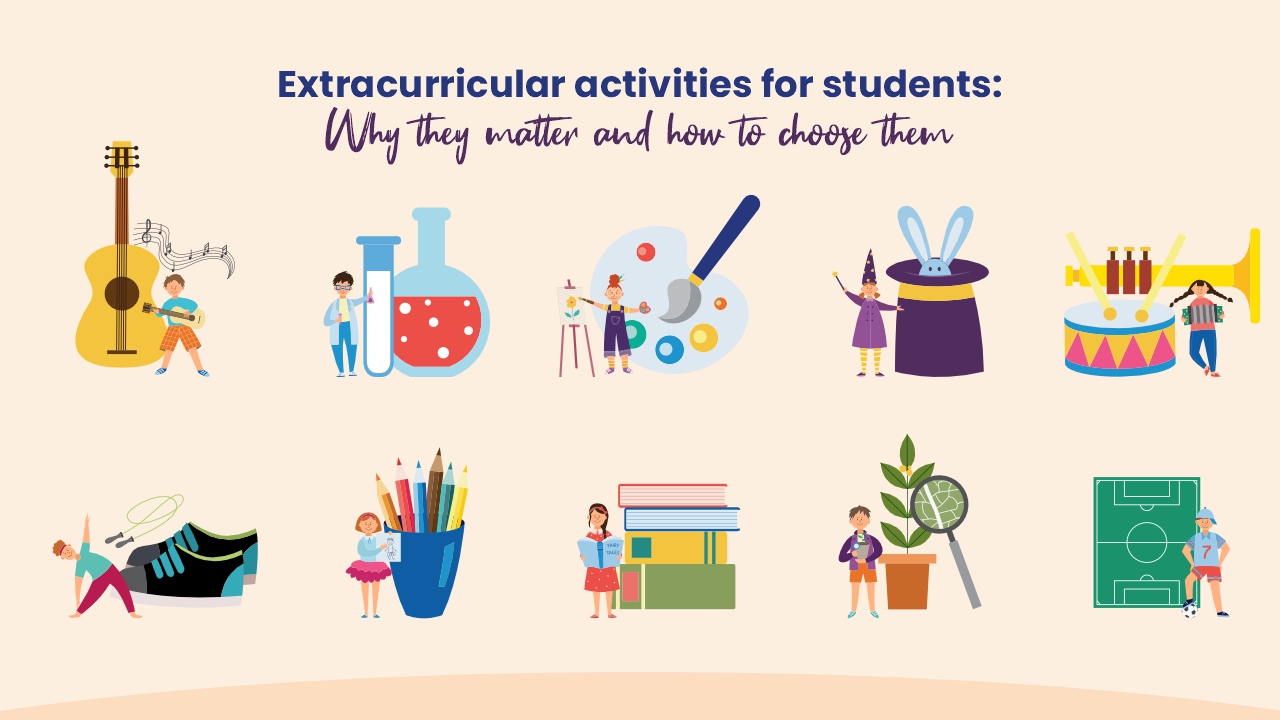 8
Engaging in extracurricular activities constitutes an essential aspect of a student's comprehensive growth. In addition to academics, allocating time to pursuits that captivate students’ interest is highly beneficial. It helps them take a break and relax, which in turn freshens up their brain and encourages them to focus on their studies. So keep reading to learn more about its importance and benefits. It is essential for children to have their own areas of interest that can make them feel relaxed. Often, college students may feel bored following the same study schedule. So, it's really important to support your kids in trying out things they're good at. You can also help them find opportunities to learn more about those things and encourage them to keep doing them. Helping your children discover what they are good at can actually help them with their academics. When children are encouraged to explore their talents and interests, they have the opportunity to discover activities they are naturally good at. As they practice and develop these skills, they begin to build a sense of competence and confidence in themselves. As they become more skilled in these activities, they often start to see positive effects in other areas of their lives, particularly in their studies. For example, a child who excels at playing a musical instrument might notice that their focus and discipline also improve when it comes to completing homework or reading assignments. Over time, if parents are worried about their kids not concentrating on their studies, involving them in meaningful extracurricular activities is a good solution. After long study hours, enjoying hobbies can be really refreshing. It is important to drive away any negative distractions to maintain a healthy and peaceful life. It will affect their academics and overall physical and mental health positively. Importance of extracurricular activities • Exploring and discovering interests Extracurricular activities will enable your children to broaden their perspective and explore different areas of their interests. These activities make it possible for children to not restrict their learning within the boundaries of the classroom. It offers new opportunities for learning. If they get the correct exposure, they can realise their talents and even pursue them as a career. • Expansion of Knowledge Exploring one’s personal interests can also serve as a means of acquiring knowledge and skills. When children pursue their interests, they learn more about that field and related ones. For example, a child who likes acting might explore different types of acting, theatre, accents, etc. This expands their knowledge and perspective, which might not happen otherwise. • Personality Development Non-academic activities can have a positive impact on students’ minds. Different types of extracurricular activities, such as sports, arts and crafts, dancing, and singing, are not taught as part of the traditional curriculum but are vital to their overall personality development. • Time Management Engaging in meaningful projects can teach children how to balance extracurricular activities and academics. It will improve their time management skills and train them to be efficient professionals in the future. • Improves Decision-Making While engaging in various extracurricular activities, children encounter various situations that require choices and actions. As they navigate these experiences, they learn to assess options, consider consequences, and make informed decisions. This process of making practical choices in extracurricular settings contributes to the development of their overall decision-making abilities. • Teaches important life skills Extracurricular activities can teach several life lessons, such as team-building, accepting failure, leadership, consistency, patience, concentration, etc. These can also help improve their communication skills. Such activities can inspire them to be future achievers. • Fosters better social connections With the involvement of children in extracurricular activities, they will begin to make new friends and develop strong bonds with them. It is helpful as it allows them to interact with others of similar interests, which complements their education as well. Introverts can turn into extroverts Conclusion Therefore, it is essential for your children to feel free and express interest in extracurricular activities . This way, when it is time for them to choose their career path, they will know what suits their interests better. So make sure you enable your children to explore their talents so that they get the correct exposure. To stay updated about all the important information from the Narayana Educational Institutions , Join our social media channels: https://t.me/narayanaeducationalinstitutions https://www.facebook.com/TheNarayanaGroup https://www.instagram.com/thenarayanagroup
30 Aug 2023 8
English stands as the preferred language for effective global communication. Given its undeniable importance, learning English can be fun and interesting at the same time. So if you are facing any challenges speaking the language, here are 10 tips for you to improve your English speaking skills. Tips to Improve English Speaking Skills Here are 10 simple tips you can follow to improve your English speaking skills: 1. Increase Your Vocabulary A good vocabulary enables you to express yourself better in the language you speak. The better your vocabulary, the more interesting English gets. Try to form longer sentences so that you get used to speaking more words in a go, ultimately leading to better fluency. For this, you may carry a pocket dictionary with you and learn three words daily. You may also watch TV shows or listen to English songs and take notes every time you come across any new words. 2. Work on Your Pronunciation You may find some words or phrases in English tough to pronounce. If you cannot pronounce a word correctly, you cannot remember it either. Therefore, try to learn the correct pronunciation of any new word you find. You may take help from several online videos and audio that teach English pronunciation. This way, you can brush up your skills in English, which can also improve your fluency. 3. Grasp the Natural Flow While you watch someone speaking in English, try to observe the flow. Focus on the linking of the words, pauses, rhythms and stress. It means, you need to concentrate on the way an English speaker stresses any word or allows for pause while speaking. Also, observe the way in which they link each word to another in the flow of speaking. Observing these minute details and practising them will surely enhance your English fluency . 4. Just Speak Many times, we feel shy to do something in which we do not consider ourselves proficient enough. While this is normal, you must get out of your comfort zone and speak. Even if you find mistakes in English grammar, consider yourself a learner and accept imperfections. You may start speaking in English with your family members and close friends and tell them to point out whenever you make mistakes. It will boost your confidence level and improve your grammar as well. 5. Practise Reading in English If you like reading books, it is excellent. However, if you don't, try reading any topic of interest in English. Once you get into the flow of reading, you will see how fast it increases your proficiency in English. The more fluent you read in English, the better you grasp the language. 6. Think in English We all know that before we speak something, we think. Just like you think in your mother tongue, that is why you have the best proficiency in your native language. Similarly, when you start thinking in English, you begin to speak in English better. So, from now on, try to think in English before you speak. 7. Use Technology Technology can open new doors to improve English speaking skills. You may install apps that help in learning English. These learning apps help to enhance vocabulary and pronunciation, offering you several chances to practise the language you are learning. 8. Watch English Language Content Make your learning process fun by watching your favourite shows in English. Try to watch TV shows, your favourite cartoons, or anything that interests you in English. You may also turn on the subtitles in English and continue reading those as you watch. 9. Participate in Events Try to participate in engaging competitions like debates, extempore and elocution contests. Find out if your school or educational organisation conducts such programmes, and enrol yourselves with proper practice. It will not only boost your confidence but also help you engage yourself in conversing in English. 10. Never Miss a Day No matter how good and proficient you become at something, there can always be scope for improvement. Learning has no end, so keep on practising your skills in English without fail. Speak in English with your close ones and continue learning new words and pronunciation every day. Conclusion Learning English can be challenging yet exciting. Once you choose the learning methods that are suitable for you, you are good to go. Not forgetting that practice makes perfect, follow appropriate English speaking tips to grasp the language quickly. Besides, remember to expand your vocabulary whenever you get a chance, practice, and just speak. To stay updated about all the important information from the Narayana Educational Institutions , Join our social media channels: https://t.me/narayanaeducationalinstitutions https://www.facebook.com/TheNarayanaGroup https://www.instagram.com/thenarayanagroup
28 Aug 2023

