

Explore stories and insights
Loading...



 7
Shapes are all around us. Learning the names of shapes helps students identify and differentiate between various visual objects. Besides, it also helps learn skills in other curriculum areas like letters, maths and science. Let’s learn about different types of shapes , their names, and how they look. Examples of Various Objects and Their Names Here is a list of a few examples of common visual objects and their name of shapes. Name of the Object Shape of the Object Earth Sphere Sun Sphere Moon Sphere Football Sphere Ring Circle Box Cube/ Cuboid Ice Cube Cube Jar Cylinder Television Screen Rectangle Birthday Cap Cone Ice Cream Cone Cone Tent Triangle Egg Oval Brief Description of Different Shapes Here, you will learn about different types of shapes in detail. 1. Triangle: A triangle is a two-dimensional closed shape with 3 points and 3 sides. There are 3 types of triangles based on their angles. 2. Rectangle: A rectangle has 4 points and sides. This 2D closed shape has equal lengths on opposite sides. 3. Square: A square is a two-dimensional closed shape with 4 points and 4 equal sides. 4. Sphere: A sphere is a three-dimensional shape in geometry that looks closely similar to a two-dimensional circle. 5. Rhombus: A rhombus is a two-dimensional closed shape with four sides of equal length. It has 4 points and sides. 6. Parallelogram: A parallelogram is a two-dimensional closed shape with two pairs of opposite sides parallel. The opposite angles are also equal. 7. Pentagon: A pentagon [penta (five) + gon (angle)] is a geometrical shape with 5 sides and angles. 8. Hexagon: A hexagon [hexa (six) + gon (angle)] is a geometrical shape with 6 sides and angles. 9. Octagon: An octagon [octa (eight) + gon (angle)] is a geometrical shape with 8 sides and angles. 10. Decagon: A decagon [deca (ten) + gon (angle)] is a geometrical shape with 10 sides and angles. Recognising different shapes is an early step in understanding and remembering numbers and letters. Therefore, explore the world of shapes and discover the shapes around you with the basic names of shapes. To stay updated about all the important information from the Narayana Educational Institutions , Join our social media channels: https://t.me/narayanaeducationalinstitutions https://www.facebook.com/TheNarayanaGroup https://www.instagram.com/thenarayanagroup
 04 Nov 2023
 7
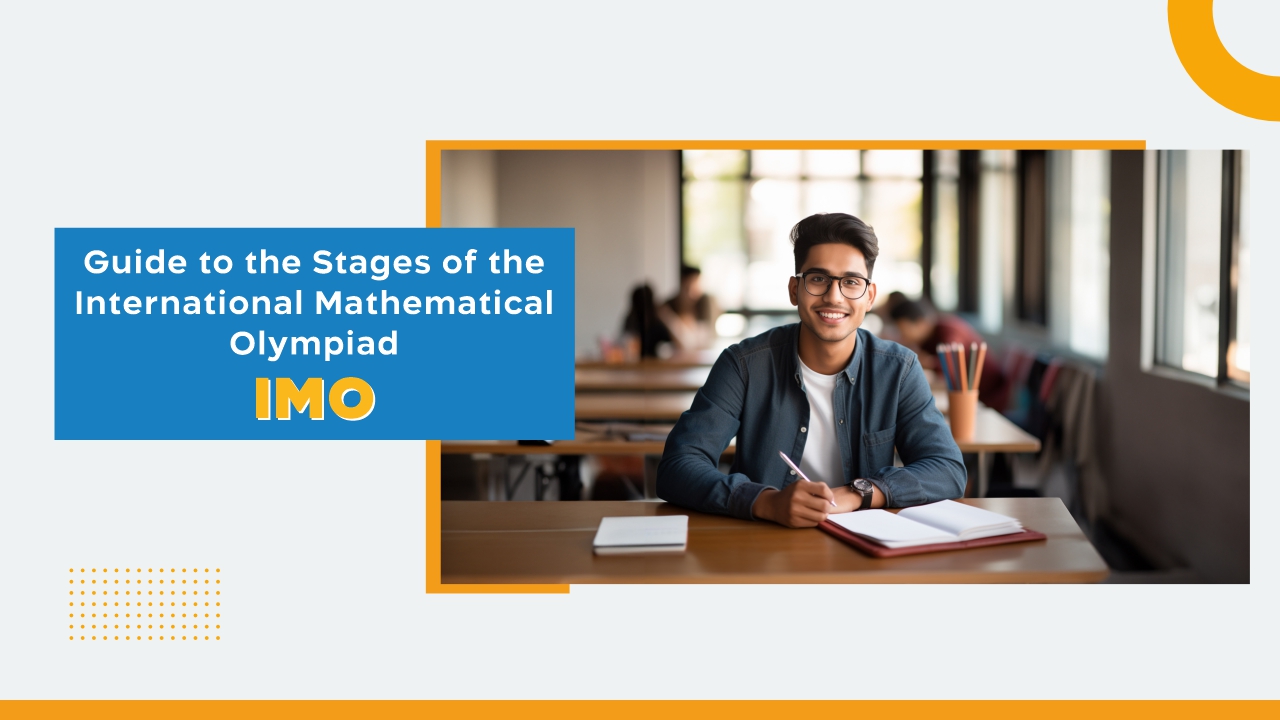
Guide To The Stages Of The International Mathematical Olympiad (IMO) The International Mathematical Olympiad (IMO) is one of the most prestigious high school mathematics competitions globally. This comprehensive guide provides everything students need to know about the IMO with a special focus on the stages and levels of this esteemed olympiad. Let’s get started: What is the IMO? The IMO is an annual international mathematics competition exam for high school students under the age of 20. It was first held in 1959 in Romania and has been conducted annually since then, except in 1980. Over 100 countries participate by sending teams. Each country's team comprises up to 6 student competitors, 1 team leader, 1 deputy team leader, and observers. The exam is a two-day event, and on each day, students are expected to complete a question paper containing three detailed questions. Benefits of Participating in the IMO Competing in the IMO offers many benefits, including learning advanced mathematical concepts, developing strong logical thinking and problem-solving abilities, competing against top math students internationally, interacting with like-minded peers, getting the opportunity to travel to new countries, and visibility for future academic opportunities. Eligibility Criteria for IMO India To participate in the IMO from India, students must be born on or after January 1, 2004, be enrolled in 8–12th grade in a school in India, have a strong foundation in math, be fluent in reading and writing English, score a minimum of 60% in Preliminary Round (PRMO), Regional Mathematical Olympiad (RMO), and Indian National Mathematical Olympiad (INMO), and be selected for the International Mathematical Olympiad Training Camp (IMOTC). Stages of IMO Selection in India The selection happens in six stages: Stage 1: Preliminary Round (PRMO) The PRMO is a national-level exam conducted by the Homi Bhabha Centre for Science Education (HBCSE) with 30 multiple-choice questions testing basic math. Every question has a single- or two-digit answer, which must be entered on an OMR response sheet. Stage 2: Regional Mathematical Olympiad (RMO) The Regional Mathematical Olympiad (RMO), which is the second stage of the examination, is a three-hour test featuring six problems. RMOs are available in English, Hindi, and other regional languages, depending on the Regional Coordinators’ decision. The problems within each topic are known for their challenging and sophisticated nature. Stage 3: Indian National Mathematical Olympiad (INMO) In this stage, about 900 of the best students in the RMO participate in the Indian National Mathematical Olympiad (INMO), and the exam is conducted at 28 locations across the country on the third Sunday of every January. The top 35 students from this stage qualify for IMOTC. Stage 4: International Mathematical Olympiad Training Camp (IMOTC) The INMOC is a 10-day residential training camp in Mumbai conducted by HBCSE for the top 35 students from the INMO, with intensive training via lectures, exams, and problem-solving sessions from experts throughout the country. The top 6 students qualify to represent India at the IMO. Stage 5: Pre-Departure Training Camp for IMO (PDC) It is an 8–10-day residential training camp conducted by HBCSE with advanced training through lectures, tests, and mock papers prior to the departure of these six students for the IMO. Stage 6: International Mathematical Olympiad (IMO) The IMO is the final international competition held in a different country every year. The examination extends over two consecutive days, and students must complete two question papers, one on each day. Each of these question papers comprises three detailed problems. Syllabus ● Arithmetic of Integers: Understanding the fundamental properties of integers and their operations. ● Geometry: Exploring geometric shapes, their properties, and spatial relationships. ● Quadratic Equations and Expressions: Solving and manipulating quadratic equations and expressions. ● Trigonometry: Delving into trigonometric functions and their applications. ● Coordinate Geometry: Studying the connection between algebra and geometry through coordinates. ● System of Linear Equations: Solving sets of linear equations and understanding their solutions. ● Permutations and Combinations: Investigating arrangements and selections in different scenarios. ● Factorization of Polynomials: Breaking down polynomials into their basic components. ● Inequalities: Exploring the relationships and properties of inequalities. ● Elementary Combinatorics: Examining counting techniques and basic combinatorial principles. ● Probability Theory and Number Theory: Unravelling the mysteries of Probability and number relationships. ● Finite Series and Complex Numbers: Understanding the summation of sequences and diving into complex numbers. ● Elementary Graph Theory: Exploring networks and their mathematical properties. Please note that calculus and statistics are not part of this syllabus. Focus on enriching understanding of algebra, combinatorics, geometry, and number theory. While the topics covered are from Class X to Class XII curricula, the problems presented will challenge one with a higher level of difficulty and sophistication. As students progress from the RMO to INMO and eventually to the IMO, they’ll witness the complexity increasing, preparing them for exciting mathematical journeys ahead. Conclusion The International Mathematical Olympiad (IMO) is undoubtedly one of the best avenues for young maths enthusiasts and it provides a host of attractive benefits like networking with international talent. However, we recommend thorough, methodical preparation due to its academic standard. IMO stands as a wonderful opportunity to open doors to new perspectives on maths as a field and thus, students should be well prepared for both its academic and non-academic facets. Narayana Schools offers a comprehensive programme to help students crack IMO. Over the years, our students have successfully cleared IMO exams and secured silver and gold medals, a shining testament to our dedication. Want to learn more about how we can help you crack IMO and other major Olympiads this year? Visit us at www.narayanaschools.in now and get a head start now! To stay updated about all the important information from the Narayana Educational Institutions, Join our social media channels: https://t.me/narayanaeducationalinstitutions https://www.facebook.com/TheNarayanaGroup https://www.instagram.com/thenarayanagroup
30 Oct 2023 8
Cricket is not just a sport in India; it’s life; it runs in the veins of millions of people. It is all but natural that, apart from watching every game, whether T20, ODI, or test, we want to learn more about its history, its journey, or some of its most unique records. With the 2023 ODI Cricket World Cup currently underway in India, we at Narayana Schools are here with some of the most fascinating facts about cricket world cups so that you not only enjoy the game but also learn more about it. Now we know that some of the most dedicated cricket enthusiasts among you might already know who is the highest wicket taker or the run scorer in the World Cup or which team won in what year, but we are here with some lesser-known but interesting facts that are sure to amaze you. 1. The 1975 inaugural men's ODI Cricket World Cup was not actually the first-ever cricket world cup. Remarkably, two years prior, in 1973, England hosted the inaugural women's cricket world cup. 2. England hosted the first three World Cups; it was not until 1987 that the World Cup moved out of the island nation to India and Pakistan. It has since been hosted by a different country every year on a rotational basis. 3. The year 1992 was one of the most significant years for ODI cricket world cups as it witnessed many visible changes, including a shift from traditional white jerseys that we today only associate with test matches to coloured ones, the adoption of a white cricket ball, and the introduction of day-night matches. 4. The 1983 ODI Cricket World Cup was the last world cup to feature the 60-over ODI cricket format. Hence, India is now the only country to have won both the 60-over and 50-over one-day international world cups. 5. Australia is not only the country with the most titles won (5); they are the only country to win the three ODI World Cups consecutively in 1999, 2003, and 2007. They broke the record previously held by the West Indies when they won the 2007 World Cup by defeating Sri Lanka in the final. Earlier, the West Indies won two consecutive world cups in 1975 and 1979 under their iconic captain, Clive Lloyd. 6. The 2023 ODI Cricket World Cup will be the first ever to be held without the West Indies participating in it. Once the absolute powerhouse of cricket, which has produced some of the greatest players to ever play this game, the West Indies failed to qualify for this World Cup when it lost the qualifiers against Scotland. 7 . For the 2023 ODI World Cup, a total of 32 teams participated in the qualification process. The rigorous process included three different leagues and took three years, and in the end, 10 teams qualified. While it is quite normal for test-playing nations such as India, Australia, England, etc. to qualify for the World Cup, the process is extremely hard and competitive for non-test-playing nations. This year, Zimbabwe, The Netherlands, Scotland, Oman, Nepal, Sri Lanka, the USA, UAE, the West Indies, and Ireland participated in the qualifiers, and only Sri Lanka and The Netherlands made it to the World Cup. 8 . Following many firsts, the 2023 ODI Cricket World Cup is also set to introduce a rule where no venue will be allowed to have boundaries less than 70 m in any direction from the striker’s end. Other than that, there is also no soft-signal rule or boundary count rule in this year’s edition. 9. The winning team does not get to take the original trophy home. Since 1999, just like the football world cup, there has been only one permanent trophy for the ODI cricket world cup. The trophy given to the winning team in each world cup after 1999 is a replica of the original trophy, which is taken back to the headquarters once the tournament is finished. Other than these interesting facts, there are some common questions that often confuse fans. These are: 1. Why is the World Cup held every four years? The World Cup occurs after 4 years to allow ample time for the completion of qualifier tournaments and playoffs involving national teams. Furthermore, this four-year cycle grants the host nation sufficient time to strategize and plan different aspects of the tournament and prepare for the accommodation of millions of fans. 2. Where does World Cup prize money come from? The earnings from the international cricket governing body are used to fund World Cup prizes. High bids for television, marketing, and licencing rights to important cricket tournaments that they organise throughout the world are what bring in these funds. 3. What is the shortest World Cup match in history (by balls bowled)? Sri Lanka vs. Canada, 2003 ODI World Cup, 140 balls From its inception in 1975 to the present day, this prestigious tournament has continued to evolve and fascinate cricket enthusiasts worldwide. Since the introduction of coloured jerseys and day-night matches in 1992, each world cup has brought its own unique charm to the cricketing world. The legendary performances, records broken, and unforgettable matches will always be there in our memories. Whether you're a passionate cricket fan or new to the game, these facts are surely interesting for everyone. At Narayana Schools, it is our aim to make education enjoyable by blending it with sports seamlessly. With this vision, we have launched an initiative where learning and cricket intersect— Narayana CricInsight . Follow us on Instagram at https://www.instagram.com/thenarayanagroup/ , as Narayana CricInsight is set to unravel even more intricacies of cricket, shedding light on the various elements that contribute to its worldwide appeal, making learning both enjoyable and informative.
07 Oct 2023 8
Narayana Schools enables learning through cricket Cricket, one of the most famous sports in the world, holds a special place in the hearts of millions. It's not just a sport; it's a passion that unites people from diverse backgrounds. The thrill of a last-ball finish, the elegance of a cover drive, and the strategy behind every delivery make cricket an enthralling sport. Narayana Schools has launched the initiative where learning and cricket intersect – Narayana CricInsight. With this, our aim is to make education enjoyable by blending cricket and education seamlessly. In line with this vision, Narayana CricInsight will unravel the intricacies of cricket, shedding light on the various elements that contribute to its worldwide appeal, making learning both enjoyable and informative. This cricket season, Narayana Cricinsight is set to release engaging video content periodically on Narayana Group's digital platforms (Instagram, Facebook, and YouTube). Each video will delve into a distinct facet of cricket, combining entertainment with education, enriching your understanding of the game. The video series will kick off in the first week of October and run until the third week of November, ensuring a consistent flow of captivating content. Whether you're a dedicated cricket fan or someone eager to explore the enchanting world of this beloved sport, Narayana CricInsight promises an enriching experience for everyone. Narayana CricInsight isn't just another cricket initiative; it's a profound exploration of the sport's essence. Cricket isn't solely about tactics and skills; it's an intriguing fusion of art and science. By infusing cricket with education, we aspire to provide a comprehensive learning experience for our students. Ms. P. Sharani , the Director of Narayana Educational Institutions , shared her excitement for Narayana CricInsight, stating, "Sports hold a special place in Narayana Schools, and cricket is more than just a game to us; it's a passion that transcends boundaries. With CricInsight, we aim to enhance our audience's understanding while they indulge in the sport they adore." Stay tuned to Narayana Group's digital platforms to catch the latest CricInsight videos and embark on this thrilling journey into the world of cricket. Get ready to watch, learn, and savour the world of Narayana CricInsight. Adventure is just around the corner!
05 Oct 2023 8
Competitive exams stimulate effective learning and promote healthy competition in students. Academic competitions, like Olympiads, help them develop analytical skills and build confidence. It uncovers students’ hidden potential and skills. These exams also prepare them for future challenges, such as college and professional life. Continue reading to know more for your child’s effective introduction to Olympiads . What are Olympiad Exams? Olympiad exams are competitive examinations held across schools for students in classes 1–12 at both national and international levels. There are some Olympiads, such as the Pre-Regional Mathematics Olympiad, Kishor Vaigyanik Protsahan Yojna (KVPY), and National Talent Search Examination (NTSE), that are conducted only for higher grades, while others are conducted for all grades. Here are some of the major Olympiad exams with all the necessary details: Competition Title Conducting Body Eligibility Exam Fee Official Website Unified Cyber Olympiad Unified Council Class 2nd to 10th ₹ 150/- www.unifiedcouncil.com National Cyber Olympiad Science Olympiad Foundation Class 1st to 10th ₹ 150/- www.sofworld.org International Informatics Olympiad Silver Zone Foundation Class 1st to 12th ₹ 150/- www.silverzone.org International Maths Olympiad Science Olympiad Foundation Class 1st to 12th 125/- www.sofworld.org International Olympiad Of Maths Silver Zone Foundation Class 1st to 12th ₹ 150/- www.silverzone.org National Mathematics Talent Contest Association Of Mathematics Teachers Of India Class 5th to 12th ₹ 75/- www.amtionline.com Unified International Mathematics Olympiad Unified Council Class 1st to 12th ₹ 150/- www.unifiedcouncil.com International Olympiad Of Science Silver Zone Foundation Class 1st to 12th ₹ 150/- www.silverzone.org Kishor Vaigyanik Protsahan Yojna Department Of Science & Technology Class 11th & 12th Please visit website kvpy.iisc.ernet.in National Level Science Talent Search Examination Unified Council Class 2nd to 12th ₹ 300/- (Individual Registration) www.unifiedcouncil.com National Science Olympiad Science Olympiad Foundation Class 1st to 12th ₹ 150/- www.sofworld.org National Talent Search Examination National Council Of Education Research And Training Class 10th Vary in different state www.ncert.nic.in International General Knowledge Olympiad Science Olympiad Foundation Class 1st to 10th ₹ 150/- www.sofworld.org/igko International Reasoning & Aptitude Olympiad (IRAO) Silverzone Foundation Class 3rd to12th ₹ 180/- www.silverzone.org/newweb/ IRAO_olympiad.html International Talent Hunt Olympiad (ITHO) Silverzone Foundation Class 1st to 10th ₹ 150/- www.silverzone.org International English Olympiad Science Olympiad Foundation Class 1st to 12th ₹ 150/- www.sofworld.org National Standard Examination In Junior Science Indian Association Of Physics Teacher Mentored By Hbcse Date of birth between 1st January 2005 and 31st December 2006 ₹ 150/- www.iaptexam.in National Standard Examination In Physics Indian Association Of Physics Teacher Mentored By Hbcse Date of Birth between 1st July 2000 and 30 June 2005, both days inclusive ₹ 150/- www.iapt.org.in National Standard Examination In Astronomy And Astrophysics Indian Association Of Physics Teacher Mentored By Hbcse Date of Birth between 1st July 2000 and 30 June 2005, both days inclusive ₹ 150/- www.iapt.org.in National Standard Examination In Chemistry Indian Association Of Physics Teacher Mentored By Hbcse Date of Birth between 1st July 2000 and 30 June 2005, both days inclusive ₹ 150/- www.iapt.org.in National Standard Examination In Biology Indian Association Of Physics Teacher Mentored By Hbcse Date of Birth between 1st July 2000 and 30 June 2005, both days inclusive ₹ 150/- www.iapt.org.in Pre-Regional Mathematics Olympiad Mathematics Teachers Association mentored By Hbcse Class 8th to 12th ₹ 230/- www.mtaexam.com International Social Studies Olympiad Silver Zone Foundation Class 1-10 150 INR www.silverzone.org Students from different schools and boards can take part in it. A few conducting bodies for these exams are the Science Olympiad Foundation (SOF), Unified Council, Silver Zone Foundation, etc. These exams improve students’ existing knowledge of subject matter and intellect. What are Some Important Things to Remember Regarding Olympiad Exams? Here are some of the important facts about Olympiad exams : These exams are conducted for different categories for different levels. Students can take part in subjects like Maths, Science, General Knowledge, English, Computer, Drawing, Essay, Social Studies etc. Olympiad exams are conducted both online and offline. The International Commerce Olympiad, International General Knowledge Olympiad, National Cyber Olympiad and some of the Olympiads that are conducted as single-level exams. The International Mathematics Olympiad, National Science Olympiad Exam, and International English Olympiad Exam are some of the Olympiads that are conducted at multiple What are the Benefits of Olympiad Exams? Olympiad exams aim to enhance conceptual learning. The benefits of Olympiad exams are as follows: 1. Participating in National and International Level Exams Olympiad exams allow students to compete at national and international levels, against students from different learning backgrounds. These exams provide a fair chance for every student to explore different skills and domain knowledge. 2. Analysing Strengths and Weaknesses Participating in academic competitions, such as Olympiads, presents students with a valuable opportunity to not only recognise their strengths but also to pinpoint areas in which they can further develop their skills. These competitions serve as a unique platform for self-assessment, allowing individuals to gain a deeper understanding of their academic abilities and areas that may require additional attention. 3. Learning to Apply Textbook Knowledge In Olympiads, the questions are generally high-level application questions. Therefore, students get additional knowledge besides theoretical knowledge. Additionally, they also learn to apply the concepts of textbooks in real life. 4. Common Platform and Exposure These competitive exams provide a common platform for students, as they have a chance to gauge their knowledge and skills on a national level with peers of their own age. They help recognise exceptional students with talent, potential, aptitude, and IQ and motivate them to keep going. Students are exposed to different ideas as they compete, which improves the overall learning process. 5. Building a Learner’s Attitude in Students Olympiads for students help build a learner’s attitude in students and prepare them for their future careers. It allows them to have in-depth knowledge about the subject matter. 6. Developing the Character of Students Competitive exams are great opportunities to learn that every problem has a solution. These exams demand both accuracy and speed from students. Therefore, they help students think out of the box and learn essential skills to prepare for these exams. How to Prepare for Olympiad Exams? Parents can register their kids either directly through school or on their own online. To prepare for these exams, students should consider the factors below: Plan as Early as Possible Planning as early as possible is essential for students aiming to crack Olympiads efficiently. These competitive exams do not require students to study excessively but rather to practice diligently every day. A proper schedule should be planned, dividing the topics equally. This approach reduces stress and aids in better retention, helping students manage their time more effectively during the actual exam. Seeking Guidance Seeking help is an important part of a student's growth. There may be times when they feel directionless and unmotivated. Make sure that your kids know that they can come to you for help. When students face difficulty in understanding certain topics, ask them to contact their teachers for assistance. Teachers will provide clarity on doubts, ultimately saving students a significant amount of time. Practice Sample Papers Students are encouraged to practice sample papers from previous years to gain insight into the types of questions that appear in these exams. This practice allows students to understand the level of difficulty beforehand and prepare accordingly. When it comes to succeeding in competitive exams, the more students practice, the better their understanding becomes. Devoting ample amount of time to practice is the key to cracking these exams. At Narayana Group of Schools , we take immense pride in our groundbreaking educational programme, "eTechno." Designed exclusively for students in grades 6–10, this programme not only provides comprehensive support for school and CBSE Board exams but also places a profound emphasis on cultivating young minds for success in various Olympiads. Conclusion In conclusion, the introduction to Olympiads is a gateway to a world of academic excellence and personal growth. It nurtures students’ critical thinking and problem-solving skills and awakens a competitive spirit in them. Besides fueling passion towards learning, it lays the foundation for a successful future career. To stay updated about all the important information from the Narayana Educational Institutions , Join our social media channels: https://t.me/narayanaeducationalinstitutions https://www.facebook.com/TheNarayanaGroup https://www.instagram.com/thenarayanagroup
04 Oct 2023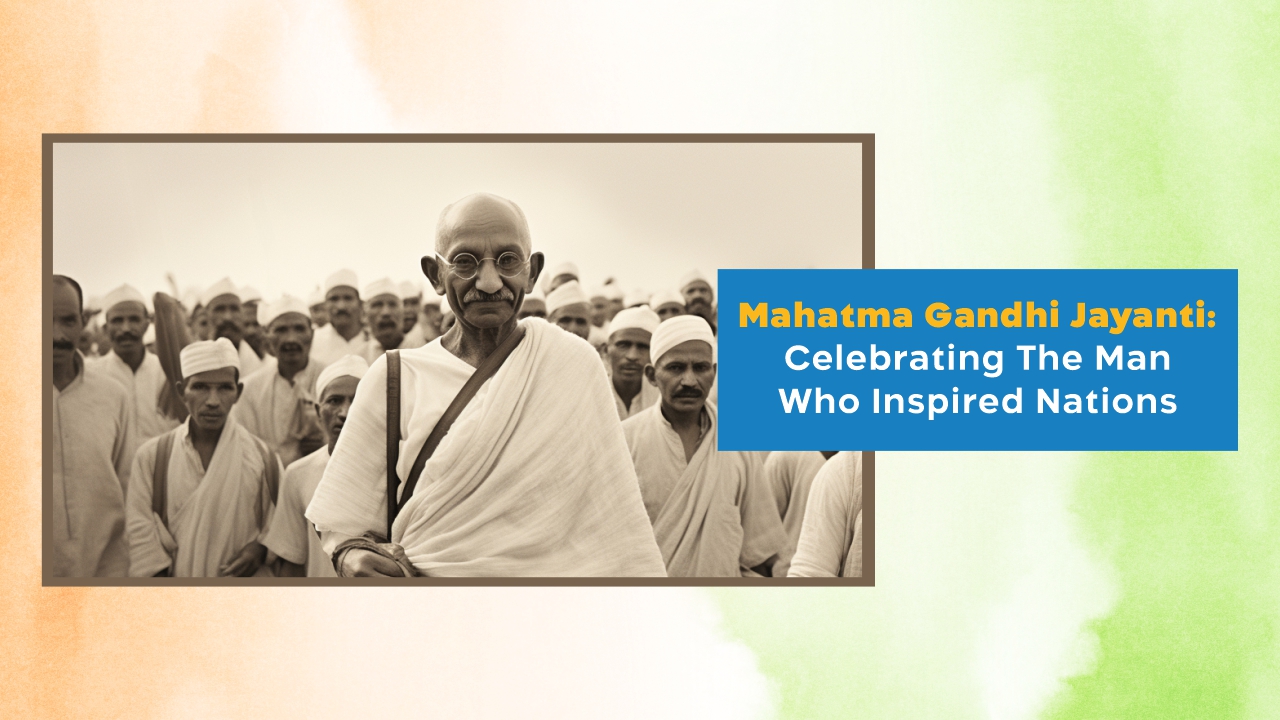 7
India celebrates the birthday of Mahatma Gandhi as Mahatma Gandhi Jayanti on 2nd October. On 15 June 2007, the United Nations General Assembly declared this day as the International Day of Non-Violence. This was in honour of Mahatma Gandhi and his global popularity as a non-violent freedom fighter. Here, you will discover the history and importance of Mahatma Gandhi Jayanti and understand his contributions to India and the world. What is the History and Significance of Mahatma Gandhi Jayanti? Mahatma Gandhi Jayanti is a national holiday that is observed in all Indian states and union territories. He became the leader of the Indian National Congress in 1921 and led multiple campaigns for attaining 'Swaraj'. Ahimsa (non-violence) and Satyavad (truthfulness) were two of Gandhi’s principles during this protest against British rule. Netaji Subhas Chandra Bose gave him the title of "Father of the Nation" due to his relentless struggle for independence. With his tremendous efforts combined with significant contributions of other freedom fighters, India was able to push the British colonialists out. Since that time, Gandhi ji’s birthday, 2nd October, has been celebrated as a day when we celebrate his everlasting legacy. Educational institutions, banks and all government and private offices are closed in honour of this day. Furthermore, International Day of Non-Violence is observed in several countries other than India. These include the United States of America, South Africa, the United Kingdom etc. Role of Mahatma Gandhi in Indian History Mohandas Karamchand Gandhi, popularly known as Mahatma Gandhi, was one of the eminent leaders of the Indian Independence Movement. He was an Indian lawyer, anti-colonial nationalist and political ethicist. He not only inspired the movements for civil rights and self-governance in India but in several countries across the world. ● Life of Mahatma Gandhi Raised in a Hindu family in Gujarat, Mohandas Gandhi studied law in London. After that, he went to South Africa to practice law. There, he first experienced racial discrimination and injustice. When he witnessed the plight of Indian peasants, he resolved to fight for justice and civil rights. He started the nonviolent Civil Disobedience Movement against the African officials. He returned to India in 1915 and became a prominent figure in the Indian National Congress. Later on, he employed ‘Satyagraha’ (‘holding firmly to truth’) as his primary tool to bring political revolution in India. ● Significance of Mahatma Gandhi in the Indian Freedom Movement Mahatma Gandhi played a significant role in India’s struggle for independence from British rulers. His philosophy of non-violence and truthfulness greatly impacted the Indian Independence movement. Some of this legend’s contributions include: 1. Non-violence Movement: To protest against the salt tax, Gandhi and his followers led the 400-km-long Dandi Salt March. This is one of the great instances of non-violent protest. 2. Civil Disobedience: Mohandas encouraged several civil disobedience acts such as protests, boycotts and non-cooperation with the British Government. 3. Quit India Movement: Gandhi initiated the Quit India Movement, in 1942, to immediately end British rule. 4. Mass Mobilisation: Gandhi unified the diverse Indian population into the freedom fight and made it a mass movement. 5. Negotiations with the British: Mohandas represented the Indian National Congress and negotiated several times with British officials for India’s Independence. 6. Role in the Constitution: Mahatma Gandhi’s ideologies on non-violence, social justice and decentralisation influenced the framing of the Indian constitution. The Global Influence of Mahatma Gandhi Mahatma Gandhi’s legacy inspired several countries through his message of non-violence. The changes he influenced were: • His philosophy of nonviolent movement and civil disobedience inspired the American civil rights movement led by Martin Luther King Jr. • He battled against racial injustice and religious intolerance, which influenced the South African freedom movement. Nelson Mandela was the father of the South African country, but Gandhi is their grandparent, claims Harris Majeke, the former South African envoy to India. • Gandhi’s simple lifestyle and minimalistic approach to life inspired many people. Best Places to Observe Gandhi Jayanti Celebrations in India Here are the best places that celebrate Gandhi Jayanti in India with utmost enthusiasm: ● Sabarmati Ashram in Ahmedabad, Gujarat ● Aga Khan Palace in Pune, Maharashtra ● Gandhi Smriti Museum, Near Birla House, Delhi ● Mani Bhavan Gandhi Museum in Mumbai, Maharashtra Conclusion To conclude, Mahatma Gandhi Jayanti serves as a powerful reminder of Gandhi's principles of non-violence, truth and social justice. It reminds us about the power of love, peace and non-violence. Commemorating this day emphasises his ideals once again and help us to become better individuals and begin the change within us. To stay updated about all the important information from the Narayana Educational Institutions , Join our social media channels: https://t.me/narayanaeducationalinstitutions https://www.facebook.com/TheNarayanaGroup https://www.instagram.com/thenarayanagroup
28 Sept 2023

