

Explore stories and insights
Loading...


 11
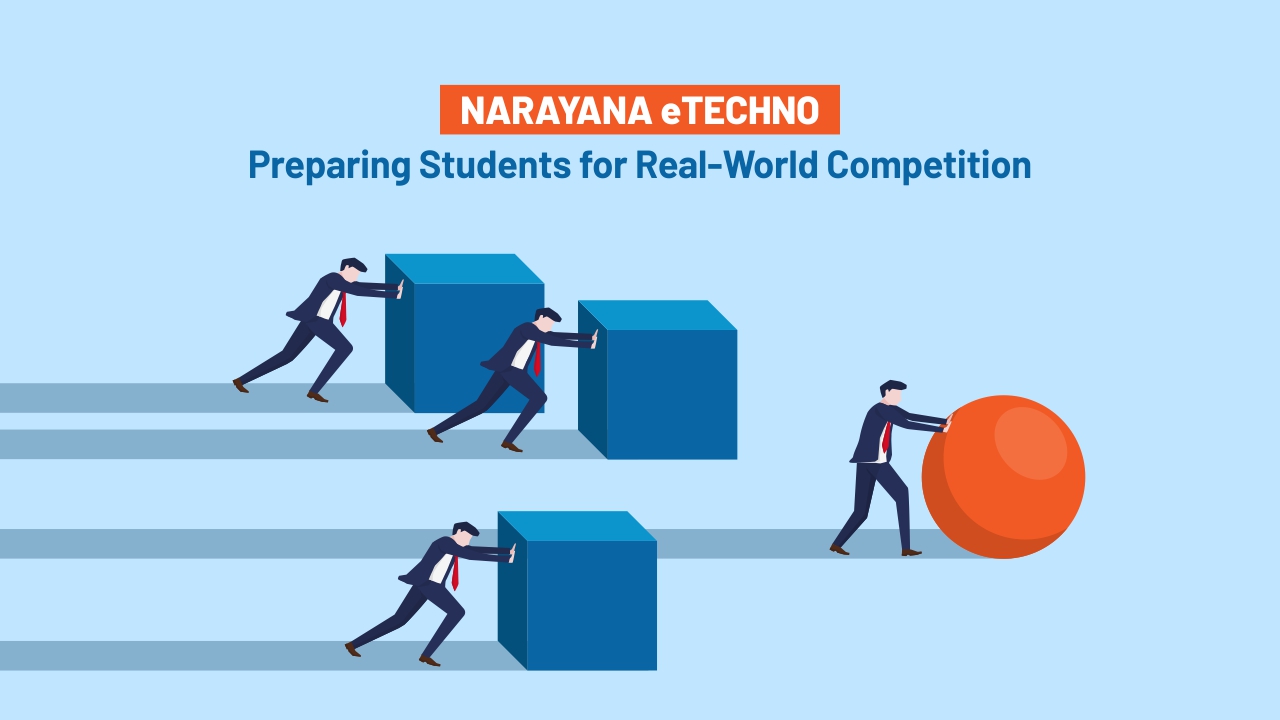
In the transition from childhood to adolescence lies a phase full of promise, complexity and opportunity. For students aged 11 to 16 (Classes 6 to 10), this period is when dreams evolve into goals and the competitive world demands not just knowledge but also resilience, creativity and adaptability. Research published in the Proceedings of the National Academy of Sciences (PNAS) shows that middle school interventions improving students’ outlook on challenges led to higher attendance, fewer failing grades, and stronger perseverance . Similarly, a large‐scale review in Frontiers in Psychology found that career readiness programmes in middle schools significantly enhanced decision-making and adaptability, proving that the middle (Classes 6-8) and secondary (Classes 9-10) years are pivotal for preparing learners to thrive in competitive environments . At Narayana Schools , the eTechno Programme is designed to help students not only dream and then realise those dreams but also to thrive in real-world challenges and competitive environments . Why Classes 6 to 10 Are Pivotal? The years from 11 to 16 mark a major shift in how children learn and grow. Jean Piaget’s Theory of Cognitive Development identifies this as the Formal Operational Stage , when students begin thinking abstractly, reasoning critically, and solving complex problems. At the same time, Erik Erikson’s Psychosocial Theory highlights this period as crucial for building identity and confidence. Together, these milestones make Classes 6 to 10 the true foundation for future success. The eTechno Programme: Dream Big, Compete Boldly At Narayana Schools , Classes 6 to 10 are not only stepping stones but foundations for competence, confidence and competitive spirit. The eTechno Programme unlocks a child’s full potential by blending academic excellence with holistic growth. By fostering critical thinking, creativity and resilience, students are prepared not only for competitive exams but also for future challenges and real life situations. Our Methodology a. Integrated Curriculum: Study materials are carefully designed using the best elements of Central Board of Secondary Education (CBSE) , Indian Certificate of Secondary Education (ICSE) , International General Certificate of Secondary Education (IGCSE) and International Baccalaureate (IB) . This ensures strong conceptual clarity and a well-rounded learning approach. b. The 4Cs Framework Common Teaching : Unified pedagogy combining theory and practice. Common Microschedule : Daily and monthly plans keep students organised and disciplined. Common Examination : Assessments mimic competitive exam formats and remain consistent across branches. Common Analysis : Reports are released within three days to encourage timely feedback and healthy competition, while also showing each student’s relative stance to help them understand where they stand in the competition. c. Personalised Error Analysis : Personalised Error Analysis transforms every test into a learning roadmap by generating detailed, question-wise and subject-wise error lists. These reports enable quick reflection, targeted remediation and customised microschedules that prevent repeated mistakes. Integrated with Narayana Schools’ digital platforms, this system ensures timely feedback, focused practice and measurable improvement, driving students towards a true zero-error mindset . d. Olympiad Programme : A specialised Olympiad preparation track builds problem solving, logical reasoning and innovation skills. Students gain exposure to national and international competitions, preparing them to stand out on a global platform. e. Learner Support Programme : Learning gaps are identified early through diagnostic assessments and regular micro-tests, helping us spot challenges in concepts, subjects or skills. These are then addressed through personalised mentoring and targeted lesson plans, ensuring every child gets the support they need to excel. f. Pedagogy: At Narayana Schools, we follow the Panchpadi model from the National Curriculum Framework (NCF) 2023 , a five-step learning process while tailoring it based on middle and secondary students (Classes 6–10) requirements: Aditi (Introduction) Teachers link new topics to prior knowledge. For example, while introducing algebra in Class 6, concepts are connected to familiar arithmetic patterns. Bodh (Conceptual Understanding) Students deepen understanding through active engagement. For example, in Class 8 science, learners explore the concept of photosynthesis by conducting experiments and discussing its role in ecosystems. Abhyas (Practice) Concepts are reinforced through structured practice. For example, in Class 9 mathematics, group problem-solving sessions strengthen geometry skills with peer collaboration. Prayog (Application) Knowledge is applied to real-life situations. For example, Class 10 students might design a budget plan in economics, applying percentages and ratios to everyday scenarios. Prasar (Expansion) Students expand learning through peer teaching and presentations. For example, in Class 7 history, learners prepare group presentations on ancient civilisations, sharing insights and broadening perspectives. Alongside this, we integrate National Education Policy (NEP) 2020 pedagogies: Flipped Classroom Pedagogy Students review lessons independently first, followed by activity-based learning in class to encourage better understanding and teamwork. For example, in Class 9, students watch a video on chemical bonding at home, then use classroom time to model molecules and discuss their properties. Art Integrated Learning Pedagogy Using arts to make learning enjoyable while building creativity and cross-curricular connections. For example, in Class 6 geography, students create maps with art techniques like collage or painting, making learning more visual and engaging. Project-Based Learning Pedagogy Where students collaborate, reflect and apply knowledge in real contexts. For example, In Class 8, learners collaborate on a renewable energy project, building small working models of wind turbines or solar cookers. Cutting-Edge Pedagogy Integrating technology with problem-solving approaches to effectively cater to the diverse needs of every learner. For example, in Class 10, coding tasks and simulations are used in computer science, enhancing problem-solving with real-world technological applications. Critical Pedagogical Approach Encouraging questioning, inquiry and self-directed discovery to foster deeper understanding and independent thinking. For example, in Class 7 social science, students debate the pros and cons of urbanisation, encouraging inquiry and independent thinking. Gratitude as a Pedagogy Instilling thankfulness, reflection and wellbeing into classroom culture to nurture positive values and holistic growth. For example, In Class 6 English, reflective journaling activities encourage students to write weekly gratitude notes, promoting positivity and emotional well-being. Academics and Beyond At Narayana Schools' eTechno Programme, education extends far beyond the classroom, offering students diverse opportunities to apply their knowledge, explore their passions and grow into well-rounded individuals. a. National Space Society (NSS) Space Settlement Contest : Organised by NASA (National Aeronautics and Space Administration) , this global contest inspires students to design innovative solutions for human settlement in space. By working on futuristic concepts that harness space resources for civilisation, learners gain exposure to cutting-edge science and creative problem-solving. b. Co-scholastic Activities : A wide range of clubs encourages students to discover their interests while building interdisciplinary connections between academics and real life. From the Community Service Club to the STEM (Science, Technology, Engineering, and Mathematics) Club and from Cultural and Eco Clubs to the Young Entrepreneur Club , every learner finds a platform to develop confidence, leadership and collaboration. c. Extracurricular Competitions and Events : Carefully curated competitions provide students with opportunities to sharpen their skills and expand their perspectives. Events such as the Annual Spell Bee , Master Orator Contest , Model United Nations (MUN) , Quiz Whizz Competition and Safalta Ka Rasta foster global awareness, public speaking, critical thinking and teamwork, shaping tomorrow’s leaders. d. nSports : Our structured, age-appropriate physical education programme balances mental and physical development. By nurturing sporting excellence alongside values such as teamwork, discipline and fair play, students build both resilience and character through a range of sporting opportunities. DISHA - Mental Wellness Programme At Narayana, we believe that true education extends beyond academics. Our DISHA Programme is dedicated to promoting holistic well-being by offering mental and emotional support to students, parents, teachers and employees. Through counselling, guidance and wellness initiatives, DISHA provides a safe, empathetic space to address challenges, build resilience and foster a balanced life. The programme is supported by a team of 130+ counsellors and psychologists , reaching over 13.5 lakh students in the last year alone . DISHA Provides: Group Assistance Programme: Awareness sessions to normalise mental health conversations and build resilience. Personal Assistance Programme: One-on-one sessions in a safe, confidential space for coping and growth. Parent Assistance Programme: Guidance to help parents support children’s emotional needs. Building Strong Parent–School Connections Adoption Calling: Each group of up to 30 students is assigned a dedicated teacher who tracks their overall progress by coordinating with subject teachers and maintaining a complete learning profile. Every 15 days, the teacher connects with parents through scheduled calls to share updates on academics, classroom experiences and growth, while also addressing parent feedback. This structured system nurtures trust, transparency and holistic development. nConnect: Our app keeps parents actively involved with real-time progress reports, classroom updates, and seamless communication at their fingertips. Tech-enabled learning Tech-enabled learning at eTechno combines smart classroom tools with AI-driven tutoring to make lessons richer and more accessible. The nLearn platform now includes ASTRA ( Advanced Student Tutoring & Resource Assistant ), an AI assistant that offers instant doubt resolution and personalised practice, while the platform delivers interactive modules, eBooks and exam simulations. These simulations are designed through exam templates that mirror the structure of original Board examinations and Joint Entrance Examination (JEE) , providing a range of tests designed to evaluate every aspect of the curriculum, from conceptual clarity to critical thinking, problem-solving ability and competitive edge. From Classes 6 to 10, smartboards play a central role in making lessons interactive and engaging. Teachers use them to display e-books, multimedia lessons, simulations and real-time problem-solving exercises, allowing abstract concepts to be visualised with clarity. These boards also encourage collaboration through group activities, quizzes and brainstorming sessions, helping students stay actively involved in class. By blending visual , auditory and kinaesthetic (experiential) learning methods, smartboards ensure better comprehension, focus and retention. The eTechno Programme aims to prepare students not just to learn but to compete, thrive and lead. For Classes 6 to 10, this means equipping them with clarity and critical thinking alongside a strong foundation, relevant skills and the right mindset to make their dreams real in a competitive world. We empower every student to step into challenges with confidence and to turn every dream into an achievement, because at Narayana Schools, your dreams are our dreams .
 23 Sept 2025
 9
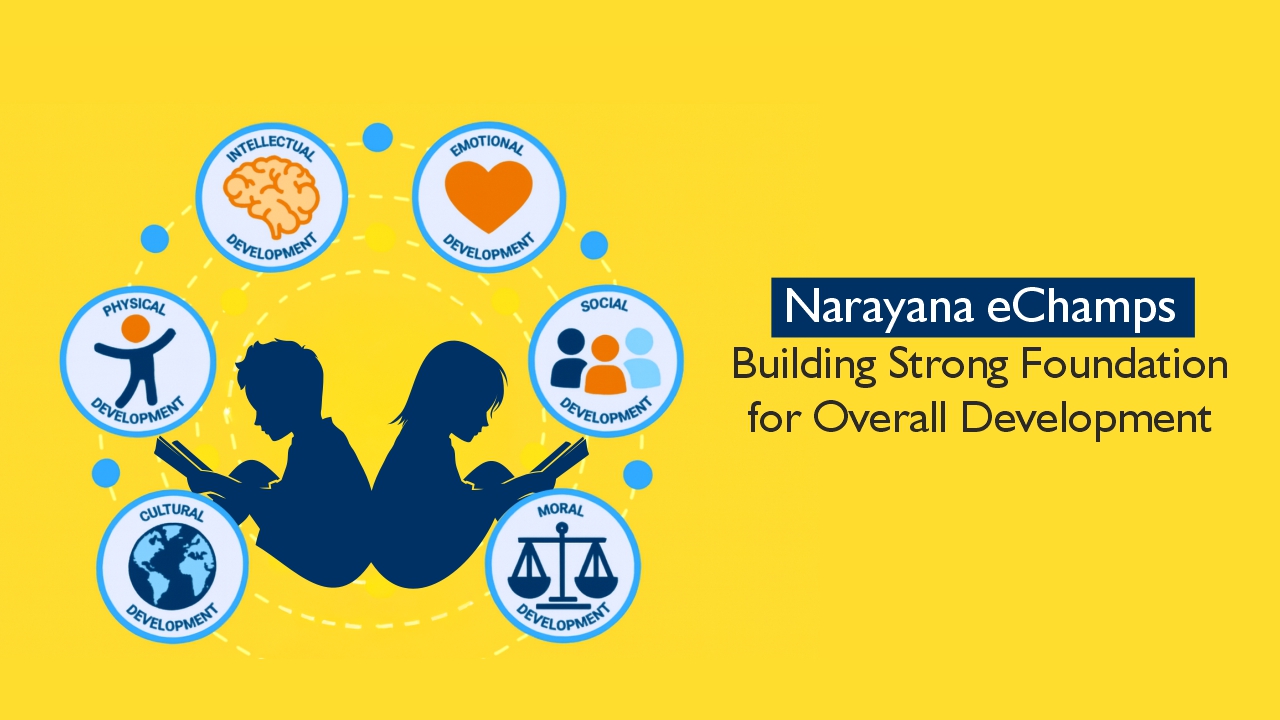
In every child’s heart lies a dream of discovery, growth and achievement. At Narayana Schools, our belief is that primary education (Classes 1-5, ages 6-11) is the critical ground where that dream begins to take shape. According to the National Education Policy ( NEP ) 2020 , primary school years are foundational to developing literacy, numeracy and a wide spectrum of essential skills. Our eChamps Programme lays a strong foundation through an age-appropriate curriculum specifically tailored for primary years, blending academic learning with holistic development to nurture confident, creative and curious learners. Research such as the Impact of Primary Schooling Expansion under India’s Sarva Shiksha Abhiyan shows that expanding primary schooling correlates with improved adult educational attainment, literacy and health outcomes. Also, studies of learning poverty reveal that many children in late primary ages lag in reading and numeracy, making early interventions crucial. At Narayana Schools, we view primary education as the foundation on which children not only learn but also dream and eventually realise those dreams. Through eChamps , children build essential skills step by step, ensuring that their early years are meaningful, engaging and future-ready. It is during these years that confidence blossoms, social and emotional maturity develops, and children learn not just what to learn but how to learn. Our Unique Approach to Learning The eChamps Programme emphasises holistic development by blending academic excellence with social, emotional, and communication skills. We ensure that every child’s journey is filled with curiosity, creativity, care and confidence, in a safe, positive and nurturing environment. Key Areas of Development a. Communication Skills: Enhancing listening, speaking, reading, and writing abilities. b. Social Skills: Fostering respect, interaction, and proper etiquette in group settings. c. Emotional Skills: Guiding children to value participation over competition and to embrace both achievements and setbacks as part of their growth journey. Our Methodology Integrated Curriculum: Workbooks and study materials are meticulously designed drawing from the best elements of Central Board of Secondary Education ( CBSE ), Indian Certificate of Secondary Education ( ICSE ), International General Certificate of Secondary Education ( IGCSE ) and International Baccalaureate ( IB ) boards to ensure deeper conceptual understanding and a well-rounded learning approach. 4Cs: We maintain Common Teaching , Common Micro Schedule , Common Examination and Common Analysis to ensure consistency and clarity across classes. Conceptual Understanding: For Classes 1–2, we use activity-based learning that engages children through interactive tasks, games and hands-on activities, making foundational concepts fun and easy to grasp. For Classes 3–5, experiential learning deepens understanding by connecting lessons with real-life examples, experiments and practical applications, ensuring lasting knowledge. Learner Support Programme: Each child’s learning pace is respected. Gaps are identified early and addressed so every student gets guidance needed to thrive. Pedagogy: We follow the Panchpadi model from National Curriculum Framework ( NCF ) 2023 which is a 5 step learning process, and includes - Aditi (Introduction): Teachers introduce new concepts by connecting them to what students already know. Bodh (Conceptual Understanding): Learners explore core ideas through discussions experiments and readings. Abhyas (Practice): Reinforcement through group work projects and exercises. Prayog (Application): Applying learning to real-life situations so education becomes relevant and practical. Prasar (Expansion): Encouraging peer learning presentations to deepen understanding and aid retention. Alongside this we employ National Educational Policy ( NEP ) 2020’s pedagogies: Flipped Classroom Pedagogy: Students review lessons independently first, followed by activity-based learning in class to encourage better understanding and teamwork. Art Integrated Learning Pedagogy: Using arts to make learning enjoyable while building creativity and cross-curricular connections. Project-based Learning Pedagogy : Where students collaborate, reflect and apply knowledge in real contexts. Cutting Edge Pedagogy : Technology and problem-solving to cater to diverse learner needs. Critical Pedagogical Approach : Encouraging questioning, inquiry and self-directed discovery. Gratitude as a Pedagogy : Instilling thankfulness, reflection and wellbeing in classroom culture. Holistic Enrichment nSports for eChamps: An age-appropriate and outcome-focused physical education programme promoting physical development, while nurturing confident and fit students. Soft Skills Development: Age-appropriate soft skills activities build self-confidence, critical thinking, listening, empathy and emotional regulation through SpellBee, Quiz Whizz, Mater Orator, NRocks (student radio station), etc. LEAP Classes (Learn, Empower, Apply, Practise): Handling body, mind, soul themes and regular 3B (Basic, Better, Best) English Speaking Skills Analysis for communication improvement through debates storytelling role-plays quizzes etc. Co-scholastic Clubs: Health and Wellness, Heritage, Literary, Drama, STEM, Cookery and Sports Clubs offer children spaces to explore interests and realise dreams beyond academics. Building Strong Parent-School Connections Adoption Calling: A dedicated teacher is assigned to a group of up to 30 students. This teacher closely monitors the overall development of every child by gathering feedback from other subject teachers and maintaining a complete learning profile.Every 15 days, the teacher personally connects with parents through a scheduled call to share insights on the child’s progress, classroom experiences and teacher observations. These conversations also provide parents with an open channel to share their feedback or concerns related to academics, hygiene, infrastructure or any other matter. This proactive system builds a strong three-way partnership between students, parents and teachers, fostering trust, transparency and holistic growth. nConnect: Our app ensures transparent communication, real-time progress reports and classroom updates, helping parents stay engaged every step of the way. Tech-enabled Learning at eChamps Classrooms are equipped with digital whiteboards and smart boards that transform traditional teaching into an interactive and immersive experience. These tools make lessons more visual, engaging and collaborative, helping students grasp concepts with greater clarity and enthusiasm. Teachers can integrate animations , problem-solving and interactive exercises , turning every classroom session into a dynamic learning opportunity. Beyond the classroom, our flagship app nLearn Kids extends learning into the home environment. With animated lessons , interactive stories , eBooks , playful quizzes , simulations and concept-based videos , children in Classes 1 to 5 enjoy age-appropriate digital resources that reinforce classroom teaching. This combined approach of in-class smart learning and at-home digital exploration nurtures creativity , sharpens critical thinking , strengthens problem-solving skills and builds confident independent thinkers . By blending fun with purposeful learning, Narayana Schools lays a strong foundation for lifelong curiosity and exploration. At Narayana eChamps, we recognise that the primary years are when students start dreaming. Our commitment is to foster a positive, inspiring and engaging environment where young learners can explore their interests, develop essential skills, build strong foundation and believe in their own potential. Through tailored resources, interactive learning and unwavering support, we aim to empower every child to dream boldly and fulfil those dreams, because at Narayana Schools, your dreams are our dreams .
16 Sept 2025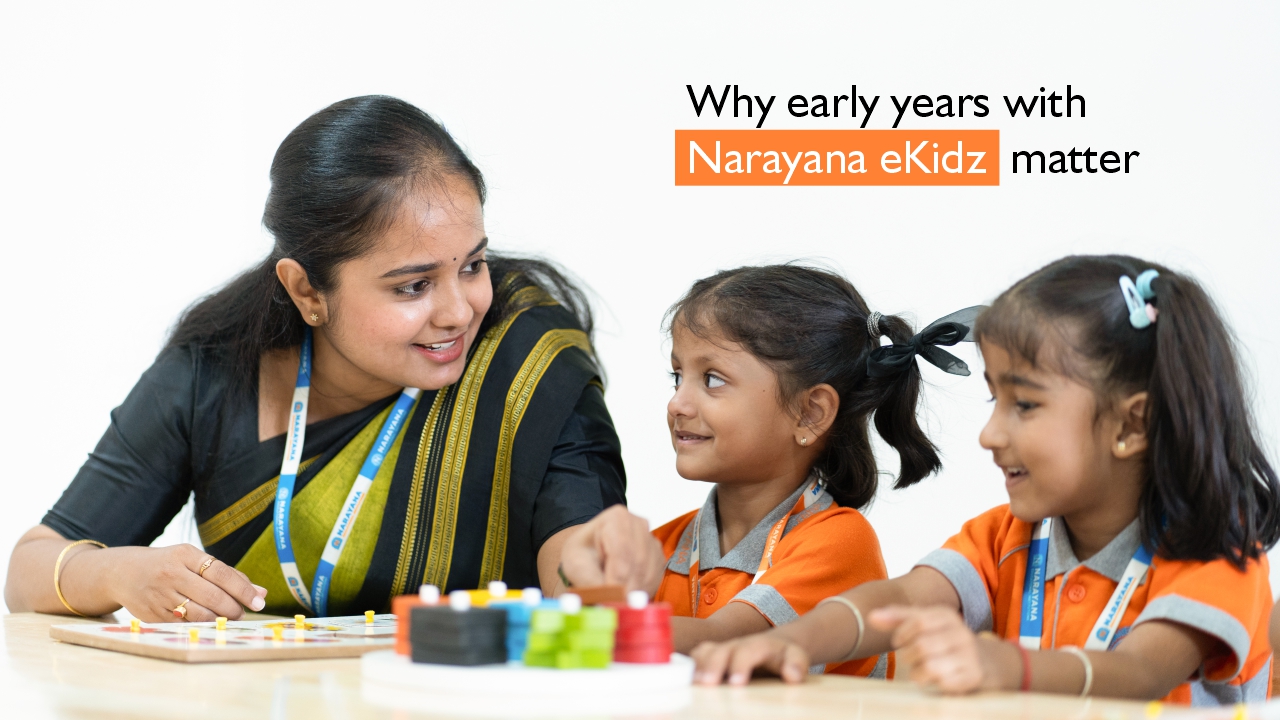 11
Every young learner dreams of discovering the world beyond the family nest. At Narayana Schools’ eKidz , our pre-primary programme for children aged 3-6 (which includes Nursery, PP1 and PP2/Nursery, LKG and UKG) embraces that dream with purpose and joy. Introducing children to the world outside their family marks the very first step of their educational journey and we believe that every dream deserves a nurturing start. The National Education Policy 2020 underlines that over 85% of a child’s cumulative brain development occurs before the age of six. This fact emphasises why early childhood education and pre-primary schooling must be rich in care and engagement to ensure healthy brain development and growth. At Narayana Schools’ eKidz we believe in nurturing every child’s potential within a safe, hygienic, joyful and stimulating environment . From ages 3-6 our age-appropriate curriculum offers personalised care ensuring that each child receives the finest early education in a secure hygienic setting. Why Pre-primary Education Matters? The early years from birth to age 6 are the most critical in shaping a child’s future, with nearly 90% of brain development completed by age 5 and over one million neural connections forming every second ( Harvard Center on the Developing Child ). While genes provide the blueprint, experiences decide whether the brain builds a strong or weak foundation for learning, behaviour and health. This is why pre-primary education is essential for helping children aged 3-6 to interact, explore creativity, express emotions and step confidently into the world beyond family. Narayana Schools’ eKidz Programme meets this need through its age-appropriate and child-centric curriculum , safe and hygienic environment and personal attention , supporting Nursery, LKG (PP1) and UKG (PP2) learners in building social skills , communication and confidence , for developing curiosity and eagerness to learn for lifelong growth. Age-Appropriate Curriculum at eKidz At Narayana eKidz, our dedicated R&D team has crafted a curriculum that blends play-based learning with structured activities, ensuring every child builds a strong foundation for future academics and life skills. Our age-appropriate curriculum introduces children to the world of numbers, letters and language through storytelling , rhymes , games and interactive play . Activities are carefully designed to strengthen cognitive , language , psychomoto r, socio-emotional , spiritual and moral development and equip them with the 4Cs ( creativity , communication , collaboration and critical thinking ). What makes our approach unique is the balance we strike between fun and learning, complemented by individual attention to each child. By the time children complete their journey with eKidz, they are not only school-ready but also confident, expressive and eager to explore the world around them. Personal Attention and Child-Centred Learning At eKidz, every child is seen , heard and valued . Our carefully maintained student-teacher ratio of 1:20 allows educators to focus on each child’s unique strengths and needs, offering personalised care and guidance. The curriculum is designed with children at its heart, encouraging curiosity , nurturing confidence and strengthening communication and social skills . Within a safe and caring environment, children are free to explore, express themselves and grow at their own pace, supported by both structured learning and gentle guidance. Hygiene and Safety We place the highest priority on children’s safety and well-being. Our classrooms are meticulously sanitised and equipped with child-friendly infrastructure , age-appropriate furniture and clean restrooms . Each class is led by a dedicated mother teacher and supported by a skilled and capable caregiver to ensure constant attention and care. Facilities such as child-sized toilets , safe drinking water , first-aid access and CCTV ( Closed-Circuit Television ) surveillance ensure a secure environment within the school. Our transport facilities are designed with equal care. All buses are fitted with GPS ( Global Positioning System ) tracking , allowing both the school and parents to monitor journeys in real time. A trained helper accompanies every trip, assisting children during travel and carefully supervising handovers at pick-up and drop-off points. With constant supervision and stringent safety protocols in place, we create a nurturing environment where children feel secure, supported and ready to thrive. Our Classes for Young Learners BUD (Nursery: 3+ Years) - The first step into structured learning, where children discover joy through play, stories, music and movement while building strong foundations in language and cognitive development. BLOOM (LKG: 4+ Years) - A stage designed to spark curiosity, where inquiry-based learning encourages children to question, explore and make sense of the world around them. BLOSSOM (UKG: 5+ Years) - Preparing children for primary school with early reading, writing, numeracy and essential social skills, empowering them with confidence and independence. nSports for eKidz At Narayana eKidz, our nSports programme is thoughtfully designed to strengthen physical growth while making movement exciting and enjoyable. Children develop essential skills such as kicking , trapping , throwing and catching , alongside activities that nurture both fine and gross motor abilities . With a focus on age-appropriate exercises, the programme builds coordination , balance and object-handling skills that form the foundation of lifelong physical confidence. More than just exercise, nSports inspires teamwork, discipline and a genuine love for active play in every young learner. Building Strong Parent–School Connections At Narayana eKidz, we believe a child thrives best when parents and teachers work hand in hand. Our nConnect app keeps parents closely involved in their child’s early learning journey by offering real-time access to progress reports, classroom updates and daily activities. This ensures complete transparency and helps parents celebrate every milestone along the way. To strengthen this bond further, our Adoption Calling initiative assigns each group of children a dedicated mother teacher who connects with parents every 15 days. These personalised conversations provide insights into a child’s progress, well-being and areas where additional support may be needed. Together, these practices create a seamless bridge between home and school, ensuring every child receives consistent care, encouragement and guidance. Tech-enabled Learning at eKidz Technology is thoughtfully woven into early learning to spark curiosity and engagement at Narayana eKidz. Children are introduced to the nLearn Kids app , a safe and age-appropriate digital platform designed to make learning both immersive and fun. Smart boards are also used for e-books and audio-visual activities, helping young learners focus better, stay engaged and experience a sense of togetherness during classroom interactions, whether reciting a poem as it plays on screen or participating in group activities. This approach not only enhances concentration but also inspires children to take initiative and actively contribute. Through animated videos , interactive stories , playful games and engaging simulations , young learners explore concepts in a sequential and enjoyable way. Each activity is carefully curated to nurture creativity, strengthen critical thinking skills and build a love for discovery, laying the foundation for confident tech-savvy learners. At Narayana Schools, we cherish the pre-primary years as the first step into the world beyond family, where curiosity and confidence take root. In a warm and stimulating environment, children learn through play, interaction, and personalised care, building social skills and a love for discovery. We nurture every child’s potential and inspire them to dream, because at Narayana Schools, your dreams are our dreams .
10 Sept 2025 9
Education in India is evolving rapidly, and parents today seek the best CBSE schools in India that not only focus on academic excellence but also nurture holistic development . Narayana Schools , with over four decades of expertise, have built an ecosystem of age-appropriate learning programmes, designed to support every stage of a child’s growth. From the eKidz pre-primary programme (nursery to PP2/nursery to UKG) to the foundational eChamps primary programme (Classes 1-5) to the advanced eTechno middle and secondary programme (Classes 6-10) , each step is carefully aligned with the needs of learners. At the heart of this system lies an Integrated Curriculum , where workbooks and study materials are meticulously designed by drawing the best elements from the Central Board of Secondary Education ( CBSE ), Indian Certificate of Secondary Education ( ICSE ), International General Certificate of Secondary Education ( IGCSE ) and International Baccalaureate ( IB ) boards. This ensures deeper conceptual understanding and a well-rounded learning approach from the eChamps level onwards. Another unique feature is Adoption Calling , which begins right from the eKidz stage. Here, a dedicated teacher is assigned to a group of up to 30 students. This teacher not only tracks the overall development of each child by taking feedback from other subject teachers but also connects with parents through a physical call every 15 days. During these conversations, discussions include the child’s progress, parental feedback, classroom experiences, teacher observations and even the parents’ concern related to hygiene, infrastructure or other issues. This proactive approach creates a strong three-way partnership between students, parents and teachers, ensuring holistic growth. With a strong presence of 500+ schools across the country, Narayana Schools stands as a trusted name for parents looking for a comprehensive educational experience . What makes Narayana Schools’ programmes unique at every stage? eKidz: Introducing kids to the world outside their family (Ages 3–6 | Pre-Primary Schooling | Nursery, PP1, PP2/Nursery, LKG and UKG) Early childhood education plays a crucial role in shaping brain development. According to studies by the National Institute for Early Education Research ( NIEER ) , children who experience structured early childhood education in India show better academic outcomes later in life. The eKidz Programme has a play-based and child-centric curriculum that blends phonics , motor-skill development and social-emotional growth . P ersonal attentio n with optimal class sizes and a healthy teacher-student ratio in a safe and hygienic environment are prioritised that enhance the learning experience and gently introduce children to the world beyond their families. eChamps: Laying a strong foundation (Ages 6–11 | Primary Schooling| Classes 1–5) The transition from early years to structured schooling can be challenging. Research published by the American Psychological Association ( APA ) highlights that personalised mentoring in primary school education and consistent feedback play a significant role in building confidence during this stage. The eChamps Programme focuses on the overall development of primary school children, starting with communication , social and emotional skills . For Classes 1 and 2, the programme emphasises activity-based learning , while Classes 3 to 5 benefit from experiential learning , fostering strong conceptual understanding . In this way, the basis for a strong personal foundation that nurtures curiosity and lifelong learning is firmly laid. Additionally, the Learner Support initiative identifies and addresses learning gaps according to individual student needs. This approach, along with Adoption Calling, ensures holistic growth and a positive learning experience . eTechno: Preparing students for the competitive world ahead (Ages 11–16 | Middle and Secondary Schooling |Classes 6–10) Middle and secondary school years are often when students begin to form clear aspirations for higher education and careers. The eTechno Programme is designed to prepare middle and secondary school students for the competitive world. It focuses on the 4 C’s , Common Teaching , Common Microschedule , Common Examination and Common Analysis , combined with personalised error analysis and correction . The United Nations Educational, Scientific and Cultural Organisation ( UNESCO ) , in its Personalised Learning module, highlights that placing learners at the centre of instruction, guided by their needs and pace, fuels lifelong engagement with learning. Similarly, the National Council of Educational Research and Training ( NCERT ), through its guidelines on Continuous and Comprehensive Evaluation ( CCE ), emphasises that embedding assessment as an ongoing and integral part of teaching rather than a standalone event significantly enhances both understanding and development. The programme also includes exposure to competitive exams like Olympiads and has a mental wellness programme, known as Disha . Holistic development is integrated at every stage Holistic development at Narayana Schools is seamlessly integrated into the age-appropriate CBSE education offered at every stage. A. eKidz programme Fosters essential early skills. Builds confidence and social interaction. Provides a nurturing environment for children to explore the world. B. eChamps programme Enhances communication, social, and emotional skills. Encourages activity-based and experiential learning. C. eTechno programme Sharpens analytical and problem-solving abilities. Strengthens leadership, communication, and resilience. Prepares students as confident, future-ready learners for the competitive world. This comprehensive approach ensures balanced growth and prepares students for life beyond academics. Neuroscience studies show that students who balance academic thoroughness with extracurricular activities perform better in the long term. At Narayana Schools, Soft Skills and nSports (physical education) programmes, along with activities such as NRocks (student radio station), Kahaniyon Ka Caravan , Jr. Master Orator Contest , Quiz Whizz , art integration , are introduced with other clubs, at each stage in ways that align with age-appropriate development . In this way, holistic growth is embedded in the journey rather than added as an afterthought. Every parent envisions a future where a child not only achieves academic success but also grows into a confident, compassionate and capable individual. At Narayana Schools, we believe in transforming that vision into reality. ‘ Your dreams are our dreams ’ is reflected in every step of the journey, from eKidz through eTechno , with holistic development, we ensure that dreams are supported by values , skills and adaptability . Just as dreams are timeless, Narayana Schools’ promise is timeless too, to provide every child with the tools, the guidance and the confidence to turn dreams into achievements, because your dreams are our dreams .
03 Sept 2025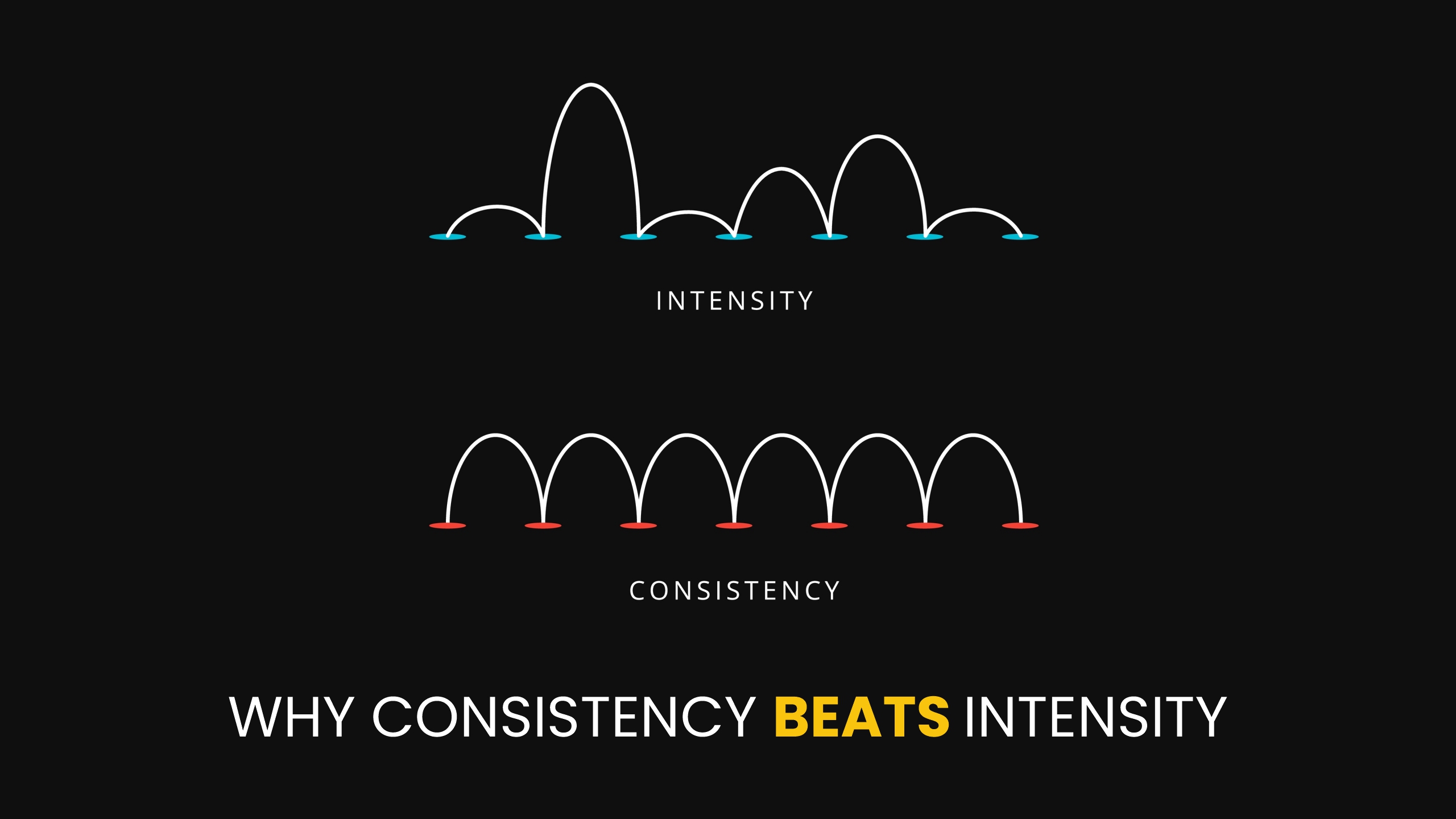 8
A study by Harvard University researchers specialising in cognitive neuroscience (2006) found that last-minute cramming often reduces sleep, which weakens memory consolidation and leads to poorer retention and recall during examinations. These effects become evident during every exam cycle. Children study late into the night, feel anxious before exams and eventually remember little or nothing after the tests. Leading educational bodies in India also emphasise that these patterns repeat with each cycle, leading to shallow learning, poor recall and higher stress. CBSE Academic Guidelines (2019) on Stress-Free Education state: “Regular revision in smaller units and consistent practice across subjects are more effective in ensuring long-term understanding than last-minute preparation.” Similarly, the NITI Aayog School Education Quality Index (2019) reports: “States with structured academic calendars and regular assessment practices reported up to 15 to 20 per cent higher performance in foundational learning outcomes.” In other words, cramming may help in the short term but fails to build deep understanding and confidence for the future. Intensity cannot replace the importance of discipline and consistency in education. Why are discipline and consistency more important? Consistency builds knowledge step by step through small daily wins. It strengthens memory pathways, reduces stress and creates confident learners. This demonstrates the power of consistency in learning , as it not only enhances retention but also ensures a stronger academic performance. Why is consistency important in classroom behaviour? Schools play a major role in shaping consistent habits. Emphasising the importance of classroom discipline and implementing strategies for students helps children feel more secure, organised and focused. Some effective practices include: Designing timetables that balance teaching, practice and revision. Conducting regular low-stakes assessments instead of relying only on final exams. Ensuring the learning framework is well-structured to make students feel ready every day. Providing timely feedback to parents and students to guide improvement. Creating such an environment supports consistency in child development and highlights the importance of discipline in students’ lives. What can parents do at home to promote consistent learning? For true learning to happen, discipline must be practised daily both in classrooms and at home. Parents can support consistency by: Establishing a brief study time every day instead of postponing preparation for exam weeks. Encouraging children to recap lessons after school. Appreciating steady effort rather than only celebrating high marks. Ensuring children get proper sleep for healthy memory retention. Communicating with teachers regularly to understand their child’s progress. How does Narayana Schools’ Microschedule create consistency in learning? Knowing the benefits of discipline and daily learning, Narayana Schools embed consistency into the academic design through Microschedule, a unique system that ensures discipline and progress across all schools. Key Features of Narayana Schools’ Microschedule Common Schedule: All Narayana schools follow a uniform pace with no deviations. Day-wise Planning: Students receive subject-wise schedules at the start of the year for both CBSE and competitive exams. 1+1 Teaching System: In higher classes, each teaching period is consistently followed by a practice period. This immediate application strengthens long-term retention. Structured Classification: Learning is broken into subjects, chapters, topics and sub-topics, with a weekly CDF (Concept, Definition, Formula) focus. Planned Assessments: Regular tests, term-end exams and year-end evaluations make revisions ongoing rather than last-minute. Structured Approach to Stay Ahead of the Curve Microschedule is not effective without proper performance tracking and analysis. Within three days of an exam, students receive detailed performance reports with micro-level insights. These reports utilise multiple methods of analysis, including rank lists, error tracking and test-to-test comparisons. This helps students: Identify strengths and areas of improvement early. Understand where errors are happening. Continuously improve without waiting for final exams. This scientific, structured approach eliminates cramming, lowers stress and builds learning as a daily habit. The result is consistency in academics, confidence in exams and a stronger foundation for the future. These are some of the steps Narayana Schools has taken to ensure students’ well-being while fulfilling their dreams, because at Narayana, your dreams are our dreams.
30 Aug 2025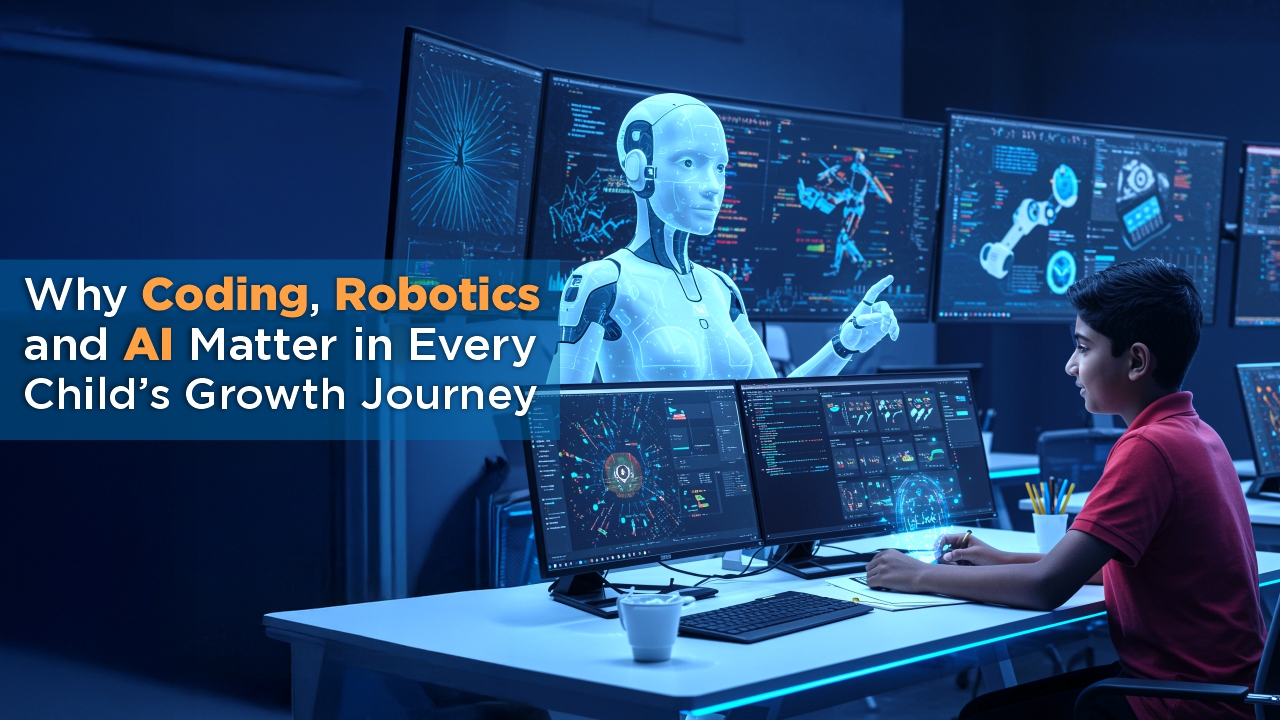 11
“65% of children entering primary school today will ultimately work in new job types that don’t yet exist.” – World Economic Forum, Future of Jobs Report (2016) This information can feel overwhelming for parents. The world is changing fast. Traditional education alone may not be enough. From voice assistants at home to online classrooms at school, today technology is part of everyday life. Learning coding, robotics and AI is no longer optional. It is essential for every child’s growth. According to UNESCO’s Education in a Digital World Report (2019) , "Digital skills, including coding and computational thinking, are now widely recognised as fundamental skills, along with literacy and numeracy." Let us explore ● Why coding, robotics and AI are crucial for students to learn? ● Advantages of AI and robotics in education ● How do they prepare children for future careers? The Evolving Technology Landscape Technology is changing every sector. Healthcare, finance, agriculture and education all use AI and automation. Children today are not just users of technology, they need to learn to create with it. Early exposure to coding, robotics and AI transforms children from gadget users into active thinkers, creators and problem solvers. Understanding the future of AI and robotics in education helps them gain skills that will be in high demand across industries. Advantages of AI and Robotics in Education Parents often ask, “How will coding or robotics help my child?” Here are the main benefits of AI, coding and Robotics that go beyond the classrooms: ● Sharper logical thinking: Coding teaches children to break problems into smaller steps. This helps in maths, science and everyday decisions. ● Hands-on Learning: Robotics facilitates hands-on learning by transforming theoretical concepts into functional models. Children see how machines move and react, which strengthens understanding. ● Creativity and experimentation: Children test ideas, design solutions and learn to rectify errors. ● Confidence through instant results: A successful code run or a working robot gives immediate feedback and boosts self-belief. ● Teamwork and communication: Coding and robotics often involve group projects. Children learn to share ideas, listen to others and solve problems together. ● Lifelong curiosity: Many children go beyond classroom lessons to explore tutorials and create projects on their own. This habit of self-learning supports growth at every stage of life. The role of AI in education is not just to provide answers but to enhance problem-solving and learning experiences. These skills help children become logical, creative and resilient. Career Readiness in a Tech-Driven World The future of AI and robotics in education is directly linked to careers. By learning coding, children understand how computers work and how to interact with them. Robotics gives them hands-on experience in building and experimenting. AI helps them see how machines learn, recognise patterns and make decisions. Early exposure to coding and AI education for future careers ensures children are ready for jobs that will rely heavily on technology and innovation. Practising coding and AI also builds adaptability. Children learn that technology changes quickly and they must keep learning. The Role of Narayana Schools in this Journey At Narayana Schools, we understand that the impact of AI and robotics will only grow. We ensure students do not just consume technology, they learn to create with it. Coding, robotics and AI are part of our core curriculum. ● Students in Classes 6 to 8 learn Python basics, gaining practical programming experience. ● Robotics is offered across all campuses in India. In some states, it is integrated into the timetable, while in others it is available as an activity club. Students get hands-on experience under expert guidance. ● Our digital platform, nLearn , includes ASTRA ( Advanced Student Tutoring & Resource Assistant ), an AI-powered assistant. ASTRA helps students with fast, accurate solutions in Maths, Science, Social Studies and English. It is available 24/7 and supports more than 15,000 active users with a 91% satisfaction rate. By combining coding, robotics and AI-assisted learning, Narayana Schools ensures students get exposed to technology in a structured, practical, safe and supportive environment. At Narayana Schools, we do not just prepare students for academics, we prepare them to chase their dreams of thriving in a world shaped by technology, because your dreams are our dreams .
28 Aug 2025

