

Explore stories and insights
Loading...


 7
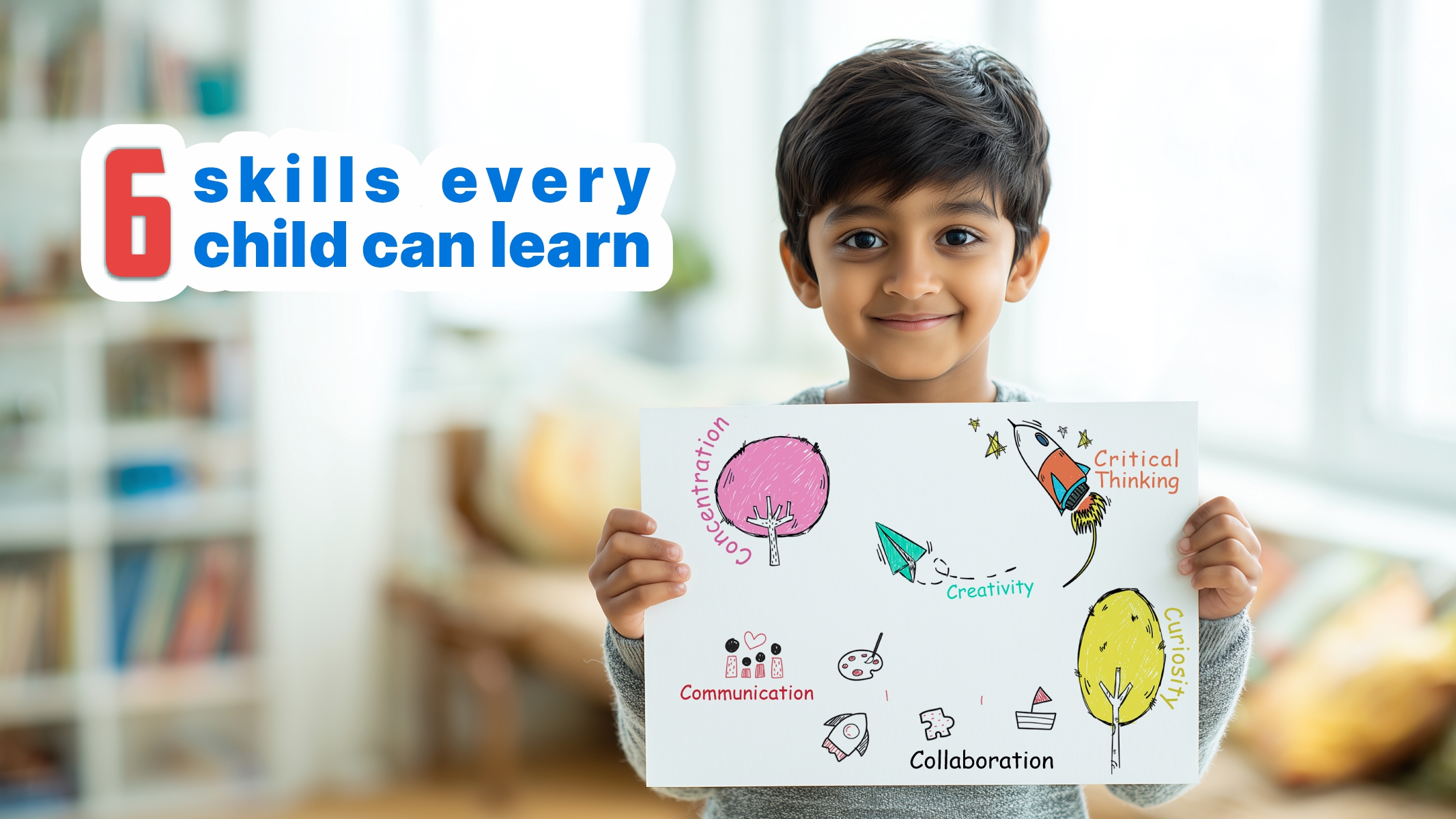
Every day offers new opportunities for growth, learning and discovery. Beyond academics, it is essential life skills such as creativity , critical thinking , communication , collaboration , concentration and curiosity that truly shape a child’s success. These abilities help children imagine, reason, express, connect, focus and explore with confidence. Here is a roadmap for parents to guide children (from primary to senior classes) in nurturing these vital skills. Creativity Creativity allows children to think beyond limits , express themselves freely and find new solutions to challenges. It is closely linked to emotional intelligence , as it helps children recognise, express, and channel their emotions in healthy, imaginative ways while developing empathy, resilience and innovative problem-solving . Studies in Frontiers in Psychology and the Harvard Graduate School of Education identify creativity in children as a vital 21st-century skill that strengthens flexible thinking , resilience and imagination . Practical ways to develop it at home: Encourage art, crafts or storytelling . Let children design Rangoli patterns or make eco-friendly decorations. Use open-ended creative projects that promote creative learning ideas and joyful expression. 2. Critical Thinking Critical thinking helps children analyse, question and evaluate information rather than accept it at face value, encouraging logical reasoning and sound judgement. Studies from Atlantis Press and MDPI (Multidisciplinary Digital Publishing Institute) Education Sciences show that inquiry-based learning greatly improves reasoning skills , decision-making and problem-solving abilities in learners. Practical ways to develop it at home: After reading a story or watching a film, ask “what if” or “why did they choose that” questions. Use puzzles, riddles or board games that encourage reasoning. Discuss real-world issues to enhance critical thinking in students through perspective-taking. 3. Communication Strong communication skills enable children to express their thoughts clearly, listen empathetically and build meaningful connections while enhancing their confidence, personality, and social presence. MDPI Education Sciences reports that effective communication in schools improves student engagement , academic outcomes and interpersonal skills. Practical ways to develop it at home: Encourage children to read aloud or narrate stories in their own words. Hold family discussions or sessions to develop public speaking for kids . Promote role-play activities that nurture clarity, confidence and empathy. 4. Collaboration Collaboration teaches teamwork, respect for others’ ideas and shared accountability, skills crucial for success in any community or workplace. A study published in the Redalyc Journal of Educational Psychology found that collaborative learning enhances creativity , adaptability and social responsibility among children. Practical ways to develop it at home: Involve children in team-based activities through group projects, science experiments or community initiatives. Assign roles such as leader, organiser or creator to build ownership. Reflect together on what went well and what could improve, encouraging shared growth. 5. Concentration Concentration forms the bedrock of effective learning. In today’s digital age, cultivating focus helps children build mental discipline , patience and productivity. According to Harvard University’s Center on the Developing Child , regular focus-based activities strengthen the brain’s executive functions , improving attention and memory retention. Practical ways to develop it at home: Create screen-free zones for reading, puzzles or mindful crafts. Schedule 10–15 minutes of daily reading and gradually increase the duration. Use quiet and comfortable reading corners to boost focus building activities and mindfulness. 6. Curiosity Curiosity inspires exploration and discovery, turning learning into an exciting self-driven experience that builds intrinsic motivation. A Nature Human Behaviour (2022) study revealed that curiosity in children promotes memory retention , long-term engagement and a passion for learning. Practical ways to develop it at home: Maintain a question jar where children can submit what they wish to learn about. Encourage inquiry learning for kids through hands-on science experiments or museum visits. Support self-directed reading on topics that spark wonder and imagination. Developing these six skills, creativity, critical thinking, communication, collaboration, concentration and curiosity , builds confident and capable learners. At Narayana Schools, dedicated soft skills programmes , nSports for physical and team-based development, Yoga Veekshan for mindfulness and holistic well-being, and Art Integration to nurture creativity and emotional expression ensure holistic growth. Every skill learned is a step towards realising dreams. Through engaging reading programmes, skill-based activities and experiential learning, students are guided to imagine, express, excel and achieve their dreams, because at Narayana Schools, your dreams are our dreams .
 23 Oct 2025
 7
Developing a love for reading in children is one of the most valuable gifts that education can offer. Beyond academics, reading builds imagination, empathy, focus and creativity. Studies by the American Academy of Paediatrics and the Harvard Graduate School of Education reveal that early exposure to books strengthens language development , cognitive growth and emotional intelligence . Encouraging reading through every stage of a child’s growth, from early storytelling to independent exploration and reflective learning, nurtures curiosity and a lifelong love for learning. Here are some age-appropriate book recommendations that help young minds grow intellectually, emotionally and creatively. 1. Age Group 3–6 Years: Early Imagination and Language Development At this stage, children are beginning to explore sounds, rhythm and imagination. Books with rhymes, repetition and vivid illustrations nurture listening skills, vocabulary and creativity. Recommendations Books/Series Authors Description/Focus The Cat in the Hat, Green Eggs and Ham Dr. Seuss Fun rhymes that develop phonemic awareness and imagination. The Tale of Peter Rabbit Beatrix Potter Teaches gentle moral lessons through animal adventures. Winnie The Pooh A. A. Milne Builds emotional intelligence and empathy through whimsical tales. Where The Wild Things Are Maurice Sendak Encourages creativity and emotional expression. The Polar Express Chris Van Allsburg Inspires wonder and the power of belief. Charlotte’s Web E. B. White Introduces value of friendship and compassion. 2. Age Group 7–10 Years: Curiosity, Morality and Early Comprehension Children in this group enjoy adventurous tales and moral stories. Reading nurtures curiosity, comprehension, and a sense of right and wrong. Recommendations Books/Series Authors/Publishers Description/Focus Panchatantra Ancient Indian Fables Cultivates wisdom, morality, and analytical thinking. Aesop’s Fables Aesop Short moral stories fostering reasoning and ethical awareness. Amar Chitra Katha Anant Pai Brings Indian mythology, history and folklore alive. Tinkle Comics ACK Media Improves reading fluency through humour and relatable tales. National Geographic Kids National Geographic Sparks curiosity about the world and science. The Adventures of Tom Sawyer, The Adventures of Huckleberry Finn Mark Twain Fosters adventure, imagination, social awareness, moral awareness and individuality. The Secret Garden Frances Hodgson Burnett Encourages empathy and appreciation of nature. 3 . Age Group 11–14 Years: Exploration, Empathy and Imagination Readers begin exploring complex ideas and longer narratives. Books at this stage nurture imagination, empathy and global understanding. Recommendations Books/Series Authors/Publishers Description/Focus Harry Potter Series J. K. Rowling Develops emotional depth, moral choices and creativity. Percy Jackson Series Rick Riordan Introduces mythology and self-discovery through adventure. Tintin Series Hergé Encourages curiosity, problem-solving and exploration. National Geographic Magazine National Geographic Society Expands awareness of science, culture and the planet. Potol Babu, Film Star Satyajit Ray Highlights simplicity, humility and artistic expression. Gulliver’s Travels Jonathan Swift Encourages critical thinking through satire. The Time Machine H. G. Wells Stimulates curiosity about science and the future. 4. Age Group 15–17 Years: Critical Thinking and Emotional Maturity Adolescents at this stage are ready for layered narratives that challenge perspectives and build analytical depth. Reading nurtures critical thinking and moral reasoning. Recommendations Books/Series Authors/Publishers Description/Focus Pride and Prejudice Jane Austen Encourages reflection on society, gender and morality. The Hunchback of Notre-Dame Victor Hugo Teaches empathy and understanding of human nature. Sherlock Holmes Series Arthur Conan Doyle Sharpens reasoning and observation. Anand Math Bankim Chandra Chattopadhyay Instils patriotism and moral integrity. Manorama Yearbook Malayala Manorama Builds awareness of current affairs and general knowledge. Rocket Boys (October Sky) Homer H. Hickam Jr. A coming-of-age memoir about a boy inspired by space exploration, nurturing dreams, resilience and innovation. A Brief History of Time Stephen Hawking Builds understanding of physics and the universe. Wings of Fire Dr. A. P. J. Abdul Kalam Inspires innovation, resilience, and scientific temperament. Hidden Figures Margot Lee Shetterly Highlights women’s role in science and perseverance. The Origin of Species Charles Darwin Encourages scientific curiosity and rational thinking. 5. Age Group 18+ Years: Depth, Philosophy and Global Perspectives Mature readers explore classics, philosophical works and complex human themes. Reading nurtures critical analysis, empathy and lifelong learning. Recommendations Books/Series Authors/Publishers Description/Focus Anna Karenina Leo Tolstoy Explores moral dilemmas, love and society. To the Lighthouse Virginia Woolf Delves into introspection and human psychology. Great Expectations Charles Dickens Develops empathy for human struggles and ambitions. Plays and Poems William Shakespeare Explores human nature, love, ambition, morality, imagination and artistic expression, and nurtures literary appreciation, emotional intelligence and critical thinking. Midnight’s Children Salman Rushdie Reflects on identity, culture and postcolonial India. Gitanjali Rabindranath Tagore Fosters spiritual awareness and poetic sensitivity. Novels and Short Stories Munshi Premchand Highlights rural India, social reform, ethical dilemmas and human values, and nurtures empathy and moral reflection. Poems and Works Kazi Nazrul Islam Explores patriotism, social justice, courage and human emotions, and inspires creativity, cultural pride and critical thinking. The Innovators: How a Group of Hackers, Geniuses, and Geeks Created the Digital Revolution Walter Isaacson Chronicles the people behind modern computing, from Ada Lovelace to Steve Jobs, emphasising creativity and collaboration. Zero to One Peter Thiel Enhances philosophical and evolutionary understanding. Long Walk to Freedom Nelson Mandela Inspires leadership, justice and moral strength. Jack: Straight from the Gut Jack Welch with John A. Byrne An autobiography detailing prominent American Business Executive Jack Welch’s journey from humble beginnings to transforming General Electric (GE into one of the world’s most successful companies. Inspires leadership, vision, and innovation. Sapiens: A Brief History of Humankind Yuval Noah Harari Enhances philosophical and evolutionary understanding. Encouraging children to take part in a reading challenge ( where completing a book or maintaining consistent reading is the goal ) or to maintain a family reading journal makes reading both purposeful and fun. Building simple habits such as reading together for ten minutes daily can lead to lasting academic and emotional benefits. At Narayana Schools, fostering a culture of reading and reflection lies at the heart of learning, for it is curiosity that ignites imagination, and imagination that shapes dreams. When young minds read, reflect and wonder, they begin to believe and that belief is where every great dream takes flight. With well-stocked libraries and dedicated age-appropriate soft-skills programmes that encourage and promote reading, comprehension and public speaking, we believe that every child’s curiosity fuels their dreams and we are here to help them take one step closer to realising those dreams, because at Narayana Schools, your dreams are our dreams .
17 Oct 2025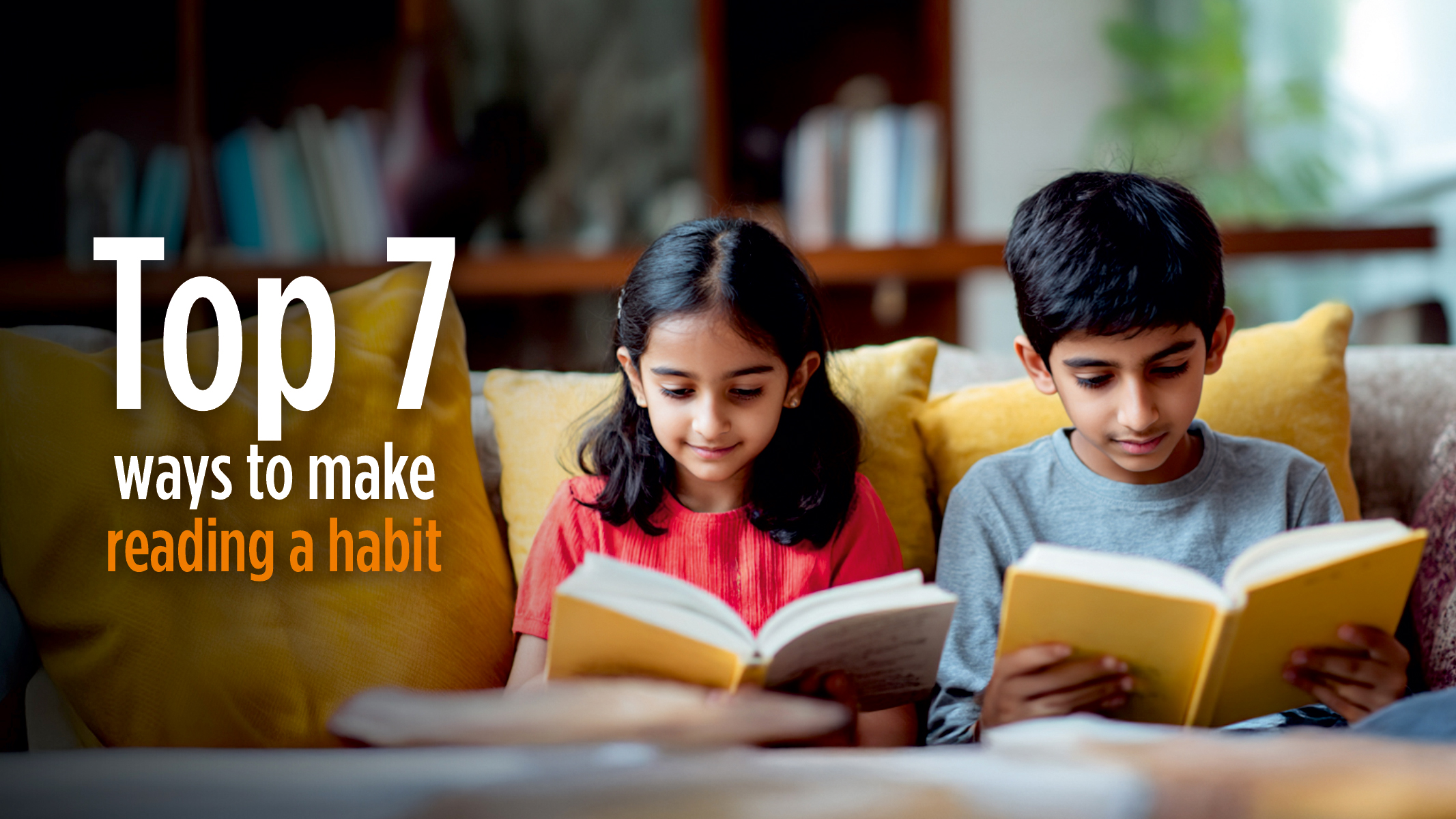 18
In an era dominated by digital screens and online distractions , nurturing a child's love for reading habits is more essential than ever. Research consistently highlights the profound impact of both children reading independently and being read to by others , each playing a vital role in enhancing cognitive development, academic growth and emotional well-being. Here are seven evidence-based strategies to cultivate a lasting reading habit in children 1. Create a Print-Rich Environment at Home Surrounding children with books , comics , newspapers , magazines , labels (such as product tags, signboards, or packaging) and other written materials fosters an environment where reading becomes a natural part of daily life . A study published in the Journal of Emerging Technologies and Innovative Research emphasises that a print-rich environment enhances literacy skills and nurtures a lasting love for reading . Moreover, frequent reading, particularly of books and newspapers, broadens perspective and sharpens analytical thinking , greatly benefiting those inclined towards debating, public speaking, law or civil services. 2. Read Aloud Together Engaging in shared reading sessions not only improves vocabulary and comprehension but also strengthens the parent-child bond . Research from the University of Rochester indicates that reading aloud for just 15 minutes daily can set children on a path to long-term academic success . 3. Incorporate Reading into Daily Activities Integrating reading in daily life , such as reading recipes , instructions or labels , demonstrates the practical applications of learning . This approach reinforces the idea that reading is a valuable life skill beyond the classroom. 4. Limit Screen Time Excessive screen time has been linked to lower reading proficiency and academic performance . A study in JAMA Network Open found that higher levels of screen time in early childhood are associated with lower reading and mathematics scores . Establishing screen-free zones and encouraging book reading can significantly improve reading habits . 5. Choose Books That Match Interests Selecting books for children that align with personal interests , such as sports , animals , space , fantasy , etc., can make reading more engaging . Libraries and bookstores often have dedicated sections, making it easier to find age-appropriate books that spark curiosity. 6. Establish a Reading Routine Setting aside a specific time for daily reading , whether before bedtime or after school, helps children develop reading consistency . A reading routine reinforces the importance of traditional non-digital reading as a regular habit rather than a task. 7. Be a Reading Role Model Children are more likely to adopt reading habits when they observe adults reading regularly . Demonstrating a love for books , discussing stories and sharing reading experiences can inspire children to engage with literature actively. Fostering strong reading habits in children lays the foundation for academic success, critical thinking and lifelong learning. By creating a print-rich environment, reading aloud, integrating reading into daily life and modelling a love for books, parents can ensure that children not only develop strong reading and comprehension abilities but also cultivate curiosity, imagination and empathy. At Narayana Schools, a culture of reading is actively encouraged through well-stocked libraries and a dedicated age-appropriate soft skills programme that focuses on and promotes reading, comprehension and public speaking. We believe this helps students to become confident, knowledgeable and well-rounded individuals, as every step taken in reading, learning and reflection brings them closer to fulfilling their dreams, because at Narayana Schools, your dreams are our dreams .
16 Oct 202536October unfolds as a month of reflection, celebration and discovery. Across the globe, it brings together a vibrant mix of historical events , global festivals and cultural celebrations , each offering timeless lessons that go far beyond academics . For young learners, this month becomes a living classroom where history builds courage , traditions nurture empathy and festivals inspire unity and gratitude . Indian Cultural and Historical Events India’s October calendar is rich with meaning, reminding students of values that shape both character and community . Gandhi Jayanti and Lal Bahadur Shastri Jayanti (2 October) highlight truth , simplicity , discipline and humility , inspiring learners to handle conflict peacefully and respect every form of work. Dussehra, Durga Puja and Navaratri , though celebrated in honour of different deities, Lord Rama’s victory over Ravana, Goddess Durga’s triumph over Mahishasura and the nine nights of divine feminine power, carry unique cultural significance. Yet, all three share a unifying message, the triumph of good over evil, the strength of virtue and the enduring power of righteousness. Diwali and Bhai Dooj carry forward the spirit of triumph into a season of light, gratitude, and togetherness. Diwali, the Festival of Lights, symbolises the victory of light over darkness, good over evil, spiritual renewal and communal harmony, while Bhai Dooj honours the bond between siblings, celebrating familial love, protection and mutual care, thus connecting personal virtue with the broader ethos of righteousness and unity. In certain traditions, particularly Jainism, Diwali also marks enlightenment or the liberation ( moksha ) of Lord Mahavira, imparting a profound spiritual dimension to the festival. In 2025, Diwali fell in October , bringing to a luminous close a month marked by reflection, devotion and moral awakening. Global Cultural Events in October Across the world, October radiates cultural diversity and human connection. Oktoberfest (Germany) celebrates togetherness and cultural pride. World Creole Music Festival (Dominica) and Signal Festival (Czech Republic) show how creativity and innovation can preserve heritage while embracing modernity. Ubud Writers and Readers Festival (Indonesia) fosters literary expression and open-minded dialogue . Itaewon Global Village Festival and Jinju Lantern Festival (South Korea) celebrate global unity , gratitude and dreams . Takayama Matsuri (Japan) teaches patience and craftsmanship , while Halloween promotes imagination and confidence . Canadian Thanksgiving and Harvest Festivals worldwide remind us of gratitude for nature and life’s blessings. Life Lessons Beyond Academics October’s global celebrations offer powerful lessons: From Gandhi’s non-violence to Lord Rama’s triumph , resilience, courage and righteousness remind us that true strength lies in perseverance and moral conviction. By embracing and valuing diverse traditions and customs, empathy and cultural awareness cultivate a deeper sense of global citizenship. Through structured rituals and daily practices, discipline and mindfulness cultivate focus, patience and self-control. Expressed through art, music and vibrant light festivals, creativity and innovation spark imagination and inspire new ideas. Whether through shared celebrations or collective traditions, family and community bonds nurture belonging, unity and joy. With nature-themed festivals that honour the environment, sustainability and gratitude teach us responsibility and the importance of living in balance with our surroundings. The month of October unites the world through values of peace , kindness and togetherness . It reminds learners that true education blends knowledge with empathy, intellect with emotion and individuality with community, nurturing citizens who think deeply, act kindly and live meaningfully. At Narayana Schools, we celebrate and encourage our students and families to embrace every event and festival, practising the timeless lessons they impart, because we believe these experiences are essential in shaping well-rounded individuals who not only dream but also fulfil those dreams with dignity and uprightness, because your dreams are our dreams .
13 Oct 2025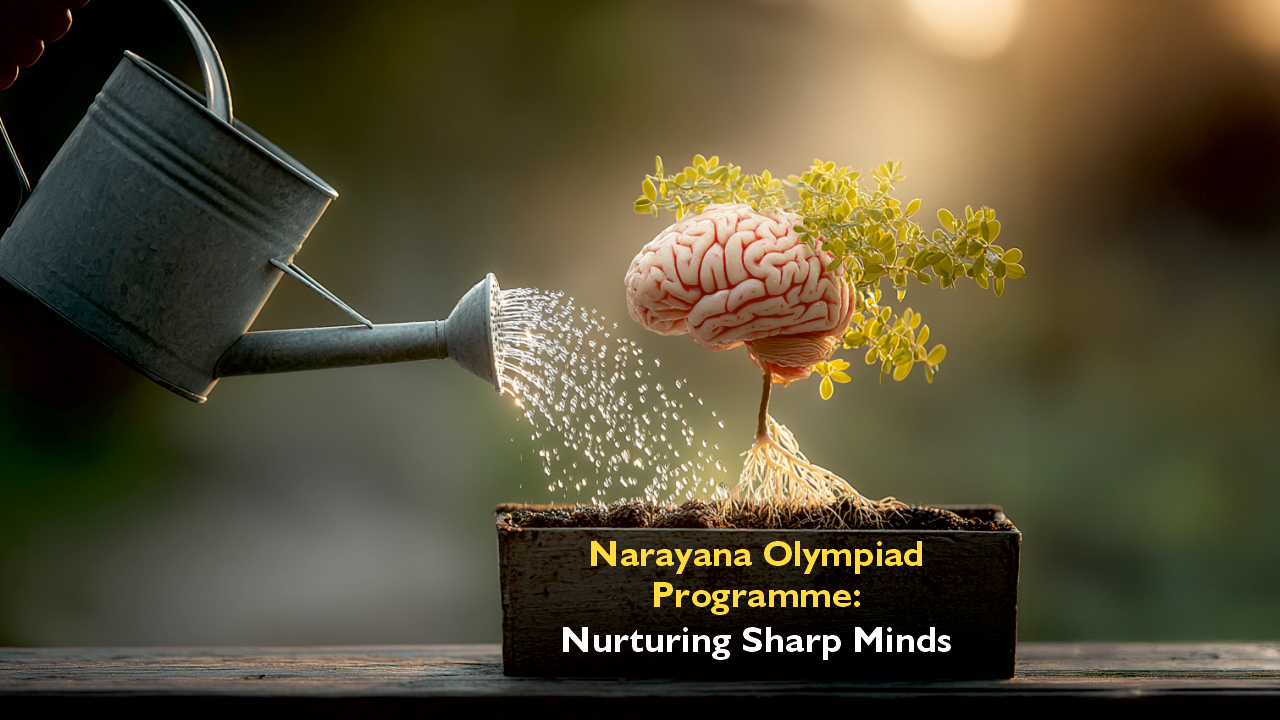 12
The Narayana Olympiad Programme is more than just preparation for Olympiads, it is a carefully crafted journey to cultivate critical thinking , problem-solving abilities , and a competitive spirit in students from (Classes 6 to 12) . With structured support, curriculum alignment and intensive feedback loops, it empowers students to embrace challenges and push their boundaries. Origins of Olympiads The term Olympiad finds its roots in ancient Greece , where it originally referred to the four-year interval between the Olympic Games , an era marked by the celebration of human strength, spirit and competition. Borrowing that legacy of excellence, modern academic Olympiads were introduced to honour intellectual brilliance and foster cross-border collaboration among young minds. The first International Mathematical Olympiad ( IMO ) was held in 1959 in Romania , born out of a vision to challenge, identify and nurture extraordinary talent in mathematics after the intellectual void of World War II . Since then, Olympiads have evolved into a global movement that spans diverse disciplines, from science and technology to linguistics and astronomy, each aiming to spark curiosity, develop problem-solving skills and prepare students for the frontiers of future knowledge. Why Olympiads Matter for Students of Classes 6 to 12 (eTechno to Senior Secondary)? Extend learning beyond rote memorisation into challenging concepts. Nurture deeper conceptual understanding and sharper analytical skills. Hone time management under exam pressure. Encourage lateral thinking and confidence in solving unfamiliar problems. Build resilience and adaptability in academic challenges. Improve performance in regular school examinations. Signal readiness for competitive exams like IIT-JEE, NEET, national/international scholarship tests and entrance examinations. Cultivate a healthy competitive mindset that drives consistent self-improvement rather than stress from peer comparisons. Major Olympiads and Their Organisers S.No. Olympiads Full Forms Registration Timelines 1 IMO International Mathematical Olympiad Typically opens in October and closes by February. Students must register through their school , individual registrations are not accepted. Website: SOF IMO 2 IPhO International Physics Olympiad National selection usually occurs in January-February. Students must qualify through the Indian National Physics Olympiad (INPhO). Website: IPhO - The International Physics Olympiad, Singapore 3 IChO International Chemistry Olympiad National selection takes place in January. Students must qualify through the Indian National Chemistry Olympiad (INChO). Website: IChO 4 IOI International Olympiad in Informatics National selection occurs in May-June. Students must qualify through the Indian National Olympiad in Informatics (INOI) . Website : IOI 5 IBO International Biology Olympiad National selection is held in January . Students must qualify through the Indian National Biology Olympiad (INBO) . Website : IBO 6 IPO International Philosophy Olympiad National selection typically occurs in March-April. Students must qualify through the Indian Philosophy Olympiad (InPhO) . Website : IPO 7 iGeo International Geography Olympiad National selection is held in May-June. Students must qualify through the Indian National Geography Olympiad (INGO). Website: iGeo 8 IOL International Linguistics Olympiad National selection is conducted in January-February . Students must qualify through the National Olympiad in Linguistics (NOL). Website: IOL 9 IJSO International Junior Science Olympiad National selection occurs in August-September . Students must qualify through the Indian National Junior Science Olympiad (INJSO). Website: IJSO - International Junior Science Olympiad | IJSO Official Website | IJSO Official Webpage | International Junior Science Olympiad Official | IJSOWeb.org 10 IESO International Earth Science Olympiad National selection is held in June-July . Students must qualify through the Indian National Earth Science Olympiad (INESO) . Website: IESO 11 IOAA International Olympiad on Astronomy and Astrophysics National selection takes place in April-May . Students must qualify through the Indian National Astronomy Olympiad (INAO). Website: IOAA - International Olympiad on Astronomy and Astrophysics - IOAA In India, key entities who promote and propagate Olympiads include Homi Bhabha Centre for Science Education (HBCSE) / Indian Association of Physics Teachers (IAPT) [which run National Standard Examination (NSE), Indian National Physics Olympiad (INPhO), etc.], the Science Olympiad Foundation (SOF) [National Science Olympiad (NSO), National Cyber Olympiad (NCO), International English Olympiad (IEO), etc.], and private bodies such as SilverZone, Indian Talent Olympiad, Crest, Unicus, Humming Bird that conduct subject-wise and grade-wise Olympiads annually. Essentials for Success in Competitive Exams Three pillars underpin Olympiad success: Subject Mastery : A very strong foundation in theory, definitions, examples and typical problems. Conceptual Skills : Ability to apply principles in new situations, reason deeply and find elegant solutions. Personal Competencies : Time management, calmness under pressure, self-analysis of mistakes and strategic practice. What Sets the Narayana Olympiad Programme Apart? Integrated Curriculum : Workbooks and study materials draw from CBSE, ICSE, IGCSE and IB frameworks. This hybrid curriculum aligns intensively with Olympiad demands while reinforcing core classroom concepts. Linked Topics : Students explore topics from future grades as well, e.g. an 8 th grade student may learn linked themes from Grades 9 and 10, sharpening them ahead of peers. The 4C System Common Microschedule : At the start of each academic year, day-wise and subject-wise microschedules (MCS) are shared so students and parents see exactly what is expected and when. Common Teaching : Across all Narayana Schools’ branches, the same pace and structure is followed. Using the ‘1+1 system’ (one teaching period, one practice period), theory is immediately applied. Common Examination + Levels and Promotion : Assessments include CDF (Concept, Definitions and Formulas) tests, JEE/NEET style exams, formative and summative evaluations and projects as per CCE norms. These are aligned with national benchmarking standards, allowing students to gauge their performance and see where they stand in comparison to peers across the country. Common Analysis : Within 3 days of each exam, students receive a full performance report: micro-level error analysis (topic-wise, question-wise) and uniform comparative analysis across all branches nationwide. This builds healthy competition and clarity. Personalised Error Analysis and Correction: Right after an exam, an individual error list is generated showing mistakes by question, subject and concept. Teachers guide students to correct those errors immediately, reinforcing mastery rather than letting mistakes linger. For example: Student Name: XYZ Admission No.: XXX-XXXX Class: 9 Section: B Subject: Physics Test/Test Type: XYZ Error Topic Sub Topic Concept 1 Heat Thermal Expansion Incorrectly identified the relationship between heat and expansion of a solid. 2 Heat Calorimetry Misunderstood the concept of specific heat capacity and its unit. 3 Heat Modes of Heat Transfer Confused conduction, convection and radiation as the same process. 4 Heat Effects of Heat Failed to recognize the difference between heat and temperature. 5 Heat Anomalous Expansion of Water Misinterpreted the significance of water's highest density at 4°C. Highlights and Structure Weekly subject-wise time allotment balances school and competitive preparation. Branch timetables follow centrally designed period allotments. Sufficient revision windows are built into every cycle. Eligibility and Screening Entrance is via a common screening test (December–January). Students exceeding cut-off marks are invited to join the Olympiad Programme. The CNAPS (Council for Nurturing Academic Potential in Students) Olympiad exam is also integrated, emphasising DISCOVER → IGNITE → NURTURE , with fully online cycles, cross-syllabus exposure, scholarships, peer benchmarking and large-scale feedback. Our Digital World nConnect: Tech-Enabled Performance Tracking At Narayana Schools, we believe that meaningful learning thrives when parents and school management work in harmony. With our dedicated parent app, nConnect , families gain real-time insights into their child’s academic progress and overall school life. Parents can effortlessly track attendance, pay fees, raise queries, post concerns and communicate directly with school authorities, all at the click of a button. By making information accessible and communication seamless, nConnect ensures that parents remain actively involved at every stage of their child’s education. nLearn: Online Self-Learning and AI-Assisted Growth Our nLearn platform redefines tech-enabled learning by blending smart classroom resources with AI-driven tutoring. It offers interactive modules, eBooks and exam simulations carefully modelled on Board examinations and the Joint Entrance Examination (JEE). These simulations assess every facet of a student’s preparation, from conceptual clarity to critical thinking, problem-solving ability, and competitive readiness. The platform is further strengthened by ASTRA (Advanced Student Tutoring & Resource Assistant) , our AI-powered doubt-solving companion that provides instant clarification and personalised practice. Together, nLearn and ASTRA enrich learning, making it more accessible, reliable, and aligned with Narayana’s curriculum. Olympiads are more than just contests, they are a pathway to sharper thinking, confidence, and academic excellence. Through its Olympiad Programme, Narayana Schools supports students to not only compete but to learn, grow and realise their fullest potential, and parents are encouraged to opt for Olympiads as a supplementary journey. We empower children to ace them and transform aspirations into reality, because at Narayana Schools, your dreams are our dreams .
01 Oct 2025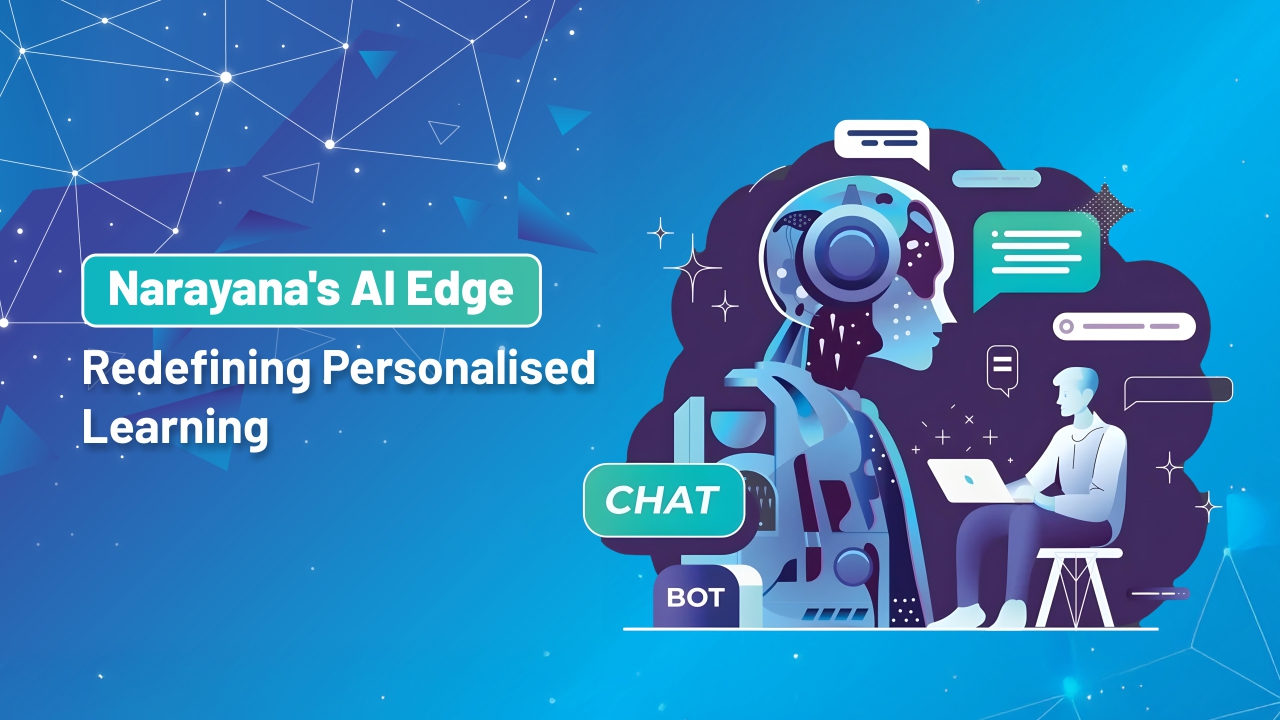 9
In today’s dynamic world of education, where every child’s learning journey demands both precision and flexibility, tools that integrate artificial intelligence in education with deeply personalised support can transform outcomes. The nLearn application , ASTRA (Advanced Student Tutoring & Resource Assistant) and AutoGrade at Narayana Schools embody this vision. These are carefully engineered innovations designed to deliver personalised learning, instant doubt resolution and measurable academic growth. nLearn: Online Self-Learning App nLearn is Narayana’s flagship educational application , bringing together animated video lessons, concept cards, question banks, mock tests and performance analytics. The platform allows students to revise and practise at their own pace while providing parents with data-driven insights into speed, accuracy and ranking. This ensures targeted support rather than a one-size-fits-all approach, reducing learning gaps and boosting confidence. ASTRA: AI-Powered Personalised Doubt Solving ASTRA (Advanced Student Tutoring & Resource Assistant) is Narayana’s AI-powered learning tool for instant doubt clarification. Integrated into nLearn, ASTRA provides answers across subjects in seconds and even maintains a repository of peer queries for revision. Its biggest strength lies in being trained on Narayana’s own curriculum, ensuring every response aligns with classroom learning. With a 91% satisfaction rate among students, ASTRA is revolutionising concept clarity and saving valuable study time. By adopting Retrieval-Augmented Generation (RAG) frameworks , ASTRA goes beyond generic AI responses by pulling answers directly from curated school content . This means students receive reliable and context-specific explanations that perfectly match their syllabus, reducing confusion, strengthening concept clarity and saving time that would otherwise be spent verifying answers from scattered sources. AutoGrade: Transforming Answer Evaluation with AI While multiple-choice tests are easy to grade, descriptive answers have always posed challenges for both students and teachers. Students often miss out on timely feedback and teachers face heavy evaluation loads. Narayana’s AutoGrade system solves this problem through AI-powered descriptive answer evaluation. With AutoGrade : Teachers can review hundreds of handwritten answer sheets in minutes. Students receive detailed and personalised feedback on conceptual understanding, structure, clarity and accuracy. Subject-specific nuances are supported, from formulas in Physics to diagrams in Biology and comprehension in English. Educators remain in control, with the ability to override and refine AI-generated suggestions, ensuring accuracy while also helping the system learn. Evaluation time and teacher workload are drastically reduced. Most importantly, students can practise answer writing more frequently and receive instant insights, preparing them for board exams with confidence. AutoGrade also tracks performance subject-wise, topic-wise and individually , enabling teachers to identify learning gaps and provide targeted mentoring . For students, this means timely intervention and personalised guidance , ensuring stronger conceptual mastery and consistent progress. Intensive real-world testing has demonstrated that AutoGrade achieves both accuracy and scalability, setting a new benchmark in AI-powered education . This AI is designed to empower, assist and never to replace or dictate . Building with Purpose: Innovation That Matters At Narayana Schools , innovation has never been about chasing trends. From smart classrooms to digital platforms for parents, every advancement has been about impact. Educational research consistently highlights the importance of timely and specific feedback ( Hattie & Timperley, 2007 ) in boosting student achievement. By combining nLearn , ASTRA and AutoGrade , Narayana ensures that students not only learn but also reflect, correct and grow. Parents, meanwhile, gain clarity into their child’s progress, and teachers find relief from administrative overload, allowing them to focus on meaningful mentoring. The integration of AI in schools represents a commitment to helping students realise their aspirations with greater clarity, confidence and support and not just technological progress. By embedding tools that are practical, purposeful and aligned with student needs, we are reimagining education not just for today but for the future. Every innovation is built with one goal in mind and that is to turn dreams into achievements, because at Narayana Schools, your dreams are our dreams .
25 Sept 2025

