

Explore stories and insights
Loading...


 7
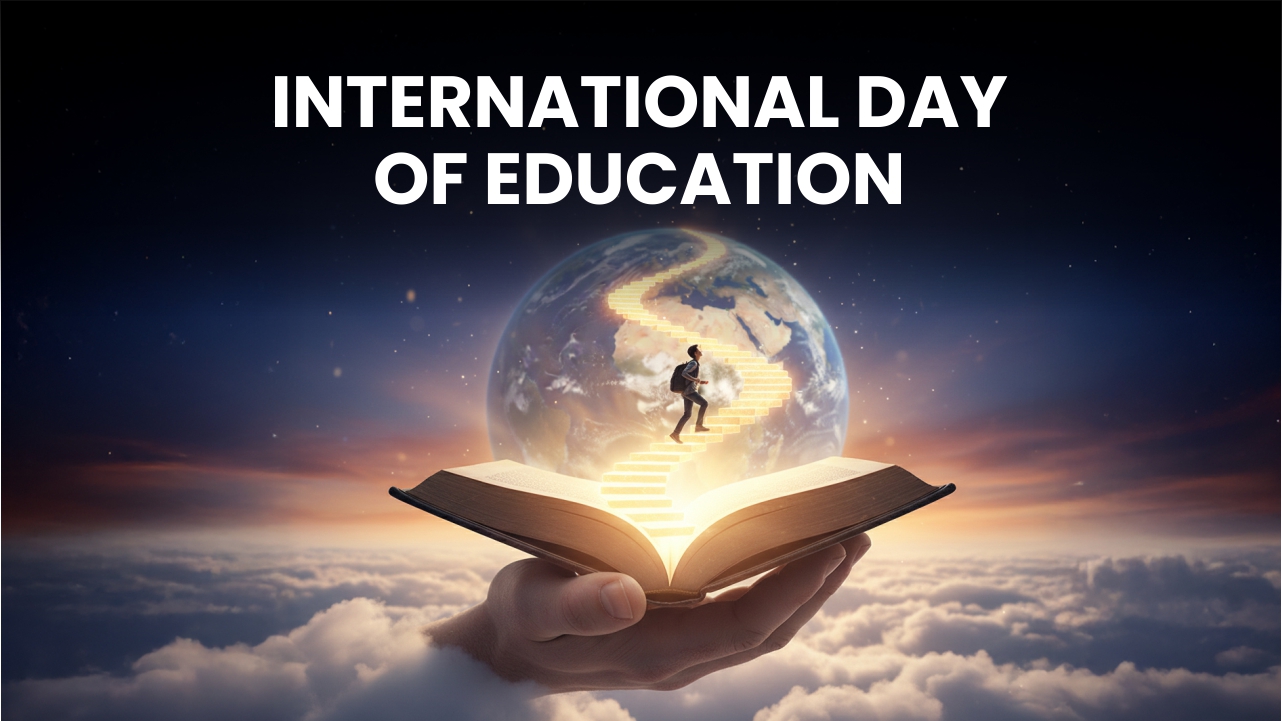
Observed every year on 24 January , the International Day of Education underscores education as a fundamental human right and a cornerstone of sustainable development. For families across India, the day highlights how learning goes beyond examinations and instead plays a vital role in shaping values, resilience and lifelong capability in children across all age groups. 1. The Origins and Aim of the International Day of Education The day was proclaimed by the United Nations General Assembly (UNGA) through Resolution 73/25 , adopted by consensus on 3 December 2018 . The initiative was spearheaded by Nigeria , co-authored by 58 UN Member States , and introduced by E. Tijjani Muhammad-Bande , then Nigeria’s Permanent Representative to the UN (United Nations). The resolution emphasised education as the most reliable path towards peace, equality and sustainable development . The core aim is to ensure inclusive and equitable quality education while promoting lifelong learning opportunities for all . 2. Why January 24th Was Chosen Unlike other UN observances linked to historic anniversaries, January 24th was selected as a symbolic fresh start to the year. The date positions education as the first global priority and resolution every January. The timing aligned with the Global Education Meeting held in Brussels in December 2018 , ensuring political commitment from education ministers, UNESCO (United Nations Educational, Scientific and Cultural Organization) and international bodies. 3. Education and the 2030 Agenda (SDG 4) The UN recognised that the 17 Sustainable Development Goals (SDGs) adopted in 2015 could not be achieved without focussed investment in education. SDG 4 specifically commits nations to providing inclusive, equitable and quality education . The observance highlights the urgent need to address the reality of 250+ million children globally still out of school . 4. Education as the Foundation of Child Development UNESCO research shows that consistent education strengthens cognitive development, emotional regulation and problem-solving skills. Holistic learning environments balance academics with social, ethical and emotional growth. Aligned with these findings, studies confirm that when parental involvement remains supportive rather than pressurising, it reinforces emotional security, enhances motivation and builds confidence, allowing children to fully benefit from well-rounded educational environments. 5. Bridging Learning Gaps Through Inclusive Education The Global Education Monitoring Report stresses inclusive education for diverse learning needs. Flexible pedagogy, emotional support and early intervention reduce academic stress and disengagement. Closing learning gaps ensures equal opportunities across socio-economic backgrounds. 6. The Science Behind Effective Learning Educational psychology highlights the role of structured routines and positive reinforcement in memory retention. Neuroscience studies show that active learning outperforms rote memorisation for long-term understanding. These findings reinforce the importance of quality education systems over performance-driven models. 7. Education and the Future of Society Economists and sociologists agree that educated societies adapt better to technological change. Education cultivates critical thinking, ethical judgement and empathy. The first International Day of Education was celebrated on 24 January 2019 , and 2026 marks its eighth observance , often focusing on themes such as digital literacy and AI in classrooms . The International Day of Education reinforces a universal truth: education shapes minds, futures and societies. When learning is meaningful, inclusive and supported, education becomes a lifelong source of confidence, purpose and possibility.
 19 Jan 2026
 7
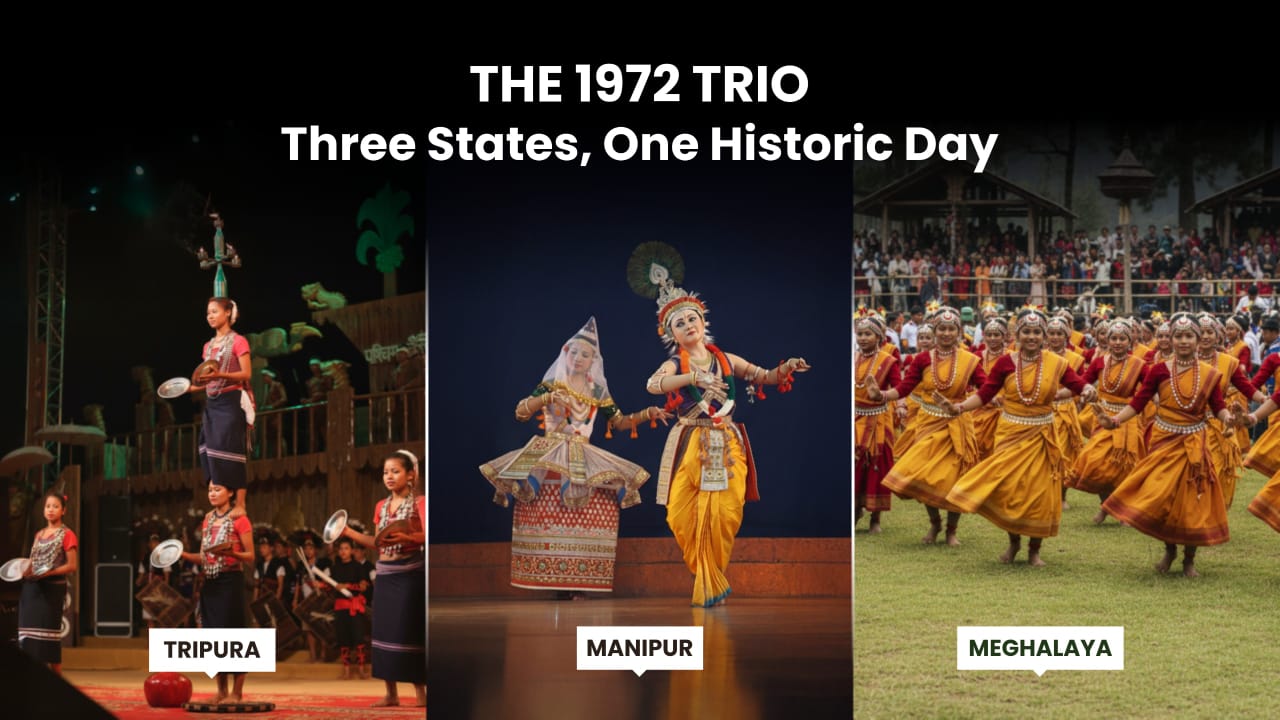
21 January, 1972 , holds a special place in India’s modern history, as on this day Tripura, Manipur, and Meghalaya attained full statehood, marking a defining chapter in the story of North East India’s heritage . Before this transition, Tripura and Manipur functioned as Union Territories, while Meghalaya was an autonomous state within Assam, arrangements that limited local administrative autonomy despite distinct cultural, linguistic and geographical identities. The move to full statehood was driven by the need to address regional aspirations, strengthen democratic representation, respond to socio-political movements seeking self-governance and ensure better governance in a strategically sensitive border region, thereby integrating these states more firmly into India’s federal framework. For families, this milestone offers an opportunity to help children understand cultural diversity, historical identity and national integration through stories rooted in tradition, geography and lived experience. 1. Why 1972 Matters in Indian History The North Eastern Areas (Reorganisation) Act, 1971 , which came into effect on 21 January, 1972 , granted statehood to Tripura and Manipur, while Meghalaya emerged as a full-fledged state after separating from Assam. Political historians note that this move strengthened regional identity in India while ensuring administrative stability within the Indian Union. Learning about this transition helps children see how democratic systems evolve to respect cultural uniqueness and regional aspirations. 2. Tripura: A Blend of Tribal Roots and Royal Legacy Tripura’s history and culture reflect a rare harmony between indigenous tribal traditions and royal heritage. The Manikya dynasty ruled for centuries, leaving behind architectural landmarks such as the Ujjayanta Palace . The name Tripura is believed to originate from ancient mythology and history, with references to ‘Tripura Sundari’ , a revered deity, and the Sanskrit words tri (three) and pura (cities), symbolising a land of ancient settlements and spiritual significance. A lesser-known but significant fact is that Tripura is home to one of India’s highest proportions of indigenous tribal population , with 19 officially recognised tribes, whose languages, festivals and ecological knowledge continue to shape the state’s identity. Anthropological studies highlight Tripura as a model of cultural coexistence, offering valuable lessons on social harmony in India . 3. Manipur: The Cultural Heartbeat of the East Manipuri heritage is deeply tied to classical dance, martial traditions and a strong sporting culture, while affirming its distinct cultural and historical identity. The name Manipur is derived from ancient Sanskrit texts, meaning “the jewelled land” ( mani meaning jewel and pur meaning land or city), a reference found in the Mahabharata, where Manipur is mentioned as a prosperous and culturally rich kingdom. Manipuri dance , recognised as a classical Indian dance form, blends devotion, rhythm and storytelling, particularly through themes drawn from Vaishnavite traditions. A lesser-known yet significant fact is that Manipur is the birthplace of modern polo , which evolved from the traditional game Sagol Kangjei and later spread globally during the British era. Educational research shows that exposure to regional art forms enhances creativity and cultural empathy in children. 4. Meghalaya: Where Nature and Community Thrive Together The name Meghalaya is derived from Sanskrit, meaning “the abode of clouds” ( megha meaning cloud and alaya meaning home), reflecting the region’s high-altitude geography and frequent cloud cover. Meghalaya’s culture and history are shaped by a matrilineal social system , where lineage and inheritance pass through the mother, offering a rare and meaningful example of gender-balanced social organisation in India. Environmental studies often cite living root bridges , grown organically from the roots of rubber fig trees, as remarkable examples of sustainable engineering and long-term ecological wisdom. A lesser-known but significant fact is that Meghalaya is home to Mawsynram , recognised as one of the wettest places on Earth, making it a vital natural laboratory for climate and rainfall studies. These traditions and natural practices introduce children to environmental stewardship, resilience and community-based living rooted in harmony with nature. 5. The People, Land and Living Traditions of the 1972 Trio Tripura, Manipur and Meghalaya are home to diverse indigenous communities whose lifestyles are closely shaped by forests, hills and rivers, making geography central to daily life. Tripura is inhabited by several tribal groups such as the Tripuri, Reang and Jamatia , with communities practising agriculture, handloom weaving and folk traditions, while Bengali and Kokborok are widely spoken. Manipur is home to the Meitei, Naga and Kuki tribes , known for strong community bonds, rich oral traditions and a disciplined sporting culture, with Manipuri (Meiteilon) serving as the primary language alongside many tribal dialects. Meghalaya is predominantly inhabited by the Khasi, Garo and Jaintia tribes , whose matrilineal social system places women at the centre of family and inheritance, shaping a distinctive way of life. Food across the three states reflects local geography, featuring rice-based diets, fermented ingredients, seasonal vegetables and minimal use of oil, highlighting sustainability and nutritional balance. Linguistic diversity thrives across the region, with Tibeto-Burman and Austroasiatic language families adding to India’s cultural richness. Hills, dense forests, high rainfall and river valleys influence housing, clothing and livelihoods, creating cultures that value harmony with nature. These elements make the 1972 Trio unique, offering children meaningful insights into how people adapt to land, climate and community values, and why India’s North East remains one of the country’s richest cultural landscapes. 6. The Shared Spirit of the 1972 Trio Despite distinct languages and customs, the three states share values of resilience, community and respect for nature. Sociological research emphasises that learning about diverse regions fosters national integration and inclusivity from an early age. Stories from the North East help broaden perspectives beyond textbooks. 7. Making Learning Relatable for Children Mapping exercises, folk stories and regional food discussions bring Indian cultural diversity into everyday conversations. Linking history with festivals, music and landscapes makes learning engaging and memorable. The 1972 Trio stands as a reminder that India’s strength lies in its diversity, where multiple histories come together to shape a shared future. Understanding the heritage, history and heart of Tripura, Manipur and Meghalaya helps children grow with respect, curiosity and pride in the many stories that together form the nation.
15 Jan 2026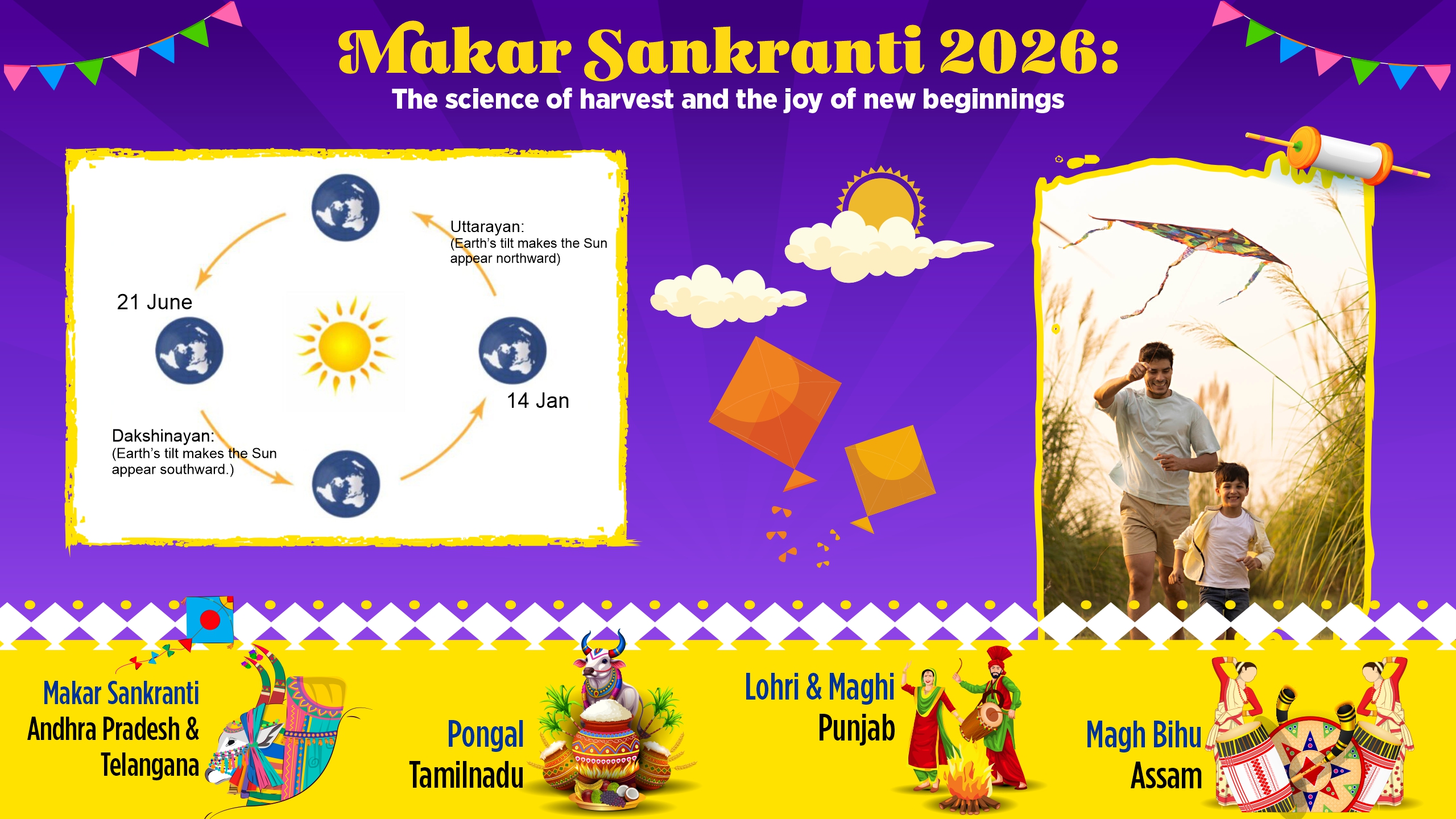 7
Makar Sankranti 2026, celebrated on 14 January, arrives as more than a cultural celebration it marks a powerful intersection of science, agriculture and renewal . Across India, Makar Sankranti is celebrated under different names in different states , each shaped by local crops, climate, customs and history. For families, this harvest festival offers a meaningful way to help children understand nature’s rhythms, gratitude and fresh beginnings through both tradition and scientific reasoning. Makar Sankranti Across India State Local Name Regional Traditions/Rituals Andhra Pradesh and Telangana Sankranti Muggu (rangoli), kite flying, harvest foods, family gatherings Assam Magh Bihu/Bhogali Bihu/Maghar Domahi Feasting, traditional games, cultural activities, marking the end of harvest season Bihar and Jharkhand Khichdi Parv Offering khichdi, bathing rituals, agricultural gratitude Gujarat Uttarayan Festive foods (undhiyu, jalebi, sugarcane, etc.), Surya Puja, charity and bathing Karnataka Suggi Ellu-bella (sesame seeds and jaggery) exchange/sharing, sugarcane rituals, community celebrations Kerala Makara Vilakku Pilgrimage to Sabarimala, celestial light marking the Sun’s transition Punjab Lohri Bonfires, folk songs, celebrating winter crops and community bonding Tamil Nadu Pongal Four-day harvest festival, cooking new rice, thanking the Sun, cattle worship West Bengal Poush Parbon Pithe (rice cakes), agrarian rituals, rural fairs Despite regional differences, the essence of Makar Sankranti remains universal celebrating harvest, sunlight, seasonal transition and new beginnings. The Astronomical Science Behind Makar Sankranti Makar Sankranti is one of the few Indian festivals based on the solar calendar and not the lunar cycle , which is why it is celebrated on 14 January every year , and in leap years it may fall on 15 January due to the slight astronomical adjustment in the Sun’s transit. It marks the sun’s transition into Capricorn (Makara) , known as Uttarayan , when daylight hours begin to increase. Astronomical studies highlight that longer daylight positively influences energy levels and biological rhythms in humans. Why Sankranti is a Harvest Festival The festival coincides with the completion of the Rabi harvest season across many regions of India (the winter cropping cycle where crops such as wheat, barley, mustard and pulses are sown in October-November and harvested from January onwards) . Agricultural science links this period to optimal crop maturity due to sunlight exposure and soil cycles. Explaining the science of harvest helps children appreciate the connection between food, farmers and nature. Nutritional Wisdom in Sankranti Foods Traditional Sankranti dishes made with sesame, jaggery and millets are rich in iron, calcium and healthy fats. Nutrition research shows these ingredients support immunity and warmth during winter months. Such practices reflect early seasonal eating science that has been passed down through generations. Kite Flying and the Physics of Play Kite flying during Makar Sankranti began as a tradition to encourage people to spend time outdoors under the winter sun, supporting vitamin D absorption. Flying kites has also been a way of expressing gratitude and devotion to the Sun God while symbolising the gradual strengthening of sunlight after winter. Over time, especially in Gujarat , this practice grew into a large-scale cultural celebration, eventually inspiring the International Kite Festival that attracts participants from across the world. From a scientific lens, kite flying introduces children to basic physics principles such as air pressure, lift, wind direction and balance in a hands-on, engaging way. The physical movement and outdoor play involved release endorphins, pain- and stress-relieving hormones that enhance mood, emotional balance and overall well-being. Sankranti as a Psychological Reset Cultural psychologists observe that harvest festivals act as natural markers for reflection and renewal. Completing one agricultural cycle and beginning another mirrors the idea of new beginnings for children . This timing supports motivation, optimism and goal-setting in young minds. Teaching Gratitude Through Science and Tradition Gratitude rituals during Sankranti align with positive psychology findings, such as offering freshly harvested grains to the Sun God , sharing traditional sweets like tilgul or pongal with neighbours and family , and feeding birds, cattle or the underprivileged as a gesture of thankfulness for abundance and prosperity . Studies in the Journal of Positive Psychology show gratitude improves emotional resilience and social bonding. Linking science with tradition makes learning values more meaningful and memorable. Building Environmental Awareness Sankranti celebrations highlight respect for land, animals and seasonal cycles. Environmental education research shows early exposure to sustainability concepts builds long-term responsibility. This festival naturally introduces eco-conscious learning in everyday life. Sankranti blends astronomy, agriculture, nutrition and psychology into a celebration that honours effort, patience and progress. By understanding the science behind harvest and renewal, families can help children view festivals not only as joyous occasions but also as lessons in balance, gratitude and growth that extend far beyond the season.
08 Jan 2026 7
A child’s educational journey is most successful when home and school work in quiet harmony. Research in parental involvement in education consistently shows that children perform better academically, develop stronger emotional resilience, and display higher motivation when parents actively engage with learning in a supportive and non-pressurising manner. A healthy parent-child educational partnership is not about constant supervision, but about shared understanding, trust and purposeful guidance. 1. Establish Learning as a Shared Responsibility Learning is most effective when education is treated as a joint effort rather than a one-sided expectation. Educational psychology research shows that children perform better when parents show interest in school activities without micromanaging. Regular discussions about classroom experiences help children feel valued and supported. Reflecting on what was learned reinforces understanding and confidence. A shared approach to learning works like a team reviewing progress together after a match, strengthening motivation and trust. 2. Create Consistent Learning Routines A structured routine creates predictability, which supports focus and emotional stability. Research on effective study habits shows that consistent schedules help reduce anxiety and improve information retention across age groups. Fixed times for study, revision and rest bring balance to the day. Regular routines help learning become a natural habit rather than a recurring source of stress or conflict. 3. Focus on Effort and Not Just Outcomes Educational research by Carol Dweck on the growth mindset highlights the importance of appreciating effort rather than focusing only on results. When persistence and hard work are acknowledged, confidence develops naturally and learning feels less pressured. Recognising small milestones such as completing a chapter or showing better focus reinforces steady progress. This approach helps nurture intrinsic motivation , encouraging children to enjoy learning rather than chase marks alone. 4. Encourage Open Communication and Emotional Safety A healthy educational partnership thrives when children feel safe expressing confusion, stress or academic fears without judgement. Studies published in the Journal of Adolescence indicate that open parent-child communication acts as a protective factor against academic stress and burnout. Regular calm conversations about challenges help children externalise worries rather than internalise pressure. Emotional safety strengthens resilience, allowing children to seek help early and approach learning with confidence rather than fear. 5. Align Home Support with School Guidance Learning becomes more effective when home support complements school instruction rather than conflicting with it. Educational alignment ensures consistency in expectations, study methods and assessment preparation. Research on school-family partnerships shows that coordinated guidance between parents and teachers leads to improved academic engagement and behavioural outcomes. Staying informed about classroom progress and learning goals enables parents to provide timely and relevant support without overstepping boundaries. A healthy parent-child educational partnership is built on trust, consistency, emotional safety and shared responsibility. When home and school function as aligned partners, children experience learning as supportive rather than stressful. At Narayana Schools, this partnership is nurtured through the following well-defined support systems that keep parents closely connected to their child’s journey. Adoption Calling A dedicated teacher is assigned to a small group of students to closely track academic progress, behavioural patterns and overall development. Structured interactions with parents every 15 days ensure consistent updates, open dialogue and timely guidance, fostering trust, transparency and holistic growth. Learner Support Programme Learning gaps are identified early through diagnostic assessments, micro-tests and classroom observations. Personalised lesson plans and mentoring sessions address these challenges effectively, and parents receive regular updates on progress, conceptual slumps and improvements, enabling a united and proactive approach to academic success. nConnect A digital communication platform keeps parents informed in real time through features such as digital attendance, instant notifications, direct teacher communication, announcements and event updates, with upcoming services including exam schedules, results, fee payments and bus tracking. This creates a transparent connected ecosystem that strengthens parent-school collaboration. Together, these initiatives ensure that learning remains supported, aspirations stay aligned and every child’s journey moves steadily towards fulfilling long-term dreams, because at Narayana Schools, your dreams are our dreams .
06 Jan 2026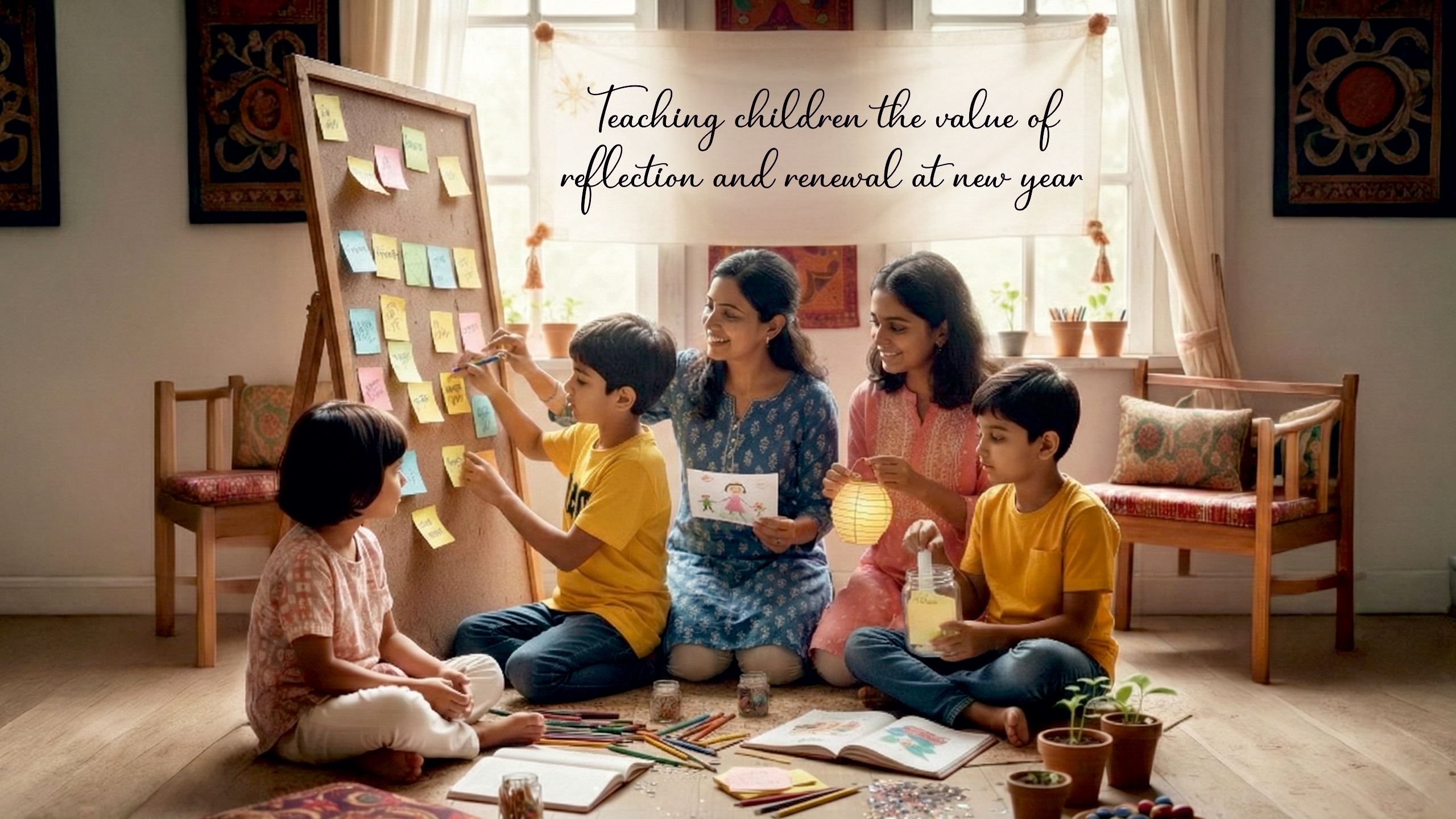 9
New Year is not just a calendar change, it also acts as a powerful psychological reset for children. This period offers families a meaningful opportunity to introduce reflection and renewal , which research in child development and educational psychology links to stronger emotional regulation, motivation and lifelong learning habits. Introduce Reflection as a Gentle Review and Not a Judgement Encourage conversations about experiences, efforts and learnings rather than successes or failures. Developmental psychology research shows reflective dialogue strengthens emotional intelligence in children . This approach helps children process challenges without fear or self-criticism. Use the New Year as a Natural ‘Fresh Start’ Behavioural studies from the Wharton School describe the Fresh Start Effect , where clear beginnings such as a new year, new month or new term boost motivation and goal-setting. Early January acts as a mental reset point that increases goal clarity. Explaining this concept helps children view the New Year as an opportunity, not pressure. Shift Focus from Outcomes to Growth Reflection should centre on improvement, effort and consistency rather than marks alone. Carol Dweck’s growth mindset research shows this builds confidence and persistence. This perspective supports positive learning habits across all academic stages. Encourage Small and Purposeful Intentions Psychologists recommend age-appropriate goal setting instead of long resolutions. Short intentions such as reading daily or staying organised feel achievable. Renewal becomes a process of steady progress rather than dramatic change. Connect Renewal with Routine Reset Research indicates that gradually resetting sleep, study and screen routines improves focus. Structured yet flexible routines enhance cognitive readiness after holidays. This balance prevents overwhelm while restoring learning rhythm. Model Reflection Through Family Practices Children learn reflection best through observation and shared experiences. Simple family discussions about lessons from the year build parent-child educational bonding . These moments normalise reflection as a life skill. Reinforce Emotional Renewal Alongside Academic Goals Mental health studies in the Journal of Child Psychology and Psychiatry stress emotional reset. Conversations around stress, balance and expectations support student emotional wellbeing . Emotional renewal strengthens academic readiness and resilience. Teaching reflection and renewal at New Year is like helping children organise their inner world before a new chapter begins. With consistent guidance, this practice builds clarity, motivation and balance that supports both learning and life throughout the year.
05 Jan 2026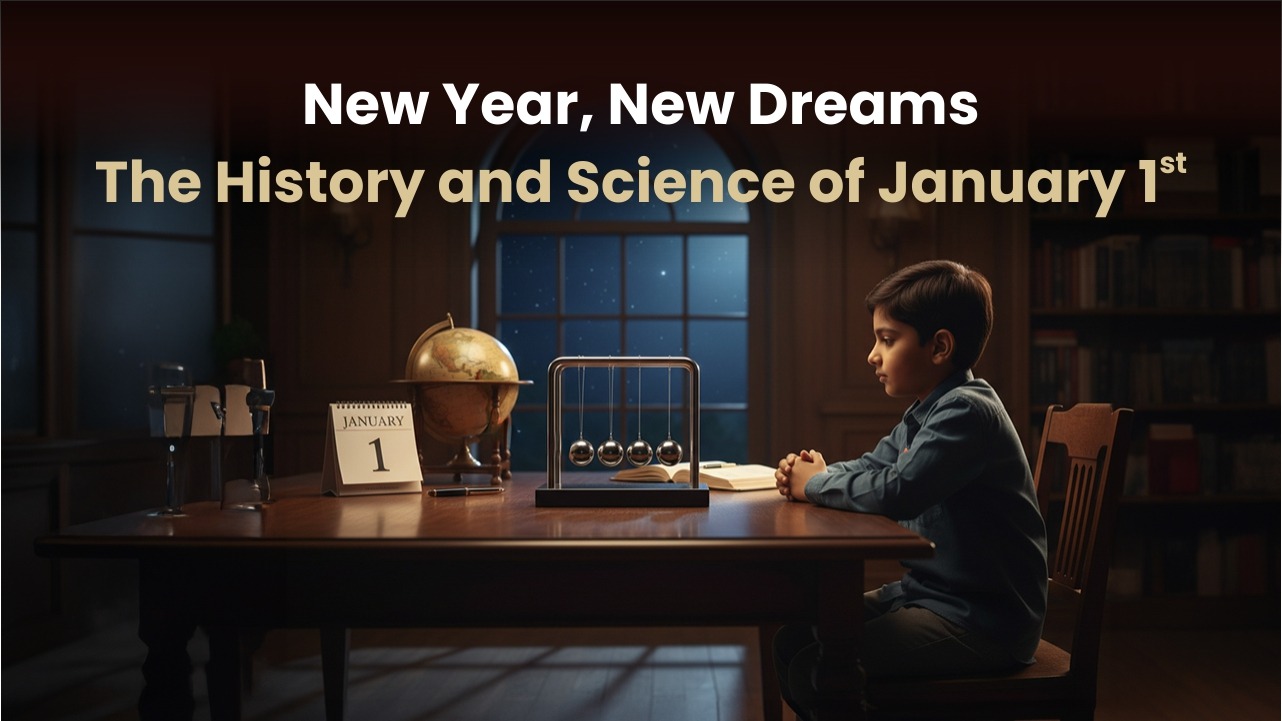 9
January 1st represents a symbolic reset for families, routines and aspirations. Its impact on children is shaped by history, psychology and neuroscience, making it a meaningful moment to encourage reflection, motivation and steady goal-setting. 1. Why January 1st Became the Start of the Year The tradition began in 46 BCE with Julius Caesar’s Julian calendar . January was named after Janus , the Roman god of beginnings and transitions . Janus symbolised looking back at the past and forward to the future. The Julian calendar assumed a year length of 365.25 days , which was slightly longer than the actual solar year by about 11 minutes . This small error accumulated over centuries, causing calendar dates to drift nearly ten days away from seasonal events such as the spring equinox . In 1582 , Pope Gregory XIII introduced the Gregorian calendar to correct this drift and realign the calendar with the Earth’s true orbit around the Sun. The Gregorian calendar was gradually adopted worldwide and later globalised January 1st as the official New Year . This historical continuity helps children view the New Year as a genuine turning point. 2. The Psychology Behind New Beginnings January 1st functions as a ‘temporal landmark’ in behavioural psychology. Research by the American Psychological Association shows such landmarks separate past actions from future intentions. This mental division boosts optimism and willingness to change. Children feel encouraged to reset attitudes towards studies, routines and behaviour. This supports effective New Year goal setting for students without emotional pressure. 3. The Science of Motivation and Fresh Starts Harvard Business School research explains the ‘fresh start effect’. Motivation levels naturally rise after major calendar milestones. This explains the surge in New Year motivation science during early January. New Year motivation science explores the fresh start effect, showing how symbolic milestones like January 1st boost behaviour, resilience and goal setting. The phase is ideal for forming positive habits for children . Small achievable goals strengthen neural reward pathways and sustain motivation. 4. Turning Resolutions into Sustainable Habits Studies in the European Journal of Social Psychology show habits take 60–70 days to form. Overambitious resolutions often lead to early burnout. System based routines work better than outcome focussed targets. Fixed study slots, balanced screen time and sleep routines support consistency. This approach encourages realistic student goal planning . 5. Emotional Growth Matters Too Child development research links reflection with stronger emotional regulation. Discussing lessons from the past year builds emotional awareness. Reflection helps develop emotional resilience in students . The process clears mental clutter, much like organising a cupboard before refilling it. Children begin the year with clarity, confidence and healthier expectations. January 1st is not about instant transformation but about creating space for possibility. When history, psychology and science come together, the New Year becomes a powerful foundation for nurturing dreams through patience, structure and belief.
30 Dec 2025

