

Explore stories and insights
Loading...


 8
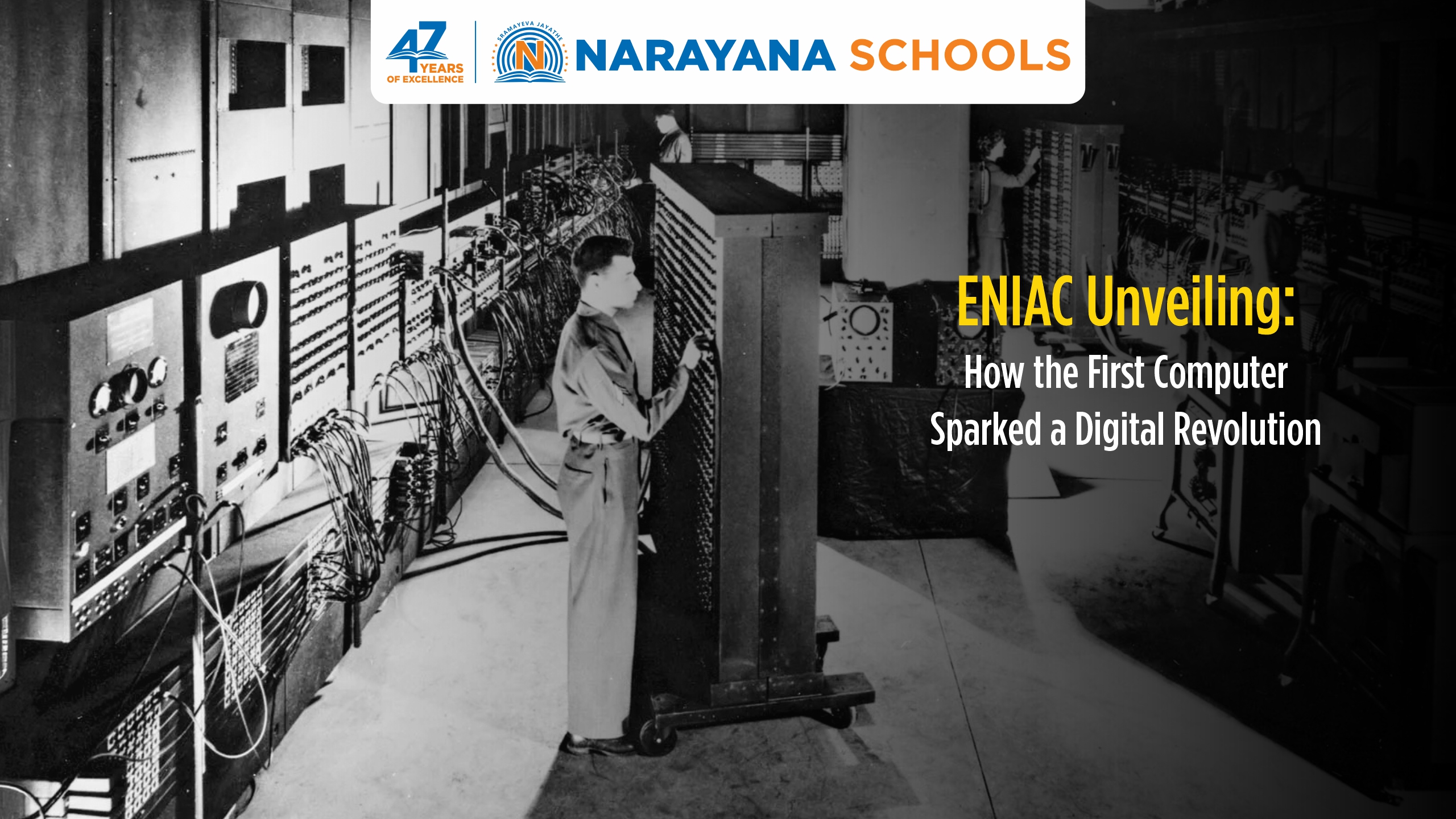
On 14 February 1946 , the world witnessed a defining technological milestone with the public unveiling of ENIAC (Electronic Numerical Integrator and Computer) , recognised as the first general-purpose electronic computer . Developed in the United States of America by John Mauchly and J. Presper Eckert , ENIAC marked the beginning of the digital revolution , transforming how societies learn, calculate, communicate and innovate. This historic moment continues to shape education, careers and everyday life across generations. 1 . Why ENIAC Still Matters Today ENIAC was designed to perform complex numerical calculations for scientific and defence purposes, completing tasks in seconds that previously required weeks. Occupying an entire room and weighing over 27 tonnes , ENIAC proved that electronic circuits could process information faster than mechanical systems. Technology historians widely regard ENIAC as the foundation of computer science , software programming and modern information technology . 2. From Room-Sized Machines to Everyday Devices Research from the Organisation for Economic Co-operation and Development (OECD) highlights digital literacy as a core life skill for the 21st century. The principles behind ENIAC evolved into personal computers , smartphones , artificial intelligence and cloud computing . Understanding this progression helps children view technology as a result of human ingenuity rather than an abstract convenience. 3. What ENIAC Teaches About Learning and Thinking Cognitive science research shows that curiosity-based learning strengthens problem-solving and adaptability. ENIAC’s development highlights the power of interdisciplinary learning, combining mathematics, engineering and creative thinking. Early exposure to computing history builds strong foundations for computational thinking and logical reasoning. 4. Supporting Healthy Digital Understanding at Home Educational psychology studies confirm that supportive learning environments improve confidence and responsible technology use. Discussing the evolution from ENIAC to modern devices encourages thoughtful engagement rather than passive screen consumption. Activities such as logic puzzles, pattern games and age-appropriate coding concepts nurture essential STEM education At Narayana Schools , these very principles are strengthened through structured digital innovation platforms such as nLearn, nLearn Kidz, nConnect, ASTRA and AutoGrade . nLearn provides curriculum-aligned digital learning modules that enhance conceptual clarity and interactive understanding across subjects. nLearn Kidz introduces foundational learners to technology through age-appropriate activity-based digital exploration. nConnect bridges communication between students, teachers and parents, ensuring collaborative and transparent academic growth. ASTRA (Advanced Student Talent Recognition & Analytics) uses data-driven insights to identify strengths, personalise support and sharpen analytical skills. AutoGrade leverages technology for instant performance evaluation, encouraging self-reflection, accuracy and improvement. These initiatives foster digital literacy, computational thinking, analytical reasoning, responsible technology use and future-ready skills , echoing the very transformation that began with ENIAC. 5. Why 14 February Deserves Wider Recognition The unveiling of ENIAC symbolises collaboration, innovation and future-focussed thinking. Education researchers note that connecting historical milestones to present learning increases relevance and engagement. Recognising this date reinforces the importance of technology in education and future-ready skills . 6. Preparing Children for a Digital Future UNESCO-backed studies emphasise the need for ethical and balanced technology education. Combining digital exposure with creativity, curiosity and reflection builds confident learners. ENIAC’s legacy reminds society that innovation begins with questions, experimentation and perseverance. The unveiling of ENIAC was not merely the launch of a machine but the start of a global transformation in learning and innovation. Understanding this milestone helps foster curiosity, resilience and a meaningful relationship with technology for the generations shaping tomorrow. At Narayana Schools, we believe that embracing technological innovation with curiosity, critical thinking and ethical understanding helps students in honing their skills, sharpening their knowledge and realising their dreams, because your dreams are our dreams.
 11 Feb 2026
 9
Observed every year on 13 February , World Radio Day celebrates the enduring power of radio as a medium of communication, storytelling and education. The date marks a historic milestone, as United Nations Radio aired its very first broadcast on 13 February 1946 , symbolising radio’s ability to connect people across borders and cultures. Even in today’s digital-first world, radio remains a trusted source of information, imagination and learning. For families across India, World Radio Day highlights how simple audio storytelling and spoken communication continue to shape listening skills, language development, curiosity and critical thinking in children of all age groups. The History and Science Behind Radio Radio was pioneered in the late 19th century through the scientific work of innovators such as Guglielmo Marconi, who successfully demonstrated wireless communication using electromagnetic waves. The original purpose of radio was to enable long-distance communication without physical connections , revolutionising how information could travel across regions and borders. From a scientific perspective, radio functions by converting sound waves into electromagnetic signals, which are transmitted through the air. These signals are then received and reconverted into sound by a radio receiver, allowing voices and music to be heard at a distance. This breakthrough laid the foundation for modern communication systems , including broadcasting, telecommunications and digital audio technologies. The Role of Radio in Education Research by UNESCO and UNICEF highlights radio’s long-standing contribution to inclusive education , particularly in reaching learners across diverse, rural and remote communities. Educational broadcasts and radio lessons support structured learning beyond the classroom. Storytelling and children’s radio programmes strengthen language acquisition, listening comprehension and imagination, especially in early learners. Audio-based learning encourages focus and cognitive engagement without screen dependence. During periods of school disruption , radio-based education ensured learning continuity, reinforcing radio’s role as a reliable and accessible educational tool . Major Educational Radio Initiatives in India and Globally Gyan Vani (All India Radio) : A dedicated educational FM radio network developed by AIR and IGNOU , offering curriculum-aligned programmes for school, higher education and adult learners across multiple disciplines. AIR Educational Broadcasts (School and College Sections): Regular subject-based lessons mapped to CBSE and State Board syllabi , broadcast in regional languages to support foundational learning and exam readiness. Radio School Programmes (State Education Departments): Launched during pandemic learning disruptions and continued in blended formats, these broadcasts support remedial learning, foundational literacy and numeracy . Pariksha Pe Charcha (Audio Editions and AIR Broadcasts): A nationally recognised initiative by the Government of India , featuring guidance on exam stress management, motivation and wellbeing, broadcast through AIR and digital audio platforms. Man Ki Baat (Prime Minister’s Monthly Address) Education Segments: While broader in scope, recurring education-focussed segments highlight learning, innovation, student achievements and life skills, reinforcing civic and academic values. Community Radio Stations (CRS): Over 400 stations across India offering hyper-local education on literacy, health, environment, vocational skills and youth development , particularly in rural and tribal regions. Radio Learning Modules by UNICEF India: Audio lessons designed to support foundational education, gender equity and inclusive learning, especially in low-connectivity regions. BBC Learning English (BBC World Service, UK) : One of the world’s most widely used audio learning programmes for English language development, listening comprehension and pronunciation. Radio France International (Savoirs): Educational broadcasts promoting language learning, culture and global awareness . UNESCO Educational Radio Initiatives: Long-running projects using radio to promote literacy, girls’ education and lifelong learning , especially in developing regions. UNICEF Radio Schooling Programmes: Active across multiple countries to ensure education continuity during crises , with a strong focus on child-friendly and inclusive content. Why Radio Still Matters for Learning Today Despite rapid digital growth, radio remains one of the most trusted sources of information worldwide , especially for news, education and cultural storytelling. Educational and cognitive studies show that audio-based learning strengthens attention span, listening comprehension and memory , skills often challenged by prolonged screen exposure. Modern advancements such as FM expansion, digital radio, podcasts and community radio platforms have transformed radio into a flexible learning medium that blends live broadcasts with on-demand access. Global platforms like BBC Sounds , iHeartRadio and TuneIn , along with India’s expanding community radio networks , integrate radio with mobile apps and smart speakers, making learning accessible anytime. Supported by advances in audio science, data analytics and AI-assisted broadcasting , radio continues to evolve as a screen free, inclusive and future-ready educational tool for children across age groups. The Future of Radio The future of radio lies in hybrid audio ecosystems that combine traditional broadcasting with digital streaming , educational podcasts and on-demand content. Media studies experts note that audio-based learning enhances cognitive focus, emotional regulation and empathy , supporting balanced and screen-moderated education models. Advances in Artificial Intelligence (AI) now enable personalised audio recommendations, adaptive learning playlists and multilingual accessibility for diverse learners. Digital Audio Broadcasting (DAB+) projects, currently expanding across Europe and parts of Asia, improve sound quality, signal stability and data integration, allowing experimentation in radio to deliver educational text, visuals and emergency alerts alongside audio. Research in neuroscience suggests that listening-only formats enhance memory retention and sustained attention. With increased accessibility, personalisation and educational integration, radio is expected to remain a core pillar of media literacy, inclusive learning and lifelong education . World Radio Day reminds families that learning does not always require screens or textbooks. Through voices, stories and shared listening moments, radio continues to nurture curiosity, communication and connection, quietly shaping confident learners for the future.
09 Feb 2026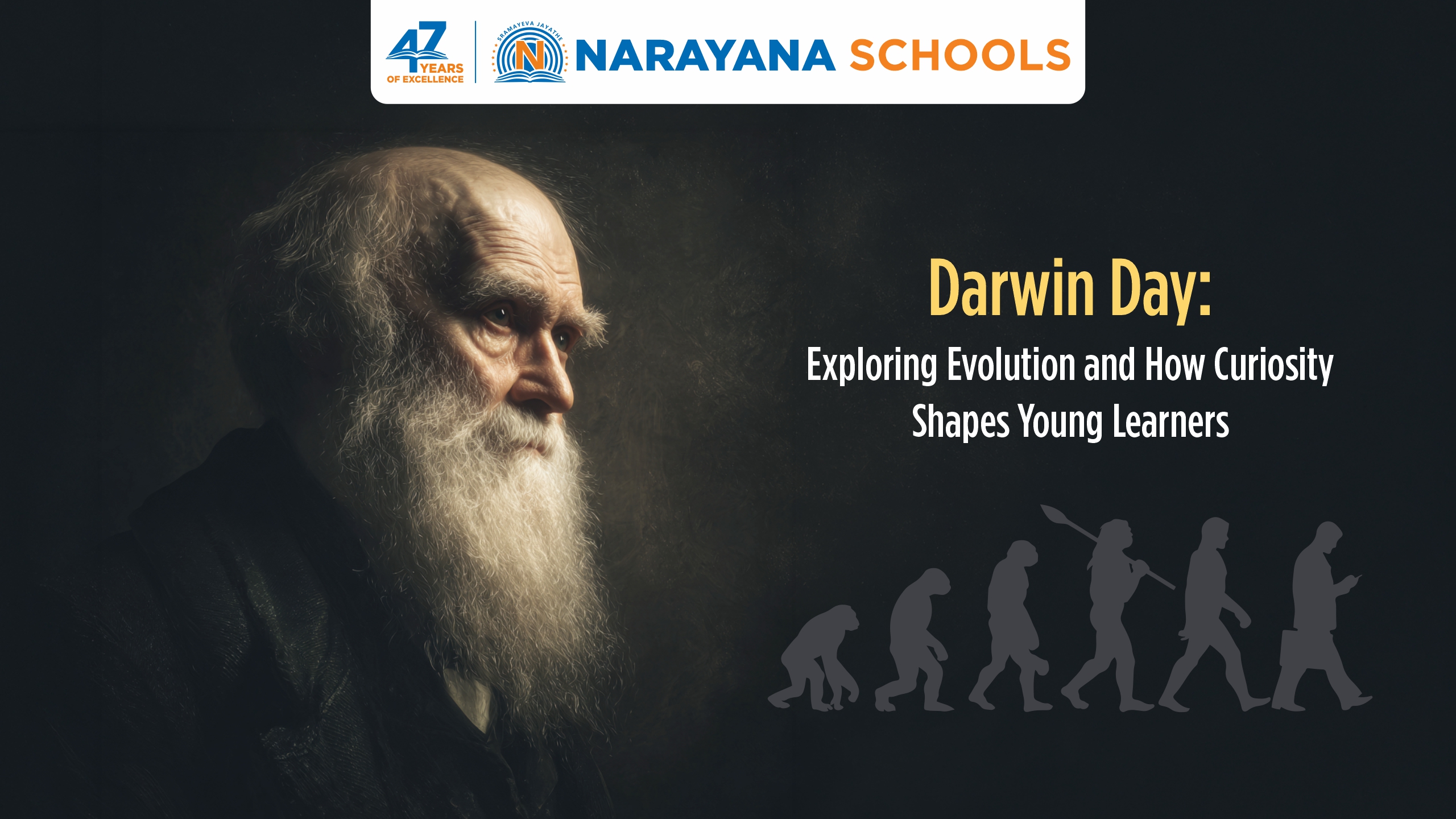 7
Observed every year on 12 February , Darwin Day commemorates the birth of Charles Darwin , the British naturalist whose pioneering work transformed the understanding of life on Earth. Best known for developing the theory of evolution by natural selection , Darwin demonstrated how species adapt and evolve over generations, through careful observation and scientific evidence. His ideas, first presented in On the Origin of Species (1859), laid the foundation for modern biology and scientific reasoning. For Indian school parents, Darwin Day offers a meaningful opportunity to introduce children to evolution , biology education and more importantly, the habit of curiosity that drives lifelong learning. Across all classes and age groups, this day highlights how questioning, observing and thinking critically shape young learners into informed, adaptable individuals prepared for a rapidly changing world. 1. Why Darwin Day Matters in Education Darwin’s theory of evolution by natural selection laid the foundation for modern biological sciences. Research published in journals such as Science Education highlights that early exposure to scientific concepts improves reasoning, evidence-based thinking and adaptability. Darwin Day promotes scientific temper , a value enshrined in India’s Constitution and essential for future-ready learners. 2. Evolution as a Tool for Understanding Life Evolutionary biology helps children understand biodiversity, adaptation and environmental balance. Studies conducted by the National Research Council (United States) show that learning about the process of evolution strengthens systematic thinking, logical sequencing and the ability to understand complex cause-and-effect relationships, all of which are essential to scientific reasoning. Connecting evolution to everyday examples, like plants, animals, climate, etc., makes learning relatable and less abstract. 3. Curiosity: The Real Legacy of Darwin Darwin’s greatest contribution was not just a theory, but a mindset rooted in observation, questioning and patience. Cognitive science research confirms that curiosity-driven learning improves memory retention and conceptual clarity. Encouraging questions, exploration and discussion at home reinforces inquiry-based learning , rather than rote memorisation. 4. Addressing Common Misconceptions Around Evolution Educational studies note that evolution is often misunderstood as conflicting with religious values or beliefs. Presenting evolution as a scientific explanation and not a belief system helps build clarity and acceptance. Age-appropriate explanations reduce confusion and foster respect for science and diverse viewpoints. 5. Practical Ways to Nurture Scientific Curiosity Reading science stories, watching nature documentaries and visiting museums encourage experiential learning. Discussing real-world phenomena, like why seasons change or how animals adapt, builds scientific literacy. A supportive and non-judgmental environment increases confidence and willingness to explore complex ideas. 6. Preparing Future Thinkers Through Science Education Global education research, including studies by UNESCO, links strong science education to innovation and problem-solving skills. Understanding evolution prepares students for advanced learning in medicine, environmental science and technology. Curiosity-led education builds resilience, creativity and ethical reasoning, which are key traits for the future workforce. Darwin Day ultimately reminds families that education thrives when curiosity is protected and questions are welcomed. When children learn how to think rather than what to think, science becomes not just a subject, but a lifelong companion in understanding the world. At Narayana Schools , curiosity-led education is central to learning at every stage. An activity-based learning approach in Classes 1–2 nurtures exploration and engagement, while experiential learning in Classes 3–5 under the eChamps programme deepens conceptual understanding through real-world connections. From Classes 6–10 (eTechno programme) and above , the emphasis is on strong conceptual clarity through structured learning focused on concepts, definitions and formulae (CDF), supported by Panchpadi learning process , NEP-aligned teaching methods and decades of academic expertise. Co-scholastic clubs further enable students to explore subject-based interests beyond the classroom. Such an approach ensures that curiosity evolves into confidence and learning becomes a lifelong aspiration. Children here are encouraged to dream boldly, think logically, question fearlessly and quench their curiosity systematically, because at Narayana Schools , your dreams are our dreams
06 Feb 2026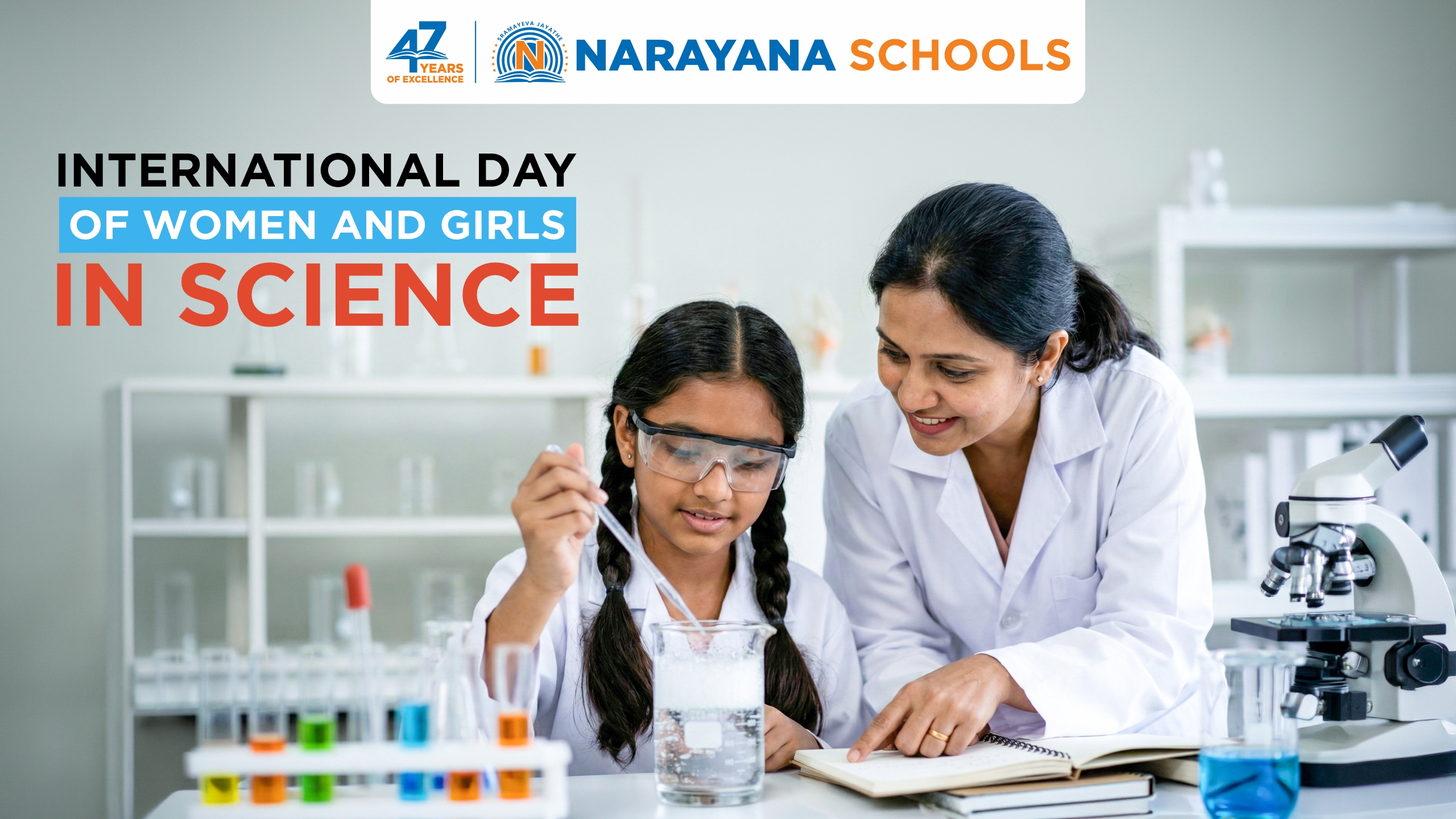 7
Observed every year on 11 February , the International Day of Women and Girls in Science highlights the importance of gender equality in science education and the need to build an inclusive ecosystem for future innovation. The date was designated by the United Nations in 2015 to support the 2030 Agenda for Sustainable Development , particularly SDG (Sustainable Development Goal) 4: Quality Education and SDG (Sustainable Development Goal) 5: Gender Equality . For families across India, this day reinforces the importance of nurturing scientific curiosity and confidence from an early age. 1. Why Representation in Science Matters United Nations Educational Scientific and Cultural Organization (UNESCO) data shows that women make up less than one-third of the global scientific workforce, despite equal ability and potential. Research consistently proves that women in STEM fields strengthen innovation, improve problem-solving and contribute to socially relevant scientific advancements, which are critical for India’s long-term growth. 2. The Science Behind Early Encouragement Developmental psychology studies reveal that attitudes towards science education for girls form during primary schooling. Children encouraged to explore, question and experiment develop stronger critical thinking skills and sustained interest in STEM learning . 3. Some Role Models Who Changed the Narrative Across India and the world, several women have reshaped science and innovation, proving that curiosity, courage and capability know no gender or borders. Name Country Field Key Contribution and Significance Kalpana Chawla India/ USA Space Science and Aerospace Engineering First woman of Indian origin in space, and symbolised global scientific participation and perseverance. Tessy Thomas India Missile Technology and Defence Science Known as the ‘ Missile Woman of India ’ and led Agni missile projects, breaking gender barriers in defence research. Dr. Gagandeep Kang India Medical Research and Virology Global authority on rotavirus research and the first Indian woman elected Fellow of the Royal Society (UK). Dr. Ritu Karidhal India Space Science (ISRO) Key leader in Mars Orbiter Mission and Chandrayaan-2. She is popularly known as the ‘ Rocket Woman of India ’. Marie Curie Poland/France Physics and Chemistry The only scientist to win Nobel Prizes in two different sciences and a pioneer of radioactivity research. Jane Goodall UK Primatology and Conservation Science Transformed the understanding of animal behaviour through long-term chimpanzee research in Africa. Katherine Johnson USA Mathematics and Space Science NASA mathematician whose calculations enabled early spaceflights and lunar missions. Rosalind Franklin UK Molecular Biology Made critical contributions to the discovery of DNA’s double-helix structure and in shaping modern genetics. Jennifer Anne Doudna USA Biochemistry and Molecular Genetics Co-developer of the CRISPR-Cas9 gene-editing technology, revolutionised genetic research and medicine. Educational research confirms that visible women scientists as role models significantly raise aspiration levels among students. 4. An Indian Story That Shows Why Breaking Barriers Matters Dr. Gagandeep Kang’s journey as one of India’s foremost virologists demonstrates how scientific excellence can emerge despite limited resources and entrenched gender barriers. Beginning her medical research career at a time when advanced laboratory infrastructure, funding, and female representation in leadership were scarce, she worked in a system where women were severely underrepresented in senior scientific roles, limiting access to visibility and mentorship. Undeterred, Dr. Kang focused on translational research with real-world impact, balancing rigorous fieldwork in underserved communities with long-term academic inquiry. Her pioneering contributions to rotavirus epidemiology and vaccine research significantly strengthened India’s public health response to childhood diarrhoeal diseases. These achievements led to global recognition, including her election as the first Indian Woman Fellow of the Royal Society (United Kingdom) , affirming a powerful truth: when education systems remove bias and invest in talent, innovation becomes inclusive and transformative. 5. How India Is Encouraging Girls in Science The Government of India has introduced targeted programmes to strengthen the participation of women and girls in STEM education and research, addressing both access and long-term retention. Vigyan Jyoti is a flagship initiative aimed at encouraging school-going girls, particularly from Classes IX to XII, to pursue science, technology, engineering and mathematics. The programme provides mentorship, academic exposure, counselling and role model interaction, helping girls build confidence and informed career pathways in science from an early stage. WISE (Women in Science and Engineering) is a comprehensive framework designed to support women scientists who may face career breaks or systemic barriers. It offers research grants, fellowships and re-entry opportunities, enabling skilled women to continue contributing to scientific research and innovation. KIRAN (Knowledge Involvement in Research Advancement through Nurturing) focuses on empowering women researchers by providing structured support for skill development, leadership training and advanced research opportunities. The programme aims to increase women’s representation in senior scientific roles and decision-making positions. INSPIRE Scholarship (Innovation in Science Pursuit for Inspired Research) supports academically strong students, including a significant number of girls, from the age of 17 onwards, encouraging sustained engagement in basic and natural sciences through higher education and research pathways. CBSE and State Government Merit Scholarships for Girls in Science provide financial assistance, fee waivers and academic incentives to reduce dropouts during senior secondary education, particularly in STEM streams. AICTE Pragati Scholarship for Girls offers financial support to girls pursuing technical education at diploma and degree levels, addressing economic barriers that often limit participation in engineering and technology programmes. Post-Matric Scholarships for Girls in STEM across multiple states focus on first-generation learners, ensuring continuity from school to college by supporting tuition, learning resources and living expenses. 6. International Scholarships and Global STEM Initiatives for Girls Beyond national efforts, several global programmes aim to create equal access to science education and research opportunities for girls worldwide. UNESCO-L’Oréal for Women in Science Programme supports young women researchers through fellowships, mentorship and international recognition, strengthening global representation in scientific leadership. British Council STEM Scholarships for Women enable women from countries like India to pursue postgraduate STEM education in the United Kingdom, particularly in underrepresented disciplines. Google Generation Scholarship and Microsoft Scholarship Programmes provide financial aid, mentorship and industry exposure for girls and young women pursuing computer science, engineering and data sciences. UNICEF and OECD backed Global Education Initiatives focus on closing gender gaps in STEM education through policy advocacy, curriculum reform and access to digital learning for girls in developing regions. Together, these national and international efforts reinforce a shared global commitment: ensuring that talent, curiosity and scientific potential are nurtured irrespective of gender , from classrooms to research laboratories. 7. Building Confidence Without Pressure Organisation for Economic Co-operation and Development (OECD) studies highlight that supportive parental involvement in education enhances motivation and resilience. Curiosity-led learning, hands-on experiments and encouragement over comparison foster long-term engagement with science and innovation . 8. Preparing for the Future Through STEM The World Economic Forum identifies STEM skills , scientific literacy and analytical thinking as essential for future careers. Inclusive science education in India equips children to thrive in a technology-driven world. The International Day of Women and Girls in Science underscores a powerful message: when access, encouragement and opportunity align, science becomes a shared pathway to progress, equity and limitless possibility.
05 Feb 2026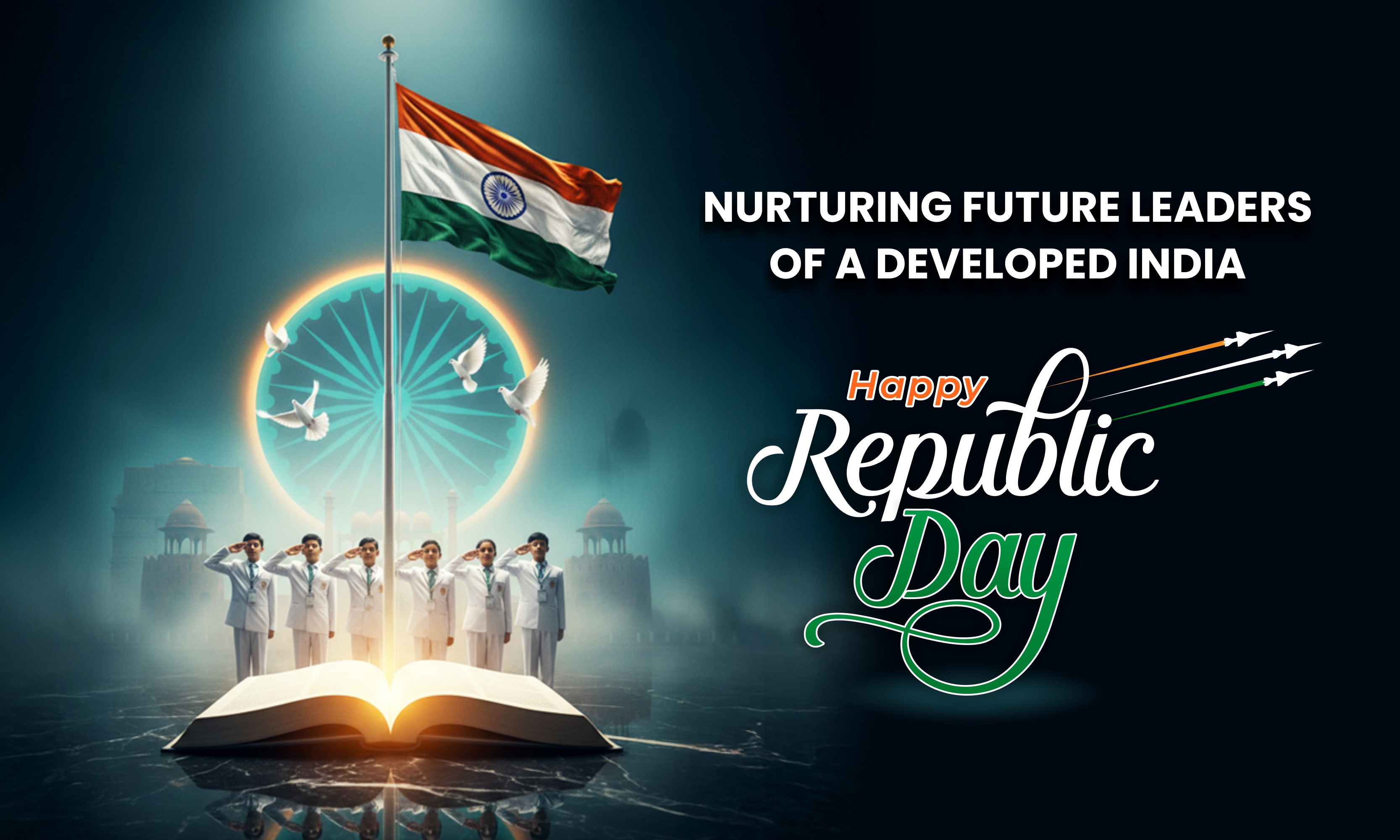 7
Celebrated every year on 26 January , Republic Day marks the adoption of the Indian Constitution in 1950 , laying the foundation for India as a sovereign democratic republic. The date was deliberately chosen to honour 26 January 1930 , the day when the Indian National Congress declared Purna Swaraj (complete self-rule), symbolising the long-standing aspiration for self-governance. While 15 August 1947 represents political freedom from colonial rule, 26 January signifies the moment India gave itself a constitutional identity and a system of laws by its own people. In 2026 , this occasion carries added significance as India continues its journey towards Viksit Bharat , or a developed nation. For families, Republic Day becomes more than a parade or a holiday. It becomes a powerful moment to help children understand constitutional values , citizenship education and leadership rooted in responsibility. Why Republic Day Matters for Young Minds Republic Day commemorates the transition from colonial rule to self-governance through the Constitution . Civic education research shows that early exposure to constitutional principles strengthens democratic awareness. Understanding this day helps children see freedom as a responsibility shaped by law and ethics. The Constitution as a Leadership Blueprint The Constitution emphasises justice, liberty, equality and fraternity as guiding ideals. Studies in political science education highlight that value-based learning builds ethical decision-making skills. These principles form the backbone of leadership development in students . Building Leadership Through Responsibility Developmental psychology research links responsibility-taking in childhood with stronger leadership traits in adulthood. Encouraging accountability at home and school nurtures confidence and problem-solving abilities. Such habits align with the vision of raising future-ready citizens of India . Education as the Engine of a Developed India UNESCO studies confirm that quality education drives innovation, economic growth and social stability. A balanced focus on academics, critical thinking and emotional intelligence supports holistic child development . Republic Day reinforces the idea that education is nation-building in action. Role Models and the Power of Example Social learning research shows that children absorb civic values by observing everyday behaviour. Discussions around leaders, scientists and change makers inspire ambition rooted in service. These conversations strengthen national pride and civic responsibility . Encouraging Critical Thinking and Voice Educational psychology highlights that questioning and dialogue improve civic understanding. Mock parliaments, debates and discussions on current affairs promote informed thinking. Such practices prepare children for active participation in a democratic society. Republic Day as a Family Learning Moment Cultural studies show that national observances strengthen collective identity. Connecting the parade, flag symbolism and constitutional stories makes learning memorable. These experiences help shape responsible citizens for a developed India . Republic Day 2026 stands as a reminder that India’s progress depends on the minds being shaped today. When children grow up understanding democracy, values and responsibility, leadership becomes a natural outcome. Nurturing these qualities at home and school ensures that the vision of a developed India is carried forward with integrity, wisdom and purpose.
24 Jan 2026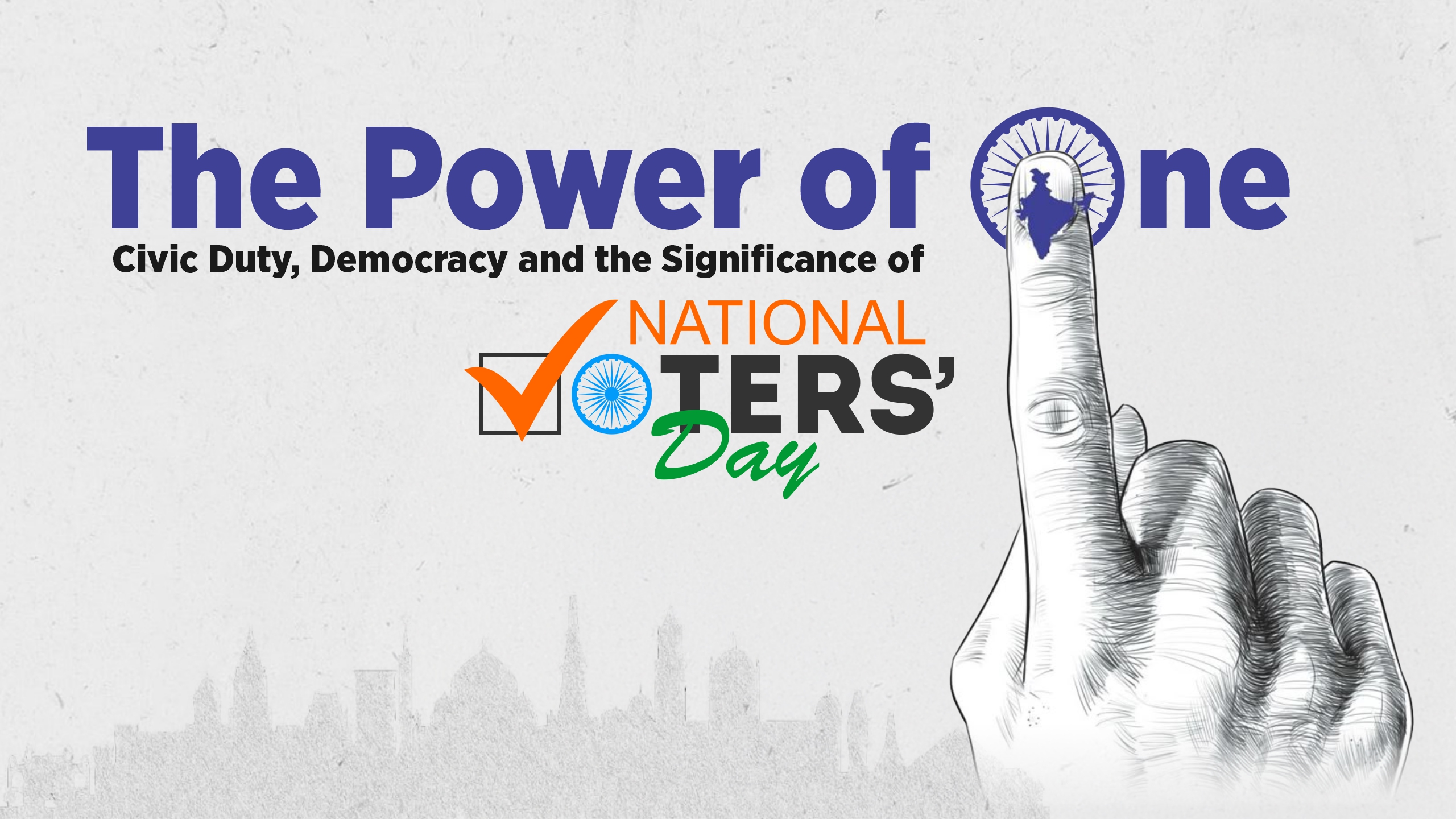 7
Observed every year on 25 January , National Voters’ Day marks the foundation of the Election Commission of India and serves as a powerful reminder of the value of every single vote. For families across India, this day offers a meaningful opportunity to introduce children to civic responsibility , democratic values in India and the idea that participations, not passivity, shapes the nation’s future. Why National Voters’ Day Matters National Voters’ Day was first celebrated in 2011 to encourage informed and ethical participation in elections. Democratic studies emphasise that early awareness of voting rights strengthens long-term civic engagement. Understanding this day helps children see democracy as an active process rather than a distant system. The Science Behind Civic Participation Research in political psychology shows that individuals exposed to civic discussions early develop stronger social responsibility. Studies published in the Journal of Social Psychology link democratic participation with higher community trust and accountability. These findings reinforce the importance of civic education for students at home and school. One Vote, Collective Impact Electoral research confirms that high voter turnout improves policy representation and governance quality. Teaching the concept of ‘one person, one vote’ helps children grasp fairness, equality and voice. This principle forms the backbone of democracy awareness for children . Families as the First Civic Classroom Behavioural studies highlight that children mirror attitudes observed at home towards social duties. Open conversations about elections, leadership and decision-making build political literacy without pressure. Such practices nurture informed thinking rather than blind opinion, supporting responsible citizenship . Ethics, Values and Voting Voting is not just a right but a moral responsibility rooted in informed choice. Social science research shows that ethical reasoning develops when children discuss fairness, justice and consequences. National Voters’ Day provides a natural platform to link values with action. Preparing Future Voters, Not Just Students United Nations Educational, Scientific and Cultural Organization (UNESCO) education frameworks stress that democracies thrive when citizens are critical thinkers. Activities such as mock elections or discussing current issues strengthen civic duty in India . These experiences prepare young minds to participate thoughtfully when eligible. Democracy as a Daily Practice Democracy extends beyond election day into respect, dialogue and shared responsibility. Sociological research confirms that democratic habits formed early last a lifetime. National Voters’ Day reinforces the idea that every voice matters, every choice counts. National Voters’ Day celebrates the power of one (one vote, one voice and one informed decision), that contributes to a stronger democracy. When children grow up understanding civic duty as meaningful and empowering, democracy becomes not just a system of governance, but a shared way of life.
22 Jan 2026

