

Explore stories and insights
Loading...



 7
Winter breaks arrive at a unique intersection of academic pause and calendar transition. With the New Year approaching, this period offers families a valuable opportunity to reset routines while supporting children’s physical, emotional and cognitive needs. A balanced winter break is not about excess structure or complete relaxation, but about creating harmony between rest, recreation and light learning. 1. Prioritise Rest and Recovery Shorter daylight hours and colder weather naturally increase fatigue. Research published in Sleep Medicine Reviews highlights that adequate rest improves memory consolidation and emotional regulation in children. Flexible wake-up times, unhurried mornings and reduced academic pressure allow the brain to recover from the constant rush of school schedules, homework and exams. Proper rest lays the foundation for winter wellness for students and sustained motivation. 2 . Maintain a Gentle Daily Structure Child psychology studies show that predictable routines reduce anxiety and behavioural friction. Fixed anchors such as meal times, light study hours and bedtime maintain rhythm without rigidity. This gentle rhythm helps children stay regulated and prevents the winter slump that often follows completely unstructured holidays. Such balanced planning complements rest and recovery while supporting healthy holiday routines for children and smoother transitions back to school. 3. Blend Learning with Curiosity and Not Pressure Cognitive science research from Stanford University suggests that curiosity-driven learning improves long-term retention. Reading for pleasure, educational documentaries and simple experiments encourage exploration. Short, interest-based activities keep the learning muscle active without academic stress. This approach aligns with stress-free learning during holidays . 4. Encourage Movement and Outdoor Exposure Limited sunlight during winter affects mood-regulating hormones. Studies in the Indian Journal of Endocrinology link daylight exposure to better energy levels in children. Morning sunlight near windows, terrace walks or light indoor movement improve circulation and alertness. Physical activity acts as a natural winter energy booster . 5. Make Space for Family Bonding and Play Developmental research confirms that shared family activities strengthen emotional security. Board games, storytelling and collaborative tasks build communication and trust. These moments nurture social skills often overshadowed by busy school schedules. Emotional safety enhances child development during winter breaks . 6. Introduce New Year Reflection Gently Behavioural studies on the ‘fresh start effect’ show that New Year milestones increase motivation. Simple reflections on the past year encourage self-awareness without comparison. Small intentions, rather than rigid resolutions support New Year goal setting for students . A thoughtfully planned winter break becomes a quiet investment in a child’s well-being. By balancing rest, fun and learning, families create a season that restores energy, sparks curiosity and prepares young minds to step into the New Year with confidence and calm.
 30 Dec 2025
 7
Christmas is celebrated across continents, yet each country adds its own cultural rhythm, values and traditions to the festival. For school children in India, learning about Christmas celebrations around the world offers a joyful way to explore geography, history and global cultures. Research in cultural education highlights that festival-based learning improves memory retention and builds empathy by connecting lessons to real-world traditions. Below is a list of places where Christmas is celebrated in exceptionally distinctive and meaningful ways, making it both educational and inspiring for young learners. 1. Giant Lantern Festival in the Philippines Christmas celebrations in the Philippines begin as early as September and continue until early January , making it one of the longest Christmas seasons in the world. The Giant Lantern Festival , held in December in San Fernando, features intricately illuminated lanterns that symbolise hope, unity and community spirit, offering children a meaningful lesson in craftsmanship, collaboration and cultural pride. 2. Roller Skating to Church in Venezuela In Caracas, streets are closed in the early mornings before Christmas so children can roller skate to church. This unique tradition highlights community trust and joyful participation. 3. Advent Calendars and Christmas Markets in Germany Germany is known for Advent calendars (special countdown calendars) and festive markets that teach children about countdown traditions, patience and historical European customs. 4. Las Posadas in Mexico Las Posadas is a deeply rooted religious and cultural tradition that symbolically re-enacts Mary and Joseph’s journey from Nazareth to Bethlehem , commemorating their search for shelter before the birth of Jesus through community-led neighbourhood processions. It helps children understand storytelling, hospitality and shared celebrations. 5. Midnight Mass and Plum Cake in India In India , Christmas blends regional flavours with global traditions. Midnight Mass, carol singing and plum cake reflect cultural harmony and inclusivity. 6. Summer Christmas Celebrations in Australia, New Zealand, South Africa, Brazil, Argentina and Chile In these Southern Hemisphere countries, Christmas falls during summer, leading to celebrations marked by sunshine, outdoor meals, beach gatherings and family picnics instead of winter traditions like snow and fireplaces. These warm-weather festivities offer a practical way to understand hemispheres, seasonal differences and how geography influences cultural celebrations around the world. 7. Modern Christmas Celebrations in Japan Although not a religious holiday, Christmas in Japan centres around togetherness and illumination displays, showing how cultures adapt global festivals locally. 8. Carols, Crackers and Pantomimes in the United Kingdom Traditional carols , Christmas crackers and pantomimes introduce children to theatrical arts, festive literature and storytelling traditions. 9. Nativity Scenes and Epiphany in Italy In Italy , Christmas celebrations place strong emphasis on intricately crafted nativity scenes and continue through Epiphany ( celebrated on 6 January , marking the end of the Twelve Days of Christmas and commemorating the arrival of the Three Wise Men or Magi , who followed the Star of Bethlehem to visit the Baby Jesus. The festival symbolises the revelation of Jesus as the Son of God and holds deep religious and cultural significance in Italy’s Christian tradition, and helps children understand faith, symbolism and the continuity of sacred timelines. 10. Christmas Day in Ethiopia (Genna) Celebrated on 7 January according to the Ethiopian Orthodox calendar , which follows the Julian calendar rather than the Gregorian calendar used in most parts of the world. Genna marks Christmas with early morning church services, fasting traditions and community games, offering meaningful lessons on different calendar systems , faith traditions and cultural diversity within global Christianity. Exploring Christmas celebrations around the world transforms the festival into a powerful learning experience. These celebrations demonstrate how one occasion can unite diverse cultures while preserving unique identities. When parents encourage children to explore such traditions, festivals become gateways to cultural awareness, global citizenship and joyful learning , making Christmas a season of wonder both inside and beyond the classroom.
24 Dec 2025 8
The colder months can bring more than just a drop in temperature. For many children, winter triggers a slump in energy, motivation and mood. Shorter days, limited sunlight and disrupted routines can lead to what is often called the winter blues or winter slump . For parents who want to support their child’s academic progress and wellbeing, the season calls for thoughtful care and practical strategies. 1. Recognise the winter slump early Seasonal changes, particularly shorter daylight hours, can disrupt the circadian rhythm (body’s internal clock) and reduce serotonin (mood regulation hormone), a brain chemical important for mood and focus. In children and teens, this may appear as tiredness, low motivation, difficulty concentrating on studies, loss of interest in hobbies or moodiness. Understanding that such changes are seasonal and not a failure of willpower helps ensure responses are kinder and more supportive rather than punitive. 2. Ensure adequate light and natural exposure Encouraging children to spend time outdoors, even on chilly days, helps restore energy and regulate sleep-wake cycles. On darker days, bright indoor lights or full-spectrum lamps (natural light simulators) may help offset mood decline caused by lack of daylight. Positioning study or reading areas near windows supports natural light exposure while maintaining focus and wellbeing. 3. Maintain a balanced daily routine A consistent schedule with regular wake-up, study, meal and sleep times provides stability when external seasons are shifting. Routine helps reduce mental fatigue and supports academic performance even during low-energy periods. Include small, frequent breaks rather than long, uninterrupted study hours. Alternating short study sessions with light movement helps prevent burnout. Add variety to the routine by mixing academic work with hobbies, puzzles or creative tasks, especially on dull winter afternoons. 4. Encourage physical activity, even if indoors Regular physical activity boosts mood, energy and concentration. Even simple indoor exercises, yoga, dancing or short bursts of movement can trigger endorphin release that counteracts lethargy linked to winter. When outdoor activity is not possible, indoor movement routines or short family walk-breaks can offer similar benefits. 5. Maintain a nutritious diet with healthy habits Winter slump often increases cravings for comfort foods, but balanced nutritious meals rich in protein, whole grains, fruits and vegetables help maintain stable energy and mood. Avoid excessive caffeine or sugary snacks that cause crashes. Ensure hydration and consistent meal timings. Encourage healthy sleep habits, regular bedtimes and limited screen exposure before sleep to support rest and mental performance. 6. Keep emotional well-being in focus Validating feelings during winter lows helps children feel supported rather than judged. Open conversations about mood, anxiety or fatigue reduce emotional burden. Practices such as gratitude journaling , storytelling evenings, family board games and indoor art sessions create warmth and positivity on dull winter days. Such nurturing environments act like emotional insulation, supporting children through challenging seasonal shifts. 7. Incorporate learning activities with flexibility Heavy academic pressure during the winter slump can reduce motivation further. A flexible approach that breaks tasks into smaller, concept-based activities works more effectively. Combining schoolwork with creative or exploratory learning, such as puzzles, reading for pleasure or simple experiments, keeps engagement alive without causing fatigue. 8. Recognise when a slump becomes a concern If low mood, fatigue or lack of interest persists for several weeks or hinders daily functioning, it may indicate Seasonal Affective Disorder ( SAD ) or deeper mental health concerns. In such cases, medical guidance or counselling support may be required. Early identification ensures that seasonal mood changes do not escalate or overlap with academic difficulties. 9. Build positivity through family bonding and warm environments Winter offers opportunities for meaningful family bonding through storytelling sessions, shared meals, creative projects, board games or baking cakes, breads and seasonal treats together indoors. Also, having activities like hot chocolate evenings or family movie nights under blankets counters isolation and bring warmth into daily life. Maintaining cosy, well-lit and organised spaces helps elevate mood and reduce emotional fatigue. Celebrating small wins, such as completing an assignment or finishing a puzzle, reinforces positivity and a sense of progress. 10. Plan ahead to combine holidays, rest and academic goals realistically Winter breaks can be used to reset routines. A few restful days help children recharge before returning to steady study schedules. Setting simple realistic goals such as reading a chapter a week or practising a hobby daily keeps progress steady without pressure. Winter slump is a seasonal experience that many children go through when daylight reduces, routines shift and energy naturally dips. With consistency, emotional support and a nurturing environment at home, children can navigate this period with resilience. Through stable routines, healthy lifestyle choices, light exposure, emotional warmth and meaningful family bonding, winter can become a period of gentle growth rather than decline.
18 Dec 2025 7
Preparing for Olympiads has become one of the most meaningful academic investments for school-going learners across India. These highly reputed competitions are no longer limited to schools that formally register students. With open registrations and online exam options, independent participation has become accessible for students everywhere. For many parents, this opens a valuable opportunity to support children who wish to demonstrate academic strength on national and international platforms. 1. Understand What Olympiads Are and Why They Matter Olympiads are subject-specific academic competitions designed to strengthen conceptual learning , logical reasoning and problem-solving skills . Contrary to popular belief, these are not exams that reward memorisation. They reward applied understanding, critical thinking and cognitive flexibility. Research published in journals like Educational Studies in Mathematics highlights that early exposure to problem-based learning improves analytical thinking and long-term retention. Beyond cognitive benefits, Olympiads nurture early competitive experience in a safe, structured format. Many global universities recognise Olympiad participation as evidence of academic commitment. It strengthens applications by demonstrating persistence, discipline and intellectual curiosity. This is why Olympiads have become a preferred academic extension for families across India. 2. Identify the Right Olympiads for Your Child Parents often feel overwhelmed by the sheer number of Olympiads available. To simplify the decision-making process, here are widely recognised options open to individual candidates. National Level Olympiads These Olympiads are conducted in India and allow students to register directly , without school involvement. Some may have ‘International’ in the name, but the first-level exam is national. SilverZone Foundation Olympiads iOM International Olympiad of Mathematics iOEL International Olympiad of English Language iOS International Olympiad of Science Website : https://silverzone.org Unified Council Olympiads NSTSE National Level Science Talent Search Examination UIMO Unified International Mathematics Olympiad Website : https://unifiedcouncil.com Homi Bhabha Balvaidnyanik Competition (Science) Website : https://gtbit.org Green Olympiad by TERI (The Energy and Resources Institute) Website : https://teriin.org International Olympiads Through National Qualifiers These require clearing India’s national-level rounds. IMO: International Mathematical Olympiad IPhO: International Physics Olympiad IChO: International Chemistry Olympiad IBO: International Biology Olympiad IOI: International Olympiad in Informatics India’s qualifiers include INMO (Indian National Mathematical Olympiad), INPhO (Indian National Physics Olympiad), INChO (Indian National Chemistry Olympiad), INBO (Indian National Biology Olympiad) and INOI (Indian National Olympiad in Informatics), conducted by Homi Bhabha Centre for Science Education (HBCSE). Website : https://olympiads.hbcse.tifr.res.in 3. Check Eligibility and Participation Mode Most Olympiad exams in India accept students from Classes 1 to 12. Children from schools not registered for Olympiads can participate independently through: Direct individual registration on official Olympiad websites Registration through authorised Olympiad centres listed online Parents need to verify the mode carefully as several Olympiads now offer both online and offline formats. Exam schedules, syllabus and test patterns are always updated on the official websites. 4. Register Independently The registration process for independent candidates is simple and parent-friendly. Visit the official website of the chosen Olympiad. Fill in the student’s personal and academic details. Pay the exam fee online, which typically ranges from ₹150 to ₹300 per subject. Select an exam centre or choose the online mode if provided. Save the confirmation page and admit card for future reference. Parents may also subscribe to official newsletters to receive updates on exam dates and syllabus changes. 5. Prepare with a Structured Plan Olympiad preparation becomes more meaningful when supported with structured routines. These exams follow the school syllabus but require higher conceptual depth. Parents can support children through: Using previous year's question papers Practising mock tests available on platforms like: Unified Council : https://unifiedcouncil.com Referring to Olympiad-specific workbooks Using digital learning tools such as nLearn or similar platforms, focusing on analytical ability Scheduling daily practice for logical reasoning and application-based questions A study published in the Journal of Educational Psychology shows that spaced practice and active recall significantly improve performance in competitive exams for school students. 6. Stay Consistent and Manage Time Smartly Balancing Olympiad preparation with school studies becomes easier when a simple weekly routine is followed. Parents can support by: Creating a balanced timetable Encouraging concept clarity rather than memorisation Allowing short breaks to avoid cognitive overload Motivating children to join Olympiad forums or peer-learning groups to maintain consistency Research from the American Psychological Association indicates that time management training in children improves self-regulation and academic outcomes. 7. Track Progress and Learn from Each Attempt Every mock test or Olympiad attempt provides insights into strengths and areas needing improvement. Parents can help by reviewing answer patterns, identifying weak topics and encouraging reflection rather than comparison. Olympiads are cumulative experiences, and every attempt builds confidence, accuracy and academic maturity. Narayana Schools offers its own Olympiad Programme designed to strengthen students' analytical thinking, reasoning ability and competitive preparedness from an early age. The programme integrates structured practice, mock exams and expert academic guidance, creating a consistent ecosystem for Olympiad-oriented learning. Independent Olympiad participation is not only possible but also empowering for students who aspire to explore their academic abilities beyond regular classroom learning. With clear guidance, access to authentic resources and consistent parental support, every child can engage meaningfully with Olympiad exam preparation. The journey strengthens discipline, analytical thinking and self-belief. At Narayana Schools , the focus remains on providing strong foundations and nurturing every child's potential so they can confidently pursue their dreams, because your dreams are our dreams .
09 Dec 2025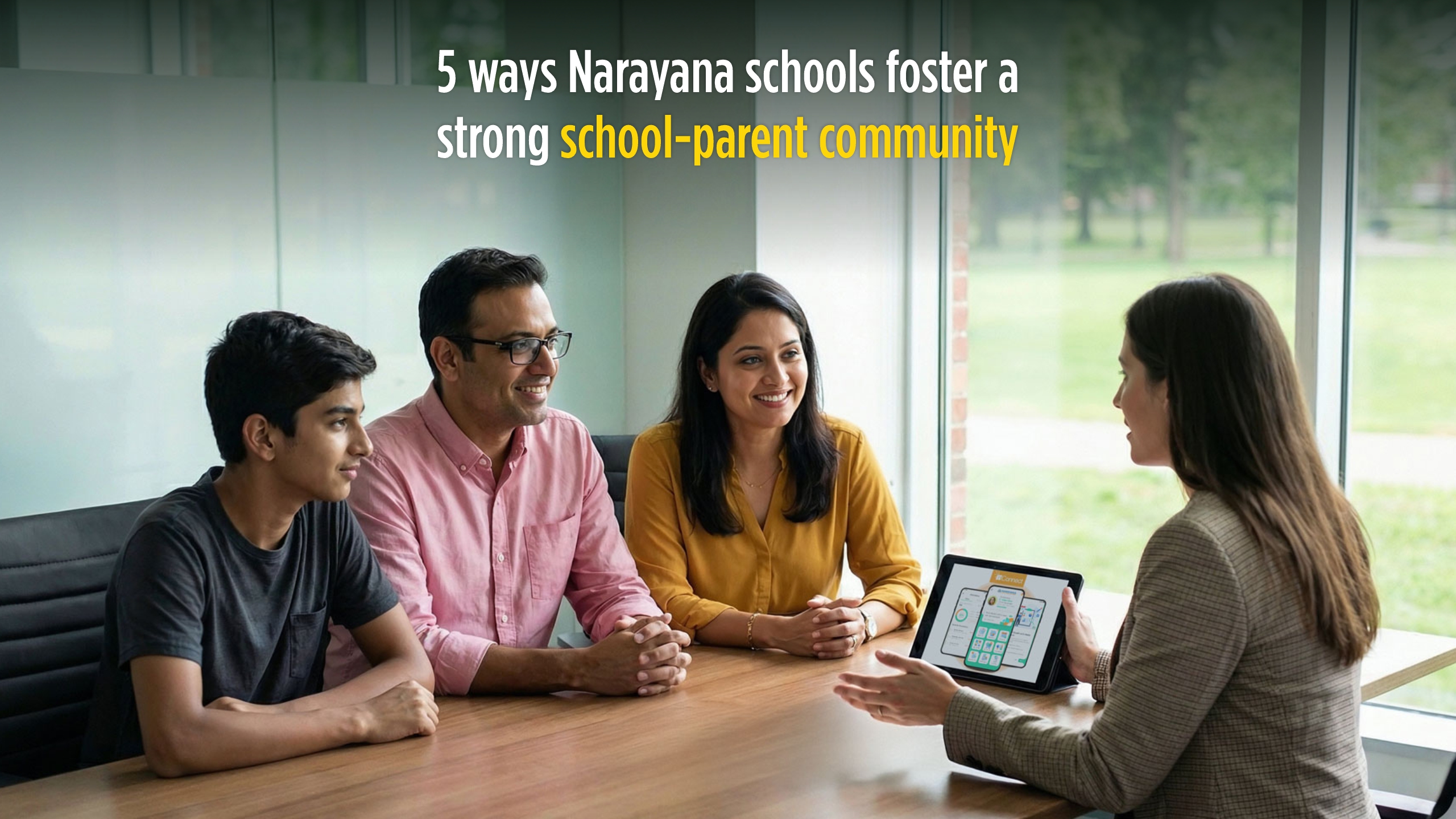 7
A strong and supportive bond between school and home plays a vital role in every child’s educational journey. At Narayana Schools , this partnership is strengthened through well-designed systems that keep parents informed, involved and reassured. The following five pillars reflect how Narayana nurtures a warm, transparent and collaborative school-parent ecosystem. 1. Adoption Calling: Every group of up to 30 students is guided by a dedicated mentor who tracks academic and behavioural development in close coordination with subject-teachers. Fortnightly Adoption Calls keep parents updated about classroom experiences, learning outcomes and overall growth. Concerns are addressed with care, creating a culture of trust and collaboration. This structured system highlights Narayana’s commitment to holistic education , personal attention and shared progress. 2. Learner Support Programme: Regular micro-tests and diagnostic assessments help identify learning gaps early, whether in concepts, subjects or essential skills. Once identified, personalised mentoring and targeted lesson plans ensure timely academic improvement. Parents are kept informed about progress, challenges and breakthrough moments. This approach strengthens student academic success and reinforces a culture of consistent, supportive intervention. 3. nConnect: nConnect is the official parent-school communications platform, a mobile and web app developed to keep parents, teachers and school leaders connected and informed through features such as digital attendance, instant notifications, direct teacher-parent chat, announcements, event stories and forthcoming services like exam schedules, results, online fee payments and bus tracking. 4. Regular Parent-Teacher Meetings : Frequent parent-teacher meetings create space for meaningful conversations about academic progress, behaviour and future goals. Each quarter, parents review a detailed portfolio of worksheets and projects during PTMs, while additional meetings with Vice Principals or Principals can be scheduled whenever needed. Whether a child seems unusually distracted, anxious before assessments or begins to struggle with a subject, these insights allow parents and teachers to personalise learning paths. Such consistent communication aligns expectations and reinforces Narayana’s focus on collaborative growth and strong school-parent partnership. 5. Newsletters and Magazines: Newsletters and quarterly magazines keep the parent community informed about academic achievements, co-curricular breakthroughs, school events and student creations. These publications build a sense of belonging while showcasing consistent learning opportunities, reinforcing Narayana’s reputation as one of the top CBSE schools committed to holistic development. Narayana Schools believe that when parents and educators work in harmony, children thrive with confidence, curiosity and passion. Through Adoption Calling, the Learner Support Programme, nConnect, regular meetings and creative publications, a nurturing, transparent and future-ready environment is built, where dreams take shape and futures shine bright, because at Narayana Schools, your dreams are our dreams .
04 Dec 2025 7
Preparing for pre-board exams can feel overwhelming for many Class 10 and 12 students, especially when academic expectations rise and the pressure to perform intensifies. However, exam readiness does not need to be accompanied by anxiety. With the right balance of structure, emotional support and scientifically informed strategies, young learners can approach the exam season with confidence and composure. Here are eight methods to support stress-free exam preparation at home, while ensuring steady progress in board exam preparation and holistic learning journey. Build a realistic study routine A consistent timetable helps reduce mental clutter and creates predictability, which psychologists identify as essential for lowering academic stress in adolescents. Short and focussed study blocks paired with timed breaks encourage productivity without overexertion. Active learning over passive reading Techniques such as reading a chapter aloud, writing self-notes or practising recall (actively trying to remember what was learnt without looking at the book) are proven to strengthen long-term retention. Cognitive science researchers at the University of California have consistently found that active recall helps students perform better in exams than simply rereading the same notes , because it trains the brain to organise and retrieve information more easily and confidently. Use previous papers to build exam familiarity Solving sample papers and timed mock tests reduces fear of the unknown. It also supports students by helping them identify gaps early while strengthening time-management skills. Try having healthy sleep cycles Studies published in Sleep Medicine Reviews show that memory consolidation, focus and problem-solving significantly improve when adolescents get a minimum of 7–8 hours of sleep, even though many tend to sacrifice rest during exam months. Have emotional expression through conversation Regular check-ins allow students to externalise worry rather than bottling it up. Adolescence experts note that open communication with trusted adults acts as a strong emotional buffer during stressful phases, strengthening student mental wellness. Keep nutrition simple but energising Balanced meals with complex carbohydrates, nuts and seasonal fruits help sustain energy levels during long study hours. Such nutrient-rich foods also stabilise mood, which is especially important during intense revision cycles. Use simple grounding and breathing techniques Deep breathing exercises are shown to reduce cortisol levels and improve mental clarity, as highlighted in studies published in the Journal of Child and Adolescent Mental Health . The 5-4-3-2-1 grounding technique involves noticing 5 things one can see, 4 things one can touch , 3 things one can hear, 2 things one can smell and 1 thing one can taste , helping bring the mind back to the present moment and ease anxiety. Short mindfulness pauses further reinforce stress-free revision strategies for adolescents by calming the nervous system and restoring focus. Celebrate progress rather than perfection Small acknowledgements such as finishing a chapter, improving a score or sticking to a routine build intrinsic motivation and reduce fear based learning. How Narayana Schools Support Children During Pre-Board Season Academic Support Structured and well-planned academic ecosystem tailored for board-year students. Highly qualified teachers, experienced mentors and expert trainers guide students. Microschedule driven learning approach for organised and predictable progress. Strong concept-clarity sessions to reinforce fundamentals. Systematic preparation strategies to boost exam readiness. Support from the nLearn digital platform, with ASTRA ( Advanced Student Tutoring & Resource Assistant ) providing instant doubt-solving and personalised practice. Interactive modules, eBooks and realistic Board exam simulations familiarise students with exam patterns early, boosting confidence and reducing academic stress. Regular assessments to track improvement and address gaps. Personalised guidance to enhance exam performance. Mental Well-being and Stress Management Support through Disha Mental Well-being Programme. Access to 130+ professional psychologists. One-on-one counselling sessions. Group workshops for emotional and academic resilience. Peer-support programmes to encourage healthy interactions. Emotional wellness sessions to maintain balance during exam season. Helps students manage expectations and approach exams with confidence and psychological strength. Every child’s journey to success is unique, but meaningful support both academically and emotionally ensures steady progress through the pre-board/board period and beyond. Narayana Schools walk alongside every learner, helping them move closer to fulfilling their dreams, because your dreams are our dreams .
03 Dec 2025

