

Explore stories and insights
Loading...


 8
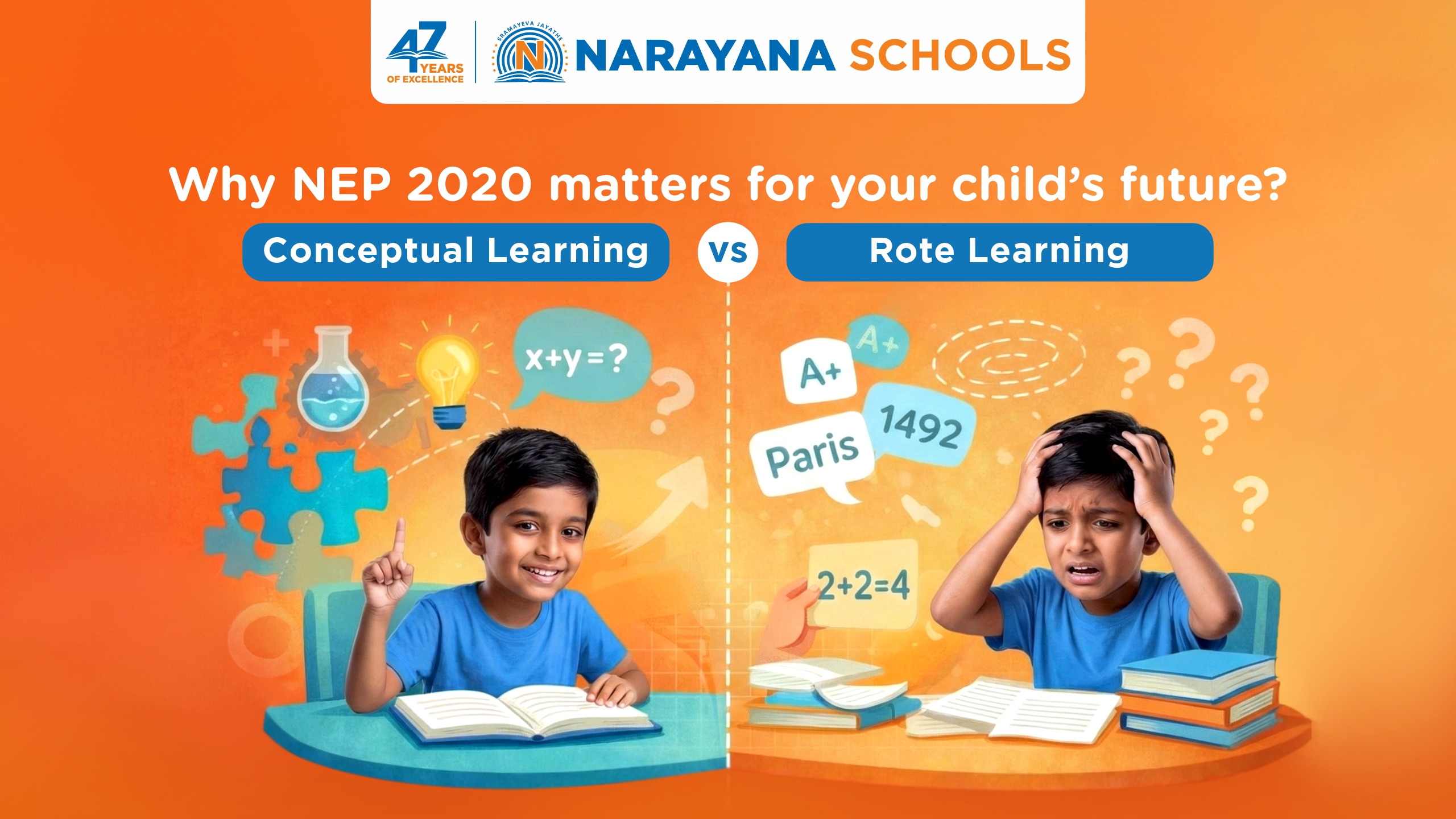
India’s education landscape witnessed a historic shift with the introduction of the National Education Policy 2020 . Approved on 29 July 2020, NEP 2020 replaced the 1986 policy to align schooling with 21st-century skills, global benchmarks and cognitive science research. At its core lies a decisive move from rote learning to conceptual learning , redefining how children understand, apply and innovate knowledge. 1. Why NEP 2020 was introduced? Educational reviews by the Government of India revealed that memorisation-heavy practices limited critical thinking and problem-solving. Global assessments such as Programme for International Student Assessment (PISA) highlighted the need for competency based evaluation. NEP 2020 signifies a shift towards holistic education in India , multidisciplinary exposure and experiential learning. 2. The science behind conceptual learning Cognitive psychology research demonstrates that conceptual learning strengthens neural connections. Studies from Stanford University show that understanding underlying principles improves long-term retention compared to surface memorisation. Neuroscientists explain that active recall, spaced repetition and application-based tasks enhance memory consolidation far more effectively than repetitive cramming. 3. Rote learning limitations While memorisation aids foundational recall, overdependence can restrict analytical ability. Research published in the journal Educational Psychology Review notes that students trained primarily in rote methods struggle with transfer of knowledge to unfamiliar contexts, a crucial skill in competitive examinations and modern careers. 4. What conceptual learning signifies Under NEP 2020 reforms , curriculum design now emphasises competency-based assessment, inquiry-driven classrooms and reduced content overload. The new 5+3+3+4 structure based on age groups aligns learning stages with developmental psychology, ensuring age-appropriate cognitive progression. This reflects a broader goal: nurturing curiosity, creativity and problem-solving abilities. 5. Practical and doable approaches at home Encouraging explanation-based revision rather than repetitive rewriting. Discussing real-life applications of classroom topics. Supporting project-based tasks and interdisciplinary exploration. Creating structured study routines that prioritise understanding over speed. These approaches align with research from the National Council of Educational Research and Training, which advocates experiential and discussion based learning for improved academic outcomes. 6. Future prospects for Children The World Economic Forum consistently identifies critical thinking, collaboration and adaptability as essential future skills. Conceptual clarity equips learners not merely to pass examinations but to innovate, research and contribute meaningfully to society. At Narayana Schools , the philosophy of conceptual learning is deeply embedded within the academic framework. The integrated curriculum draws upon the best practices of CBSE, ICSE, IGCSE and IB boards , creating comprehensive study materials designed to strengthen conceptual clarity, analytical thinking and deeper subject understanding . This spirit of inquiry is nurtured progressively across every stage of learning. An activity-based learning approach in Classes 1–2 encourages exploration, curiosity and active engagement with concepts. In Classes 3–5 , the eChamps programme introduces experiential learning to lay a strong foundation , enabling students to connect classroom knowledge with real-world observations and practical understanding. From Classes 6–10 under the eTechno programme and beyond , the focus shifts to building strong conceptual clarity through structured learning centred on Concepts, Definitions and Formulae (CDF) . Supported by the Panchpadi learning process , NEP-aligned teaching methodologies and decades of academic expertise, this stage focuses on preparing students for the competitive world ahead . Beyond classroom learning, co-scholastic platforms for Grades 6–10 provide opportunities for students to apply knowledge through hands-on projects, working models and presentations . Through four dynamic clubs, Pixel Palette (Digital Creativity), Synergy X (STEM and Aerospace), Idea Vault (Entrepreneurship and Innovation), and Global Vox (Public Discourse and Diplomacy) , learners explore real-world challenges, design innovative solutions and present ideas with confidence and collaboration. Such an ecosystem ensures that conceptual learning evolves into creativity, critical thinking and future readiness , empowering students to transform knowledge into meaningful achievement. In essence, Conceptual Learning vs Rote Learning is not a debate of memory versus understanding, it is about preparing children for a rapidly evolving world. Aligning with the vision of NEP 2020 , Narayana Schools signal a strong commitment to an education system that values reasoning over repetition . This approach focuses on nurturing confident, capable and future-ready citizens who not only dream boldly but also pursue and fulfil those dreams fearlessly , because at Narayana Schools, your dreams are our dreams .
 06 Mar 202612
On the full moon day of the Hindu month of Phalguna , India celebrates Holi festival , a vibrant expression of Indian culture , seasonal change and social harmony. The date shifts according to the lunar calendar, symbolising renewal as winter gives way to summer. Historically rooted in the legend of Prahlada and Holika, Holi signifies the triumph of good over evil, resilience over adversity and unity across differences. For families it is important to note that, Holi for children can become more than just playing with colours and celebration, it is an opportunity to nurture cultural awareness , empathy and scientific curiosity. 1. Why Holi Matters in Indian Tradition Holi reflects India’s pluralistic ethos. Sociological research from the Indian Council of Social Science Research highlights that festivals strengthen inter-community bonds and collective identity. The ritual of Holika Dahan , observed on the eve of Holi, symbolises moral courage and the importance of standing by truth. According to Hindu mythology, Holika attempted to burn her nephew Prahlada in a fire at the command of King Hiranyakashipu, believing she was immune to flames. However, her misuse of power led to her destruction, while Prahlada’s unwavering faith and commitment to righteousness protected him. The episode reinforces the ethical lesson that arrogance and injustice ultimately fail, whereas integrity and truth prevail. 2. What Holi Signifies for Young Learners Developmental psychologists note that shared cultural experiences enhance social belonging and emotional intelligence. Participation in traditional songs, stories and rituals helps children connect history with lived experience, strengthening both identity and inclusivity. 3. The Science Behind the Colours The science of Holi offers fascinating learning moments. Historically, natural gulal was derived from flowers such as tesu (palash), turmeric and neem. Research in ethnobotany shows that these plant-based colours possessed mild antibacterial properties, beneficial during seasonal transitions when immunity can fluctuate. Discussing about natural colours for Holi introduces children to chemistry, plant science and sustainable practices. 4. Health and Environmental Awareness Modern synthetic colours may contain harmful chemicals. Public health studies published by the Indian Council of Medical Research caution against skin and eye irritation caused by artificial dyes. Opting for eco-friendly alternatives, protective clothing and hydration ensures safe celebration while reinforcing environmental responsibility. 5. Teaching Diversity Through Celebration Holi is celebrated differently across India, from Lathmar Holi in Uttar Pradesh to Yaosang in Manipur , reflecting regional diversity within unity. Cultural studies emphasise that exposure to such variations fosters respect for differences from an early age. Conversations around these traditions deepen geographical and historical understanding. 6. Practical Ways to Encourage Curiosity • Exploring the chemistry of colours through simple home experiments (e.g., mixing turmeric with water to observe natural pigments, adding lemon juice to turmeric to see an acid base colour change, extracting colour from crushed hibiscus or spinach leaves). • Reading mythological narratives to connect values with storytelling. • Encouraging community interaction to strengthen social empathy. • Discussing water conservation to build environmental consciousness. In essence, Holi celebration in India is not merely a festival of colour but a living classroom. When approached thoughtfully, it becomes a meaningful bridge between tradition, science and diversity, shaping informed, compassionate and curious young minds.
28 Feb 2026 8
Every year on 28 February , India observes National Science Day , marking the discovery of the Raman Effect in 1928 by Nobel Laureate Sir C. V. Raman . This breakthrough in light scattering earned the Nobel Prize in Physics (1930) and placed India firmly on the global scientific map. The date signifies not merely a historic achievement, but the power of scientific temper , curiosity and research-driven progress in nation-building. For families across India, National Science Day 2026 is more than a calendar event. It represents the importance of STEM education in India , the encouragement of inquiry-based learning and the nurturing of future-ready innovators. 1. Why 28 February matters? The Government of India designated this date in 1986 to honour Raman’s discovery and promote science education and innovation . It signifies India’s commitment to developing a culture of research, critical thinking and evidence-based reasoning among young learners. 2. Why National Science Day is as important today? In an era shaped by artificial intelligence, space research and biotechnology , scientific literacy is no longer optional. Reports by the World Economic Forum highlight analytical thinking and problem-solving among the most essential skills for the future workforce. Early exposure to scientific thinking strengthens adaptability and resilience. 3. What it signifies for young minds? Research published by the National Council of Educational Research and Training (NCERT) emphasises that experiential learning improves retention and conceptual clarity. Science, when experienced through experiments and observation, shifts from memorisation to meaningful understanding. The day symbolises the move from rote learning to curiosity-led exploration. 4. Addressing common challenges Academic pressure often reduces science to examination performance. Studies in the Indian Journal of Psychiatry note that excessive performance anxiety can hinder creativity. Encouraging small home based observations, simple experiments and science discussions reduces fear-based learning and builds confidence. 5. Practical and doable ways to inspire curiosity Creating structured study routines that include hands-on experiments improves retention, according to cognitive science research on active recall. Limiting passive screen consumption and encouraging science documentaries or museum visits enhances engagement. Discussing everyday phenomena like rainbows, cooking reactions, plant growth, etc., connects textbooks to real life. Celebrating effort rather than results nurtures intrinsic motivation, as highlighted in motivation studies by Stanford University . 6. Future prospects and national growth India’s expanding missions in space exploration, renewable energy and medical research signal vast opportunities in scientific careers in India . Cultivating curiosity today strengthens participation in tomorrow’s innovation economy. National Science Day ultimately celebrates the spirit of questioning. It reminds families that innovation begins not in laboratories alone but in everyday curiosity nurtured consistently at home. At Narayana Schools, this spirit of inquiry is nurtured at every stage of learning. An activity-based learning approach in Classes 1–2 nurtures exploration and engagement, while experiential learning in Classes 3–5 under the eChamps programme deepens conceptual understanding through real-world connections. From Classes 6–10 (eTechno programme) and above, the emphasis shifts to strong conceptual clarity through structured learning focussed on concepts, definitions and formulae (CDF) , supported by the Panchpadi learning process , NEP-aligned teaching methodologies and decades of academic expertise. Beyond academics, co-scholastic platforms empower students from Grades 6–10 to demonstrate their skills through hands-on projects, working models and presentations. Through four dynamic clubs, Pixel Palette (Digital Creativity), Synergy X (STEM and Aerospace), Idea Vault (Entrepreneurship and Innovation) and Global Vox (Public Discourse and Diplomacy) , students explore real-world challenges, design creative solutions and present ideas with confidence and collaboration. These initiatives reflect our commitment to nurturing future-ready learners who think critically, act creatively and express responsibly. And in this way, curiosity evolves into clarity, confidence and a driving force for setting aspirations and fulfilling dreams, because at Narayana Schools, your dreams are our dreams .
25 Feb 2026 10
20 February 1987 holds a distinguished place in modern Indian history , as on this day Arunachal Pradesh and Mizoram attained full statehood, marking a defining chapter in the story of North East India’s heritage . Before this transition, Arunachal Pradesh functioned as a Union Territory (earlier known as NEFA - North‑East Frontier Agency), while Mizoram was a Union Territory formed after separation from Assam in 1972 . Limited legislative autonomy, complex socio-political movements and strategic border considerations highlighted the need for stronger democratic governance. The grant of statehood in 1987 strengthened regional identity , ensured improved administrative responsiveness and reinforced national integration within India’s federal structure. For families, this milestone offers a meaningful opportunity to introduce children to Indian federalism , cultural diversity in North East India and the evolution of democracy. Beyond its historical significance, both Arunachal Pradesh and Mizoram offer enriching travel experiences that allow families to connect learning with real-world exploration. In Arunachal Pradesh, Tawang Monastery is renowned for its spiritual significance and stunning Himalayan setting, while Ziro Valley is celebrated for its lush landscapes and the unique Apatani tribal culture . In Mizoram, the capital Aizawl stands out for its vibrant hill city charm and cultural richness, Reiek Tlang offers panoramic views and insights into traditional Mizo heritage , and Vantawng Falls is known as the highest waterfall in the state, showcasing breathtaking natural beauty. Exploring these destinations helps children understand geography, culture and ecology in an engaging and memorable way. 1. Why 1987 Matters in Indian History The State of Mizoram Act, 1986 and the State of Arunachal Pradesh Act, 1986 came into effect on 20 February 1987, granting full statehood. The historic Mizo Peace Accord of 1986 is widely cited in political science research as a successful model of peace-building and democratic reconciliation. Strategic studies highlight the importance of strengthening governance in India’s sensitive international border regions. Learning about the 1987 statehood movement helps children understand how democratic systems respond to regional aspirations. 2. Arunachal Pradesh: The Land of the Rising Sun Arunachal Pradesh, meaning ‘land of the dawn-lit mountains’, is India’s easternmost state and a vital part of the Eastern Himalaya biodiversity hotspot . The state is home to over 20 major tribes, including the Adi , Nyishi and Apatani communities, each preserving distinct languages and traditions. The Apatani Valley’s sustainable wet rice cultivation system is recognised in environmental research as a model of ecological balance. Tawang Monastery , one of Asia’s largest Buddhist monasteries, symbolises the region’s spiritual and architectural heritage. Biodiversity studies identify Arunachal Pradesh as one of India’s richest ecological zones, reinforcing lessons on environmental conservation . 3. Mizoram: A Model of Peace and Literacy Mizoram’s statehood followed years of socio-political unrest resolved through democratic dialogue, making it an important chapter in Indian political history . The Mizo value of Tlawmngaihna emphasises community service, discipline and social harmony. Mizoram consistently records one of the highest literacy rates in India, often cited in educational research linking literacy with social progress. Bamboo-based architecture and traditional shifting cultivation practices demonstrate adaptive ecological knowledge studied in environmental sciences. Festivals such as Chapchar Kut celebrate agrarian rhythms and cultural continuity. 4. People, Land and Living Traditions of the 1987 Duo Both states are home to Tibeto-Burman language families, vibrant oral traditions and strong community institutions. Mountain landscapes, dense forests and high rainfall influence food habits, housing styles and livelihoods. Diets rich in rice, leafy greens and fermented foods reflect nutritional balance aligned with indigenous food systems research. Geography plays a central role in shaping identity, resilience and sustainable living practices. 5. The Shared Spirit of the 1987 Duo Despite distinct identities, both states embody resilience, cultural pride and respect for nature. Sociological studies emphasise that learning about the history of North East India fosters inclusivity and national awareness from an early age. Stories from Arunachal Pradesh and Mizoram expand perspectives beyond textbooks and strengthen appreciation of India’s unity in diversity. The 1987 Duo stands as a reminder that India’s strength lies in democratic evolution, cultural respect and shared progress. Understanding the heritage, history and heart of Arunachal Pradesh and Mizoram helps children grow with curiosity, empathy and informed pride in the many narratives that together shape the nation.
19 Feb 2026 7
As the 2026 board examination unfold, families across India enter one of the most academically intense phases of the school year. With Class 10 and Class 12 board exams having commenced on 17 February 2026, this period demands not only academic preparedness but also emotional stability, structured routines and focussed support at home. Board exams represent a critical milestone in a student’s learning journey, making the weeks leading up to the examinations essential for consolidating concepts, building confidence and reducing exam-related stress. 1. Understanding the Science of Exam Stress Studies published by the Indian Journal of Psychiatry and the World Health Organization (WHO) indicate that prolonged academic stress affects memory, sleep quality and emotional regulation in adolescents. High cortisol levels impair recall and concentration, making calm preparation essential. Recognising stress as a cognitive barrier, rather than a lack of effort, reframes exam preparation in a healthier way. 2. Creating a Structured Study Framework Educational psychologists emphasise that structured study routines improve information retention and reduce anxiety. Time-blocked schedules that balance revision, practice tests and short breaks help the brain consolidate learning. Research from the National Institute of Mental Health and Neurosciences (NIMHANS) confirms that predictable routines provide emotional security during high-pressure periods like board exams. 3. Prioritising Conceptual Clarity Over Rote Learning Curriculum studies aligned with CBSE and NEP 2020 highlight that board examinations increasingly assess conceptual understanding, application and analytical thinking. Regular concept revision, error analysis from mock papers and subject-wise prioritisation strengthen academic confidence. Learning science research shows that spaced repetition and active recall outperform last-minute memorisation. 4. Supporting Emotional Wellbeing During Exam Season The Organisation for Economic Co-operation and Development (OECD) reports that emotional support from family environments significantly enhances resilience and exam performance. Calm conversations, reassurance and encouragement reduce fear-based learning. Sleep, nutrition and physical activity remain critical, as neuroscience research links adequate rest to improved cognitive processing and memory consolidation. 5. Prioritising Physical Health for Peak Performance Neuroscience and adolescent health research consistently highlight the connection between physical wellbeing and cognitive efficiency. Adequate sleep (7–9 hours for teenagers) strengthens memory consolidation and improves attention span. Balanced meals rich in whole grains, proteins, fruits and hydration stabilise energy levels and prevent fatigue during long exam hours. Light physical activity such as walking or stretching improves blood circulation and reduces stress hormones. Maintaining consistent sleep-wake cycles, limiting caffeine intake and avoiding late-night screen exposure further protect both physical stamina and mental clarity during board exams. 6. Managing Digital Distractions and Information Overload Studies from Stanford University demonstrate that digital multitasking lowers comprehension and exam preparedness. Clear boundaries around screen usage, especially during revision hours, protect attention span. Limiting exposure to comparison-driven content on social media also reduces performance anxiety. 7. Encouraging Confidence and Exam-Day Readiness Educational assessment research shows that familiarity with exam patterns, clear revision plans and positive reinforcement improve self-efficacy. Mock exams under timed conditions reduce fear of the unknown and build mental stamina. Confidence grows when effort is acknowledged alongside outcomes. 8. Long-Term Perspective Beyond Board Results Education economists agree that board exams represent milestones, not final destinations. Skills such as discipline, stress management and problem-solving developed during exam preparation contribute to lifelong success. Board exam preparation , when supported through structure, empathy and evidence-based strategies, becomes a process of growth rather than pressure. Focused support during the exam season helps students approach board examinations with clarity, confidence and resilience, laying the foundation for future academic and personal achievements.
18 Feb 2026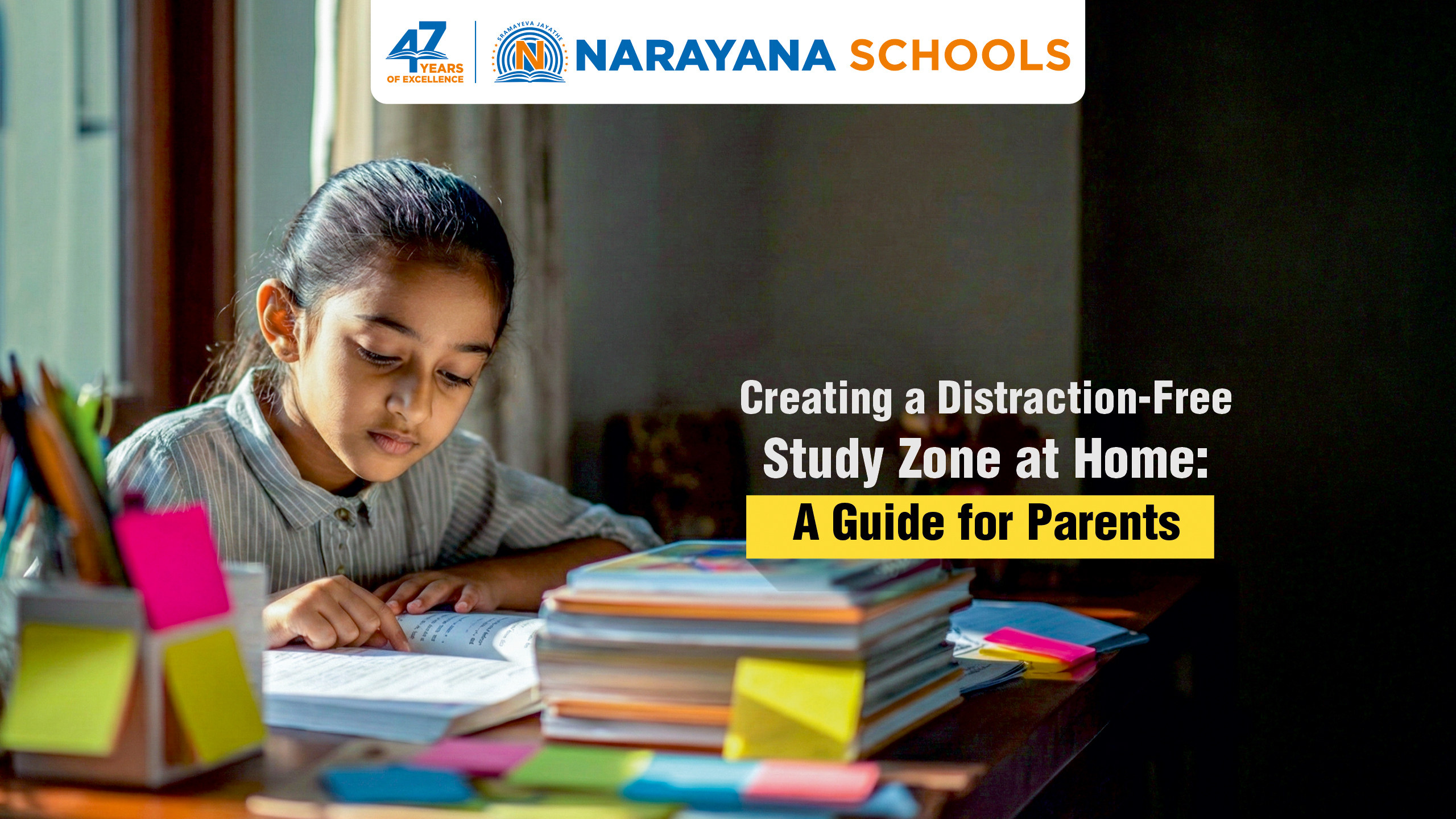 10
In today’s digitally saturated world, creating a distraction-free study environment at home has become essential for meaningful learning. Research in educational psychology consistently shows that the physical study space directly influences concentration, memory retention and academic performance, making home environments a powerful partner in education. Why the Study Environment Matters Studies by the American Psychological Association show that cluttered or noisy surroundings increase cognitive load and reduce attention span. Organised study zones support better task completion and sustained focus during learning hours. Choosing the Right Location Educational research recommends a quiet well-lit study area away from televisions and high-traffic household spaces. Exposure to natural light supports alertness, mood stability and visual comfort. Proper seating posture reduces physical strain during longer study sessions. Minimising Digital Distractions Research from Stanford University indicates that digital multitasking lowers comprehension and learning efficiency. Keeping mobile phones and non-academic devices outside the study area encourages deep focus. Structured screen-time boundaries reduce habitual interruptions and digital dependency. Designing for Focus and Comfort Ergonomic desks and chairs reduce fatigue and support longer periods of concentration. Organised stationery and limited desk clutter help sustain attention. Studies in colour psychology suggest neutral tones promote calmness, while excessive visual stimulation increases restlessness. Establishing Consistent Study Routines Educational studies highlight that structured study routines build self-discipline and emotional regulation. Fixed study timings help children internalise healthy learning habits. Short breaks, such as those recommended by the Pomodoro Technique , prevent mental fatigue. Encouraging Ownership of the Space Child development research shows that involving children in organising their study corner builds responsibility and motivation. Personal elements such as goal charts or academic planners strengthen emotional engagement without becoming distracting. Managing Noise and Sensory Overload Noise-control studies suggest that silence or consistent low-level sounds improve concentration. Avoiding sudden auditory disruptions supports deeper focus during reading and problem-solving tasks. Supporting Emotional Wellbeing OECD education reports confirm that supportive, non-pressurising parental involvement enhances motivation and resilience. Calm encouragement fosters positive learning associations and long-term academic confidence. Creating a distraction-free study zone at home is not about perfection, but about intention. When space, routine and emotional support align, learning becomes focussed, balanced and sustainable. Such environments help children develop lifelong skills like concentration, self-regulation and independent thinking, laying a strong foundation for academic success and personal growth.
14 Feb 2026

