

Explore stories and insights
Loading...


 6
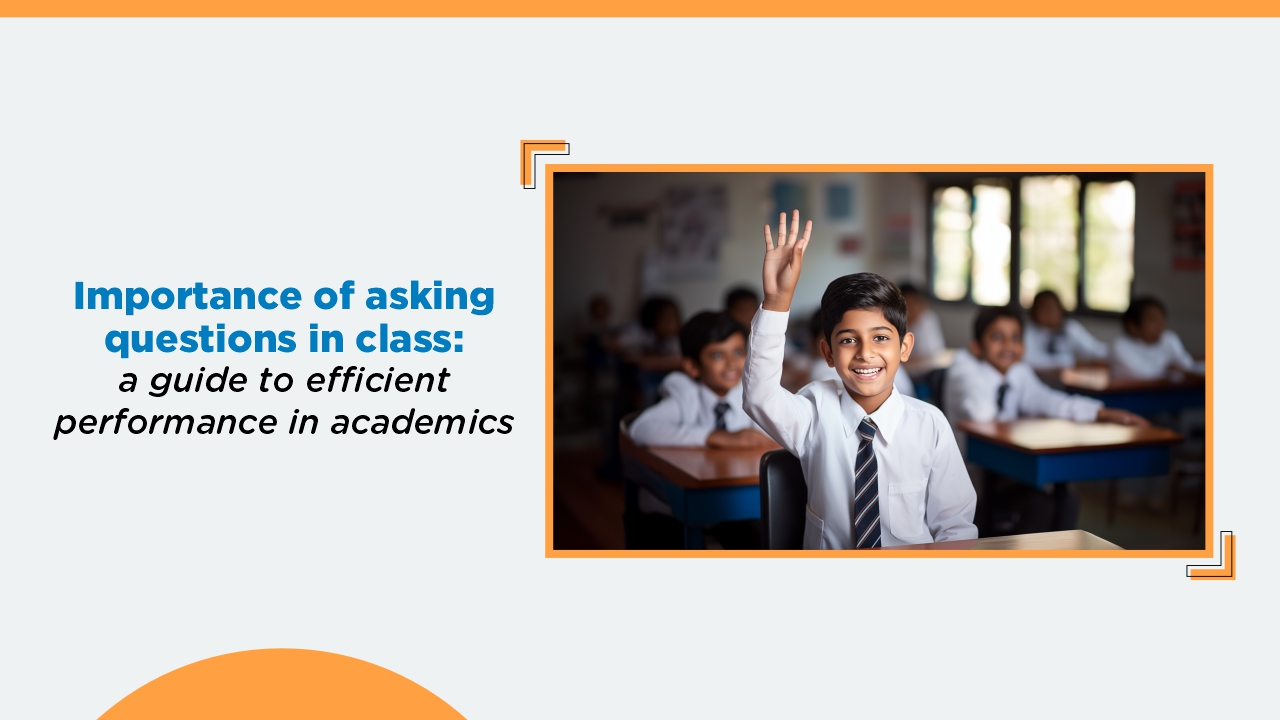
In classrooms, asking questions isn’t just something which one does when they don’t understand the concept. It’s a superpower that can help attain conceptual clarity, boost learning and help perform better in academics. Thus, always understand the importance of asking questions in the classroom. Not only is it one’s duty to clear doubts but it is fundamental for understanding several concepts. Let us understand the importance of asking questions in the classroom to address any uncertainties. 1. Understanding Concepts Better: When one asks questions, one is clarifying doubts and gaining a deeper understanding of the topic. If there’s something which one is unsure about, chances are there are others in the class who are also confused. By speaking up, one not only helps oneself but also their classmates. Therefore, the practice of asking questions proves advantageous, as it enables individuals, as well as the group, to understand concepts better thereby paving the way for the next stage of learning. 2. Active Engagement: Asking questions shows the teacher that one is engaged and interested in learning. It helps create a dynamic learning environment where everyone is involved. Teachers appreciate students who are curious and eager to learn. Moreover, within such a learning environment, students and teachers are receptive & understand each other better. Consequently, it becomes more convenient for one to participate in discussions and address one’s areas of improvement. Thus, one must understand the importance of asking questions to obtain accurate solutions for better learning. 3. Critical Thinking Skills: Seeking clarifications isn't merely about passively accepting information. Instead, it entails active contemplation of the subject matter being learned. This process aids in honing critical thinking abilities, indispensable for academic achievement and beyond. Initiate a dialogue with the mentor! Pose pertinent questions, particularly those that are challenging and inculcate the skill of critical thinking. One must understand the importance of asking questions to think deeper & wider. 4. Building Confidence: Asking questions can feel intimidating, especially if one is afraid of looking silly. But remember, there’s no such thing as a dumb question! By asking questions regularly, one will become more confident in their abilities and more comfortable speaking up in class. Furthermore, this practice enables one to receive more constructive feedback from the teacher and build a stronger reputation. Moreover, actively engaging in questioning demonstrates to the teacher that one is attentive in class. Therefore, initiating communication with the teacher and posing questions is highly recommended. 5. Preparation for Exams: Asking questions during the class essentially translates to real-time studying. The more one engages with the material, the better prepared one becomes for exams. Moreover, if there's any uncertainty, it's far more beneficial to seek clarification from the teacher during class rather than grappling with it alone during individual study sessions later on. In conclusion, asking questions in class is a valuable skill that can enhance one’s academic performance in many ways. So, always speak up! The questions contribute to a more vibrant and enriching learning environment. Therefore, the importance of asking questions in the classroom is multifaceted, and at Narayana Schools, we train teachers through our special teacher training programmes to ensure that they encourage students to ask questions & help enhance their creative thinking, to make them confident individuals who dream big, as your dreams are our dreams. Don’t miss out! Follow us on Instagram for exclusive updates and behind-the-scenes content. Instagram: The Narayana Group Stay informed on the latest updates and expert insights! Join our Telegram channel for valuable content. Join us on Telegram: Narayana Educational Institutions – Official Stay connected, stay informed, and thrive with Narayana Educational Institutions!
 29 Feb 2024
 6
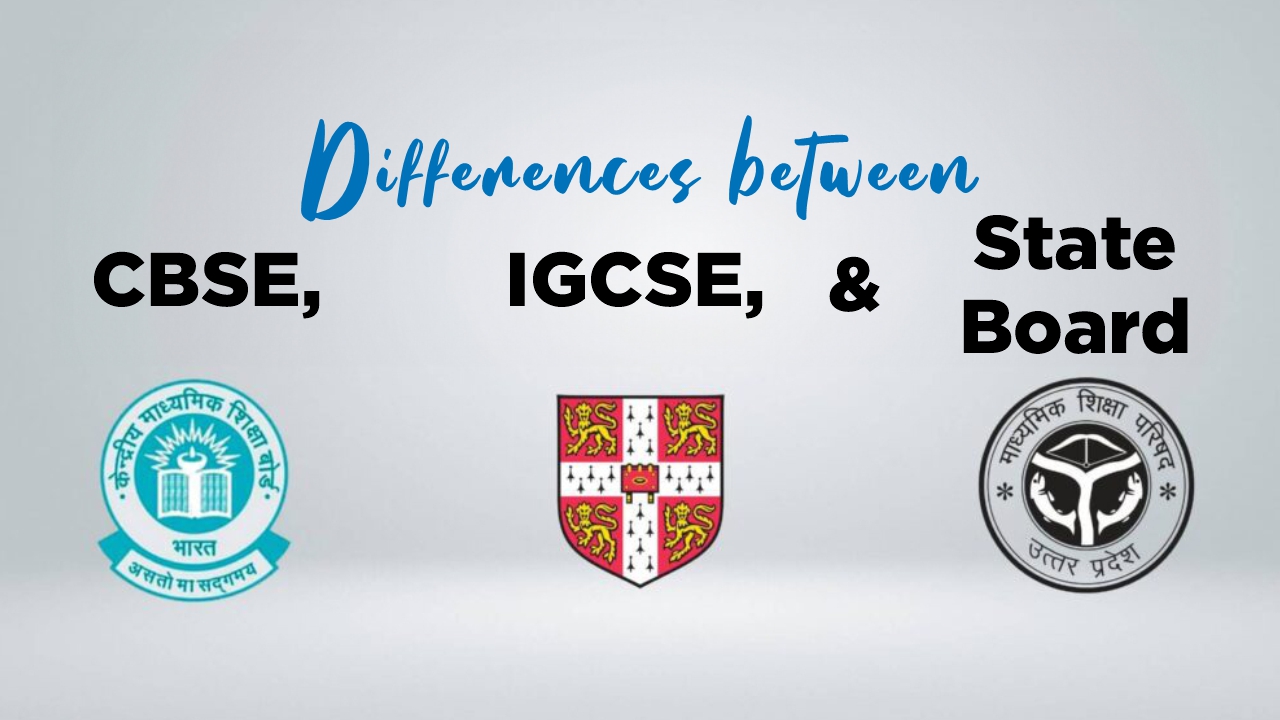
India is home to over 60 educational boards. Selecting an educational board among them for your child is indeed a tough decision to make. Be it CBSE, IGCSE, or state board, every educational council features a slew of one-of-a-kind characteristics. Parents always strive to offer the best education to their children. But, how to know which one is the best? If you are also tired of asking this question, then this article is for you! This article highlights the major differences between CBSE, IGCSE, and State boards to let you decide which educational board is ideal for your child. Scroll down to get a comprehensive idea of IGCSE vs CBSE vs State board . Whether you prefer either CBSE or IGCSE or state board, you must gain a brief knowledge about each before making a decision. Overview of CBSE Board CBSE is the Central Board of Secondary Education in India, both for public and private schools. It was established in 1929 and reorganised in 1962 to help students and educational institutions throughout the country. Today, various schools follow the CBSE curriculum such as the Narayana CBSE Schools . Overview of the IGCSE Board The International General Certificate of Secondary Education (IGCSE) is an exam offered by the Cambridge Upper Secondary programme for students aged 14 to 16. The exam covers various topics and is supervised by Cambridge International Exams (CIE). Students must pass Pearson Edexcel exams to progress to the higher levels, AS (11 th grade) and A (12 th grade). Overview of State Board Each state has a State Board that oversees education. The State Board's curriculum is based on NCERT guidelines and thus, has some similarities with the CBSE board. The curriculum uses the state's regional language as the medium of instruction but also offers classes in English language. Major Differences: CBSE vs IGCSE vs State Board CBSE, IGCSE, and State Board have unique ways of imparting education to children. The following three boards have been compared thoroughly based on 5 key elements: 1. Curriculum There is a difference in the curriculum of State Board and CBSE vs IGCSE . Both CBSE and State board schools follow NCERT-patterned curricula that have both regional and national influences. On the other hand, IGCSE schools pursue a United Kingdom-oriented curriculum. While CBSE and state board students have competitive advantages in national-level examinations, such as JEE and NEET, the IGCSE board prepares its students for foreign scholarships and global examinations. 2. Primary Language In the discussion of IGCSE vs CBSE , the language used to impart education plays a vital role. State boards mostly implement regional languages as the first language and English as the second, making the syllabus relatively easy to comprehend. The CBSE schools, on the contrary, have a higher orientation towards Hindi. As the IGSCE board caters to international standards, it has a higher orientation towards English. 3. Grade System The way students are graded differs across different boards. CBSE uses a CGPA system that eliminates the need to minutely worry about marks. This can help relieve exam stress for some students. Meanwhile, whether you go for either IGCSE or state board schools, both of them have their grading systems that vary by location. 4. Syllabus The IGCSE, CBSE, and state syllabuses differ noticeably. CBSE emphasises relatively more on Math and Science, while the state board syllabus covers basic subjects like Math, Science, Social Studies, and languages specific to the state. The IGCSE syllabus, on the other hand, has a global perspective. 5. Exam Pattern To excel in CBSE examinations, students need to expand their study resources beyond textbooks. Merely relying on the prescribed textbooks might not be enough since the questions asked in the exams require logical thinking and practical application of knowledge. On the other hand, state board exams are relatively easier as they primarily rely on textbook content. IGCSE exams also follow a textbook-centric examination pattern. Hopefully, this complete overview of IGCSE vs CBSE vs state board has answered all your queries. The student's willingness to learn and their ability to grasp the concepts are the most important things to consider before making a decision. Select smartly for a successful future ahead! At Narayana, our integrated curriculum draws the best of CBSE, ICSE, IGCSE, and other state boards and caters to the needs of today’s students. We’re here to ensure the dream of getting the best is fulfilled because Your Dreams Are Our Dreams. Don’t miss out! Follow us on Instagram for exclusive updates and behind-the-scenes content. Instagram: The Narayana Group Stay informed on the latest updates and expert insights! Join our Telegram channel for valuable content. Join us on Telegram: Narayana Educational Institutions – Official Stay connected, stay informed, and thrive with Narayana Educational Institutions!
26 Feb 2024 6
Every child is unique, with a distinct combination of traits and tendencies. Understanding child personality types can help you understand how children behave, learn, and interact with the world around them. As parents, recognising your child's personality can help you understand them deeper and why they are doing what they are doing. This in turn can support their growth and development efficiently. In this article, we will explore different personality traits in a child , how they affect their behaviour, and practical ways for parents to use this knowledge to foster positive outcomes. 4 Different Child Personality Types 1. Introvert vs. Extrovert One of the most well-known personality types in kids is introversion versus extroversion. Introverted children are typically more reserved, enjoying quiet surroundings and independent hobbies. On the other hand, children who are extroverts do well in social situations, loving the company of others and actively seeking out entertainment. For example, if your child enjoys reading quietly by themselves rather than participating in large group activities, he/she is an introvert and if they love hanging out with large groups of friends, they are extroverts. You can create an appropriate environment that is suitable for your child's social and emotional development and accommodate their preferences by being aware of their introverted or extroverted tendencies. 2. Judging vs. Perceiving Judging tendency refers to a preference for structure, and decision-making, and Perceiving refers to an inclination to gather new ideas and information. Children's approach to the outside world and life patterns are reflected in the judging-perceiving component of personality. Kids who have judging tendencies prefer predictability, proper structure, order, and like to plan in advance. On the other hand, perceiving children are flexible and adaptive, welcome spontaneity, and are ready to embrace new options. It can be helpful to identify your child's judging or perceiving tendencies in order to establish routines and expectations that respect their choices and encourage productivity. While perceiving children may flourish in situations that allow for exploration and flexibility, judging children may benefit from strict timetables and deadlines. 3. Sensing vs. Intuitive The difference between sensing and intuitive tendencies is another crucial component of personality. Kids who have sensing tendencies use their five senses to absorb information and make decisions; they are practical and analytical. On the other hand, imaginative and future-focused, intuitive kids concentrate more on possibilities and patterns than on hard facts. Knowing your child's sensing or intuitive preferences will enable you to modify your parenting approach so that it aligns with the needs of the child. Children with sensing tendencies could benefit from practical exercises and real-world examples, whereas intuitive kids might like thinking about theoretical ideas and hypothetical possibilities. 4. Thinking vs. Feeling The way children make decisions and assess information is referred to as the thinking-feeling component of child personality types . Thinking kids use analytical and logical reasoning above everything else when making decisions, and are likely to score high on intelligence quotient (IQ). On the other hand, feeling individuals are compassionate and empathetic and are likely to score high on emotional quotient (EQ). They consider the emotional impact of their decisions on themselves as well as others. Understanding this component will help you support your child’s moral and social development. Thinking kids might gain from having the freedom to work through issues and come to their conclusions, but feeling kids could do well in settings that promote cooperation, empathy, and emotional expression. Practical Tips for Parents When Dealing with Different Personality Types Now that you know the different personality types in kids , below are some tips for you: Watch and pay attention to your child: To learn more about your child's personality, observe their actions, emotions, and preferences. Modify your parenting style: Adapt your parenting techniques to your child's particular child personality type . Create an environment that is encouraging: Establish a kind and welcoming atmosphere that enables your child to explore their interests and express themselves honestly. Promote self-awareness: Talking to your child about their strengths, areas of improvement, and talents will help them become more self-aware. Promote diversity: Appreciate the different child personality types in your family and promote tolerance and acceptance of different perspectives. Parents can promote positive development and general well-being in their children by learning how personality types affect them. Keep in mind that each child is unique; valuing their distinct qualities will help you create a stronger and happier bond with them. Additionally, it fosters a positive environment, which is essential for the healthy development of your kid. Narayana’s age-appropriate child-centric curriculum and healthy teacher-student ratio help us to understand the behaviour of the children and guide them to reach their full potential, as at Narayana, Your Dreams are Our Dreams. Don’t miss out! Follow us on Instagram for exclusive updates and behind-the-scenes content. Instagram: The Narayana Group Stay informed on the latest updates and expert insights! Join our Telegram channel for valuable content. Join us on Telegram: Narayana Educational Institutions – Official Stay connected, stay informed, and thrive with Narayana Educational Institutions!
23 Feb 2024 6
Procrastination, the tendency to delay things, is a familiar enemy for students. You know you should be studying for tests, and finishing projects and assignments, but for some reason, you keep putting everything off until the very last minute. Do you relate to this? You are not alone! Students frequently struggle with procrastination, but with the appropriate techniques, you can get past it and increase your productivity. We will cover ten useful strategies in this post on how can you avoid procrastination . 10 ways to avoid procrastination 1. Break Tasks into Manageable Chunks While Making Them Interesting It is simple to become overwhelmed by assignments or projects and put them off until later. Break the task into smaller manageable parts rather than putting it off. Make a list of all the actions you need to do to finish the assignment and work on each one individually. Tasks feel more doable if they are broken up into smaller pieces. Additionally, try to find interest in either the task itself or a part of it by relating it to something of your choice. 2. Set Clear Objectives and Deadlines Setting specific, attainable goals is crucial for overcoming procrastination. Rather than just saying, "I'll study for my exam sometime this week," make a specific plan of action, like reviewing a chapter of your textbook every day. Set due dates for every task as well to create a sense of accountability and urgency. Setting and meeting deadlines and specific goals will help you stay motivated and focused and avoid procrastination while studying. 3. Minimise Distractions: Find strategies to reduce the distractions that tend to divert your attention. Whether it is notifications on your phone, social media, or video games, be proactive in minimizing or getting rid of distractions while studying. You can get help from app blockers to minimize distractions while you study. 4. Find a Productive Study Environment Your concentration and productivity can be significantly impacted by the environment in which you study. Try out a variety of study spaces to see which one suits you the best. While some students might be okay with studying anywhere, others could do better in a dedicated quiet study area. Make sure the space you select is distraction-free for better concentration. 5. Create a Schedule and Stick to It A good method to manage your time and answer how you can avoid procrastination is by making a daily or weekly calendar. Establish designated times for studying, attending classes, finishing homework, and taking breaks. Try your best to stick to your timetable and be realistic about the amount of time each assignment will require. 6. Reward Yourself Reward yourself for your hard work by adding incentives to your study routine. Give yourself a tiny reward, like a snack, or a quick break, after finishing difficult work or hitting a goal. Awards encourage you to stay focused on your task and prevent procrastination by offering positive rewards for your efforts. 7. Use the Pomodoro Technique The Pomodoro Technique is a time management strategy that involves working in focused 25-minute intervals, followed by short five-minute breaks. After completing four consecutive work intervals, longer breaks of 15 to 30 minutes can be taken. This is one of the best tips on how to avoid procrastination. 8. Stay Organised A disorganised place of study increases the risk of procrastination by causing mental chaos. Invest some time to arrange your study materials, notes, and assignments. Additionally, make note of deadlines, and use digital tools, binders, or folders to prioritise your tasks. 9. Practise Self-Compassion It is important to treat yourself with kindness, particularly when you want to avoid procrastination. Remind yourself that mistakes are normal and engage in self-compassion rather than punishing yourself for putting off tasks. Beating yourself up will not help you feel better. Rather, accept your mistakes, draw lessons from them, and proceed with optimism. 10. Seek Support Asking for help when you are having trouble staying focused is nothing to be ashamed of. Having someone remind you of your targets can make all the difference in the world. Give them an overview of your objectives, and request that they follow up with you frequently. This way you can get the answer to how to avoid procrastination and laziness. Procrastination is a common challenge for students, but it does not have to derail your academic success. Hopefully, this blog helped in answering the question of how to avoid procrastination for students . Narayana understands the significance of breaking tasks into manageable portions and adopting a structured method while preparing for exams. Our microschedule emerges as a transformative tool to ease your preparation & help you reach your full potential, as Your Dreams Are Our Dreams. Don’t miss out! Follow us on Instagram for exclusive updates and behind-the-scenes content. ? Instagram: The Narayana Group ? Stay informed on the latest updates and expert insights! Join our Telegram channel for valuable content. ? Join us on Telegram: Narayana Educational Institutions – Official Stay connected, stay informed, and thrive with Narayana Educational Institutions!
20 Feb 2024 6
As parents you might remember your childhood when your only worry was your mother's anger on coming home late after playing.Some of you would also have teamed up with your friends and played cricket, kabaddi, football, hockey, etc. Then, after some years, you moved on with your life and only remembered those times as fun memories that you created. But did you realise that by engaging in those games, you learned so many important life skills? Well, in this blog, we will shed some light on that. We will talk about the importance of playing team sports as a child and why you should encourage your kids to take up team sports. Playing team sports is not just about getting some physical activities done; one can do that even by jogging or exercising alone; it is much more than that. The number of skills that you learn during these activities build your character. It teaches you how to handle success or failure in your life and how good you are at collaborating with others. All of the things that we mentioned or are going to mention are very important for a child so that they can navigate real-life challenges the same way they handled themselves during a tough situation during a game. Team sports stand out as a cornerstone for the overall development of kids. Engaging in team sports not only promotes physical fitness but also fosters essential life skills that extend far beyond the playing field. In this blog, we'll explore the significant impact that team sports can have on a child's growth, emphasising the importance of collaboration, resilience, leadership, commitment, sportsmanship, and strategic thinking. Cultivates leadership skills Team sports provide a perfect opportunity for children to develop leadership skills. Whether as a team captain or a teammate, kids learn to lead, motivate other teammates, and make decisions under pressure. They feel responsible for something, probably for the first time in their lives, and try to win by giving it their all. These leadership qualities extend beyond the sports arena, influencing their academic and personal lives positively. Teaches collaboration One of the important benefits of team sports for kids is the invaluable lesson of collaboration. Kids learn how to work with others to achieve a common goal, developing a sense of unity and shared responsibility. Whether it is passing a ball, deciding where to bowl to a certain batsman, or defending against opponents, team sports instil the importance of effective communication and cooperation from an early age. Teaches how to handle success and failure Winning or losing is inevitable in sports and life alike. Team sports provide children with a platform to experience both, teaching them how to handle success with humility and defeats with grace. These early encounters with wins and losses contribute to the development of resilience and emotional intelligence, which are vital skills for navigating life's challenges. Instils a sense of commitment Commitment is the key to success in any endeavour in life. Doing well in team sports requires regular attendance, practice, and dedication to improvement. Through this commitment, children develop a strong work ethic, time management skills, and a sense of responsibility towards their team, laying the foundation for future achievements in various aspects of life. Teaches how to take on challenges Another important benefit of team sports for kids is that sports teach them how to take on difficult situations. Life is full of challenges, and team sports serve as a training ground for overcoming obstacles. Whether facing a tough opponent, recovering from an injury, or adapting to a new playing strategy, children learn to embrace challenges, develop resilience, and discover the strength within themselves to push through adversity. Instils sportsmanship Learning to win or lose graciously is a crucial aspect of sportsmanship instilled in children through team sports. Respecting opponents, following rules, and acknowledging fair play contribute to the development of good sportsmanship, shaping the child's character, and fostering a positive attitude in various aspects of life. Teaches planning and strategizing Another reason your child should play team sports is that it teaches them how to thoughtfully plan and strategize. Success in team sports often hinges on effective planning and strategic thinking. Children learn to anticipate opponents' moves, develop game plans, and make split-second decisions. These cognitive skills not only enhance their performance on the field but also translate into better problem-solving abilities in academics and everyday challenges. Creates everlasting memories Beyond the skills and lessons acquired, team sports create lasting memories that children carry with them into adulthood. The companionship built during practice, the thrill of winning a game for your team, and the losses experienced together become cherished moments. Moments that they will remember their whole life and seek comfort in whenever they are facing a challenge or difficulty in life. In conclusion, there are multiple and very evident reasons why parents must encourage their kids to take up team sports. The importance of playing team sports as a child extends far beyond physical fitness. These activities shape character, instil crucial life skills, and lay the groundwork for success in various aspects of life. Team sports are not just about the game; they are about moulding resilient, collaborative, and well-rounded individuals ready to take on the challenges of the future. At Narayana, we believe in providing plenty of opportunities for children to participate in team sports/activities, nurturing their talents and fostering a sense of camaraderie. We are committed to fulfil your dreams of overall development of your children, as Your Dreams are Our Dreams. Don’t miss out! Follow us on Instagram for exclusive updates and behind-the-scenes content. Instagram: The Narayana Group Stay informed on the latest updates and expert insights! Join our Telegram channel for valuable content. Join us on Telegram: Narayana Educational Institutions – Official Stay connected, stay informed, and thrive with Narayana Educational Institutions!
10 Feb 2024 6
The CBSE English class 12 exam is an excellent opportunity for students to score 90+ marks. Students just have to keep a few things in mind while preparing for this exam, and they will be easily able to navigate through with a good score. Preparing for the Class 12 CBSE English exam requires focusing on the important parts of the prescribed texts. Whether it is unseen passages, poetry, or prose, we have to identify the core message and theme and mention them clearly in our answers. Here at Narayana, we believe in breaking concepts down to details for better understanding, and this is exactly what we are going to do in this blog. Here are our tips on how to score 90+ in the CBSE English class 12 exam . 1. Understand the exam pattern for CBSE English class 12 exam To excel in any exam, the first step is to familiarise oneself with the syllabus and exam pattern. Here is the CBSE class 12 English syllabus: Section A – 22 Marks (12+10) This section will contain 2 reading comprehension questions, including unseen passages. Q.1: One reading comprehension question that will be factual, descriptive, or literary and will assess the comprehension, interpretation, and analysis skills of the students through multiple-choice questions, objective-type questions, and short-answer type questions. Q.2: One case-based passage with inputs like statistical data or charts to assess comprehension, interpretation, analysis, inference, and evaluation through multiple-choice questions, objective-type questions, and short-answer types. Following are some tips that will help students answer this section effectively: The prerequisites for excelling in unseen passages are students’ reading speed and vocabulary. One should develop a regular habit of reading, whether it is exam time or not, to improve these two skills. One should regularly practice solving unseen passages and figure out which types of questions need improvement. Students should read the entire passage at least twice—even before they look at the questions. It will provide them with a basic understanding. Students should highlight and underline the important facts. While writing answers, they should be conveyed clearly. One should look out for the cause words (due to, because, since, etc.), effect words (consequently, as a result, therefore, etc.), and purpose words (so as to, in order to, for, etc.) in the passage that will help them arrive at the answer. When solving a passage, one should always go in the prescribed order. Go over the pertinent passages and the questions in the correct order. Complete sentences should be used when responding to the questions. Always respond to questions in accordance with the marks given. One must try to respond with one point if the question is for a single mark. Give two points if the question has two marks. Section B: 18 Marks This section contains 4 writing skill questions that test students' grammar, sentence structure, spelling, and punctuation. Q.3: 2 Notice writing question will be given. Students will have to answer 1 out of 2 questions. (50 words) (4 Marks) Q.4: Two formal or informal invitation questions will be given. Students will have to answer 1 out of 2 questions. (50 words) (4 Marks) Q.5: Two job application letter or letter to the editor questions will be given. Students will have to answer one of the two questions. (120–150 words) (5 Marks) Q.6: Two article or report writing questions will be given. Students will have to answer 1 out of 2 questions (120–150 words) (5 Marks) Following are some tips that will help students answer this section effectively: Reading the editorial section of a newspaper can be of great importance, as one will know what kind of issues are in the news these days. Even if the exam does not ask questions about these points, students will know what kind of points to focus on while writing the answer. Reading will also make students aware of the appropriate vocabulary and tone required to answer these questions effortlessly. Practice all types of writing skill questions, such as letters, applications, notices, and articles or reports. Not only will you get the format right, but you will also understand how to express your ideas within the given word limit effectively. The key is to convey core points without digressing or using too many words. One should start these questions wherever possible with a relatable quote and mention concrete data and facts. Section C – 40 Marks The questions will be based on the prescribed literature text book and supplementary reading text. (multiple-choice questions, short-answer questions, and long-answer questions) Q.7: Two poetry extracts from the book Flamingo will be given. Students will have to answer 1 out of 2 questions. (6 Marks) Q.8: Two prose extracts from the book Vistas will be given. Students will have to answer 1 out of 2 questions. (4 Marks) Q.9: Two prose extracts from the book Flamingo will be given. Students will have to answer 1 out of 2 questions. (6 Marks) Q.10: Short answer-type questions from prose and poetry from the book Flamingo will be asked. Students have to answer five out of the six questions. (40–50 words per question) (10 Marks) Q.11: Short answer-type questions from Prose from the book Vistas will be asked. Students have to answer 2 out of 3 given questions. (40–50 words per question) (4 Marks) Q.12: Two long-answer type questions from prose or poetry from the book Flamingo will be asked. Students will have to answer 1 out of 2 questions. (120-150 words) (5 Marks) Q.13: Two long-answer-type questions from chapters of the book Vistas will be asked. Students will have to answer 1 out of 2 questions. (120-150 words) (5 Marks) Following are some tips that will help students answer this section effectively: Students should make notes on character sketches, important events, and themes and revise them regularly. Extensive reading of the literature is the key to excelling in this section and scoring high marks in the CBSE class 12 English paper. Developing quick thinking skills is a result of extensive reading. Once students develop the ability to think swiftly, they gain the proficiency to seamlessly weave arguments into words and write more efficiently. Once the students complete the prescribed syllabus books thoroughly, they will easily be able to identify significant passages, dialogues, plot twists, and lines from poems to memory, ensuring a thorough understanding of the texts. 2. Learn how to write effective answers An impactful answer typically adheres to a three-part structure: introduction, body, and conclusion. The introduction establishes the context, the body delves into the main content and arguments, and the conclusion summarises key points for a cohesive and effective response. 3. Use the additional 15 minutes given before the exam wisely The introduction of an extra 15 minutes by CBSE( Central Board of Secondary Education ) serves the purpose of assisting students in comprehensively reviewing the question papers. The intention is to allow students to analyse the set of questions and formulate a preliminary mental outline of how to approach them. It is recommended that students use this time to strategize, assess the questions they are fully prepared for, and allocate specific time limits for each section. This approach helps in effective time management during the examination. 4. Solve previous-year questions (PYQs) There is simply no substitute for solving previous-year question papers. Solving them helps students with their time management, highlights areas that need improvement, and makes them familiar with the exam pattern. To score 90+ in CBSE English Class 12 exam , students must solve PYQs during their revision without fail. Conclusion Just adhere to the word limits, write short paragraphs, and use bullet points wherever possible. The English exam is a great opportunity to increase one’s overall percentage in CBSE board exams; students often tend to downplay its importance and end up scoring less, disturbing their overall aggregate. Following these simple tips, students will easily be able to score 90+ in the CBSE English board exam . We wish you all the very best for your board exams.
27 Jan 2024

