Gradually Introducing Children to Technology: Best Free Online Educational Platforms Every Parent Should Know
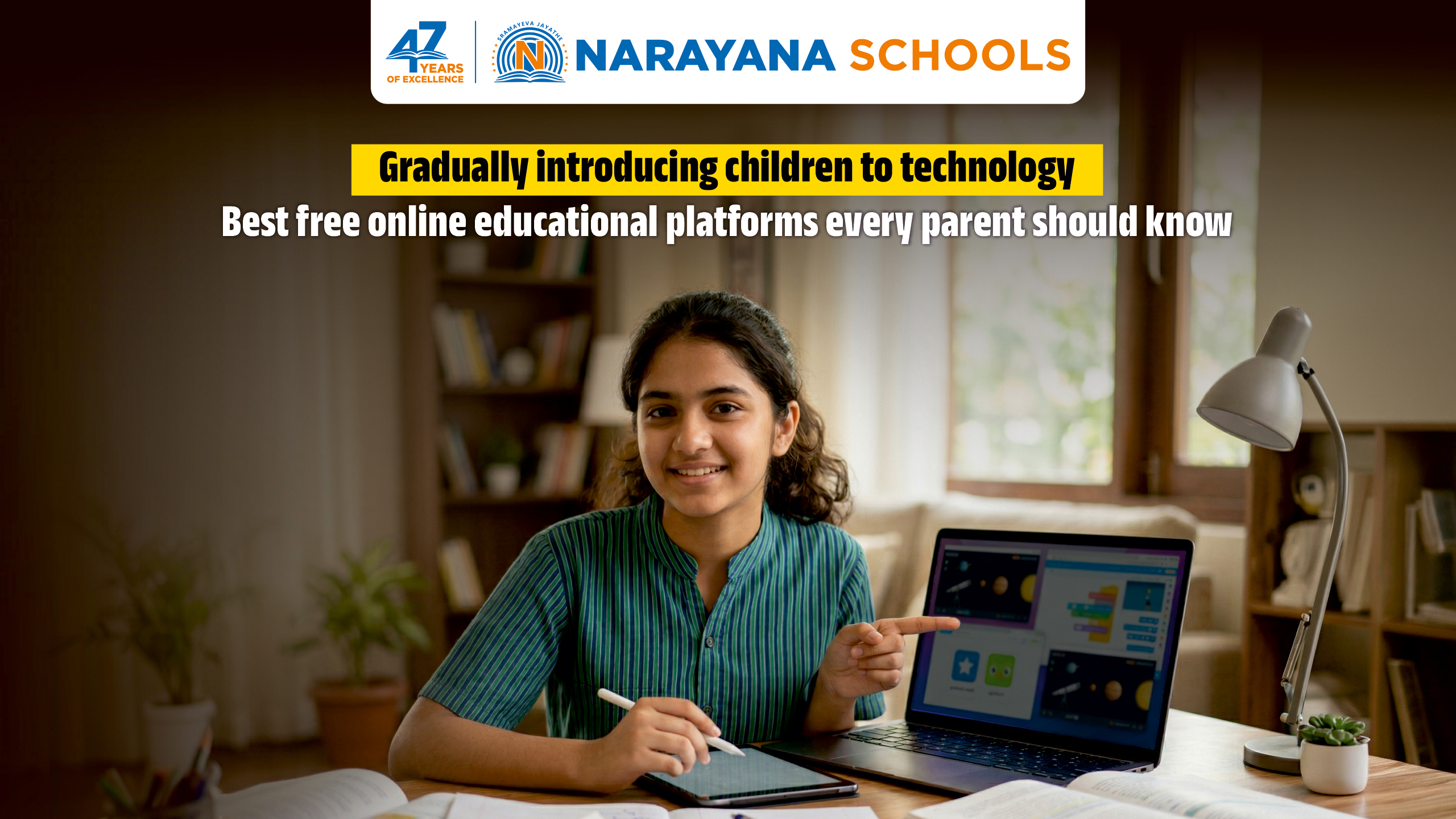
In an increasingly digital world, technology is no longer optional in education, it is essential. The focus today extends beyond merely limiting screen time to ensuring that children engage with technology in a safe, purposeful and productive manner, where digital learning platforms and online education are utilised meaningfully and effectively. A gradual and guided introduction to technology helps children build familiarity, confidence and digital discipline without feeling overwhelmed. Research shows that when introduced in a structured manner, technology enhances cognitive development, creativity and problem-solving skills, while also fostering digital literacy, independent learning and adaptability for future academic and real-world environments.
Why technology must be seen as a learning tool, not a threat: The science behind digital learning-
- Research by the United Nations Educational, Scientific and Cultural Organization (UNESCO) highlights that digital tools expand access to quality education, bridge learning gaps and promote inclusive, equitable learning experiences across diverse backgrounds.
- Cognitive and neuroscience studies, including those from Stanford University, show that interactive and multimedia-rich digital environments enhance engagement, conceptual understanding and long-term retention by activating multiple areas of the brain and encouraging active participation.
- Evidence from cognitive psychology demonstrates that techniques such as quizzes, problem-solving tasks, spaced repetition (reviewing at increasing intervals) and retrieval practice (recalling learned information) significantly strengthen memory consolidation and learning efficiency.
- Gradual and guided exposure to such structured digital platforms fosters digital literacy, critical thinking, creativity and independent learning, enabling children to view technology as a tool for exploration, innovation and knowledge building rather than distraction.
- Educational psychology supports phased and scaffolded exposure, where guided usage and structured routines gradually build digital discipline, confidence and reduce cognitive overload in early stages.
- As familiarity increases, supervised engagement helps develop self-regulation and executive functioning skills, including time management, focus, planning and responsible usage.
- A gradual shift towards independent exploration within safe boundaries fosters critical thinking and digital judgement, ensuring technology is used as a balanced and productive learning tool rather than a source of distraction.
- Research from the American Academy of Pediatrics emphasises supervised screen use, age-appropriate content and clearly defined digital boundaries, supported by parental controls and monitoring to create a safe and secure digital environment.
- Guided interaction, including co-viewing and open discussions, helps children develop critical understanding, digital awareness and ethical judgement, enabling them to navigate online content responsibly.
- Consistent routines and structured limits strengthen self-regulation, impulse control and responsible usage, ensuring technology remains a productive and balanced part of learning.
- Alignment with school curriculum
- Credibility and academic backing
- Interactive and concept-based content
- Absence of excessive distractions or advertisements
- Ease of use and intuitive design, enabling children to navigate independently without confusion or cognitive overload
- Strong privacy and data protection practices, ensuring a safe and secure digital environment
- Opportunities for skill-building beyond academics, such as creativity, problem-solving and basic digital literacy
- Research by the Organisation for Economic Co-operation and Development (OECD) indicates that structured and early exposure to digital tools enhances digital literacy, problem-solving abilities and adaptability for future readiness.
- Over time, such guided engagement also builds independent learning habits and information evaluation skills, enabling children to navigate digital environments with confidence while making informed and responsible choices.
In essence, the key lies in gradually introducing technology in a structured and purposeful manner. When children are supported with the right guidance and balance, educational technology platforms transform into powerful allies like fostering curiosity, strengthening knowledge and preparing learners for a digitally driven future.
At Narayana Schools, this philosophy is brought to life through age-appropriate digital platforms designed to align with every stage of learning.- nLearn Kids for eKidz (pre-primary) and eChamps (primary): Technology is thoughtfully integrated into early learning to spark curiosity and engagement. The platform offers a safe, immersive and child-friendly environment through animated videos, interactive stories, games and simulations. Supported by smart boards, e-books and audio-visual activities, it enhances focus, encourages participation and nurtures creativity, critical thinking and a love for discovery from an early age.
- nLearn for eTechno and above (middle, secondary and senior secondary): As learners progress, the platform evolves to support deeper conceptual understanding and competitive readiness. With features like ASTRA (Advanced Student Tutoring & Resource Assistant), students receive instant doubt resolution and personalised practice. Interactive modules, eBooks and exam simulations designed to mirror Board examinations and competitive exams like IIT-JEE/NEET (UG) help strengthen conceptual clarity, problem-solving skills and overall academic performance.
We ensure that technology is not merely introduced, but thoughtfully and progressively integrated into the learning journey, empowering students to grow into confident, capable and future-ready individuals who dare to dream boldly and pursue those dreams with conviction, because at Narayana Schools, your dreams are our dreams.